
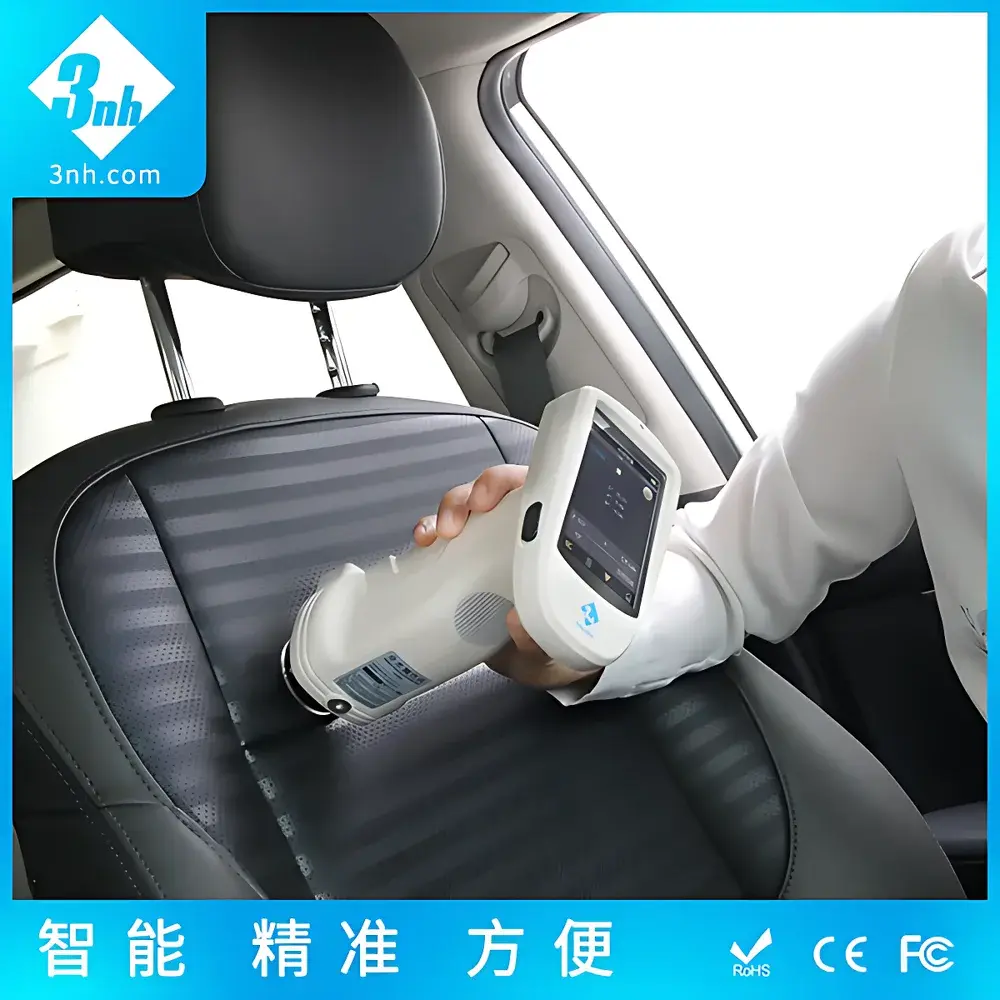
3nh TS70 Multi-Aperture D/8 Precision Spectrophotometer
| Brand | 3nh |
|---|---|
| Origin | Guangdong, China |
| Manufacturer Type | Direct Manufacturer |
| Product Type | Spectrophotometer |
| Instrument Form Factor | Portable |
| Optical Geometry | d/8° integrating sphere |
| Light Source | Full-spectrum LED + UV LED |
| Spectral Range | 360–780 nm |
| Repeatability | ΔE*ab ≤ 0.02 |
Overview
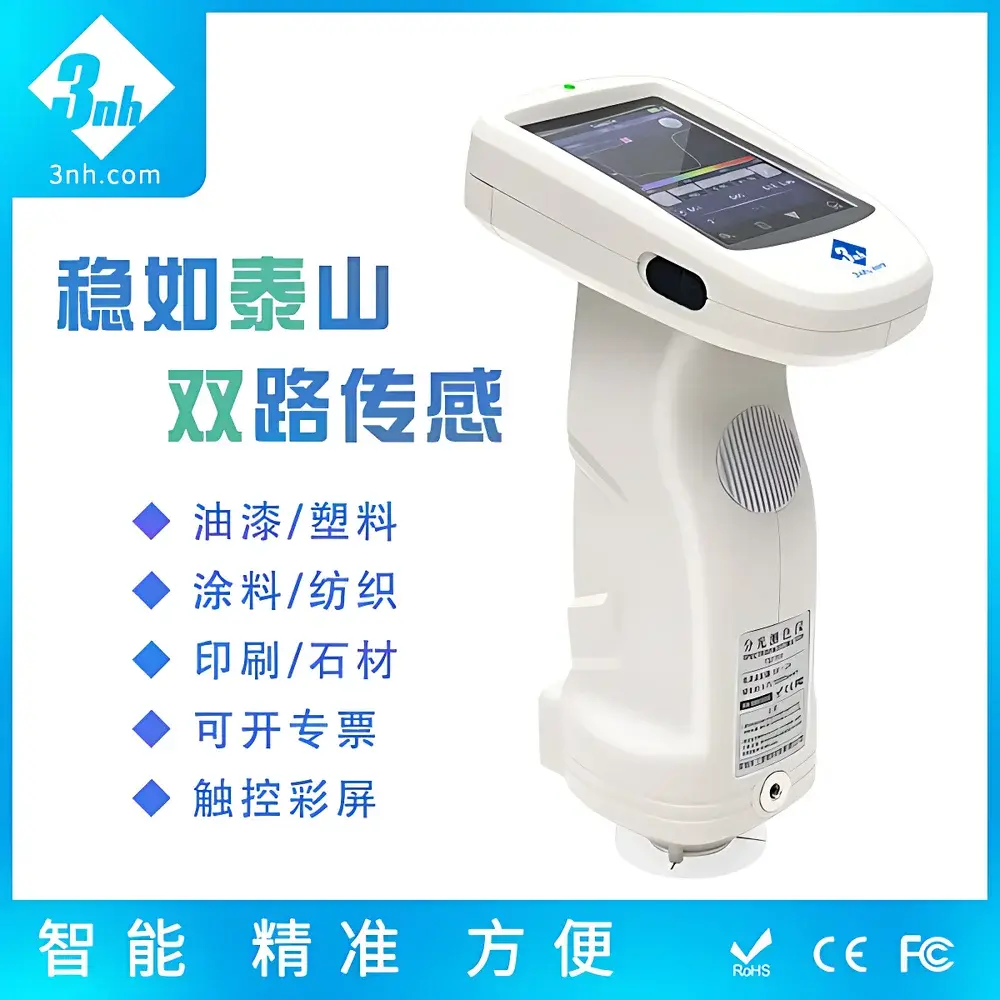
The 3nh TS70 Multi-Aperture D/8 Precision Spectrophotometer is a high-accuracy, portable benchtop-grade spectrophotometer engineered for laboratory-grade color measurement and industrial quality control. It employs diffuser-illuminated d/8° optical geometry—fully compliant with CIE No. 15, ISO 7724-1, ASTM E1164, DIN 5033 Teil 7, and GB/T 3978—enabling both SCI (Specular Component Included) and SCE (Specular Component Excluded) measurements in a single acquisition cycle (~1.5 s). At its core lies 3nh’s proprietary Taishuang spectral engine: a dual-row 32-element silicon photodiode array sensor coupled with a planar grating dispersion system. This architecture delivers high signal-to-noise ratio across the full visible spectrum (360–780 nm at 10 nm intervals), ensuring robust performance for both high-reflectance and low-reflectance surfaces—including fluorescent and optically brightened materials. Unlike filter-based tristimulus meters, the TS70 captures full spectral reflectance data (0–200% range), forming the physical basis for traceable color analysis, inter-instrument agreement, and spectral prediction workflows.
Key Features
- Dual-mode d/8° optical path with simultaneous SCI/SCE acquisition—eliminates manual mode switching and reduces operator-induced variability.
- Five interchangeable apertures: Ø8 mm flat, Ø8 mm tip, Ø4 mm flat, Ø4 mm tip, and 1×3 mm rectangular tip—optimized for textured, curved, granular, or small-area samples (e.g., textile yarns, electronic components, ceramic glazes).
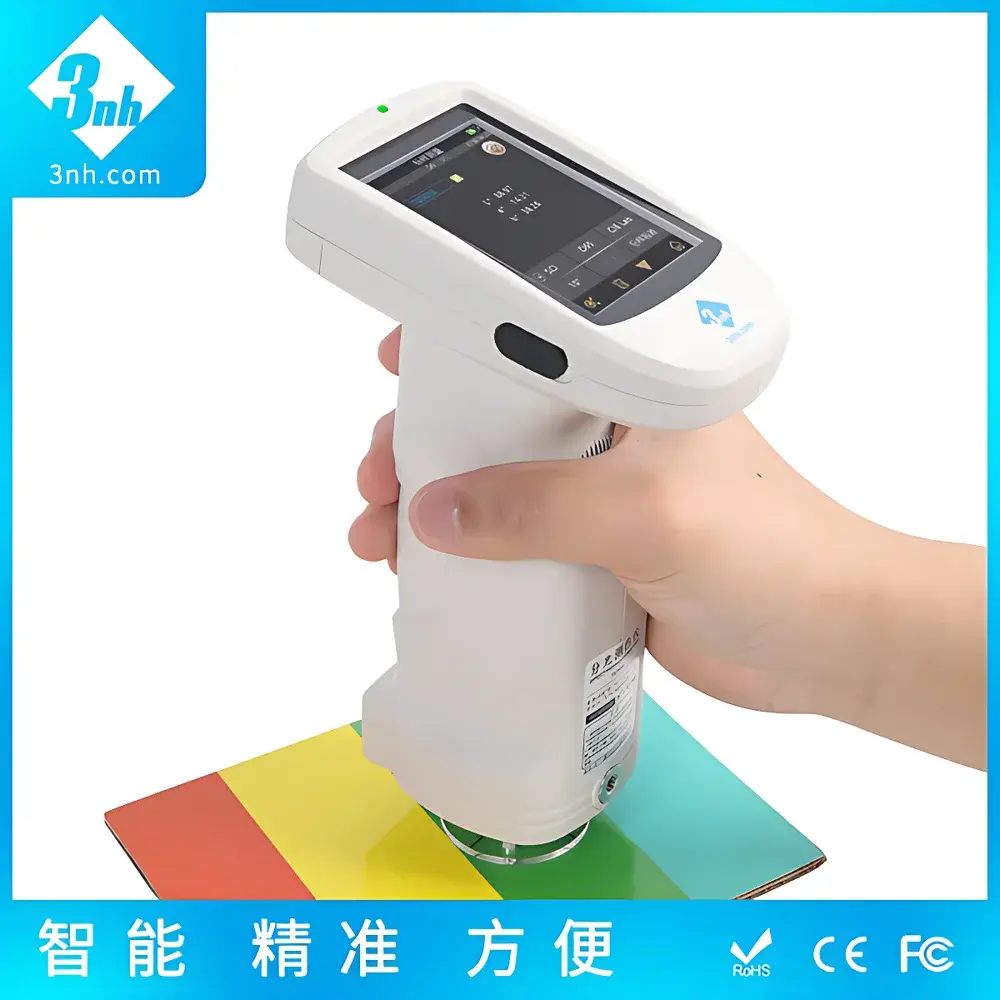
- Integrated real-time CMOS camera with on-screen crosshair overlay—enables precise visual targeting and eliminates misregistration errors common in handheld devices.
- Full-spectrum LED illumination (360–780 nm) with dedicated UV channel—ensures uniform spectral power distribution, avoids band-limited artifacts, and supports fluorescence excitation per ISO 13655 and ASTM E308 Annex A4.
- Non-contact auto-calibration using certified reference white tile—minimizes drift and maintains long-term stability without mechanical wear.
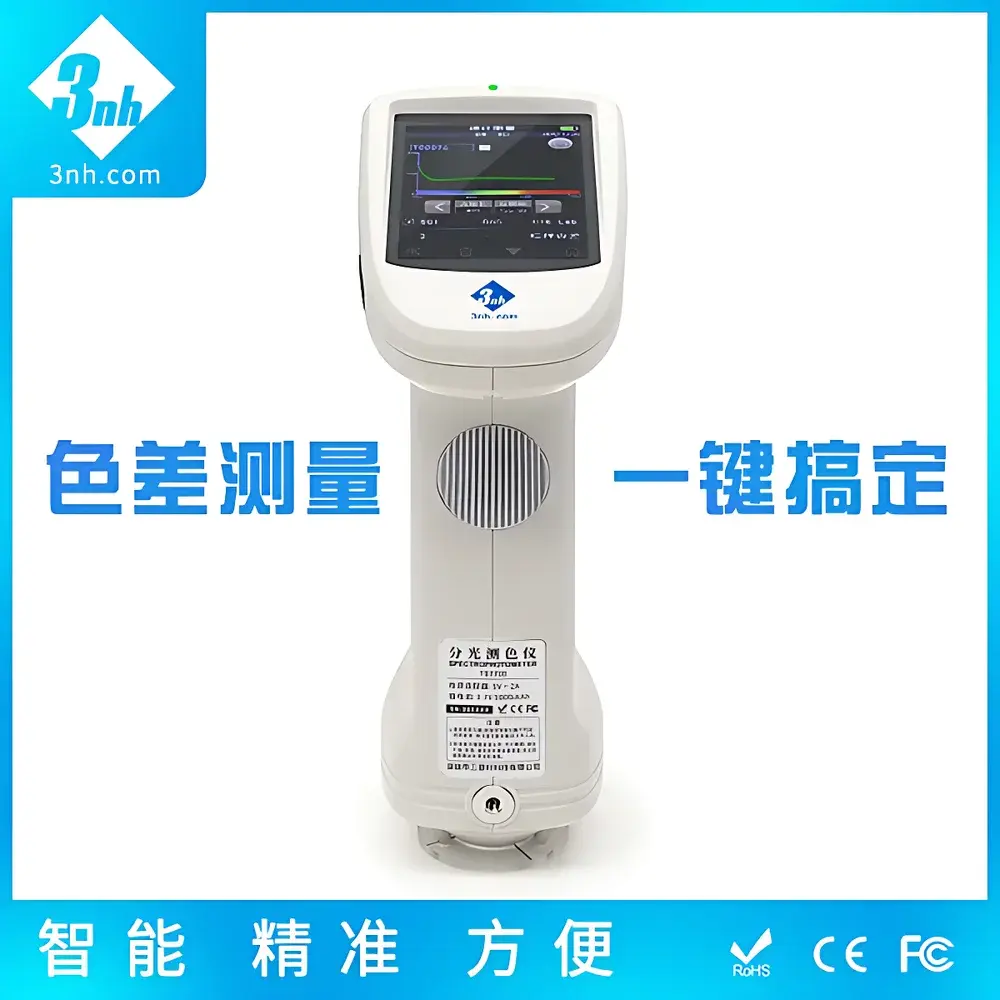
- Ruggedized aluminum-magnesium alloy housing (129 × 76 × 217 mm, 600 g) with IP52-rated sealing—designed for factory floor durability while retaining portability for in-line QC stations.
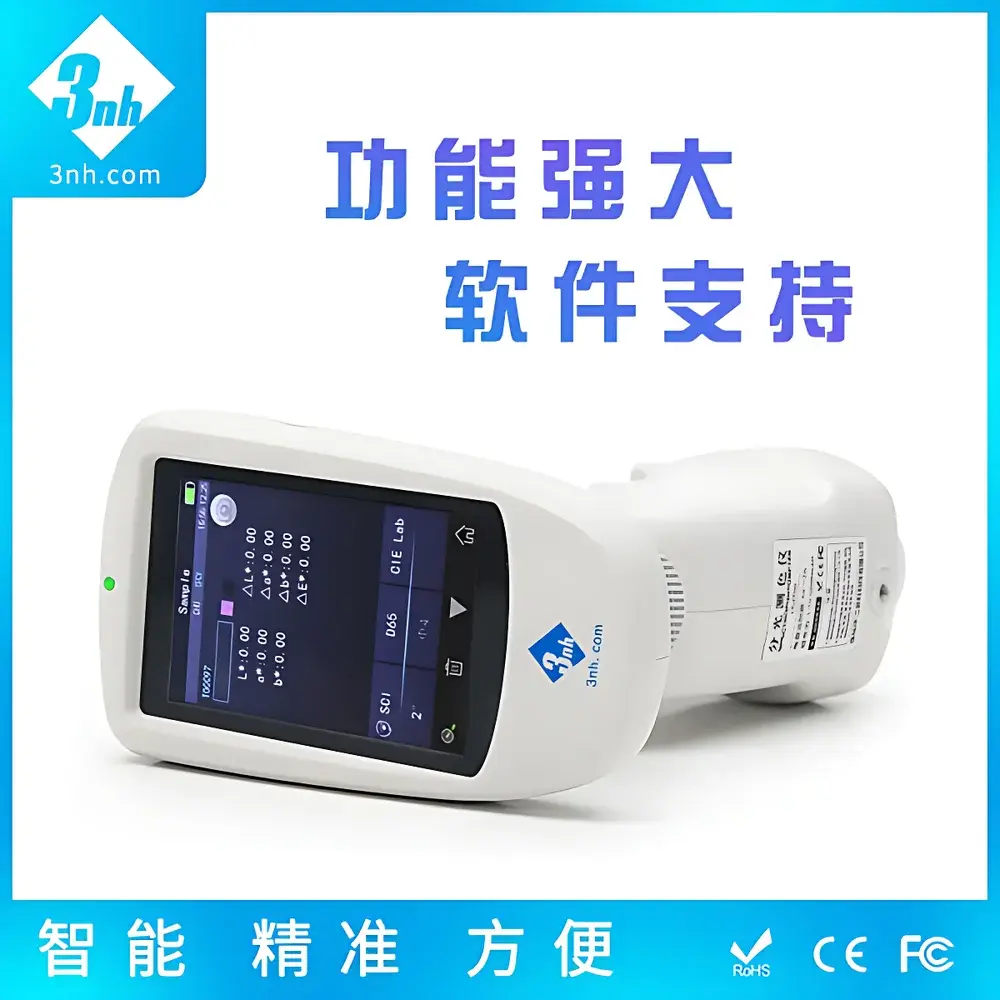
- Capacitive 3.5″ TFT touchscreen with glove-compatible UI—supports multilingual operation (English, Simplified/Traditional Chinese) and offline measurement logging.
Sample Compatibility & Compliance
The TS70 accommodates diverse sample types across regulated and non-regulated industries: opaque solids (plastics, painted metals), translucent films (packaging laminates), textured fabrics (denim, knits), powdered pigments (via optional powder test kit), and fluorescent substrates (detergent-brightened paper, security inks). Its d/8° geometry meets ISO/IEC 17025 method validation requirements when used with documented calibration procedures and traceable standards (e.g., NIST-traceable BCRA Series II tiles). The instrument supports GLP-compliant audit trails via PC software (3nh ColorQC Suite), including user login, timestamped measurement records, calibration history, and digital signature fields. All color spaces and illuminants conform to CIE S 014-2/E:2021 and ISO/CIE 11664 series definitions. Fluorescence correction follows ASTM E308–22 Annex A5 methodology.
Software & Data Management
The TS70 operates natively with cross-platform software ecosystems: Windows desktop application (ColorQC Suite), iOS/Android mobile apps, HarmonyOS-compatible interface, and cloud-synced WeChat Mini Program. Data export supports CSV, XML, and CxF/XRGA formats for integration into LIMS, ERP, or formulation systems (e.g., X-Rite Color iMatch, Datacolor MatchText). Up to 1,000 standard references and 30,000 sample readings are stored onboard; cloud backup enables centralized fleet management. Software modules include spectral comparison, metamerism index (Mt) calculation, whiteness/yellowness per ASTM E313/D1925, colorant strength (force value), opacity/gloss (8°), and Munsell renotation (C/2° observer). All firmware updates and spectral database patches are delivered via secure HTTPS channels with SHA-256 signature verification.
Applications
The TS70 serves as a primary color verification tool in ISO 9001-certified production lines for automotive interiors (PP/TPO trim), architectural coatings (AAMA 2605 compliance), textile dye lots (AATCC TM150), printed packaging (ISO 12647-2), and medical device housings (USP color consistency). Its 0.02 ΔE*ab repeatability and ≤0.15 ΔE*ab inter-instrument agreement (BCRA II average) make it suitable for master-standard transfer between R&D labs and contract manufacturing sites. In R&D settings, full spectral data enables predictive modeling of batch-to-batch variation, substrate-dependent color shift, and UV-stabilizer efficacy. Regulatory documentation packages—including IQ/OQ protocols, uncertainty budgets per GUM (JCGM 100:2008), and 21 CFR Part 11-compliant electronic record templates—are available upon request.
FAQ
Does the TS70 support FDA 21 CFR Part 11 compliance?
Yes—when operated with the validated ColorQC Suite v4.2+ under controlled IT environment (audit trail enabled, role-based access, electronic signatures), it satisfies electronic record and signature requirements for pharmaceutical and medical device color release testing.
Can it measure metallic or pearlescent coatings?
It measures gonio-apparent effects only qualitatively; for quantitative multi-angle analysis, a dedicated goniospectrophotometer (e.g., BYK-mac or X-Rite MA98) is recommended.
What is the calibration interval recommendation?
Annual recalibration against NIST-traceable standards is advised; daily zero/white calibration using included reference tiles is required per ISO 13655:2012 Section 7.2.
Is spectral data export supported for third-party modeling tools?
Yes—CSV exports include wavelength (nm), reflectance (%), and metadata (illumination, observer, aperture); compatible with MATLAB, Python (scikit-optimize), and commercial color prediction engines.
How is thermal drift managed during extended use?
The instrument incorporates real-time thermal compensation algorithms and active temperature stabilization of the LED driver circuitry, maintaining spectral fidelity within ±0.1 nm over 0–40°C ambient range.



