
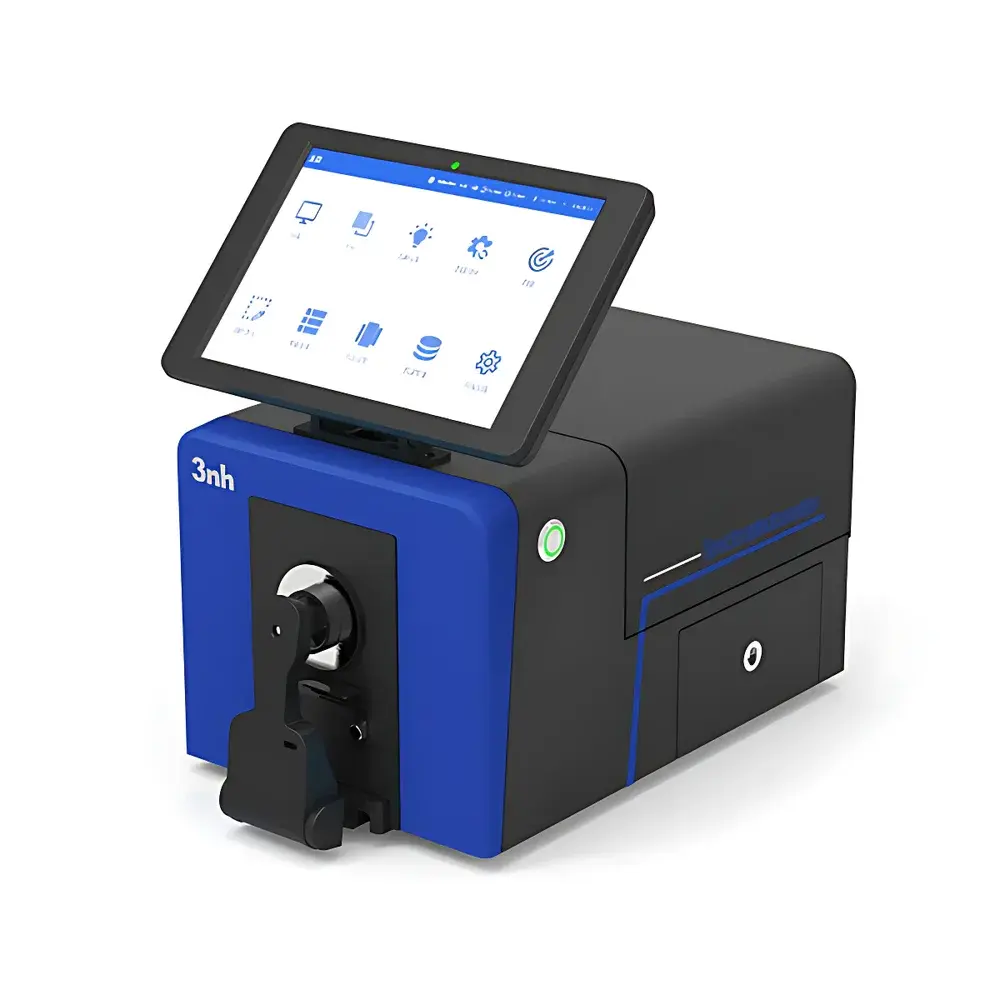
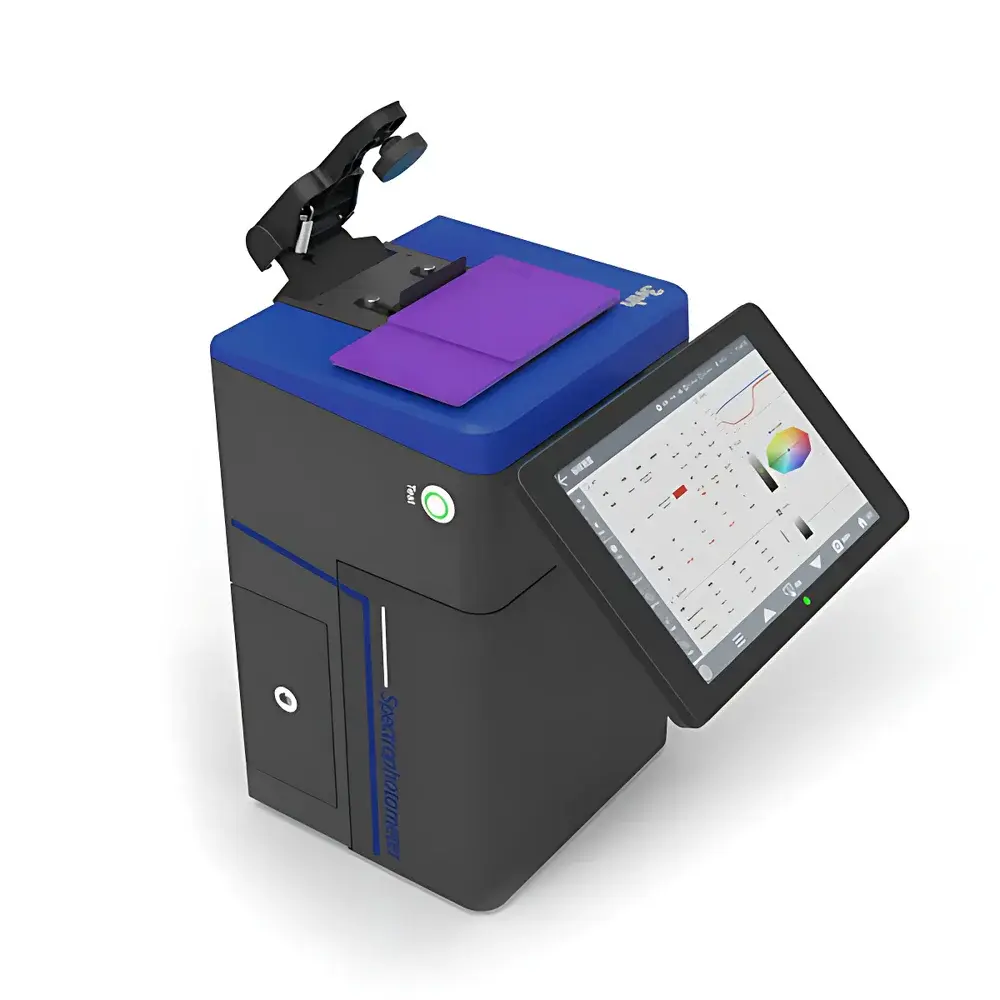
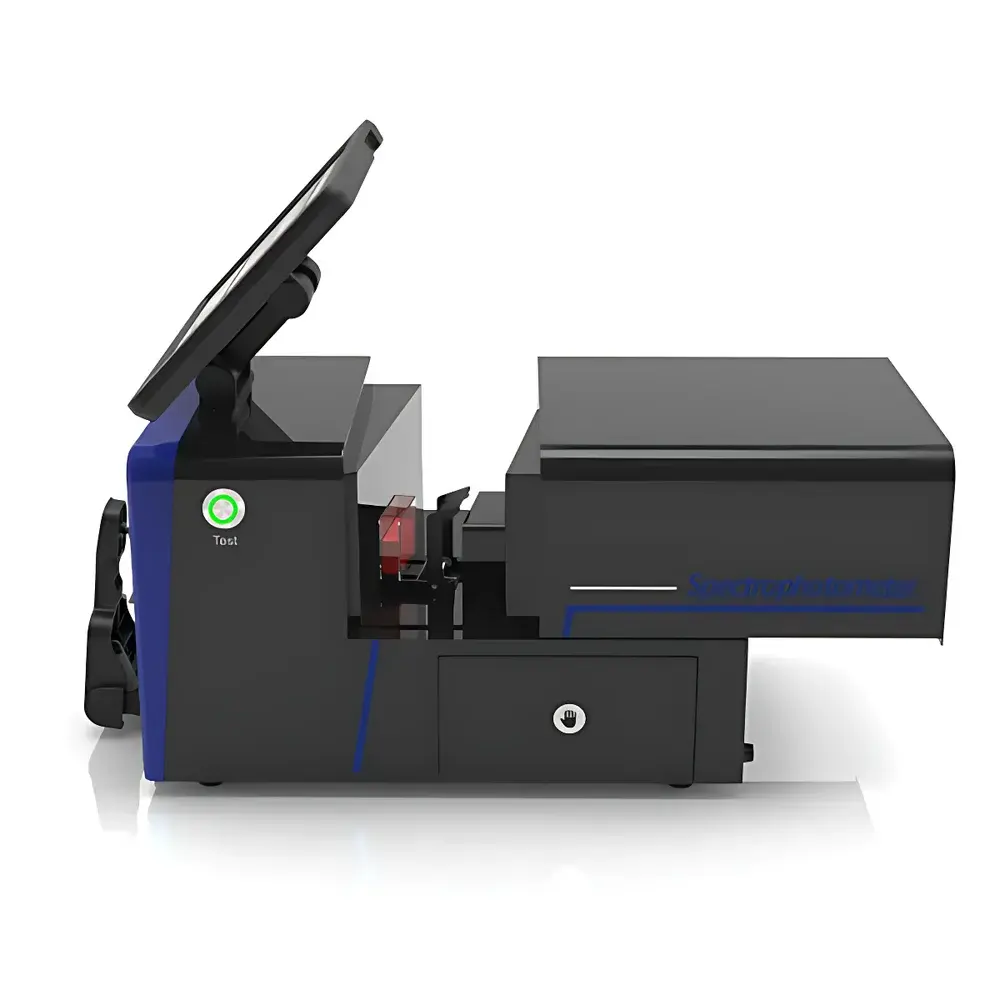
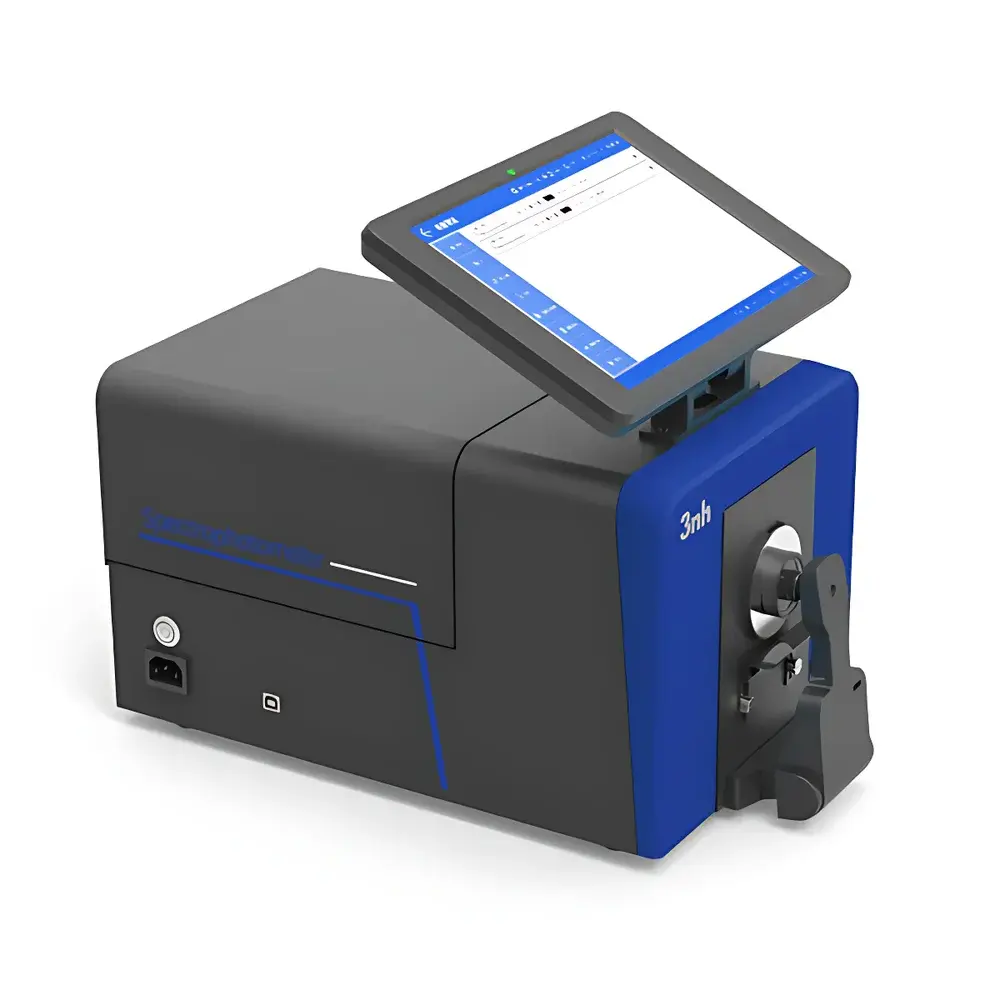
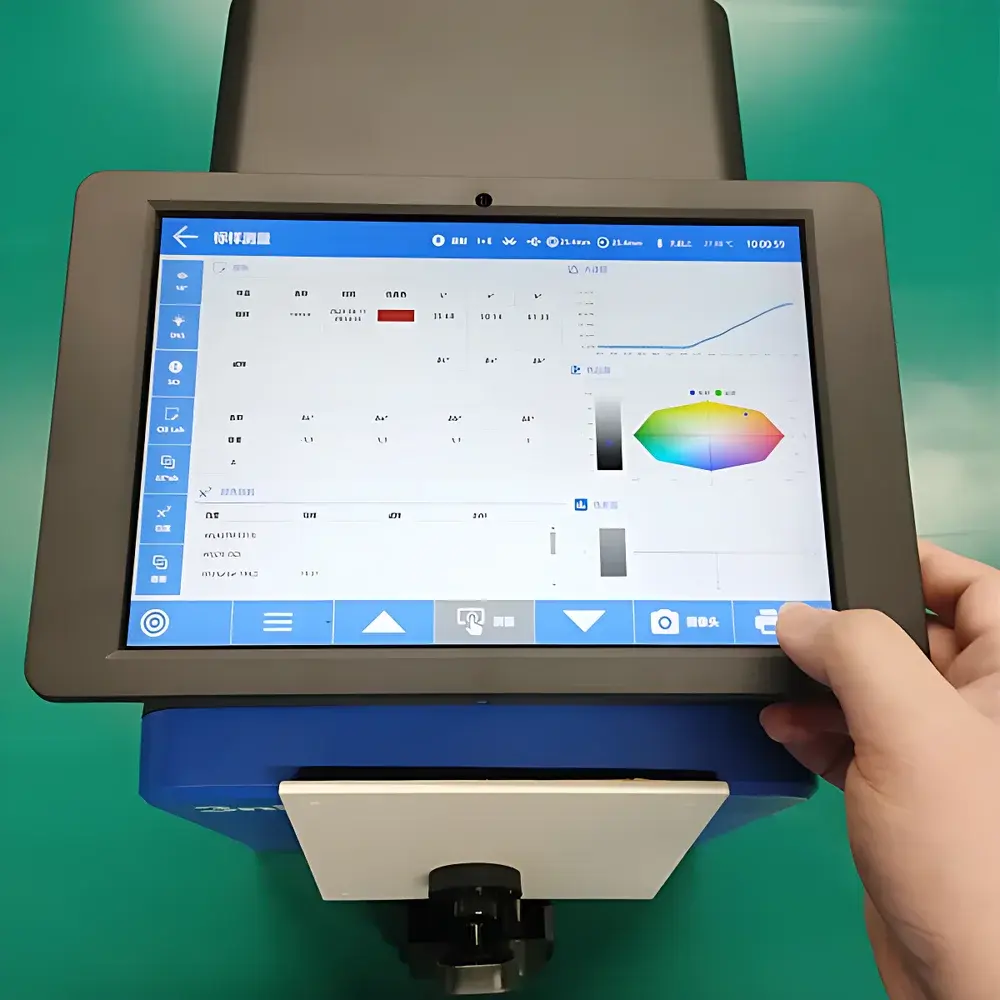
3nh TS8503 Desktop Spectrophotometer
| Brand | 3nh |
|---|---|
| Origin | Guangdong, China |
| Manufacturer Type | Direct Manufacturer |
| Product Category | Domestic |
| Model | TS8503 |
| Product Type | Spectrophotometer |
| Instrument Form Factor | Desktop |
| Optical Geometry | d/8° integrating sphere |
| Light Source | Full-spectrum LED array (360–780 nm) with integrated UV and selectable cutoff filters (400 nm, 420 nm, 460 nm) |
| Spectral Range | 360–780 nm |
| Repeatability | Reflectance colorimetric value (Φ25.4 mm / SCI): ΔE*ab ≤ 0.018 (after warm-up & calibration |
| Spectral reflectance/transmittance repeatability | ≤0.1% |
Overview
The 3nh TS8503 Desktop Spectrophotometer is a high-precision, dual-optical-path spectrophotometric instrument engineered for rigorous color measurement across reflective, transmissive, translucent, fluorescent, and semi-transparent samples. It operates on the CIE-compliant d/8° integrating sphere geometry for reflectance measurements (with both SCI and SCE modes), and d/0° geometry for transmittance—enabling standardized evaluation per ISO 7724-1, ASTM E1164, CIE No. 15, GB/T 3978, and DIN 5033 Teil 7. Its core optical architecture employs a concave holographic grating and a 256-pixel dual-array CMOS image sensor, delivering stable spectral acquisition at 10 nm intervals with 5 nm FWHM bandwidth. The instrument’s full-spectrum LED illumination system (360–780 nm) incorporates dedicated UV-emitting diodes and mechanically switchable longpass filters (400 nm, 420 nm, 460 nm cutoff), ensuring traceable UV contribution control essential for fluorescence quantification and whiteness/yellowness assessment in regulated materials.
Key Features
- Dual optical path design supporting both d/8° (reflectance) and d/0° (transmittance) geometries, compliant with ISO/CIE/ASTM standards for industrial color evaluation.
- Integrated UV-capable full-spectrum LED source with real-time UV intensity monitoring via independent photodiode detector—ensuring spectral stability over >3 million measurements and ≥5 years of operational life.
- 10.5-inch rotatable tablet PC with 64 GB onboard storage, live camera-assisted targeting, and intuitive touch interface for rapid sample positioning and measurement validation.
- Four auto-recognized apertures (Φ25.4 mm, Φ15 mm, Φ8 mm, Φ4 mm) with motorized lens alignment—enabling seamless switching between large-area uniformity checks and micro-area spot analysis without manual recalibration.
- Open-top transmittance chamber accommodating samples up to 54 mm thickness, compatible with standard cuvettes, Petri dishes, and custom film holders (optional).
- Real-time temperature and humidity compensation algorithm, minimizing environmental drift in lab or production-floor deployments.
- Robust mechanical design featuring damping sample clamps, slide-out accessory drawer, and modular mounting options—including optional inverted stand for overhead or downward measurement configurations.
Sample Compatibility & Compliance
The TS8503 accommodates diverse physical forms: opaque solids (plastics, painted panels, textiles), transparent liquids (pharmaceutical solutions, beverages), translucent films (packaging, lenses), and UV-fluorescent materials (optical brighteners in detergents, paper, cosmetics). It supports ASTM D1003 (haze), ASTM D1500 (petroleum color), ASTM D1925/YI (yellowness index), ASTM E313/WI (whiteness index), Gardner, Saybolt, APHA/Pt-Co, and DIN 6164 blackness metrics. All colorimetric calculations adhere to CIE 1931 2° and 10° standard observer functions under 41 programmable illuminants—including D65, A, C, F-series, LED-specific spectra (B1–B5, RGB, V1–V2), and user-defined spectral power distributions. Data integrity meets GLP/GMP documentation requirements, with audit-trail-ready timestamping, operator ID logging, and version-controlled firmware.
Software & Data Management
The TS8503 ships with SQCX Quality Control Software—a validated Windows-based platform supporting FDA 21 CFR Part 11 compliance (electronic signatures, role-based access, immutable audit trails). It enables spectral database creation, multi-instrument fleet calibration tracking, tolerance band definition (ellipsoidal or rectangular ΔE limits), SPC charting (X-bar/R, Cp/Cpk), batch reporting (PDF/Excel), and cross-platform data exchange via CSV, XML, or direct SQL export. Cloud synchronization (optional) allows centralized color standard management across global R&D, QC, and supplier sites. Firmware updates and spectral library expansions are delivered through secure OTA channels with cryptographic signature verification.
Applications
This spectrophotometer serves as a primary color reference tool in regulated and high-variability environments: formulation QC in automotive coatings and ink manufacturing; raw material release testing in pharmaceutical excipient and medical device polymer supply chains; whiteness/yellowness validation in textile dye houses per AATCC TM107; haze and clarity verification in optical-grade polycarbonate sheets (ISO 14782); petroleum product grading per ASTM D1500; food color consistency monitoring in confectionery and beverage production; and fluorescence-corrected color matching in cosmetic emulsions containing optical brightening agents. Its dual-geometry capability makes it suitable for comparative analysis between incoming raw materials and finished goods under identical geometric and illuminant conditions.
FAQ
Does the TS8503 support regulatory compliance for pharmaceutical or food-grade color testing?
Yes—it complies with ASTM D1500, D1925, E313, and ISO 8254-1 for paper/board, and its software supports 21 CFR Part 11 audit trails, electronic signatures, and data integrity protocols required for GxP environments.
Can the instrument measure both reflectance and transmittance without hardware reconfiguration?
Yes—the dual-path optical design enables automatic switching between d/8° reflectance and d/0° transmittance modes via software command; no manual mirror or port adjustments are required.
What is the maximum sample thickness supported in transmittance mode?
The open transmittance chamber accepts samples up to 54 mm thick, with optional fixtures for cuvettes (10 mm path), Petri dishes, and thin-film holders.
How is UV contribution controlled during measurement?
UV output is managed via three discrete longpass filters (400 nm, 420 nm, 460 nm cutoff) and a dedicated UV LED channel, allowing quantitative separation of UV-excited fluorescence from visible reflectance—critical for ISO 11475 and CIE 15:2018 UV-adjusted whiteness calculations.
Is inter-instrument agreement validated against certified reference materials?
Yes—typical inter-instrument agreement is ΔE*ab ≤ 0.24 (BCRA Series II 12-tile average, Φ25.4 mm / SCI), traceable to NIST-traceable ceramic tiles and liquid standards.




