
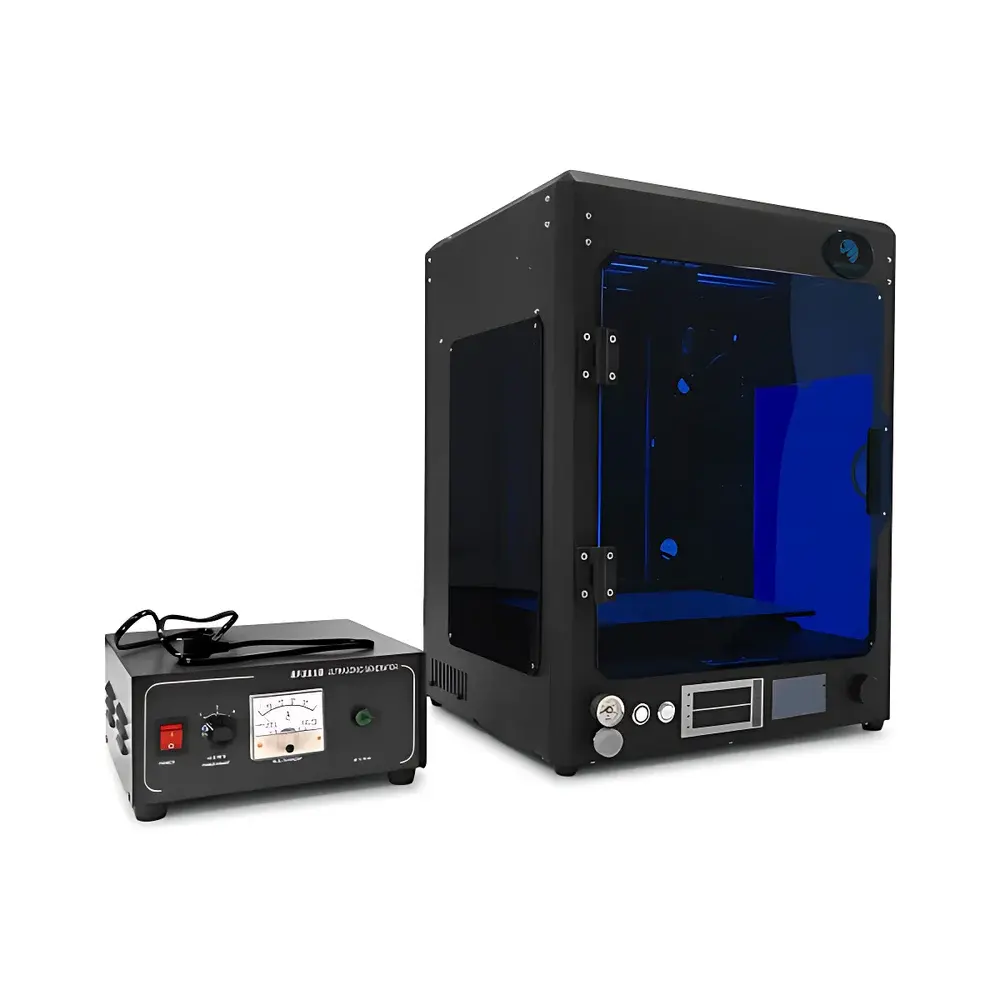
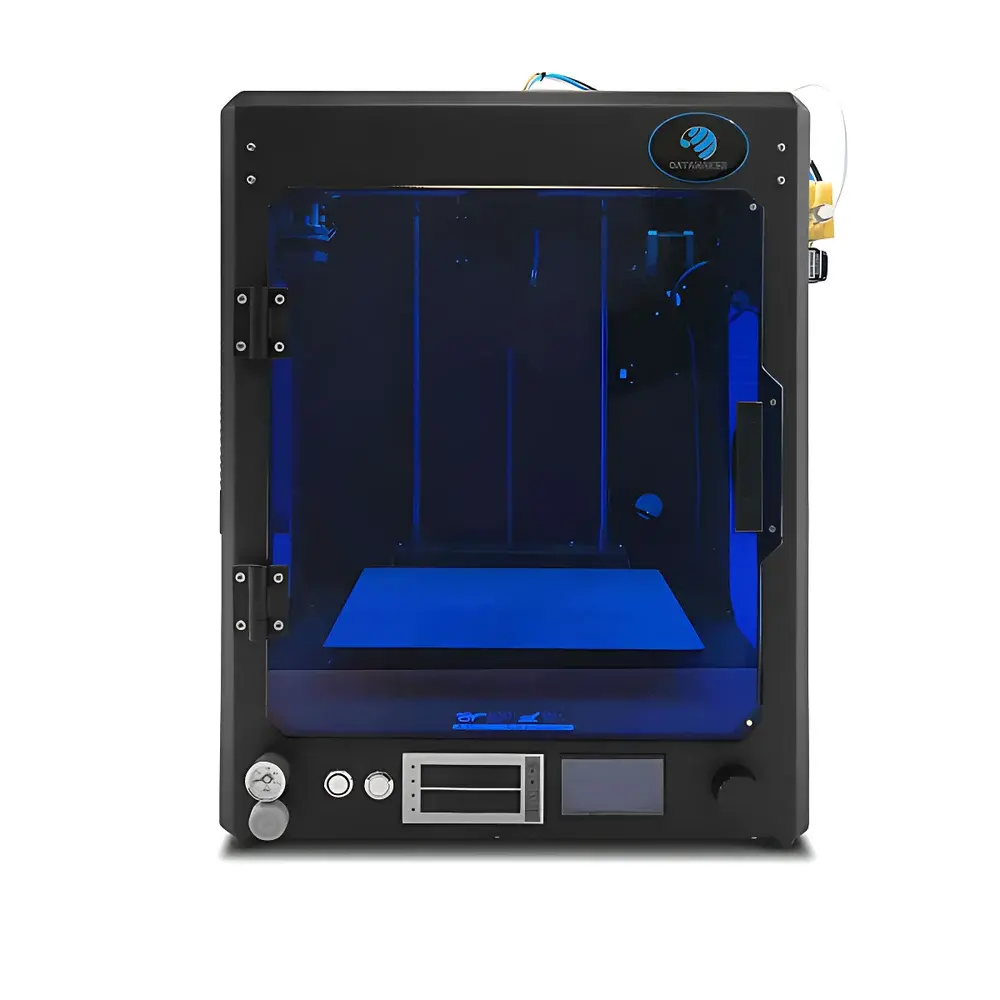
4IR CPT-230 Ultrasonic Spray Coating System
| Brand | 4IR |
|---|---|
| Origin | Shanghai, China |
| Manufacturer Type | Authorized Distributor |
| Country of Origin | China |
| Model | CPT-230 |
| Price Range | USD 14,000 – 42,500 |
Overview
The 4IR CPT-230 Ultrasonic Spray Coating System is a precision-engineered laboratory-scale deposition platform based on high-frequency ultrasonic atomization. Unlike conventional pneumatic or pressure-driven spray systems, it utilizes piezoelectric transduction to generate controlled capillary wave instability at the liquid–air interface—enabling droplet formation via Rayleigh–Taylor and Faraday instabilities under resonant acoustic excitation (typically 120 kHz). This physical mechanism yields monodisperse aerosol clouds with median droplet diameters in the 5–25 µm range, depending on liquid viscosity and surface tension. Designed for low-flow, high-uniformity thin-film fabrication, the system eliminates nozzle orifice constraints, turbulence-induced splashing, and pressure-related flow pulsation—making it especially suitable for delicate substrates, functional nanomaterials, and air-sensitive formulations in R&D environments.
Key Features
- Ultrasonic atomization module comprising a high-power piezoelectric transducer, titanium alloy amplitude transformer (horn), and corrosion-resistant stainless-steel雾化头 (atomizing tip), engineered for thermal stability and long-term resonance fidelity.
- Nozzle-free operation: eliminates clogging, wear, and maintenance downtime associated with orifice-based dispensing—critical for suspensions containing nanoparticles, viscous precursors, or non-Newtonian fluids.
- Adjustable雾化量 (atomization rate) from 0.05 to 15 mL/min via programmable generator output and liquid feed control, supporting both single-pass and multi-layer deposition protocols.
- Low acoustic noise (<65 dB(A)) and zero compressed air requirement—reducing facility infrastructure demands and enabling integration into laminar flow hoods or gloveboxes.
- Energy-efficient design: typical power consumption 85% energy conversion efficiency from electrical input to acoustic output.
- Chemically inert wetted path constructed from Grade 5 titanium (Ti-6Al-4V) and 316L stainless steel—compatible with aqueous solutions, organic solvents, acidic/alkaline electrolytes, and high-viscosity polymer dispersions (up to 500 cP).
Sample Compatibility & Compliance
The CPT-230 supports deposition onto rigid and flexible substrates—including silicon wafers, ITO/glass, FTO-coated glass, PET/PEN foils, carbon paper, metal meshes, and porous ceramics—without thermal or mechanical stress damage. Its gentle, low-impact droplet delivery preserves nanoparticle dispersion integrity and prevents aggregation or dewetting commonly observed with high-velocity spray methods. The system complies with CE safety directives (2014/30/EU EMC, 2014/35/EU LVD) and meets ISO 14644-1 Class 5 cleanroom compatibility when operated inside appropriate enclosures. While not inherently GMP-certified, its modular architecture and reproducible process parameters support IQ/OQ documentation for GLP-compliant coating development workflows per ASTM D7263 and ISO 20567-2 standards.
Software & Data Management
The integrated digital controller features a 7-inch capacitive touchscreen HMI with real-time monitoring of transducer impedance, frequency tracking, liquid flow rate, and duty cycle. All operational parameters—including atomizer drive frequency (118–122 kHz auto-tuned), amplitude setpoint (0–100%), and syringe pump speed—are logged with timestamped CSV export capability. Optional Ethernet/RS-485 interfaces enable remote command execution (Modbus RTU/TCP) and integration into centralized lab automation platforms. Audit trails meet FDA 21 CFR Part 11 requirements when deployed with validated user access controls and electronic signature modules (available as add-on firmware package).
Applications
- Functional thin-film fabrication for perovskite photovoltaics (e.g., MAPbI₃, CsFA-based absorbers), where uniform nucleation and minimal solvent loss are critical to phase purity and grain growth kinetics.
- Deposition of graphene oxide, MXene, and conductive polymer layers (PEDOT:PSS, PANI) onto flexible electrodes—leveraging low-impact delivery to maintain sheet conductivity and interfacial adhesion.
- Proton exchange membrane (PEM) and solid oxide fuel cell (SOFC) electrode layering, including catalyst ink spraying onto gas diffusion layers (GDLs) with sub-micron thickness control (±5% CV across 100 mm × 100 mm area).
- R&D-scale production of anti-reflective, hydrophobic, and self-cleaning coatings using silica, titania, or fluorinated nanoparticle suspensions.
- Controlled humidification and aerosol generation for inhalation toxicology studies, pharmaceutical dry powder formulation screening, and microencapsulation process development.
FAQ
What types of liquids can be atomized with the CPT-230?
Aqueous solutions, alcohols, acetone, DMF, NMP, ethylene glycol, silicone oils, and nanoparticle colloids (e.g., TiO₂, ZnO, Ag NPs) up to 500 cP viscosity—provided they do not chemically attack titanium or 316L stainless steel.
Is substrate heating integrated into the system?
No—the CPT-230 is a standalone atomization platform; hotplates, IR heaters, or heated chucks must be sourced separately and synchronized via external I/O triggers.
Can the system operate continuously for extended periods?
Yes—rated for 24/7 operation with active cooling of the transducer housing and duty-cycle management to prevent thermal drift beyond ±0.3 kHz.
What is the minimum achievable film thickness per pass?
Typically 20–100 nm for low-viscosity precursors on flat substrates, depending on concentration, dwell time, and post-deposition annealing conditions.
Does the system support automated XYZ motion integration?
Yes—standard RS-485 and digital I/O ports allow synchronization with third-party motorized stages (e.g., Zaber, Thorlabs) using custom G-code or LabVIEW drivers.



