
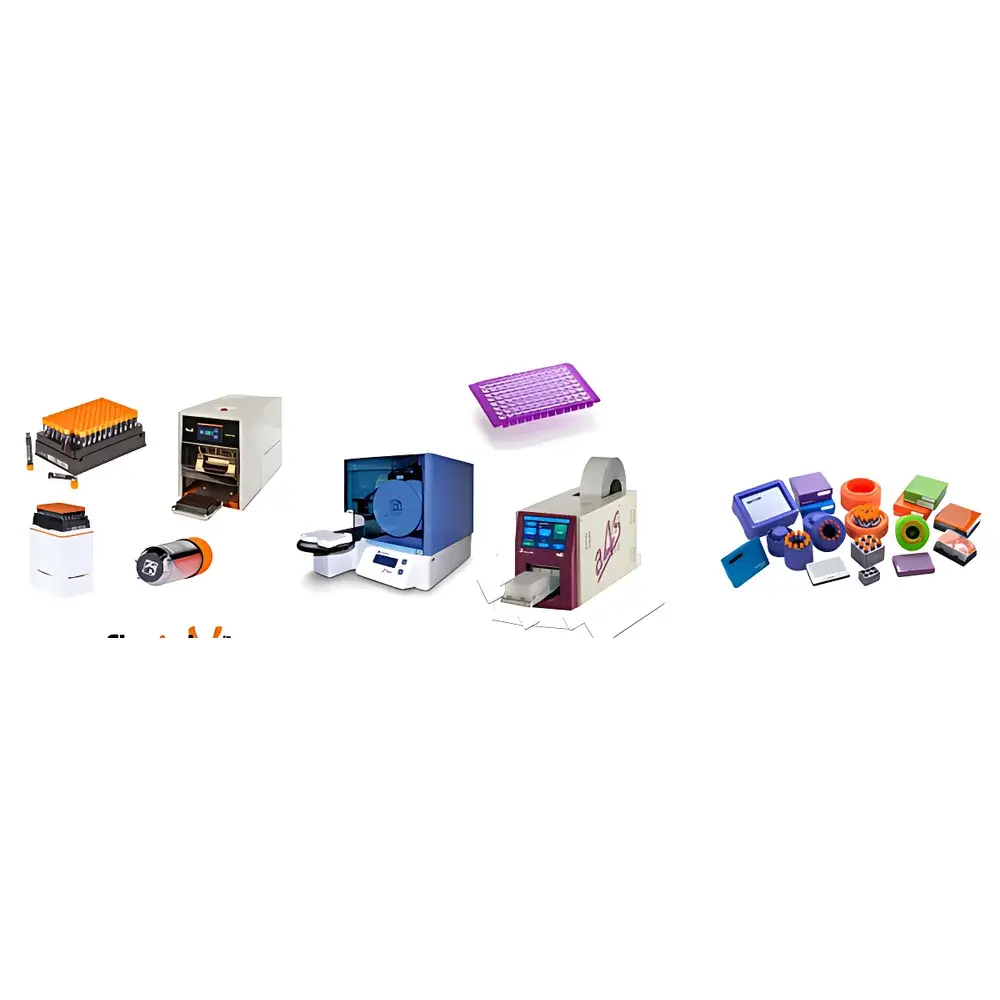
4TI Series qPCR Consumables and Sealing Equipment for Viral Detection – AZENTA (formerly Brooks Automation) Compatible
| Key | Brand: AZENTA (formerly Brooks Automation) |
|---|---|
| Origin | USA |
| Product Type | Sealing Films, PCR Plates, Strip Tubes, Thermal Sealers |
| Compatibility | AZENTA A4S, Thermo Fisher KingFisher/Thermo Sealers, Agilent BioTek, Roche LightCycler, ABI QuantStudio |
| Regulatory Context | Designed for ISO 13485–compliant IVD workflows and FDA-cleared molecular diagnostic assay support |
Overview
The 4TI Series represents a comprehensive portfolio of precision-engineered consumables and sealing instrumentation designed specifically for high-fidelity viral nucleic acid detection workflows—particularly quantitative real-time PCR (qPCR) applications in clinical diagnostics, public health laboratories, and contract research organizations (CROs). These products are engineered to ensure consistent thermal sealing integrity, optical clarity for fluorescence signal transmission, and low-binding surface chemistry critical for sensitive detection of SARS-CoV-2 and other respiratory viruses. All 4TI films and plates are manufactured under controlled cleanroom conditions in the United States and validated for compatibility with automated liquid handling platforms and thermal cyclers used in CLIA-certified and CAP-accredited laboratories. The system architecture supports end-to-end traceability—from sample receipt through amplification and data capture—aligning with Good Laboratory Practice (GLP) and ISO/IEC 17025 documentation requirements.
Key Features
- Optical-grade transparent sealing films (4TI-0540, 4TI-0541, 4TI-0560) optimized for excitation/emission wavelengths between 450–700 nm; certified for minimal autofluorescence and consistent light transmission across all 96 wells.
- Aluminum foil sealing films (4TI-0590, 4TI-0536, 4TI-0591, 4TI-0522) with peelable adhesive layers and moisture vapor transmission rate (MVTR) <0.5 g/m²/day—validated for long-term storage of extracted RNA at –80 °C and ambient transport from raw material suppliers to testing facilities.
- 96-well PCR plates in dual-material (polypropylene base + polyethylene skirt) and single-material configurations (4TI-0960, 4TI-0950, 4TI-0710, etc.), each engineered with uniform well geometry, tight dimensional tolerances (±0.05 mm), and certified flatness (<0.1 mm deviation) to ensure reliable pipetting and thermal contact during cycling.
- Eight-tube strips with integrated hinged lids (4TI-0754, 4TI-0784) featuring snap-fit closure mechanisms and individually removable caps—designed for flexible reaction setup without cross-contamination risk.
- Fully automated thermal sealer (A4S, model 4TI-0665) capable of sealing up to 96-well plates at ≤2.5 seconds per plate with programmable temperature (80–180 °C), dwell time (0.5–5 s), and pressure control; includes built-in calibration verification and audit trail logging per FDA 21 CFR Part 11 Annex 11 guidelines.
- Semi-automated sealer (IntelliXseal SA, model 59-2000) and peel-off film remover (XP-A_230V) support manual QC review steps and post-amplification plate opening under laminar flow hoods.
Sample Compatibility & Compliance
All 4TI consumables are tested for compatibility with common qPCR master mixes (including TaqMan, SYBR Green, Luna, and Q5-based chemistries) and demonstrate no detectable inhibition in spike-recovery assays using NIST-traceable SARS-CoV-2 RNA standards. Plates and films comply with ANSI/SBS standard dimensions (ANSI SLAS 4-2004) and exhibit ≤0.02% carryover contamination in sequential run validation studies. The entire product line is supplied with CoA (Certificate of Analysis) and CoC (Certificate of Conformance), and manufacturing adheres to ISO 13485:2016 quality management systems. For regulatory submissions, technical dossiers—including biocompatibility (ISO 10993-5), extractables/leachables (USP ), and particulate testing reports—are available upon request.
Software & Data Management
The A4S thermal sealer integrates via RS-232 or Ethernet into laboratory information management systems (LIMS) and electronic lab notebooks (ELN). Its embedded firmware logs seal parameters (temperature, time, pressure), operator ID, timestamp, and plate barcode—enabling full chain-of-custody tracking. Audit trails are immutable and exportable in CSV or PDF format for internal QA review or external inspection (e.g., CAP, COLA, or FDA pre-submission audits). No proprietary software installation is required; configuration is performed via intuitive web-based interface accessible on any networked device.
Applications
- High-throughput SARS-CoV-2 N-gene/E-gene/ORF1ab target detection in centralized reference labs
- Omicron subvariant surveillance using variant-specific primer/probe sets (e.g., BA.5, XBB.1.5, JN.1)
- Quantitative viral load monitoring in immunocompromised patient cohorts
- Neutralizing antibody titer assessment using pseudovirus-based assays (e.g., lentiviral Omicron pseudotypes with luciferase reporters)
- Reference standard preparation with plasmid DNA controls containing full-length or truncated spike gene inserts
- Workflow validation for EUA (Emergency Use Authorization) and CE-IVD compliant test kits
FAQ
Are 4TI sealing films compatible with non-AZENTA instruments such as Bio-Rad CFX or Eppendorf Mastercycler?
Yes—dimensional and thermal specifications meet ANSI/SBS standards; compatibility has been verified with over 18 major qPCR platform models.
Do optical films require special storage conditions prior to use?
Store unopened rolls or sheets at 15–25 °C and <60% RH; avoid direct UV exposure. No refrigeration is required.
Can the A4S sealer be integrated into robotic workcells?
Yes—it supports TTL and pneumatic I/O signals for synchronization with third-party automation arms and conveyors.
Is lot-level traceability provided for every consumable order?
Yes—each box carries a unique lot number linked to full QC test records, including optical density mapping and seal strength validation per ASTM F88.
Are these products suitable for GLP-compliant environmental virology studies?
Yes—documentation packages include raw data files, instrument calibration certificates, and change control history per ICH-GCP and OECD 172 guidelines.



