
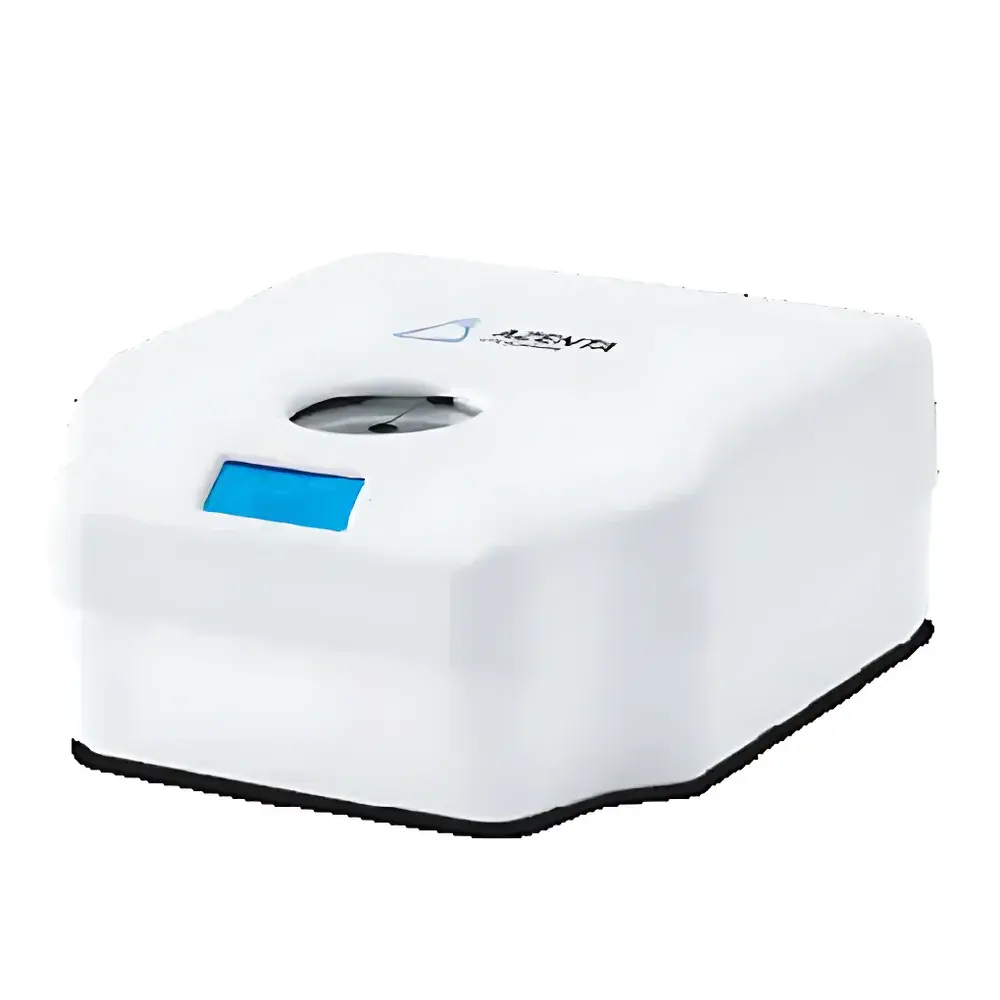
4titude® TubeMarker 2 Direct-Tube Thermal Pixel Labeling System
| Brand | 4titude |
|---|---|
| Origin | USA |
| Model | 4titude® TubeMarker 2 |
| Printing Technology | Thermal pixel printing |
| Tube Diameter Range | 6–30 mm |
| Tube Volume Compatibility | 0.2 mL to 50 mL |
| Operating Temperature Range | −196 °C to +100 °C |
| Chemical Resistance | Ethanol (70%), isopropanol (70%), methanol (>98.5%), DMSO, liquid nitrogen, water, mechanical abrasion |
| Print Media | Polypropylene (PP), polyethylene (PE), and other smooth-surface plastic tubes |
| Supported Codes | 1D linear barcodes (Code 128, Code 39), 2D DataMatrix, monochrome graphics (.bmp, .gif, .tiff) |
| Font Support | Full TrueType font library with adjustable size, bold/italic formatting |
| Print Orientation | Horizontal or vertical (barcodes vertical only) |
| Data Import | Microsoft Excel (.xls, .xlsx, .csv) |
| Automation | Auto-sensing tube detection with delayed print trigger |
| Ribbon Capacity | 300 m per roll (≥100,000 prints at 3 mm width) |
| Standard Adapters Included | 8.5 mm, 11.5 mm, 12.7 mm internal diameter |
| Compliance | Designed for GLP/GMP-aligned lab workflows |
Overview
The 4titude® TubeMarker 2 is a benchtop thermal pixel labeling system engineered for direct, permanent marking of plastic laboratory tubes without adhesive labels or manual writing. Unlike conventional inkjet or laser-based systems, it employs patented thermal pixel printing technology—applying heat-sensitive pigment directly onto the tube surface via precise micro-thermal elements. This non-contact, solvent-free process ensures high-fidelity, high-contrast marks on polypropylene (PP), polyethylene (PE), and other smooth-surface thermoplastic tubes ranging from 0.2 mL PCR strips to 50 mL conical centrifuge vessels. The system eliminates label delamination, smearing, and misalignment risks inherent in sticker-based identification—critical for cryogenic storage (−196 °C in liquid nitrogen), high-throughput screening, and regulated biobanking environments where unambiguous, machine-readable traceability is mandated by ISO 20387, CLIA, and CAP accreditation standards.
Key Features
- Direct thermal pixel printing on tube walls—no adhesives, no solvents, no label inventory management
- Support for multi-line alphanumeric text, 1D barcodes (Code 128, Code 39), 2D DataMatrix symbols, and monochrome logos (.bmp/.gif/.tiff)
- Full TrueType font support with scalable sizing, bold/italic options, and horizontal/vertical orientation (barcodes restricted to vertical alignment for optimal scanner compatibility)
- Auto-sensing tube detection with programmable delay print logic—ensures consistent mark placement and prevents double-printing or blank passes
- Modular adapter system with three standard diameters (8.5 mm, 11.5 mm, 12.7 mm) covering common 0.5 mL, 1.5/2.0 mL microcentrifuge tubes, and 2.0 mL cryovials; additional adapters available for vacuum blood collection tubes, 15 mL, and 50 mL Falcon®-format tubes
- Adjustable sled pivot and height-calibrated tube support platform—accommodates tubes with or without rimmed caps, including externally threaded cryovials
- Ribbon-based consumables: 300 m black, white, or metallic blue ribbons enabling >100,000 prints per roll (based on 3 mm average print width); tool-free ribbon replacement in <30 seconds
Sample Compatibility & Compliance
The TubeMarker 2 is validated for use on virgin and copolymer polypropylene tubes with uniform wall thickness and low surface energy—materials commonly employed in ISO-compliant biorepositories and clinical trial sample banks. Printed marks retain integrity under repeated freeze-thaw cycling, immersion in 70% ethanol or isopropanol (standard decontamination protocols), exposure to DMSO (common in cell culture workflows), and prolonged storage in liquid nitrogen vapor phase (−196 °C). Marks show no transfer upon manual handling or contact with gloves, racks, or automated liquid handlers—ensuring traceability continuity across LIMS-integrated workflows. While not an FDA-cleared device, its design supports 21 CFR Part 11–compliant data integrity when integrated with validated software platforms that enforce electronic signatures, audit trails, and change control for print job parameters.
Software & Data Management
The system operates via Windows-based TubeMarker Control Software (v4.x), supporting batch import of sample metadata from Microsoft Excel (.xls, .xlsx, .csv) files—including fields for sample ID, operator name, date/time stamp, location code, and custom descriptors. Users can save and recall optimized print templates—including font selection, line spacing, barcode symbology, and position offset—for repeat runs across tube formats. All print jobs are timestamped and logged locally; optional integration with enterprise LIMS enables real-time synchronization of printed identifiers with master sample registries. Software enforces user-level access controls and maintains a tamper-evident audit trail of print commands, parameter modifications, and ribbon usage—facilitating GLP/GMP documentation requirements.
Applications
- Cryopreservation of primary cells, PBMCs, and tissue samples in biobanks operating under ISO 20387:2018
- High-throughput genomics labs requiring stable, scannable identifiers on 0.2 mL PCR tubes subjected to thermal cycling
- Clinical diagnostics laboratories managing large-volume specimen workflows with strict chain-of-custody mandates
- Pharmaceutical QC/QA labs performing stability studies across temperature gradients (−80 °C to +40 °C)
- Academic core facilities seeking cost-effective, low-maintenance tube identification without label inventory overhead
FAQ
Does the TubeMarker 2 require special tube surface treatment before printing?
No—printing is optimized for untreated, clean polypropylene and polyethylene surfaces. Surface contamination (e.g., residual ethanol, fingerprints, or dust) must be removed prior to printing for optimal adhesion.
Can the system print on glass or metal tubes?
No—thermal pixel printing is validated exclusively for smooth-surface thermoplastics. Glass, aluminum, or silicone-coated tubes are incompatible due to insufficient thermal coupling and surface energy mismatch.
Is ribbon consumption tracked or reported by the software?
Yes—the control software estimates remaining ribbon length based on cumulative print area and displays real-time usage percentage, triggering alerts at 10% remaining.
What is the minimum recommended DataMatrix symbol size for reliable scanning after cryogenic storage?
A 6 mm × 6 mm DataMatrix symbol is validated for >99.8% scan success rate using standard industrial CCD scanners following 100+ cycles of liquid nitrogen immersion and ambient thawing.
Are firmware updates provided, and how are they deployed?
Firmware updates are distributed quarterly via secure download from the 4titude support portal and installed through the TubeMarker Control Software interface—with version rollback capability and integrity checksum verification.




