
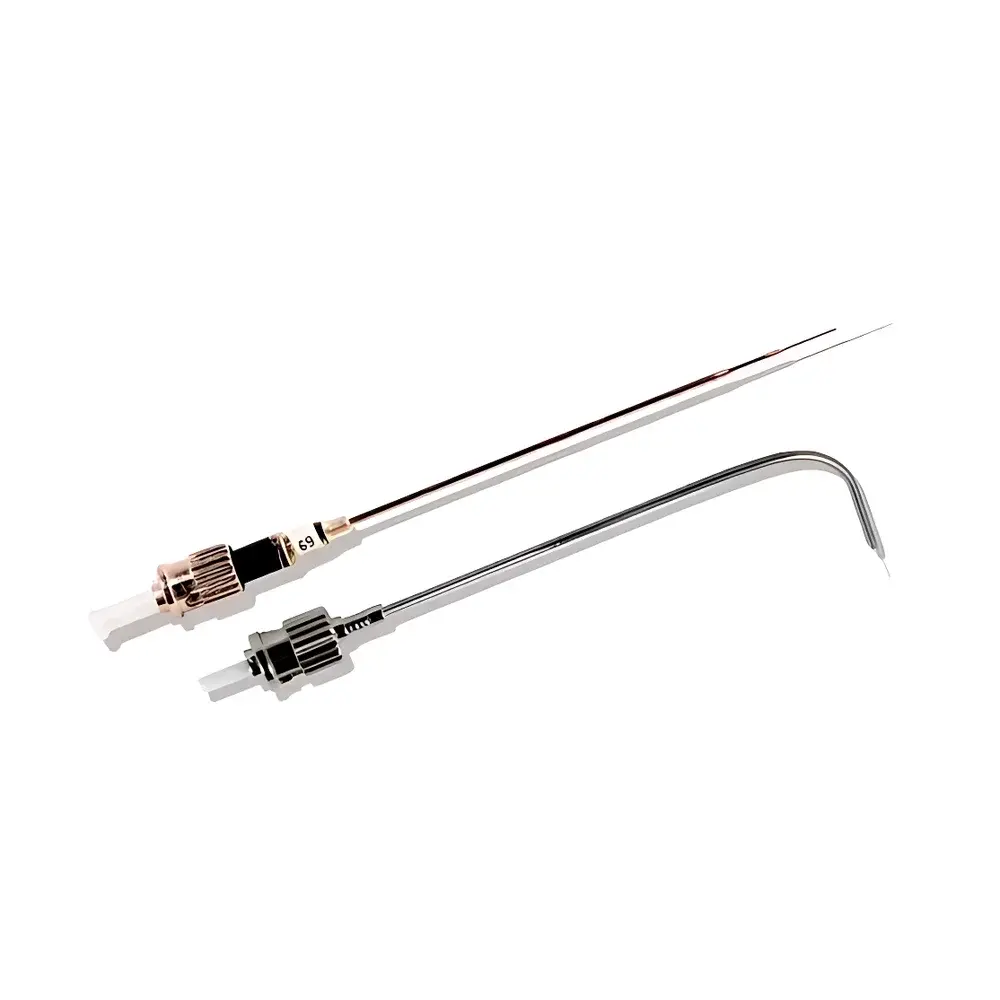
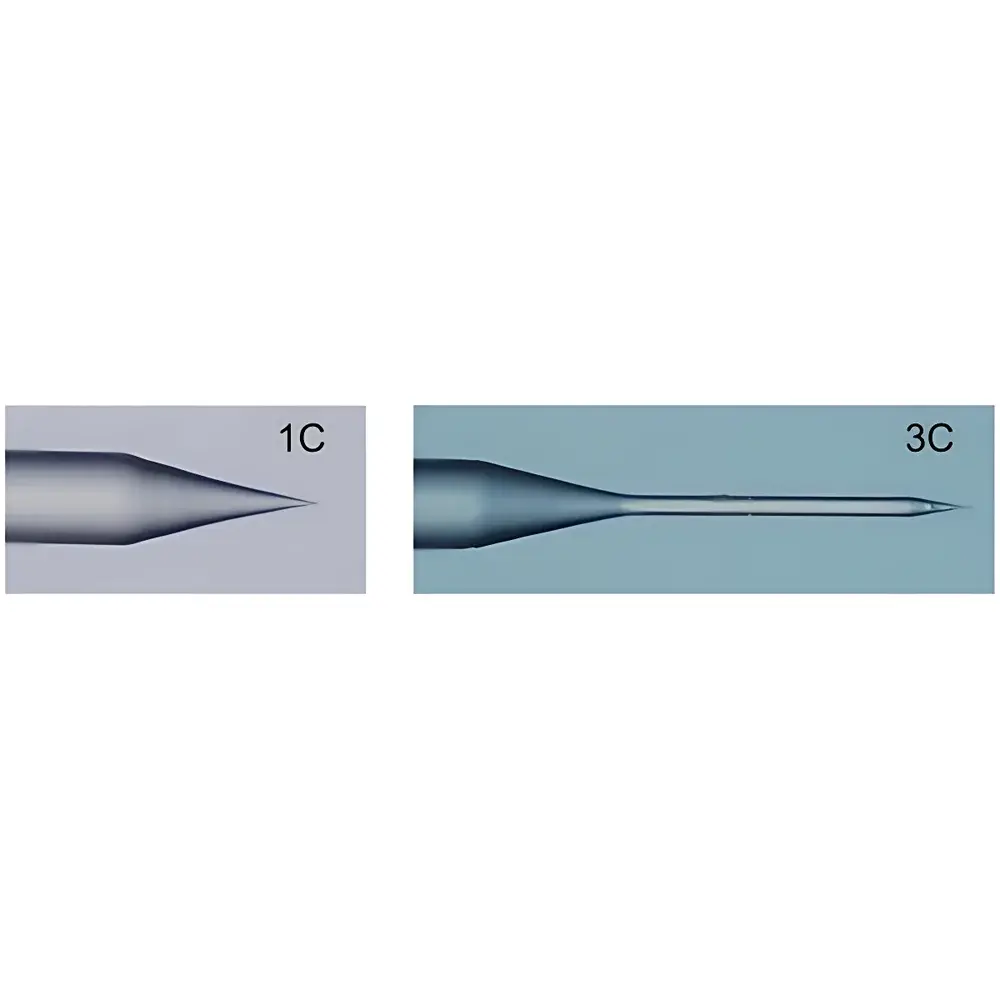
A2PS POP Series Bubble Detection Probe
| Brand | A2PS/A2 Photonic Sensors |
|---|---|
| Origin | France |
| Manufacturer Type | Authorized Distributor |
| Import Status | Imported |
| Model | POP |
| Pricing | Available Upon Request |
Overview
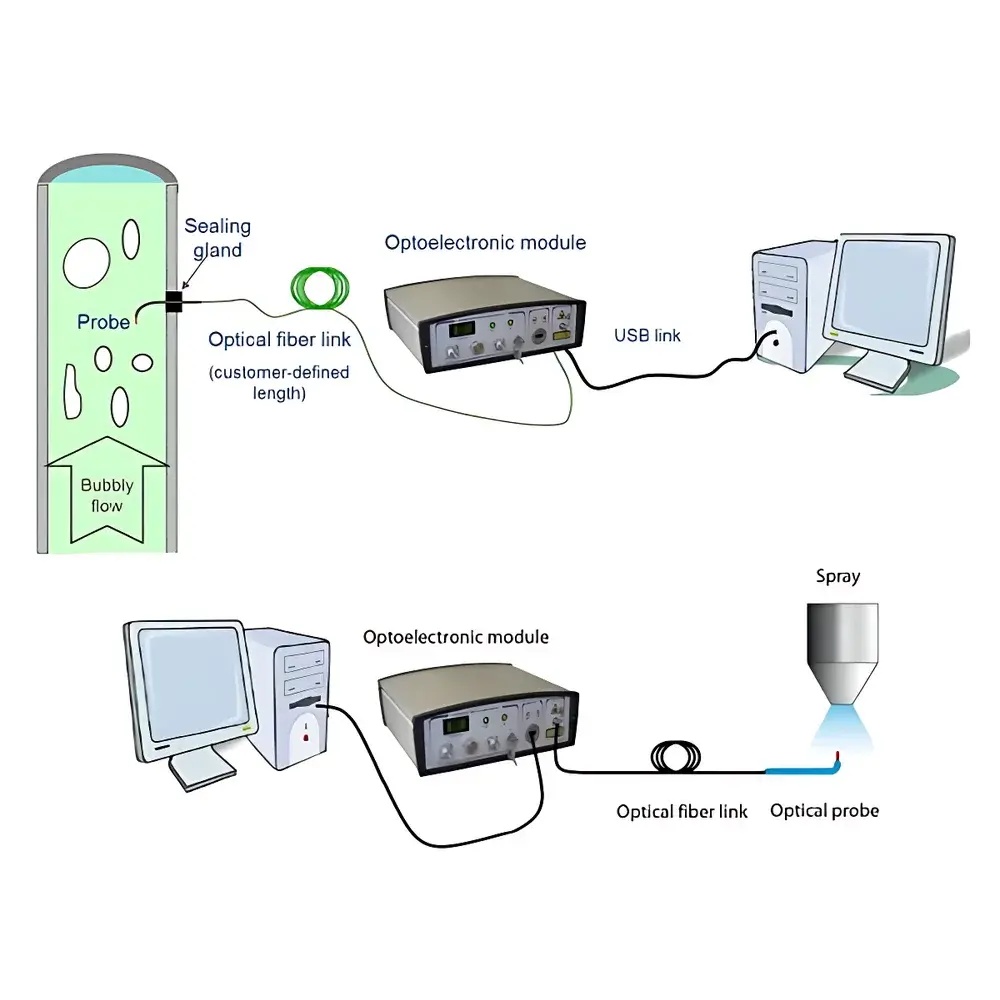
The A2PS POP Series Bubble Detection Probe is a high-precision, contact-based optical sensor engineered for quantitative characterization of gas–liquid two-phase flows—specifically bubbly and spray (droplet-laden) flows—in opaque, optically dense media. Unlike conventional imaging or transmission-based optical methods, the POP probe operates on the principle of localized laser reflection at the probe tip, detecting refractive index discontinuities at phase boundaries (gas–liquid or liquid–liquid interfaces). This enables direct, point-wise measurement of bubble/droplet passage without requiring external light paths, beam collimation, or transparent windows—making it uniquely suited for harsh, high-solidity, or pressurized industrial flow loops, chemical reactors, and nuclear thermal-hydraulic test rigs. The probe’s core transduction mechanism relies on time-resolved detection of reflected laser intensity modulations induced by moving interfaces; transit time between dual sensing zones (where applicable) yields local velocity, while signal duration and amplitude correlate with bubble/droplet size and phase fraction.
Key Features
- Contact-mode operation: No external optical access required—ideal for sealed vessels, opaque slurries, or high-pressure piping systems.
- Dual-parameter capability: Simultaneous acquisition of local void fraction (0–100%), bubble/droplet velocity (0.1–25 m/s, field-upgradable), and characteristic dimension (bubbles ≥ 500 µm; droplets ≥ 15 µm).
- High temporal resolution: Microsecond-level response enables capture of rapid interfacial dynamics in turbulent or transient flow regimes.
- Robust stainless-steel probe housing with sapphire optical window—rated for temperatures up to 150 °C and pressures up to 10 MPa (configuration-dependent).
- Multi-interface compatibility: Supports USB 2.0, PCIe, and ExpressCard host interfaces for real-time streaming or high-throughput buffered acquisition.
- Modular signal conditioning: Integrated analog front-end with adjustable gain, threshold, and filtering to optimize SNR across varying flow densities and conductivity backgrounds.
Sample Compatibility & Compliance
The POP probe is validated for use in conductive and non-conductive liquids (water, oils, glycols, molten salts, liquid metals) and is insensitive to ambient lighting, particulate loading (< 30 vol%), or moderate acoustic noise. It complies with IEC 61000-6-2 (EMC immunity) and IEC 61000-6-4 (EMC emission) standards. For regulated environments—including pharmaceutical process validation, nuclear safety testing, and energy R&D—the system supports audit-ready data logging with timestamped metadata, adhering to ALCOA+ principles. While not intrinsically certified for hazardous areas, explosion-proof housings and ATEX/IECEx-compatible variants are available upon request. The probe design aligns with ISO 13578 (acoustical characterization of multiphase flows) and ASTM D975 (fuel spray analysis) methodologies where applicable.
Software & Data Management
The A2PS POP Control Suite (v4.x) provides native support for Windows and Linux platforms. It delivers real-time visualization of raw photodiode signals, threshold-crossing events, and derived statistical outputs—including time-resolved void fraction, size distribution histograms (via pulse-height analysis), and velocity probability density functions. Batch post-processing modules enable ensemble averaging, turbulence intensity quantification, and cross-correlation with synchronized reference sensors (e.g., conductivity probes, PIV, or pressure transducers). All datasets are exported in HDF5 format with embedded calibration metadata, ensuring traceability per ISO/IEC 17025 requirements. Optional FDA 21 CFR Part 11-compliant configuration includes electronic signatures, role-based access control, and immutable audit trails for GMP/GLP workflows.
Applications
- Nuclear thermal-hydraulics: Void fraction mapping in boiling water reactor (BWR) fuel channel simulators.
- Chemical process intensification: In-situ monitoring of gas dispersion efficiency in stirred tank reactors and loop reactors.
- Energy systems: Characterization of steam–water stratified and annular flows in geothermal and fossil-fueled heat exchangers.
- Pharmaceutical spray drying: Quantifying droplet size and velocity distributions at nozzle exit under sterile conditions.
- Environmental engineering: Air entrainment studies in hydraulic structures (spillways, aerators) and wastewater aeration basins.
- Academic multiphase research: Validation benchmark for CFD–Eulerian–Eulerian and DNS simulations of interfacial dynamics.
FAQ
How does the POP probe achieve measurements without external optical access?
It uses an integrated laser diode and photodetector pair at the probe tip; interface detection occurs via internal reflection changes induced by local refractive index shifts—no transmitted beam or external optics are required.
Can the POP probe distinguish between bubbles and solid particles?
Yes—through differential signal morphology analysis: gas–liquid interfaces produce sharp, symmetric intensity transitions, whereas solid particles yield asymmetric or attenuated reflections due to bulk scattering and absorption.
Is calibration required before each experiment?
Factory calibration is traceable to NIST-standard refractive index references; field verification using known-diameter glass beads or calibrated capillary break-up tests is recommended for critical applications.
What is the minimum detectable bubble concentration?
The system reliably resolves void fractions as low as 0.5% in steady-state bubbly flows, provided bubble frequency exceeds 10 Hz and signal-to-noise ratio remains >15 dB.
Does the POP support synchronization with high-speed cameras or PIV systems?
Yes—TTL trigger input/output ports enable hardware-level synchronization with external imaging systems, enabling hybrid optical–point-sensor interrogation strategies.






