
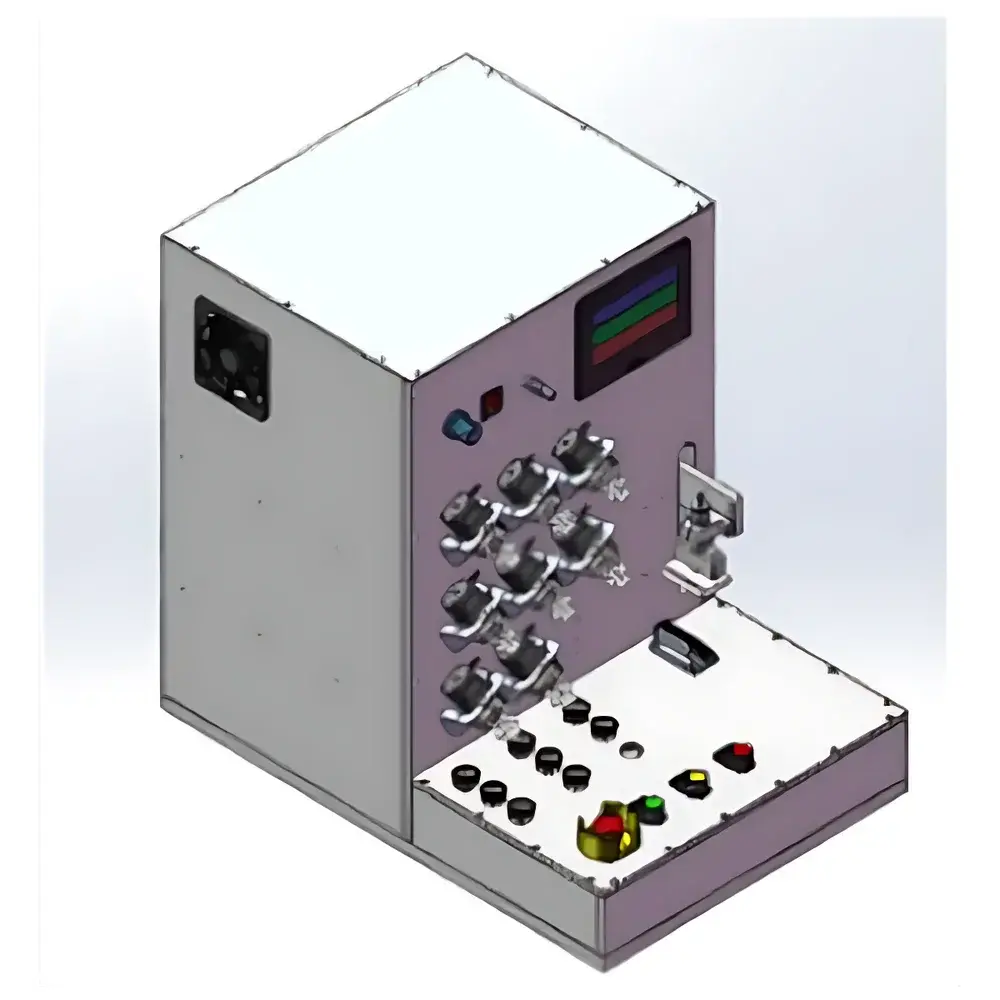
AA OPTO Electronic Cryo-Optimized Micro-Volume Precision Filling System
| Brand | AA OPTO Electronic |
|---|---|
| Origin | China |
| Manufacturer Type | Authorized Distributor |
| Model | Cryo-Optimized Micro-Volume Precision Filling System |
| Z-Axis Travel | 100 mm |
| Filling Accuracy | <2% RSD |
| Input Power | 220 V / 50 Hz |
| Operating Mode | Semi-Automatic Standalone Unit |
| Minimum Single-Head Fill Volume | >10 µL |
| Power Consumption | 1.3 kW |
| Channel Configurability | Modular (Scalable from 1 to 16 Channels) |
| Compliance | Designed for ISO 5 Cleanroom-Compatible Environments |
| Control Architecture | Independent Per-Channel PID-Regulated Dispensing Logic |
Overview
The AA OPTO Electronic Cryo-Optimized Micro-Volume Precision Filling System is an engineered solution for controlled, repeatable dispensing of micro- to trace-volume liquid formulations into primary containers—specifically designed to meet the stringent requirements of lyophilization (freeze-drying) process development and small-batch GMP manufacturing. Unlike general-purpose liquid handlers, this system integrates mechanical, thermal, and fluidic design elements calibrated for cryogenic compatibility: low-volatility solvent handling, minimized thermal drift during extended operation, and reduced droplet formation under low-humidity freeze-dry prep conditions. Its core architecture employs positive-displacement peristaltic or syringe-based pumping (configurable per application), synchronized with high-resolution Z-axis vertical positioning (100 mm travel, ±1 µm repeatability) to ensure consistent meniscus contact and fill depth across vial arrays. The system operates as a standalone semi-automatic unit, requiring operator initiation per cycle but executing fully deterministic dispensing sequences without manual intervention post-start.
Key Features
- Modular multi-channel architecture supporting 1–16 independently addressable dispensing channels—each with dedicated flow calibration, real-time pressure monitoring, and programmable fill volume (10 µL–2 mL range, configurable)
- Z-axis motion control optimized for vial height variance compensation; integrated proximity sensing ensures tip-to-meniscus distance consistency across heterogeneous container batches
- Filling accuracy maintained at <2% relative standard deviation (RSD) under ISO 8573-1 Class 4 compressed air supply or inert gas purging (N₂/Ar-compatible manifold option available)
- Electromechanical design compliant with IEC 61000-6-2 (immunity) and IEC 61000-6-4 (emission) standards; CE-marked for laboratory equipment use
- Tool-less channel expansion interface enabling field-upgradable configurations without recalibration downtime
- Thermally stabilized fluid path housing minimizes viscosity-induced variability across temperature gradients typical in pre-lyo cold rooms (4–10 °C ambient)
Sample Compatibility & Compliance
The system accommodates aqueous buffers, protein solutions, mRNA-LNP suspensions, and viscous stabilizer blends (up to 40 cP at 20 °C) via chemically resistant PTFE/sapphire fluidic pathways. It supports standard ISO-standardized vial formats (2R–20R), nested tray carriers, and custom fixtures for stoppered or open-container loading. All wetted materials comply with USP Class VI biocompatibility testing. The platform is validated for use within GLP and early-phase GMP environments: audit trails record operator ID, timestamp, channel-specific fill parameters, and system error logs in accordance with ALCOA+ principles. Optional 21 CFR Part 11-compliant software package provides electronic signatures, role-based access control, and immutable data archiving.
Software & Data Management
Control firmware runs on a deterministic real-time OS with dual-mode operation: intuitive touchscreen HMI for rapid method setup (e.g., “Vial Array Fill”, “Gradient Dilution”, “Multi-Solution Sequential”) and Ethernet-enabled remote command via ASCII protocol (SCPI-like syntax) for integration into broader MES or LIMS workflows. All dispensing events—including actual delivered volume (derived from motor step count + calibrated pump displacement), ambient temperature/humidity (via optional sensor module), and Z-axis positional feedback—are logged in CSV/SQLite format with nanosecond-precision timestamps. Data export supports automated SFTP push to secure network storage; no cloud dependency or vendor-hosted infrastructure is required.
Applications
- Pre-formulation studies requiring precise volumetric delivery of candidate APIs into cryovials prior to lyophilization cycle mapping
- Manufacturing of clinical trial materials where batch sizes range from 50–5,000 units and fill weight uniformity must satisfy ICH Q5C acceptance criteria
- QC release testing of lyo cakes via reconstitution volume verification using gravimetric fill validation protocols
- Development of combination products (e.g., drug-device prefilled syringes with lyo-stabilized payloads)
- Academic research labs conducting structure-function correlation studies requiring sub-50 µL dosing reproducibility across biological replicates
FAQ
Is the system compatible with sterile processing environments?
Yes—optional ISO 5 cleanroom-rated enclosure kits (stainless steel 316L frame, polycarbonate shielding, HEPA-filtered internal airflow) are available for Grade A/B environments.
Can fill volume be adjusted dynamically during a run?
No—volumes are pre-programmed per channel per cycle to ensure metrological integrity; however, method switching between runs takes <15 seconds via HMI.
What maintenance intervals are recommended?
Peristaltic tubing replacement every 1,000 cycles; syringe piston seals inspected quarterly; annual full-system calibration traceable to NIST-certified mass standards.
Does the system support regulatory submission documentation?
Yes—Factory Acceptance Test (FAT) and Installation Qualification (IQ) protocols are provided; Operational Qualification (OQ) templates align with ASTM E2500 and EU Annex 15 guidelines.



