
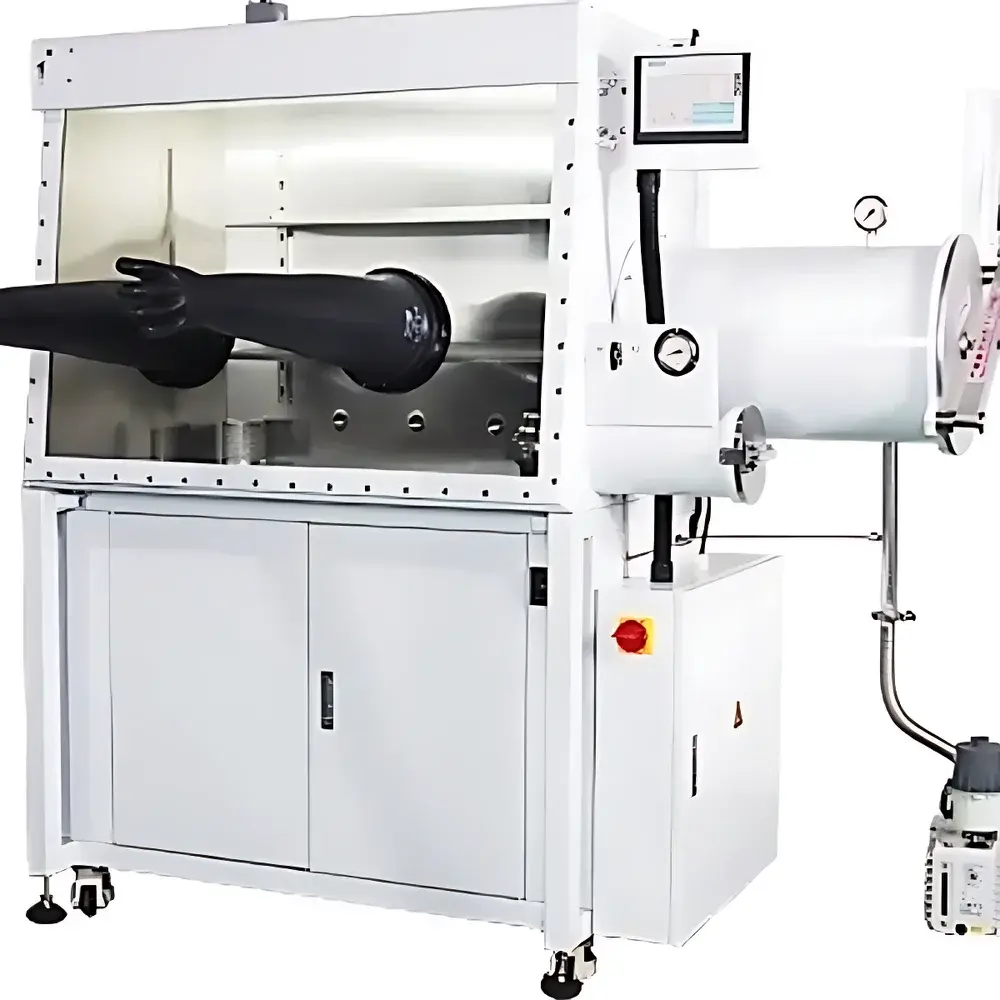
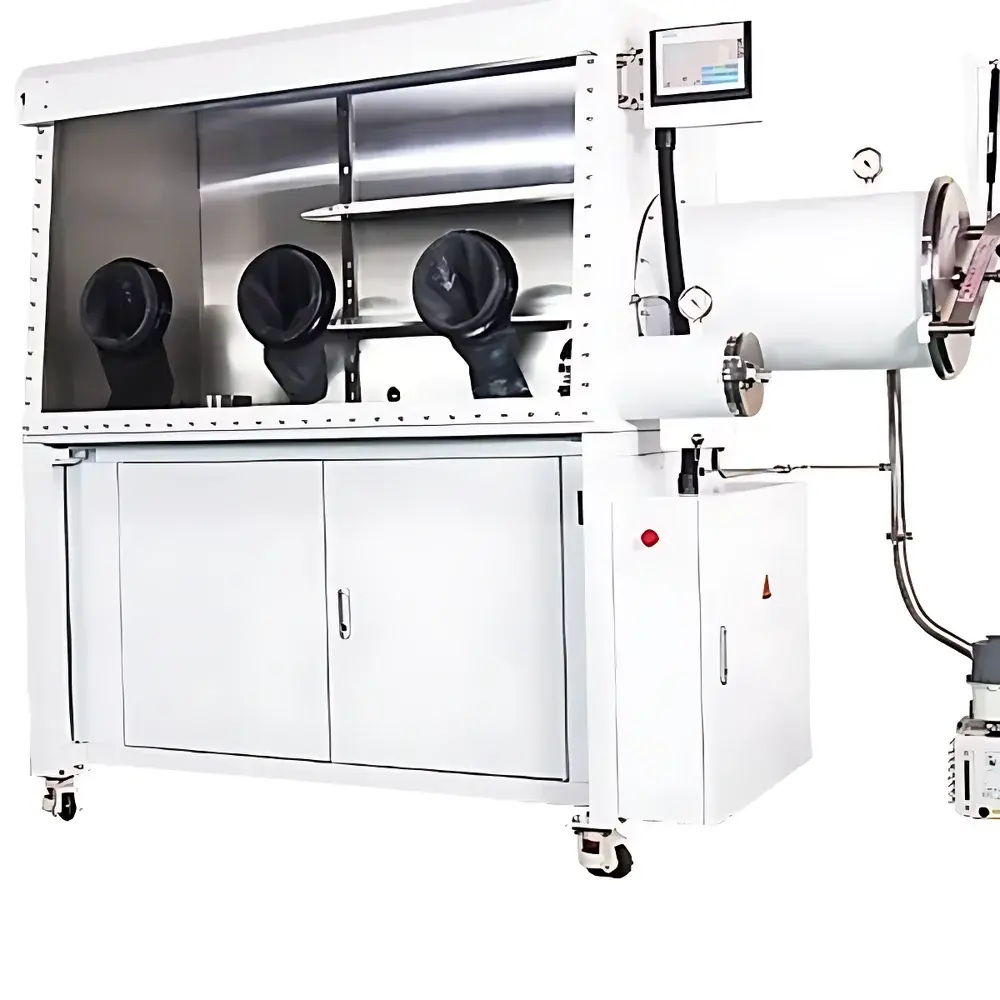
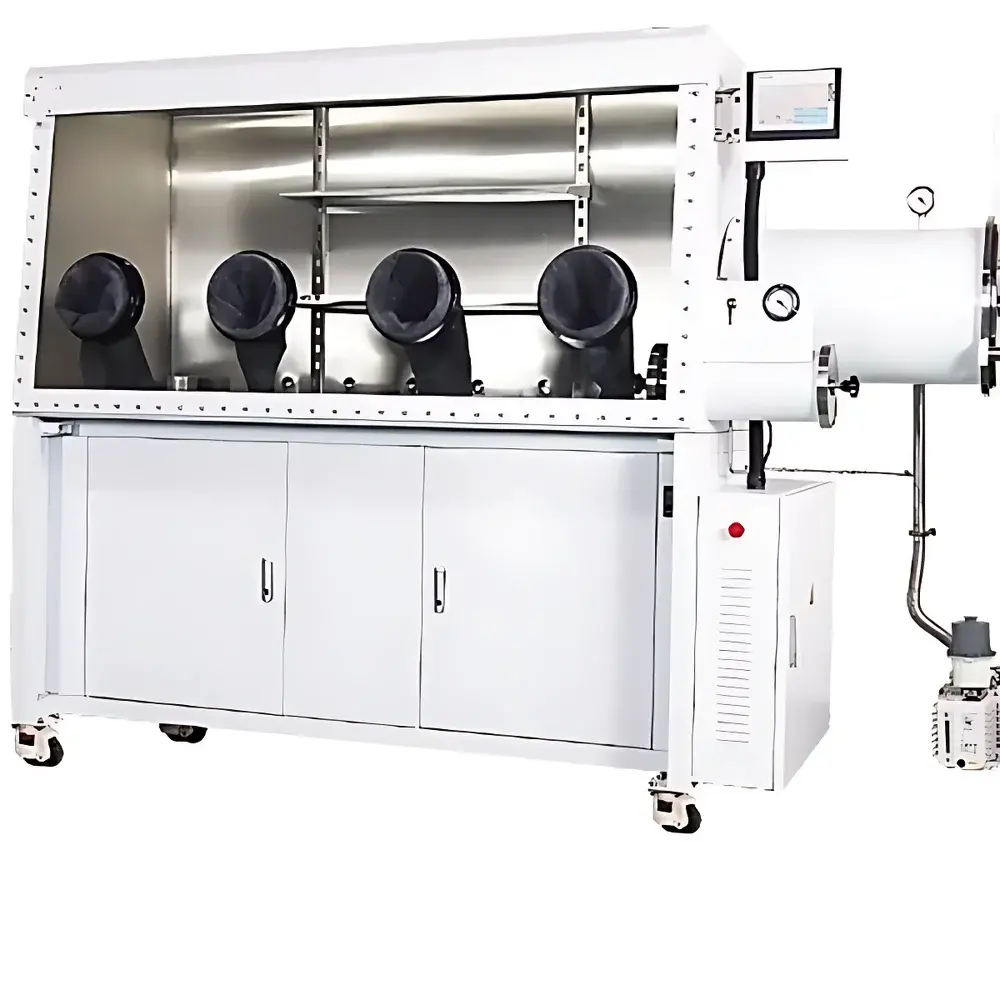
AA OPTO Electronic Freeze-Dried Microsphere-Specific Isolator
| Brand | AA OPTO Electronic |
|---|---|
| Origin | China |
| Manufacturer Type | Authorized Distributor |
| Model | Freeze-Dried Microsphere-Specific Isolator |
| Leak Rate | <0.001 vol% / h |
| H₂O Content | <1 ppm (v/v) |
| O₂ Content | <1 ppm (v/v) |
| Oxygen Scavenger Capacity | 8 kg (effective O₂ removal: 120 L) |
| Desiccant Capacity | 16 kg (effective H₂O removal: 5 kg) |
| Regeneration Efficiency (per cycle) | >80% |
| Chamber Material | 316L Stainless Steel |
| Large Transfer Lock | Ø360 mm × 600 mm (left/right configurable) |
| Small Transfer Lock | Ø150 mm × 300 mm |
| Glove Ports | Dual, ISO-KF40 flanged, with integrated dry-box gloves |
| Internal Lighting | LED, explosion-proof rated |
| Power Outlets | Multifunctional, intrinsically safe, 24 V DC / 230 V AC isolated |
| Shelving | Adjustable, 900 mm × 200 mm stainless steel |
| Circulation System | High-efficiency centrifugal blower, dual-bed purification (O₂/H₂O/organics), HEPA-filtered recirculation |
| Regeneration System | Automated thermal/chemical reactivation module |
| Pressure Control | PID-controlled differential pressure regulation (±0.5 Pa resolution) |
| Control System | Industrial PLC with 10.1" HMI touchscreen, audit-trail enabled |
| Analytical Sensors | Integrated tunable diode laser (TDLAS)-based O₂ analyzer, chilled-mirror dew point sensor (–90 °C DP accuracy ±0.2 °C) |
| Vacuum System | Oil-free scroll pump, programmable auto-start/stop |
| Safety | Footswitch for manual pressure override, redundant leak detection protocol |
| Compliance | Designed per ISO 14644-1 Class 5 (at operation), compatible with GMP Annex 1 (2022) isolator qualification requirements |
Overview
The AA OPTO Electronic Freeze-Dried Microsphere-Specific Isolator is an engineered containment solution designed exclusively for the aseptic handling, lyophilization support, and post-drying stabilization of sensitive microsphere formulations—including peptide-loaded PLGA particles, vaccine adjuvant carriers, and mRNA encapsulation platforms. It operates on the principle of dynamic inert gas purging combined with closed-loop catalytic and adsorptive purification, maintaining ultra-low residual oxygen (<1 ppm) and moisture (<1 ppm) environments essential for preserving oxidation-labile active pharmaceutical ingredients (APIs) and preventing hydrolytic degradation during extended storage or process hold steps. Unlike general-purpose gloveboxes, this isolator integrates purpose-built hardware and control logic optimized for freeze-drying workflow integration—supporting seamless transfer of vials, trays, or microsphere dispensers between lyophilizers and secondary packaging lines while sustaining ISO Class 5 particulate cleanliness under positive or negative pressure regimes.
Key Features
- Hermetic stainless steel chamber (316L) with validated leak rate ≤0.001 vol%/h—verified per ASTM E493 helium mass spectrometry protocol
- Dual-stage purification architecture: primary catalytic oxygen scavenging (Cu-based) + secondary molecular sieve desiccation (LiCl/zeolite hybrid), both regenerable in situ
- Automated regeneration sequence with real-time temperature profiling and endpoint confirmation via O₂/H₂O rebound monitoring
- Intelligent gas management: adaptive purge scheduling based on sensor drift compensation and load-dependent consumption modeling
- Redundant differential pressure control using dual piezoresistive transducers and fail-safe venting valves compliant with IEC 61508 SIL2
- Integrated TDLAS oxygen analyzer (0–100 ppm range, ±0.05 ppm repeatability) and chilled-mirror dew point sensor (–90 to –20 °C DP, NIST-traceable calibration)
- PLC-based control system with 21 CFR Part 11–compliant electronic signatures, audit trail logging (≥18 months), and password-protected user roles (Operator, Technician, QA)
Sample Compatibility & Compliance
The isolator accommodates standard lyophilization accessories—including 2R–20R vials, aluminum crimp-sealed trays, and silicone-coated elastomeric stoppers—without compromising seal integrity or internal laminar flow. All internal surfaces are electropolished to Ra ≤0.4 µm and passivated per ASTM A967. The system meets design and operational criteria outlined in EU GMP Annex 1 (2022) for isolator qualification, including smoke visualization testing (ISO 14644-3), particle challenge studies (PMS-2000), and media fill simulation validation support. Optional IQ/OQ documentation packages are available, aligned with PIC/S TR 13 and WHO Technical Report Series No. 986 Annex 6.
Software & Data Management
The embedded HMI runs firmware v4.2+ with embedded SQLite database supporting structured data export (CSV/Excel) and OPC UA server interface for MES/SCADA integration. All critical parameters—including pressure differentials, O₂/H₂O trends, regeneration cycle logs, and alarm history—are time-stamped with UTC synchronization and encrypted at rest. Electronic records comply with ALCOA+ principles (Attributable, Legible, Contemporaneous, Original, Accurate, Complete, Consistent, Enduring, Available) and support retrospective review for FDA or EMA inspection readiness.
Applications
- Aseptic loading of lyophilized microspheres into barrier packaging (e.g., Alu-Alu blisters, glass vials with bromobutyl stoppers)
- Stability study sample retrieval under inert atmosphere to prevent oxidative artifact formation
- Excipient compatibility screening in low-humidity, low-oxygen conditions
- Post-lyophilization weighing, visual inspection, and aggregation assessment using integrated stereomicroscopy ports
- Process development for spray-freeze-drying or supercritical fluid drying where ambient exposure must be eliminated pre-analysis
FAQ
What validation documentation is supplied with the isolator?
Factory acceptance test (FAT) reports, material certificates (EN 10204 3.1), and sensor calibration certificates (NIST-traceable) are included. Site qualification support (SAT/IQ/OQ) is available as a commissioned service.
Can the system interface with existing facility SCADA networks?
Yes—via OPC UA (PubSub over UDP) or Modbus TCP; configuration files and mapping templates are provided upon order.
Is the regeneration cycle fully automated and validated?
Yes—each regeneration follows a fixed thermal ramp profile with real-time O₂/H₂O feedback control; cycle completion is confirmed by dual-sensor convergence within predefined thresholds.
What maintenance intervals are recommended for purification media?
Oxygen scavenger bed life is rated for ≥120 L O₂ removal per 8 kg charge; desiccant replacement is triggered automatically when dew point rise exceeds 2 °C over baseline—typically every 6–12 months depending on usage frequency and ambient humidity.
Does the isolator meet USP <1207> requirements for package integrity testing?
While not a test instrument itself, its ultra-low leak rate and stable internal environment enable reliable execution of dye ingress, microbial challenge, and helium leak testing protocols per USP <1207> when used as a controlled test chamber.



