
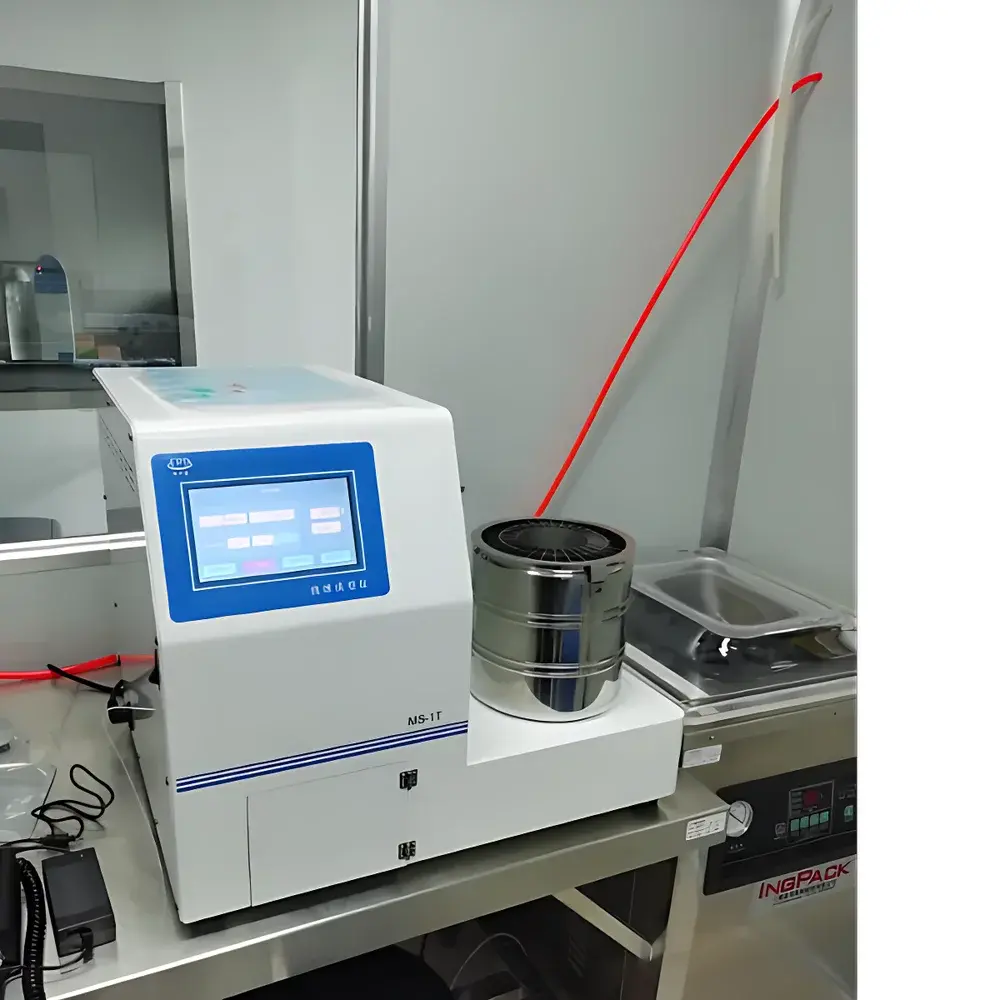
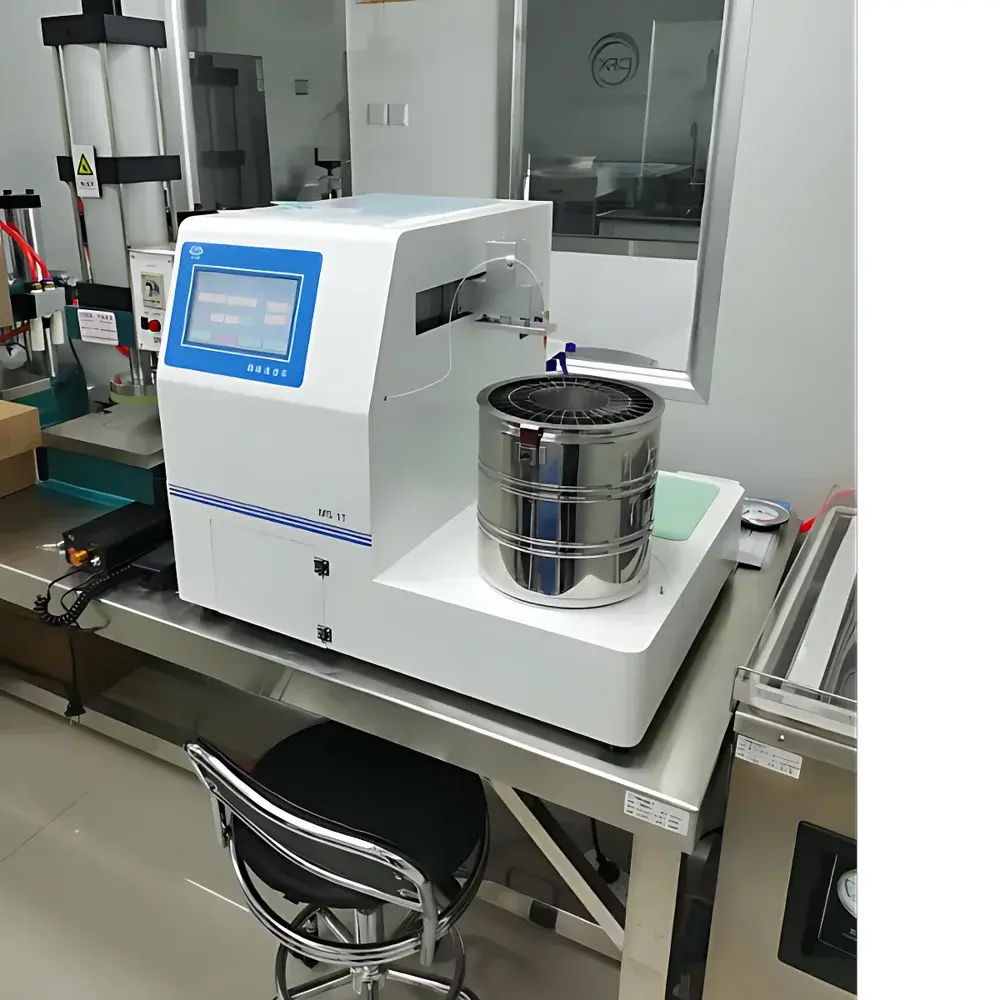
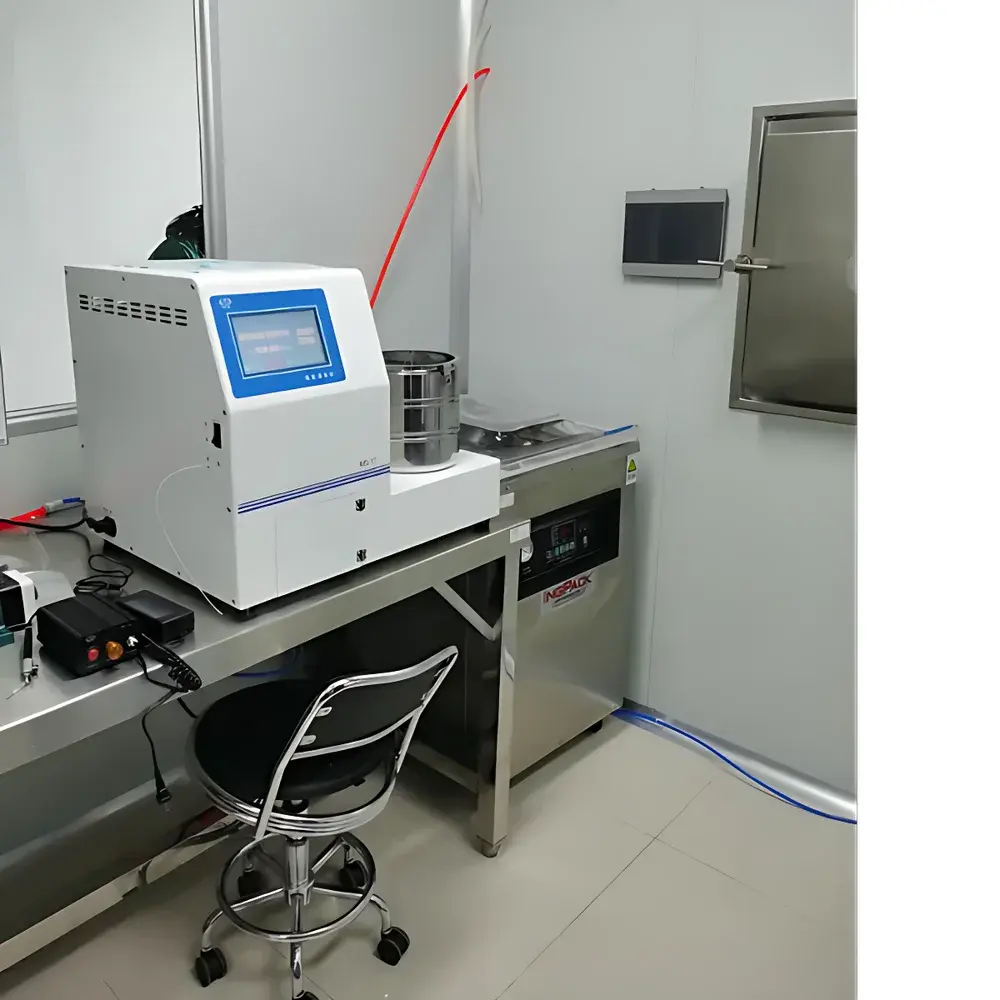
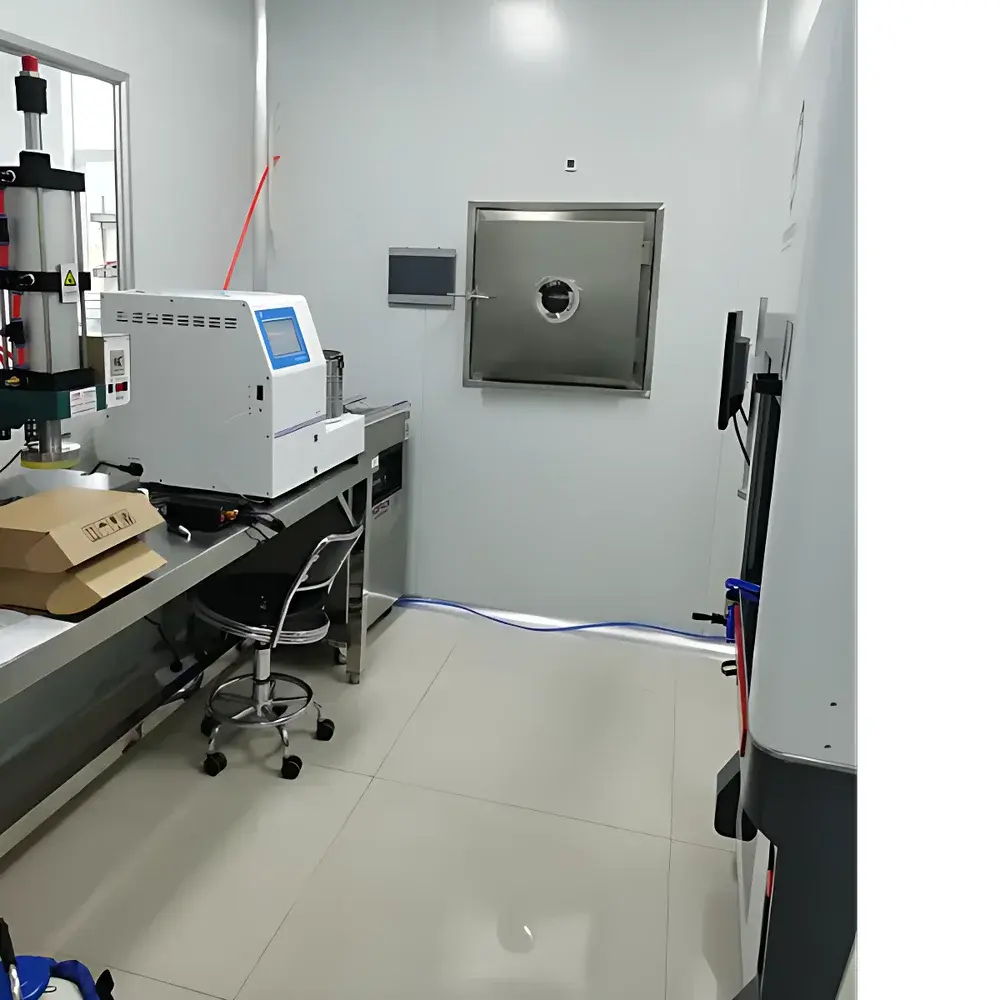
AA OPTO Electronic MS-11T Microsphere Forming Instrument
| Brand | AA OPTO Electronic |
|---|---|
| Origin | Beijing, China |
| Manufacturer Type | Authorized Distributor |
| Country of Origin | China |
| Model | MS-11T |
| Pricing | Available Upon Request |
Overview
The AA OPTO Electronic MS-11T Microsphere Forming Instrument is a precision-engineered benchtop platform designed for the controlled, reproducible fabrication of monodisperse microspheres via vibrational droplet generation and in-flight solvent evaporation or cryogenic solidification. Operating on the principle of piezoelectrically or electromechanically modulated liquid jet breakup—followed by controlled droplet flight trajectory and phase transition—the MS-11T enables scalable production of spherical particles ranging from 10 µm to 500 µm in diameter. It serves as a critical enabling tool in pharmaceutical process development, diagnostic reagent manufacturing, and advanced biomaterial formulation—where particle uniformity, surface integrity, residual solvent control, and batch-to-batch consistency are governed by regulatory expectations under ICH Q5C, USP , and ISO 13320-compliant particulate characterization frameworks.
Key Features
- Integrated monolithic chassis with compact footprint (W × D × H: 420 × 360 × 480 mm), optimized for Class A/B cleanroom integration and lab-scale GMP-aligned workflows.
- Ceramic-core peristaltic pump assembly delivering stable, pulse-free flow across 0.1–5 mL/min range; chemically inert to organic solvents, aqueous buffers, and acidic/basic formulations.
- Modular sample cup configuration supporting 2-, 4-, or 8-position interchangeable trays—enabling parallel processing or sequential formulation screening without hardware modification.
- Adjustable vibration amplitude (0–100% linear scale) and frequency (10–200 Hz) to precisely tune Rayleigh–Plateau instability onset, thereby controlling droplet size, sphericity, and interfacial relaxation kinetics for viscous (up to 500 mPa·s) and low-surface-tension systems.
- Direct-drive (DD) torque motor with high-resolution optical rotary encoder (≤0.001° resolution) and automatic homing routine—eliminating gear backlash, minimizing mechanical resonance, and ensuring positional repeatability < ±0.02° over 10,000 cycles.
- GLP-compliant wetted path constructed entirely from USP Class VI-certified PEEK, PTFE, and 316L stainless steel; all fluid-contact surfaces exhibit < 0.5 ng/cm² protein adsorption (BSA assay, ASTM F2459-22).
- Embedded PLC-based control architecture (IEC 61131-3 compliant) with deterministic real-time scheduling, dual-channel watchdog timers, and hardware-enforced interlock logic for safe mode transitions.
- 7-inch capacitive touchscreen HMI running proprietary V1.0 firmware: displays live status metrics (elapsed time, drop count, temperature, pressure), supports recipe-based parameter recall, and logs timestamped operational events with SHA-256 integrity hashing.
Sample Compatibility & Compliance
The MS-11T accommodates aqueous polymer solutions (e.g., PLGA, chitosan, alginate), lipid dispersions, protein-loaded hydrogels, and small-molecule suspensions—provided viscosity remains within operational envelope and particulate loading does not exceed 15 wt%. It supports lyophilization-compatible matrix formulations intended for subsequent freeze-drying (per ISO 22309:2021), as well as cryo-formulation protocols using liquid nitrogen or chilled ethanol baths. The system meets electromagnetic compatibility requirements per EN 61326-1:2013 and safety standards per EN 61010-1:2010. All firmware and data handling routines are architected to support 21 CFR Part 11-compliant audit trails when deployed with validated networked storage and user access controls.
Software & Data Management
Firmware V1.0 provides local data persistence (≥10,000 event records), CSV export of run logs (including timestamps, setpoints, and sensor readings), and password-protected user roles (Operator, Technician, Administrator). While no cloud connectivity is embedded, the instrument features RS-485 Modbus RTU and USB-C host interfaces for integration into LIMS or MES environments. Audit trail entries include operator ID, parameter changes, emergency stops, and calibration verification timestamps—fully traceable for GLP/GMP inspections. Data encryption at rest follows AES-128 standards per NIST SP 800-111.
Applications
- Diagnostic reagent development: Fabrication of freeze-dried microspheres for point-of-care immunoassays (CLIA, ELISA, lateral flow), preserving antibody conformation and enzymatic activity during long-term storage.
- Controlled-release therapeutics: Production of biodegradable microspheres for sustained delivery of peptides, mRNA, or small molecules—supporting pharmacokinetic profiling and IVIVC modeling.
- Cell encapsulation research: Generation of alginate or gelatin-based microcapsules for islet cell transplantation, stem cell delivery, and 3D bioprinting bioink precursor synthesis.
- Viral vector stabilization: Encapsulation of AAV or lentiviral particles in trehalose-based matrices to enhance thermal stability and transduction efficiency post-lyophilization.
- Reference material generation: Certified particle standards for flow cytometry calibration, light scattering validation, and microscopy sizing benchmarks.
FAQ
What materials are compatible with the MS-11T’s fluid path?
All wetted components comply with USP Class VI and FDA 21 CFR 177.2440; validated for contact with water, PBS, DMSO, ethanol, acetone, dichloromethane, and common PLGA/PEG solvents.
Can the MS-11T be integrated into automated fill-finish lines?
Yes—via Modbus RTU or discrete I/O signals; full electrical interface documentation and PLC communication protocol specifications are provided upon system qualification.
Is IQ/OQ documentation available?
Comprehensive Installation Qualification (IQ) and Operational Qualification (OQ) templates—including test protocols, acceptance criteria, and blank execution records—are supplied with each unit and aligned with Annex 15 and ASTM E2500-13 guidelines.
What maintenance intervals are recommended?
Ceramic pump core inspection every 6 months or 2,000 operating hours; optical encoder calibration annually; full wetted-path cleaning after each formulation change using IPA/water rinse followed by nitrogen purge.
Does the system support PAT (Process Analytical Technology) integration?
While the MS-11T does not include built-in spectroscopic or imaging sensors, its analog/digital I/O ports and Modbus registers are configured to accept external probe inputs (e.g., NIR, Raman, or laser diffraction) for real-time droplet size feedback control loops.



