
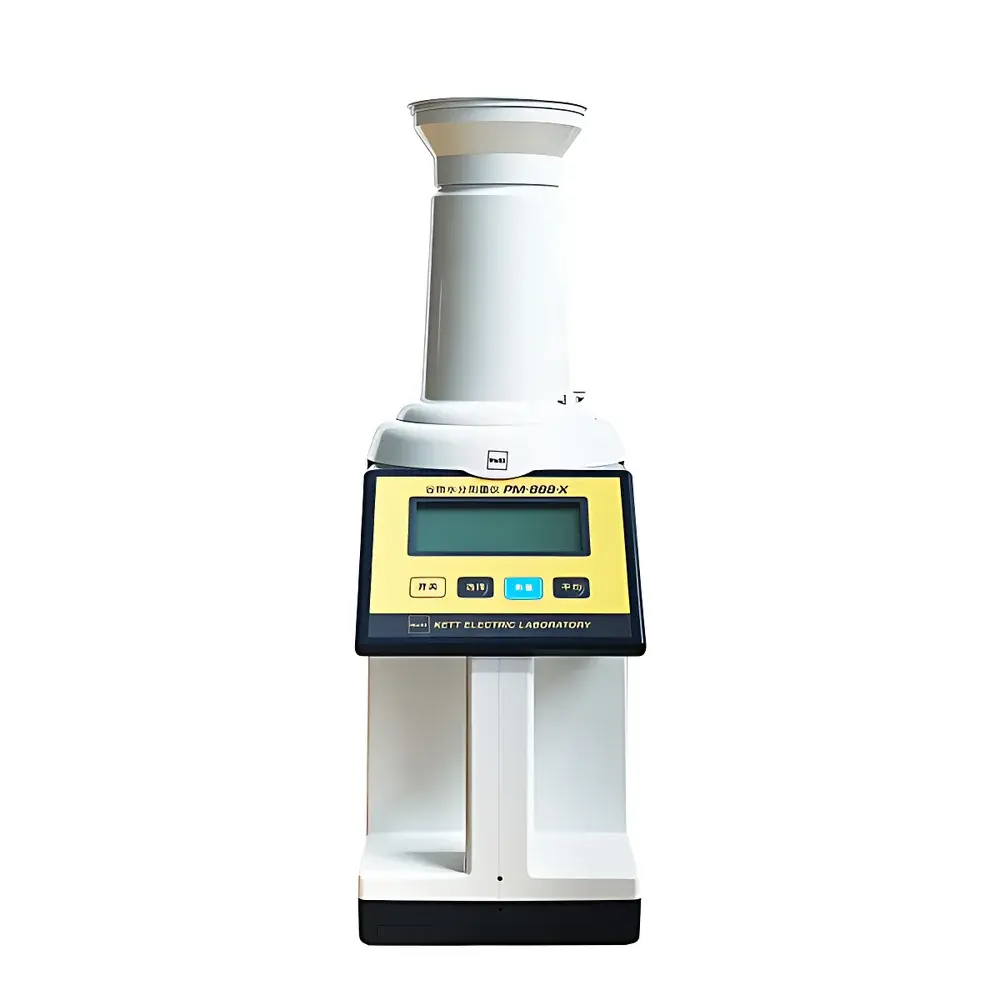

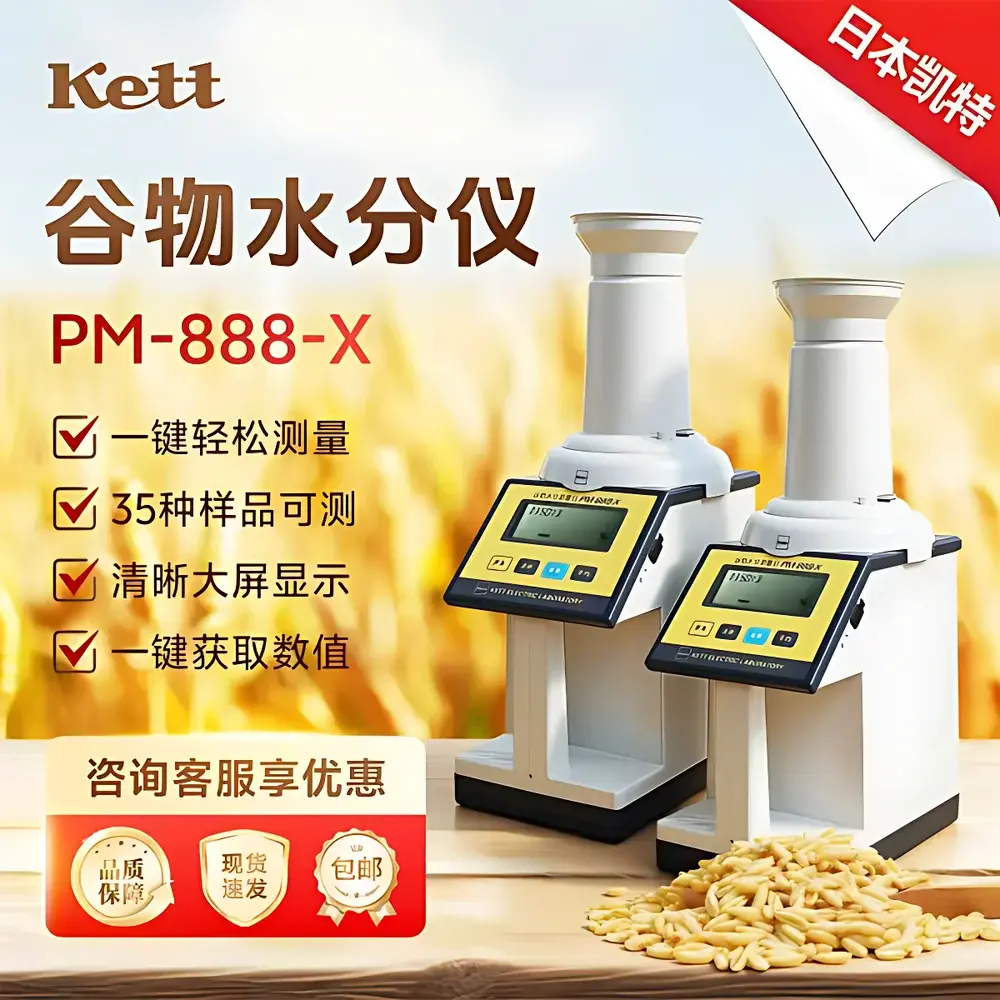
AA OPTO Electronic PM-888-X Capacitance-Based Grain Moisture Analyzer
| Brand | AA OPTO Electronic |
|---|---|
| Origin | Japan |
| Model | PM-888-X (Upgraded successor to PM-8188-A) |
| Measurement Principle | Radio-frequency capacitance |
| Accuracy | ±0.5% w/w (within specified moisture ranges) |
| Sample Handling | Auto-feed hopper (for grains) or cup loading (for seeds, beans, tea, spices) |
| Moisture Range Coverage | 0–45% w/w, segmented by pre-programmed material-specific calibration curves |
Overview
The AA OPTO Electronic PM-888-X is a dedicated radio-frequency (RF) capacitance-based moisture analyzer engineered for rapid, non-destructive, and operator-independent quantification of moisture content in bulk agricultural commodities. Unlike thermogravimetric (loss-on-drying) or near-infrared (NIR) methods, the PM-888-X employs high-frequency dielectric measurement—typically in the 1–10 MHz range—to detect changes in the relative permittivity of granular samples, which correlates linearly with water content under controlled density and temperature conditions. This principle enables real-time analysis without sample grinding, drying, or chemical reagents, making it ideal for high-throughput quality control in grain elevators, feed mills, seed processing facilities, and commodity trading laboratories. As the direct upgrade to the widely deployed PM-8188-A, the PM-888-X introduces enhanced signal stability, expanded material library support, improved temperature compensation algorithms, and refined auto-calibration routines—ensuring consistent repeatability across seasonal humidity fluctuations and operator shifts.
Key Features
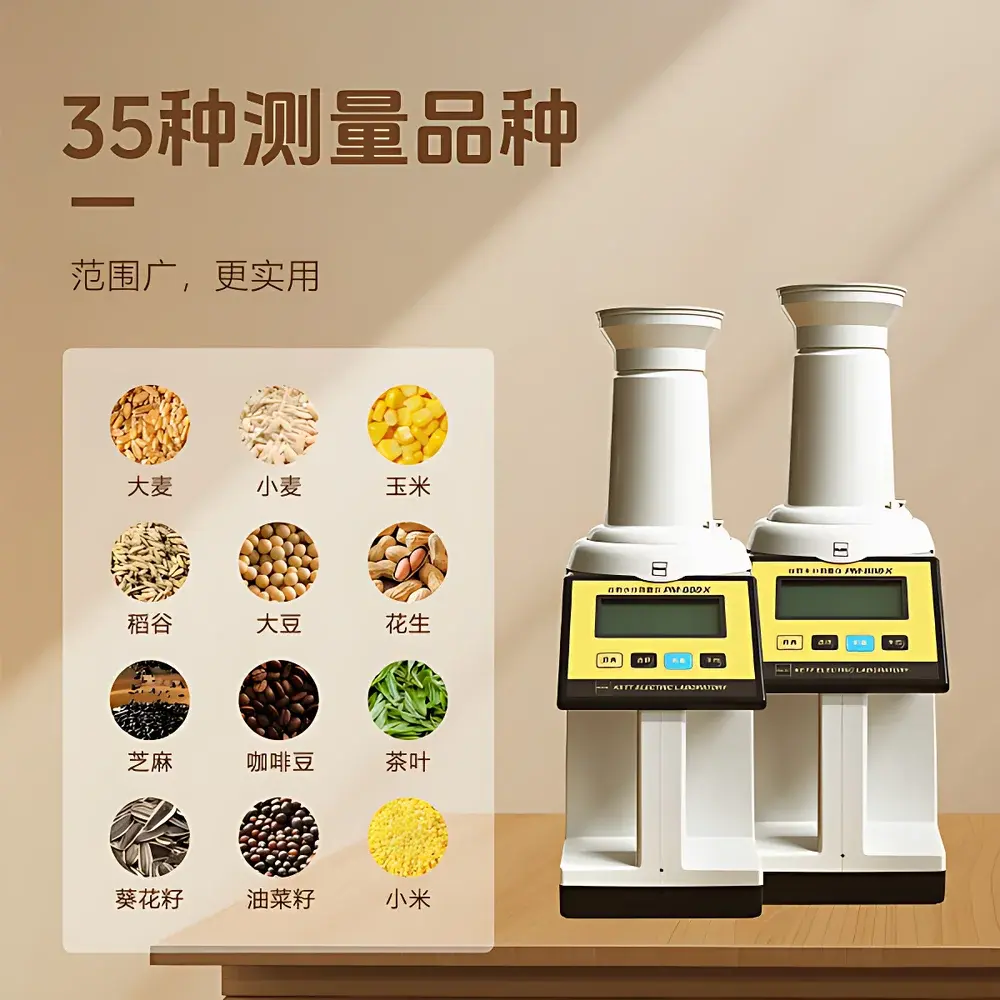
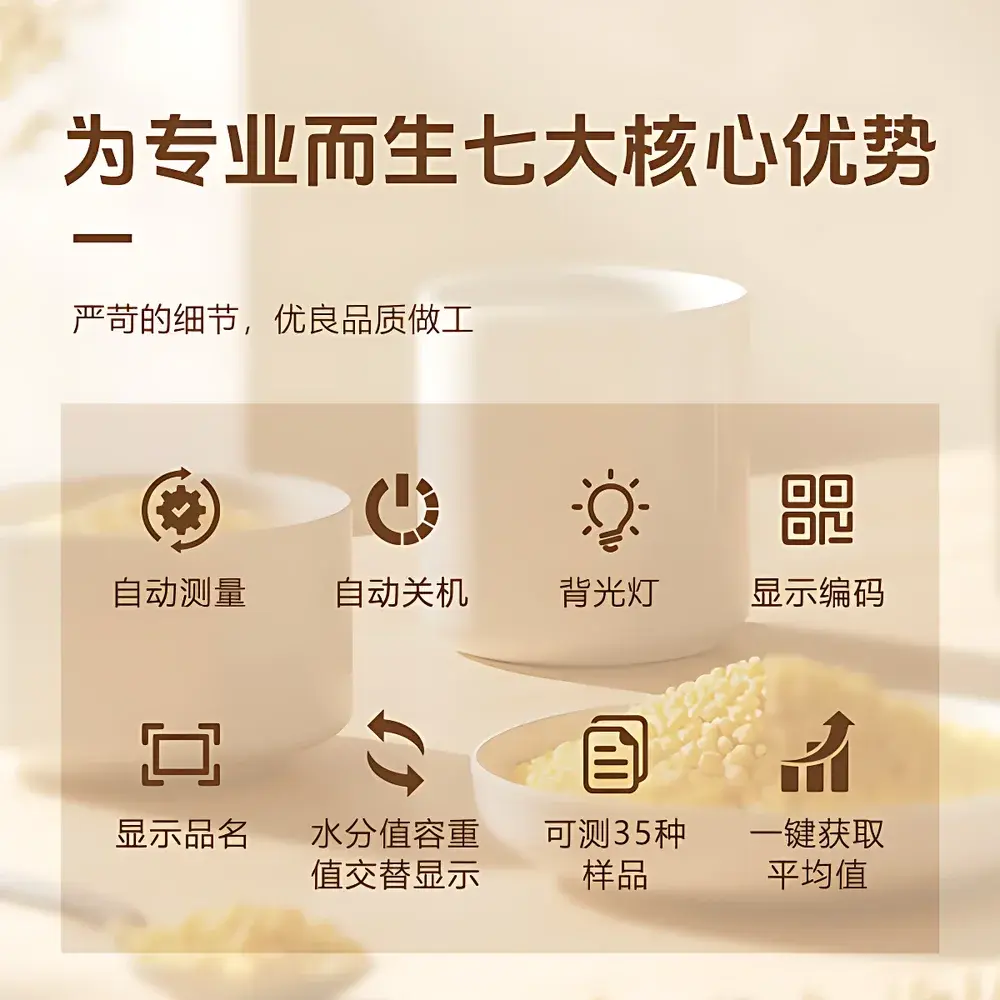
- Pre-loaded, factory-validated calibration curves for 35 distinct agricultural materials—including 12 rice variants (e.g., LRCE, SPAD), 6 coffee forms (green/roasted Arabica & Robusta), 5 tea categories (CTC, oolong, green), and specialty crops (sesame, pepper, sunflower seed)
- Dual sample introduction modes: motorized gravity-fed hopper (optimized for free-flowing grains ≥2 mm) and precision cup loader (for irregular, fragile, or fine-particle samples such as ground tea or hulled sesame)
- Real-time moisture readout with ±0.5% w/w accuracy within defined operational ranges (e.g., 6–20% for mung beans; 20–45% for high-moisture oolong tea)
- Integrated temperature sensor and automatic thermal drift compensation to maintain measurement integrity across ambient conditions from 10°C to 35°C
- Non-contact RF sensing architecture with stainless-steel measuring chamber—no electrode wear, no sample residue buildup, minimal maintenance
- Compliance-ready data logging: timestamped results, user ID tagging, and audit trail export via USB-C interface
Sample Compatibility & Compliance
The PM-888-X supports heterogeneous particulate matrices ranging from whole cereal grains (rice, sorghum, millet) to oilseeds (peanut, canola), legumes (adzuki, mung), roasted and green coffee beans, and processed botanicals (black/white pepper, CTC tea, dehulled sesame). Each material profile is mapped to its empirically derived moisture sensitivity window—e.g., OOLH (high-moisture oolong) operates at 20–45% w/w, while BTB (large-leaf black tea) is constrained to 0–15% w/w. The instrument meets core requirements for ISO 712:2017 (cereal and cereal products — determination of moisture content), ASTM D4940-21 (standard guide for electrical conductivity, resistivity, and dielectric constant measurements), and supports GLP/GMP documentation workflows through configurable report templates. While not FDA 21 CFR Part 11-certified out-of-the-box, its data export architecture enables integration with validated LIMS environments supporting electronic signature and audit trail compliance.
Software & Data Management
The embedded firmware provides intuitive one-button operation with on-screen material selection, batch ID entry, and immediate result display. All measurements are stored internally (up to 1,000 records) with full metadata: date/time, selected material code (e.g., “SUNS” for small sunflower seeds), operator ID, ambient temperature, and raw capacitance value. Export is performed via USB-C to CSV or Excel-compatible formats, preserving column headers for traceability. No proprietary software installation is required—data files are natively readable in common spreadsheet applications. Optional firmware updates (distributed via AA OPTO Electronic’s secure customer portal) include new calibration profiles, language localization packs, and enhanced outlier detection logic based on statistical deviation thresholds.
Applications
- Grain procurement inspection: rapid verification of incoming wheat, rice, or sorghum against contractual moisture limits (e.g., ≤14.5% for paddy rice per USDA standards)
- Feed formulation QA: monitoring moisture in soybean meal, corn gluten, or DDGS to prevent mold growth during storage
- Coffee export certification: validating green bean moisture prior to shipment per ICO guidelines (10–12.5% for Arabica, 10–13% for Robusta)
- Tea processing control: tracking moisture loss during withering, rolling, and firing stages to optimize flavor development and shelf life
- Spice and oilseed grading: ensuring pepper or sesame meets international trade specifications (e.g., ISO 968:2022 for sesame moisture ≤6.5%)
- Research agronomy: longitudinal moisture profiling of field-harvested samples under varying drying protocols
FAQ
Does the PM-888-X require daily calibration with reference standards?
No. The instrument uses factory-established, material-specific dielectric models and does not rely on user-performed calibration. Periodic verification using traceable reference samples (e.g., NIST SRM 2890) is recommended every 6 months or after physical shock.
Can I add custom calibration curves for proprietary blends or regional varieties?
Not directly via front-panel interface. Custom curve development requires collaboration with AA OPTO Electronic’s application engineering team and validation against gravimetric reference data.
Is the auto-feed hopper compatible with broken or damaged kernels?
The hopper is optimized for intact, free-flowing grains. Severely fractured or dusty material may cause bridging; cup loading is advised for such cases.
What is the minimum sample mass required for reliable measurement?
For hopper mode: ≥100 g (typical for rice, sorghum); for cup mode: 25–50 g depending on particle density and geometry.
How does temperature variation affect measurement accuracy?
The built-in thermal sensor dynamically adjusts the capacitance-to-moisture conversion algorithm. Deviation remains within ±0.3% w/w across 15–30°C ambient range when operating within calibrated moisture windows.
Related Products




