
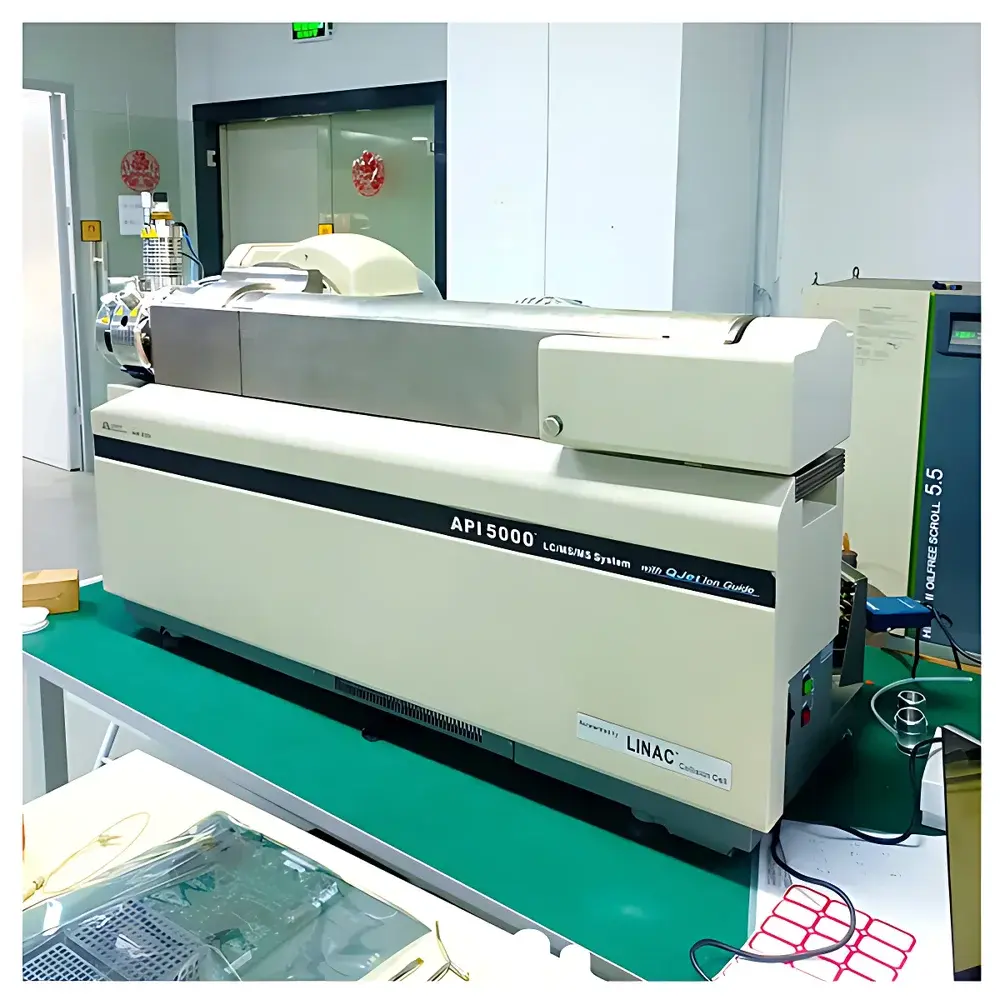
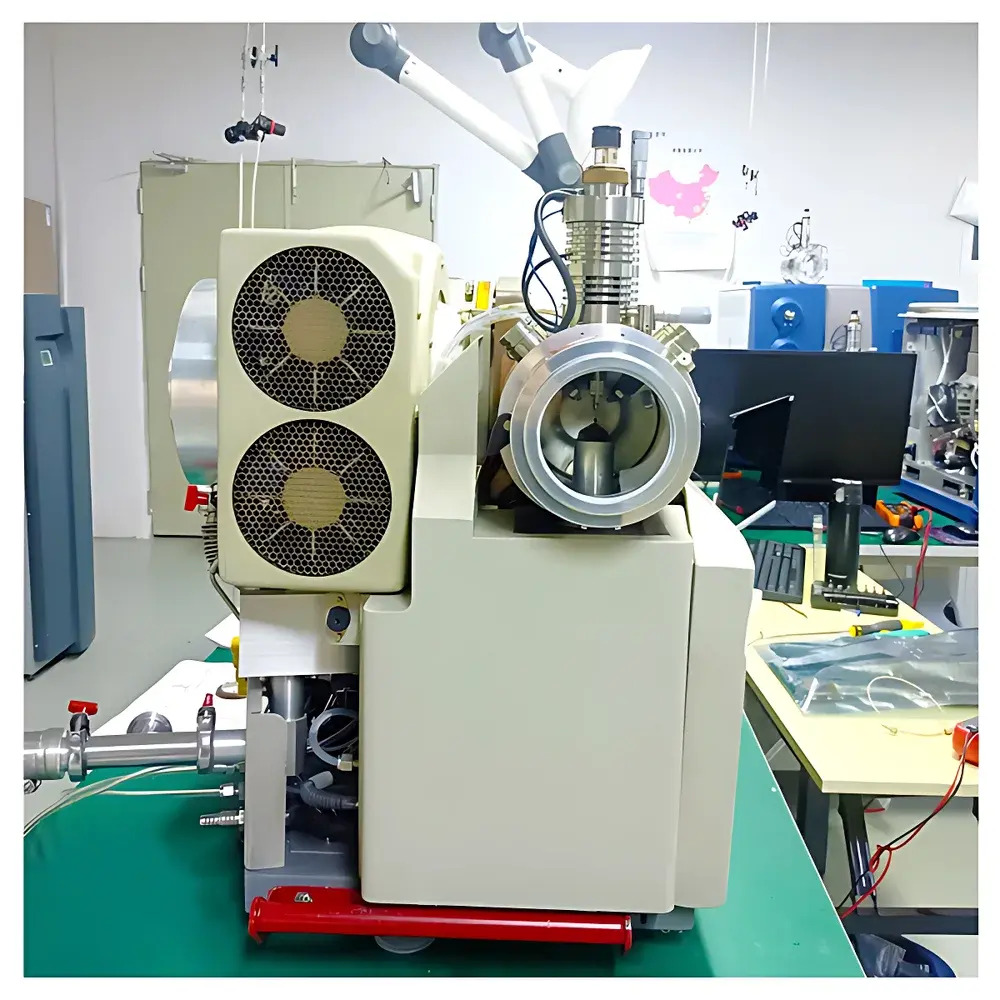
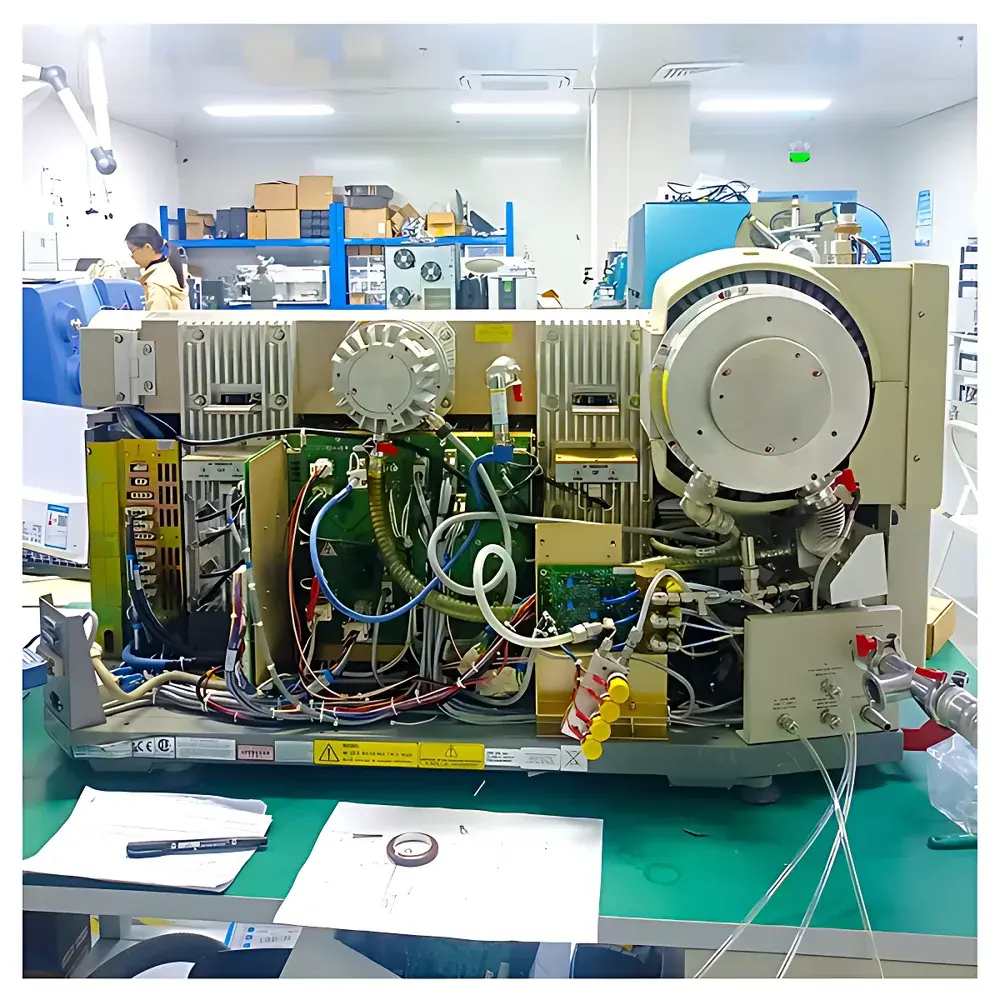
AB SCIEX API 5000™ Triple Quadrupole Liquid Chromatography Tandem Mass Spectrometer
| Brand | AB SCIEX |
|---|---|
| Origin | USA |
| Manufacturer Type | Authorized Distributor |
| Origin Category | Imported |
| Model | API 5000™ |
| Instrument Type | Triple Quadrupole (TQ) |
| Application Scope | General-Purpose |
| Mass Range | 10–1200 m/z |
| Sensitivity | <100.1 fg on-column for selected analytes (e.g., reserpine, caffeine) |
| Resolution | Unit resolution (0.5–0.7 Da full width at half maximum) |
| Mass Accuracy | ≤0.1 Da (calibrated) |
| Operating Pressure Range | Up to 1200 psi (LC system compatible) |
Overview
The AB SCIEX API 5000™ is a high-performance triple quadrupole liquid chromatography tandem mass spectrometry (LC-MS/MS) system engineered for robust, quantitative analysis of small molecules in complex biological and environmental matrices. Built upon a proven QqQ architecture, it operates via electrospray ionization (ESI) or atmospheric pressure chemical ionization (APCI), enabling selective reaction monitoring (SRM) and multiple reaction monitoring (MRM) with high specificity and reproducibility. Its design emphasizes regulatory compliance, analytical throughput, and operational stability—making it particularly suited for GLP- and GMP-aligned laboratories engaged in pharmaceutical development, clinical toxicology, food safety testing, and environmental monitoring. The instrument integrates seamlessly with standard HPLC/UHPLC systems and delivers consistent performance across diverse sample types, including plasma, urine, tissue homogenates, food extracts, and aqueous environmental samples.
Key Features
- QJet™ Ion Guide Technology: A pressurized RF-only collision cell that enhances ion transmission efficiency while minimizing space-charge effects—resulting in improved signal-to-noise ratios and sub-femtogram detection limits.
- TURBO V™ Ion Source: Dual-mode ESI/APCI source with heated nebulizer gas, optimized desolvation, and independent temperature and gas flow control for maximum ionization efficiency across polar and non-polar compounds.
- DuoSpray™ Ion Source Option: Enables rapid switching between TurboIonSpray® and APCI modes without hardware reconfiguration—ideal for method development and multi-analyte workflows.
- PhotoSpray® Ion Source (Optional): Atmospheric pressure photoionization (APPI) capability extends coverage to low-polarity, thermally stable compounds not efficiently ionized by ESI or APCI.
- Robust Vacuum Architecture: Dual-stage differential pumping with turbomolecular and roughing pumps ensures stable operation at up to 1200 psi LC backpressure and maintains optimal sensitivity during extended acquisition runs.
- Automated Calibration & Tuning: Integrated calibration routines and automated tuning protocols reduce operator dependency and support routine QC verification per FDA 21 CFR Part 11 requirements.
Sample Compatibility & Compliance
The API 5000™ accommodates a broad range of sample introduction formats—including microbore, analytical, and narrow-bore LC columns—and supports both reversed-phase and HILIC separations. It complies with international regulatory frameworks governing analytical instrumentation: methods developed on this platform meet ASTM D7622 (for pesticide residue quantitation), ISO/IEC 17025 (for testing laboratory competence), and USP (validation of compendial procedures). Data integrity is maintained through Analyst® software’s audit trail functionality, electronic signatures, and secure user access controls aligned with FDA 21 CFR Part 11 and EU Annex 11 expectations. Routine system suitability testing (SST), carryover assessment (<0.1%), and daily calibration verification are fully supported within the instrument’s operational workflow.
Software & Data Management
Controlled exclusively by Analyst® Software v1.6.3 or later, the API 5000™ provides a validated, scalable environment for method development, acquisition, processing, and reporting. Analyst® includes integrated tools for peak integration, matrix-matched calibration curve generation, internal standard normalization, and automated report export in PDF, Excel, and CSV formats. All raw data files (.wiff) are stored with embedded metadata—including instrument configuration, sequence logs, and audit trails—to ensure traceability and support regulatory inspections. The software supports networked deployment, centralized license management, and integration with LIMS platforms via ODBC or vendor-specific APIs.
Applications
- Quantitative bioanalysis in drug metabolism and pharmacokinetics (DMPK) studies
- Clinical toxicology and therapeutic drug monitoring (TDM) in human plasma and serum
- Residue analysis of veterinary drugs, pesticides, and mycotoxins in food commodities
- Environmental contaminant screening in water, soil, and air particulate extracts
- Newborn screening for inborn errors of metabolism using dried blood spot (DBS) analysis
- Forensic toxicology for controlled substance identification and quantification
- Natural product profiling and quality control of herbal medicines
- Food authenticity testing and adulterant detection
- Occupational exposure assessment of industrial chemicals
- Regulatory submission support for ANDA, NDA, and MAA dossiers
FAQ
Is the API 5000™ compliant with 21 CFR Part 11?
Yes—when operated with validated Analyst® software and configured with appropriate administrative controls, electronic signatures, and audit trail logging, the system meets core requirements for electronic records and signatures.
What is the typical mass accuracy under routine calibration conditions?
Mass accuracy remains ≤0.1 Da for singly charged ions across the 10–1200 m/z range when calibrated using standard tuning solutions (e.g., reserpine, cesium iodide).
Can the system be upgraded to support newer software versions?
Yes—hardware compatibility with Analyst® v1.7.x and subsequent releases is confirmed; upgrade eligibility depends on firmware version and controller board revision.
Does the instrument support scheduled MRM transitions?
Yes—scheduled MRM acquisition is fully implemented, allowing retention time–based transition activation to maximize dwell time and cycle speed for high-throughput assays.
What maintenance intervals are recommended for optimal performance?
Ion source cleaning every 2–4 weeks (depending on sample load), turbo pump oil change annually, and full vacuum system inspection every 18–24 months are advised per AB SCIEX service guidelines.




