
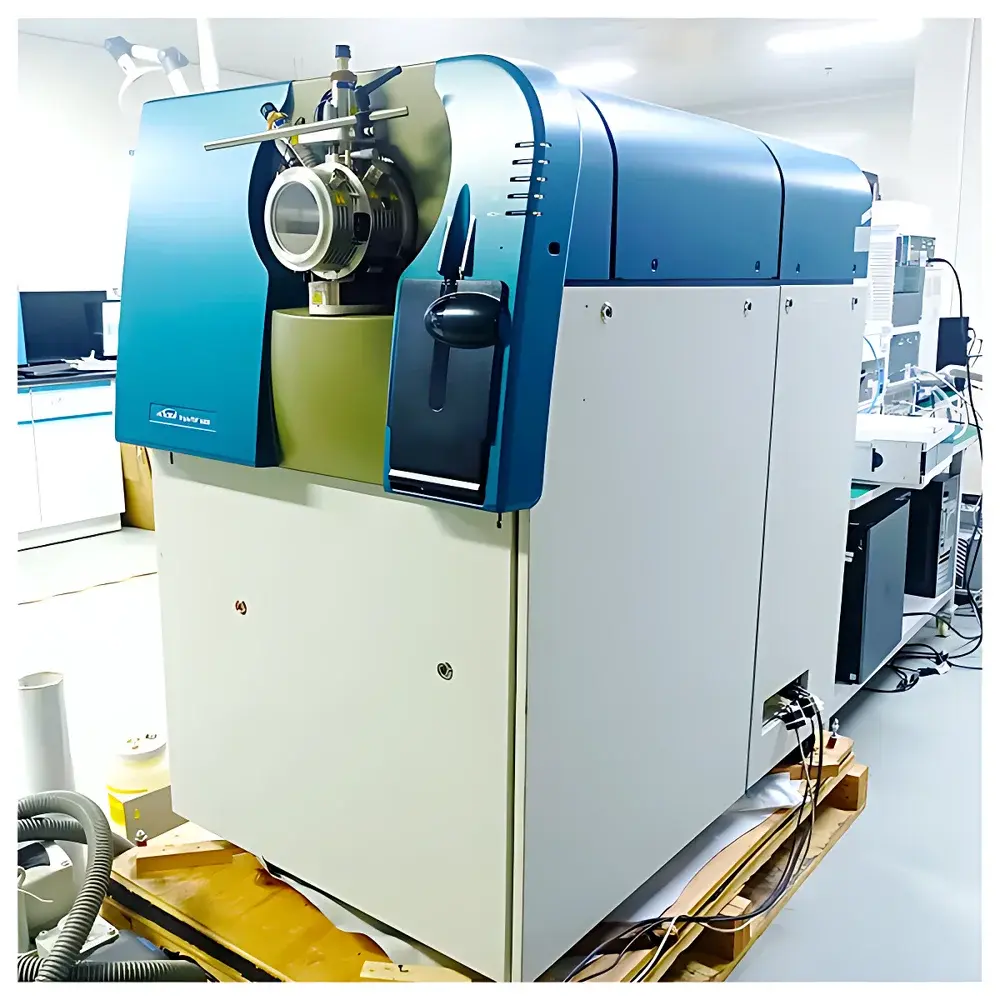
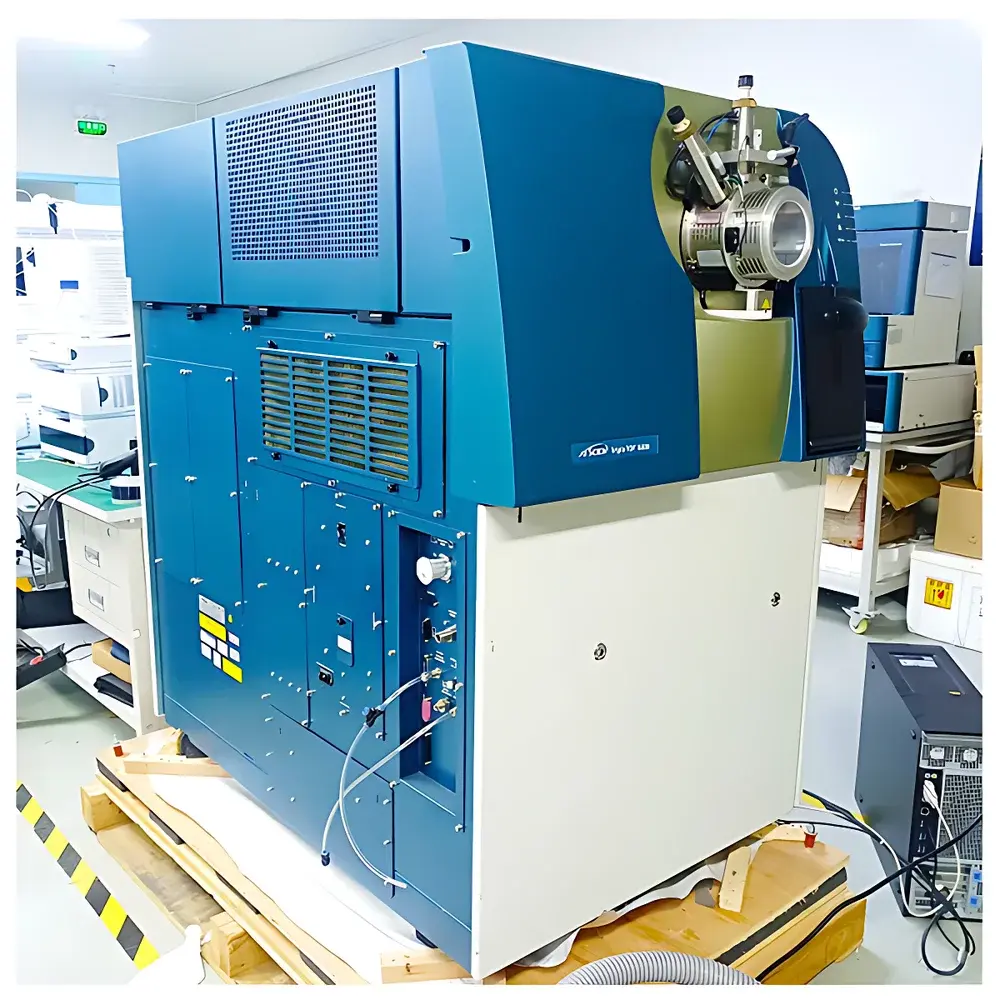
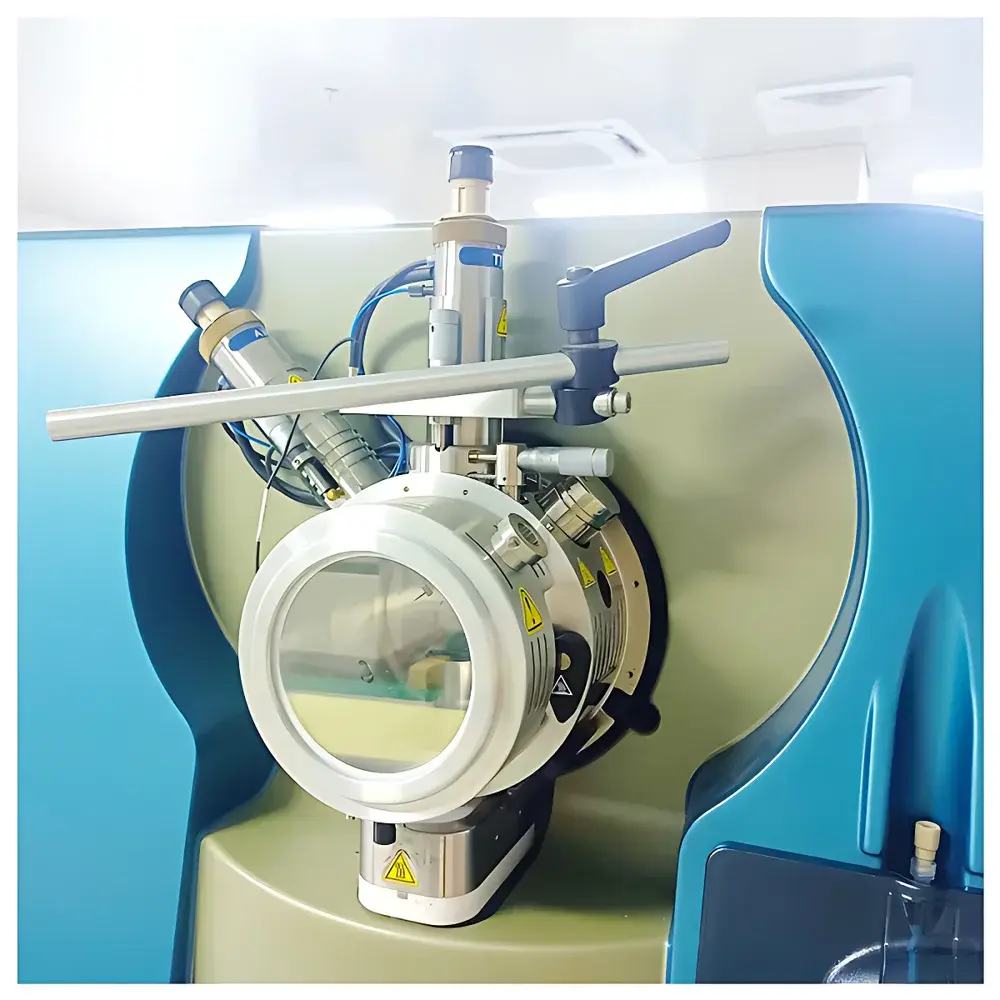
AB SCIEX TripleTOF 6600 Q-TOF Mass Spectrometer
| Brand | AB SCIEX |
|---|---|
| Origin | USA |
| Model | TripleTOF 6600 |
| Instrument Type | Quadrupole-Time-of-Flight (Q-TOF) |
| Resolution | 30,000 (FWHM at m/z 1,000) |
| Sensitivity | 10.1 fmol (substance P, S/N ≥ 10) |
| Mass Accuracy | < 100 ppm (internal calibration), < 5 ppm (external calibration with lock mass) |
| Stability | ≤ 10 ppm RMS over 24 h |
| Acquisition Rate | 50 Hz (MS/MS spectra per second) |
| SWATH™ Acquisition | Up to 200 variable isolation windows per cycle |
Overview
The AB SCIEX TripleTOF 6600 is a high-performance hybrid quadrupole-time-of-flight (Q-TOF) mass spectrometer engineered for comprehensive, reproducible, and quantitative analysis in large-scale proteomics, metabolomics, and small-molecule applications. Leveraging orthogonal acceleration TOF technology combined with a high-transmission quadrupole front-end, the system delivers simultaneous high-resolution, high-mass-accuracy, and high-sensitivity detection across broad dynamic ranges. Its core architecture supports both data-dependent acquisition (DDA) and data-independent acquisition (DIA), with SWATH™ 2.0 representing the industry’s most mature and robust DIA implementation—enabling full-spectrum fragmentation without precursor selection bias. Unlike traditional targeted workflows such as MRM, SWATH™ 2.0 captures all detectable precursors within user-defined, dynamically optimized isolation windows, generating permanent digital maps of sample composition suitable for retrospective interrogation.
Key Features
- Hybrid Q-TOF platform with dual-stage quadrupole design for enhanced precursor ion selection and transmission efficiency
- Resolution up to 30,000 FWHM at m/z 1,000 in MS/MS mode, supporting confident peptide identification and PTM localization
- Mass accuracy better than 5 ppm with external lock-mass calibration, compliant with ISO/IEC 17025 requirements for analytical instrument qualification
- SWATH™ 2.0 acquisition with intelligent, variable windowing—configurable from 2 Da to >25 Da per window, up to 200 windows per duty cycle
- Acquisition rate of 50 MS/MS spectra per second, enabling deep coverage of complex biological matrices in single-run analyses
- Extended linear dynamic range (>4 orders of magnitude), facilitating quantification of low-abundance analytes alongside high-abundance species without dynamic range compression
- SelexION™ differential mobility spectrometry (DMS) interface option for added orthogonality in co-eluting isobaric species separation
Sample Compatibility & Compliance
The TripleTOF 6600 interfaces seamlessly with nanoLC, microLC, and UHPLC systems, supporting reversed-phase, HILIC, and ion-pairing chromatographic methods. It accommodates diverse sample types including cell lysates, plasma, tissue digests, serum, urine, and small-molecule extracts. The system meets key regulatory expectations for research-use-only (RUO) instrumentation: full audit trail support in Analyst TF and MarkerView software; electronic signature capability compliant with FDA 21 CFR Part 11 when deployed in validated environments; and alignment with GLP/GMP documentation practices for preclinical biomarker discovery. Note: This instrument is not CE-marked for IVD use nor registered with NMPA for clinical diagnostics—it is designated exclusively for laboratory research applications.
Software & Data Management
Data acquisition and processing are managed through AB SCIEX’s Analyst TF 1.8+ platform, which provides integrated SWATH™ library generation, spectral alignment, peak integration, and relative quantification. Library-free quantification workflows leverage reference spectral libraries built from DDA runs or public repositories (e.g., ProteomeXchange). All raw data files (.wiff) are stored in vendor-neutral formats compatible with open-source tools including OpenMS, Skyline, and Spectronaut. Long-term archival follows FAIR principles (Findable, Accessible, Interoperable, Reusable), with metadata tagging aligned to PSI-MI and mzML standards. System logs record method parameters, calibration history, maintenance events, and user actions—supporting traceability during internal audits or collaborative multi-site studies.
Applications
- Discovery and verification proteomics: Identification and label-free quantification of >5,000 proteins per run in human cell lines or biofluids
- Post-translational modification (PTM) profiling: Phosphoproteomics, acetylomics, and ubiquitinomics with site-localization confidence scoring
- Targeted quantitative metabolomics: Simultaneous measurement of hundreds of endogenous metabolites without chemical derivatization
- Biomarker candidate screening: Cross-cohort comparison of clinical cohorts using consistent SWATH™ acquisition across instruments and timepoints
- Biopharmaceutical characterization: Intact mass analysis, peptide mapping, and deamidation/oxidation monitoring in mAbs and biosimilars
- Environmental and food safety testing: Residue screening of pesticides, mycotoxins, and veterinary drugs at sub-ppb levels
FAQ
What distinguishes SWATH™ 2.0 from conventional DIA methods?
SWATH™ 2.0 implements intelligent, variable windowing based on real-time survey scan intensity distribution—optimizing resolution and coverage while minimizing chimeric spectra. This differs from fixed-window DIA by adapting isolation width to local precursor density.
Can SWATH™ data be re-analyzed years after acquisition?
Yes. All fragment ion data are permanently recorded without lossy compression. New search algorithms, updated spectral libraries, or refined statistical models can be applied retrospectively to original .wiff files.
Is the TripleTOF 6600 compatible with third-party LC systems?
Yes. Standard ESI and nanoESI sources support direct coupling to Thermo, Waters, Shimadzu, and Agilent LC platforms via analog/digital trigger signals and standard tubing interfaces.
Does the system support retention time alignment across batches?
Analyst TF includes automated retention time correction using spiked lock-mass compounds or endogenous anchor peptides, ensuring consistency across multi-day or multi-instrument experiments.
How is instrument performance verified post-installation?
AB SCIEX provides IQ/OQ documentation templates aligned with ASTM E2687 and ISO/IEC 17025. Routine performance checks include resolution, mass accuracy, sensitivity (using substance P), and carryover assessment per USP <621>.



