
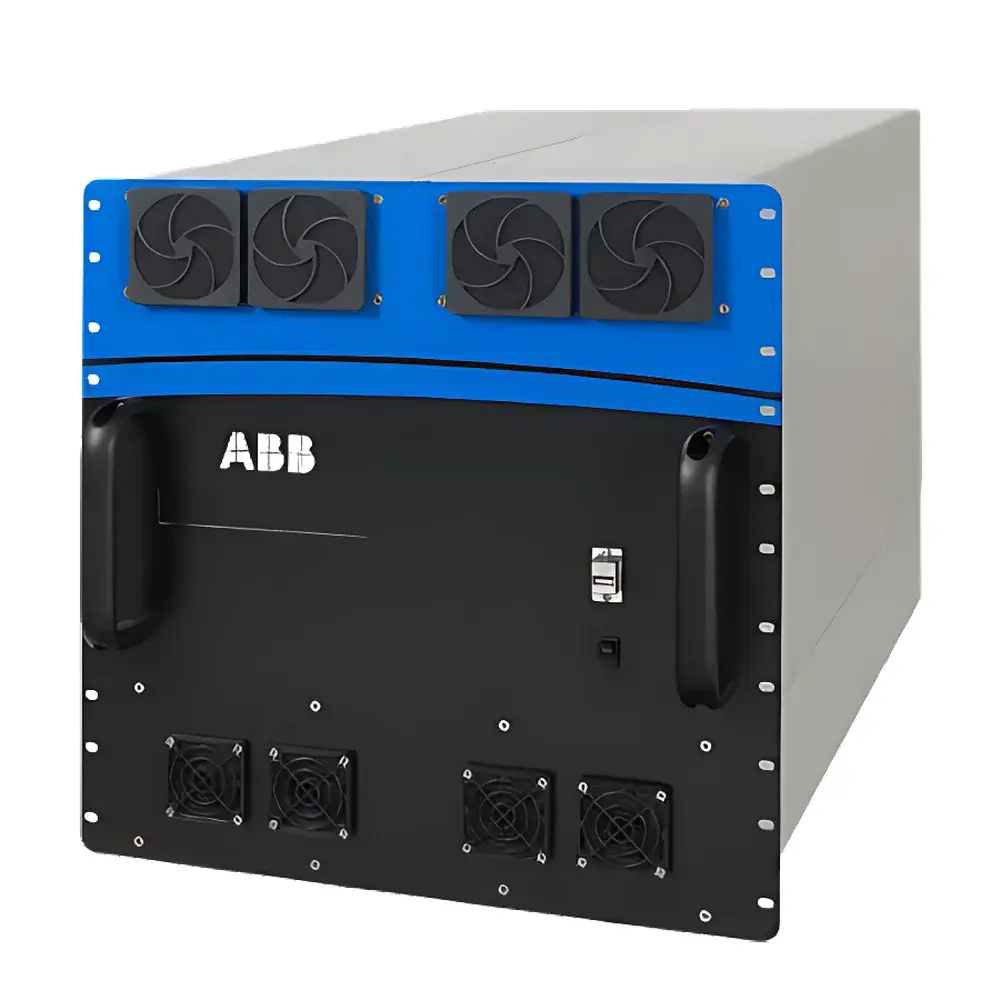
ABB GLA351-N2OCM Enhanced Performance Quantum Cascade Laser Absorption Spectrometer (QCLAS) for Simultaneous N₂O and CO Analysis
| Brand | ABB |
|---|---|
| Origin | Canada |
| Model | GLA351-N2OCM |
| Detection Gases & Ranges | N₂O (0–4 ppm, extended to 40 ppm), CO (0–4 ppm, extended to 40 ppm), H₂O (0–30,000 ppm, <99% RH, non-condensing) |
| Accuracy (1σ, 1 s / 10 s / 100 s) | N₂O: 0.1 / 0.04 / 0.02 ppb |
| CO | 0.2 / 0.06 / 0.03 ppb |
| H₂O | 50 / 20 / 10 ppm |
| Max Drift (24 h, STP, 15-min avg) | N₂O <1 ppb, CO <1 ppb |
| Measurement Rate | 0.01–1 Hz (standard), up to 10 Hz with high-flow option |
| Flow Response Time | <12 s (1/e), <10 s with high-flow option |
| Data Outputs | Ethernet, Wi-Fi, USB, RS-232 |
| Power | 110/240 VAC, 50/60 Hz |
| Dimensions | 50 × 48 × 86 cm (H×W×L) |
| Weight | 68 kg |
Overview
The ABB GLA351-N2OCM is an enhanced performance quantum cascade laser absorption spectrometer (QCLAS) engineered for ultra-trace, simultaneous, and interference-free quantification of nitrous oxide (N₂O) and carbon monoxide (CO) in ambient air and process streams. Leveraging mid-infrared quantum cascade laser technology operating at precisely tuned wavelengths—optimized for the fundamental ro-vibrational absorption bands of N₂O (~2170 cm⁻¹) and CO (~2150 cm⁻¹)—the instrument achieves part-per-quadrillion-level detection sensitivity through wavelength-scanned direct absorption spectroscopy. Its optical architecture employs a thermally stabilized, multi-pass Herriott cell (effective path length >75 m) coupled with proprietary spectral fitting algorithms that resolve overlapping line shapes in real time. Critically, the GLA351-N2OCM also measures water vapor (H₂O) mole fraction concurrently, enabling on-the-fly, physics-based correction of H₂O-induced spectral broadening and dilution effects—thereby delivering rigorously dry-base N₂O and CO concentrations without external drying or empirical post-processing.
Key Features
- Simultaneous, real-time measurement of N₂O, CO, and H₂O with independent, traceable calibration against NIST-traceable standards
- Enhanced Performance (EP) thermal management system ensuring sub-millikelvin temperature stability across all critical optical and detector components
- No cross-sensitivity between N₂O and CO channels—validated per IEC 61261 and ASTM D6348 protocols
- Dynamic range spanning four orders of magnitude: 0.01 ppb to 40 ppm for both N₂O and CO while maintaining full metrological compliance
- High-speed acquisition mode supporting up to 10 Hz data output (with optional high-flow inlet module), optimized for eddy covariance flux systems and rapid combustion diagnostics
- Integrated onboard Linux-based computer with 1 TB SSD storage—enabling continuous, timestamped logging for >12 months without external intervention
- Real-time self-diagnostic suite monitoring laser current, cavity pressure, detector responsivity, and optical alignment drift—each logged with ISO 17025-compliant audit trails
Sample Compatibility & Compliance
The GLA351-N2OCM accepts unfiltered, humid ambient air (0–99% RH, non-condensing) and industrial stack gases with particulate loading ≤1 µm. Its robust gas handling design includes heated sample lines (60°C), pressure-regulated flow control (±0.1% setpoint accuracy), and integrated particulate filtration (0.2 µm PTFE). The analyzer meets stringent regulatory and research-grade requirements: compliant with EPA Method TO-11A for CO, ISO 14064-2 Annex B for N₂O flux validation, and fully compatible with FLUXNET and ICOS ERIC infrastructure protocols. All firmware and data processing modules adhere to FDA 21 CFR Part 11 for electronic records and signatures, including role-based access control, automated audit logs, and cryptographic hash integrity verification for raw spectral files.
Software & Data Management
ABB’s proprietary GLA Control Suite v4.2 provides full instrument configuration, real-time spectral visualization, and automated baseline correction via Voigt profile fitting. Raw absorbance spectra (16-bit, 4096-point resolution) are stored alongside processed mole fractions, metadata (T, P, RH, flow rate), and diagnostic flags. Export formats include NetCDF-4 (CF-1.8 compliant), CSV with ISO 8601 timestamps, and XML for LIMS integration. Remote access is supported via secure TLS 1.3-enabled web interface or SSH tunneling. Data synchronization supports MQTT and OPC UA protocols for seamless ingestion into SCADA, cloud analytics platforms (e.g., AWS IoT Core), or custom Python-based QA/QC pipelines.
Applications
- Atmospheric science: Long-term N₂O/CO trend monitoring at GAW stations and tall-tower observatories
- Eddy covariance flux measurements over agricultural soils, wetlands, and urban gradients—leveraging 10 Hz capability for high-frequency turbulence correction
- Chamber-based emission studies (e.g., soil incubation, bioreactor off-gas) requiring sub-ppb precision and minimal sampling artifacts
- Combustion optimization and emissions certification for gas turbines, marine engines, and waste incinerators
- Urban air quality networks integrating with low-cost sensor arrays for bias correction and source apportionment modeling
- Calibration transfer and reference standard generation for regional air quality laboratories accredited to ISO/IEC 17025
FAQ
Does the GLA351-N2OCM require periodic zero/span calibration?
No—its EP architecture eliminates the need for routine zero/span adjustments under stable environmental conditions. Factory calibration remains valid for ≥12 months; annual verification against primary standards is recommended per ISO/IEC 17025.
Can the instrument operate unattended for extended field deployments?
Yes—integrated power management, watchdog timers, automatic file rotation, and redundant communication interfaces (dual Ethernet + cellular fallback via optional module) support >6-month autonomous operation in remote locations.
How is water vapor interference corrected without physical drying?
The instrument uses first-principles line-broadening theory (HITRAN-based) applied to simultaneously acquired H₂O spectra to compute pressure- and temperature-dependent collisional broadening coefficients—correcting N₂O and CO absorption line shapes in real time.
Is the GLA351-N2OCM compatible with existing eddy covariance data loggers?
Yes—it outputs analog (0–5 V, 4–20 mA) and digital (RS-232, TCP/IP) signals synchronized to GPS PPS, meeting AmeriFlux and ICOS timing specifications for latency <10 ms and jitter <1 µs.







