
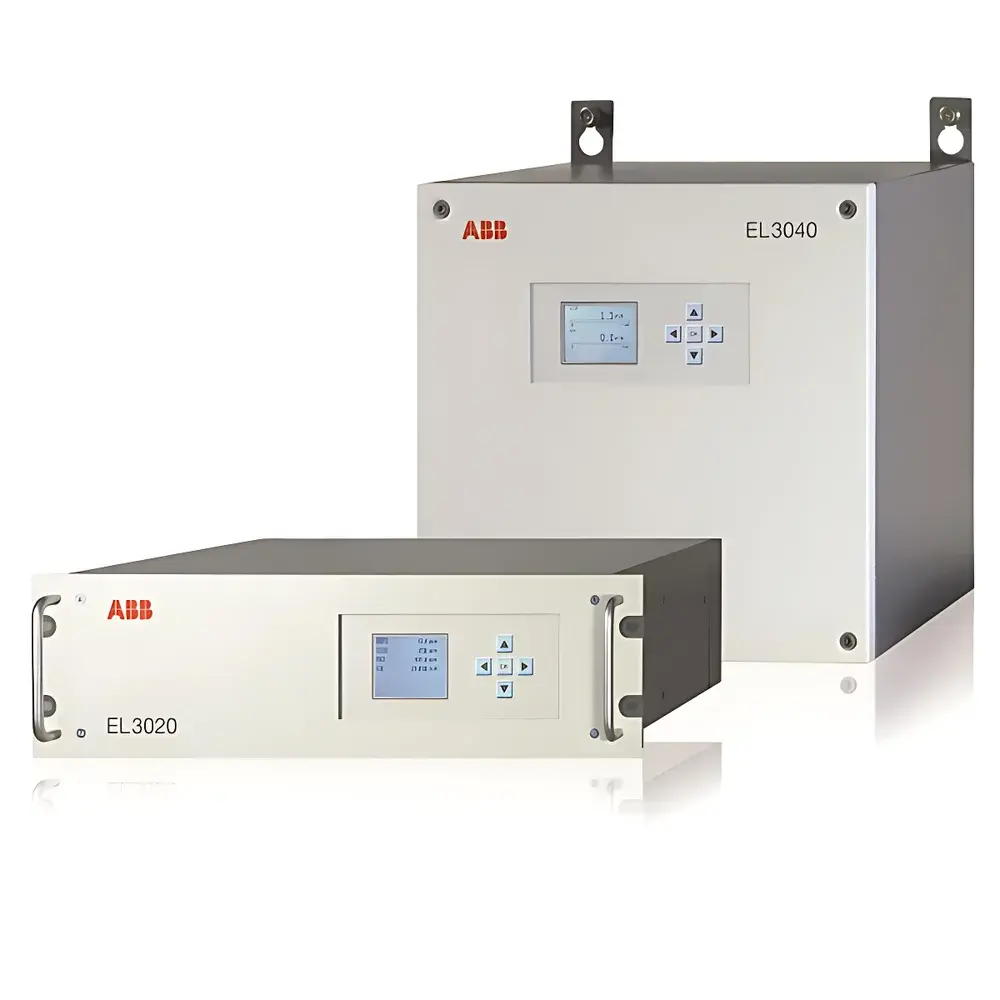
ABB Uras26 EL3000 Integrated Gas Analyzer with Sealed Calibration Cell
| Brand | ABB |
|---|---|
| Origin | Canada |
| Model | EL3000 |
| Measurement Principle | Non-Dispersive Infrared (NDIR) Spectroscopy |
| Accuracy | ≤ 1% of full scale |
| CO₂ Measurement Range | 0–5 ppm to 95–100 vol% |
| Response Time (T₉₀) | 2.5 s |
| Repeatability | ≤ 0.5% of full scale |
Overview
The ABB Uras26 EL3000 is a high-integrity, continuous gas analyzer engineered for regulatory-grade greenhouse gas (GHG) and gaseous pollutant monitoring in fixed emission sources and ambient air applications. It employs non-dispersive infrared (NDIR) spectroscopy—a physically robust, interference-resistant absorption technique—to quantify target gases based on their characteristic vibrational absorption bands in the mid-infrared region. Unlike conventional NDIR analyzers requiring external calibration gas cylinders, the Uras26 integrates a hermetically sealed, factory-precharged calibration cell—certified by TÜV to maintain stability for over ten years without degradation. This eliminates dependence on external zero and span gases, enabling fully autonomous zero-point and span calibration cycles. The instrument is designed to meet stringent performance requirements under EN 15267 (QAL1 certification) and EN 14181 (ASTM D6522 and ISO 12039 harmonized), supporting compliance with EU Industrial Emissions Directive (IED), US EPA Method 21/22, and GHG reporting frameworks including EPA GHGRP, UK ESOS, and ISO 14064-3 verification protocols.
Key Features
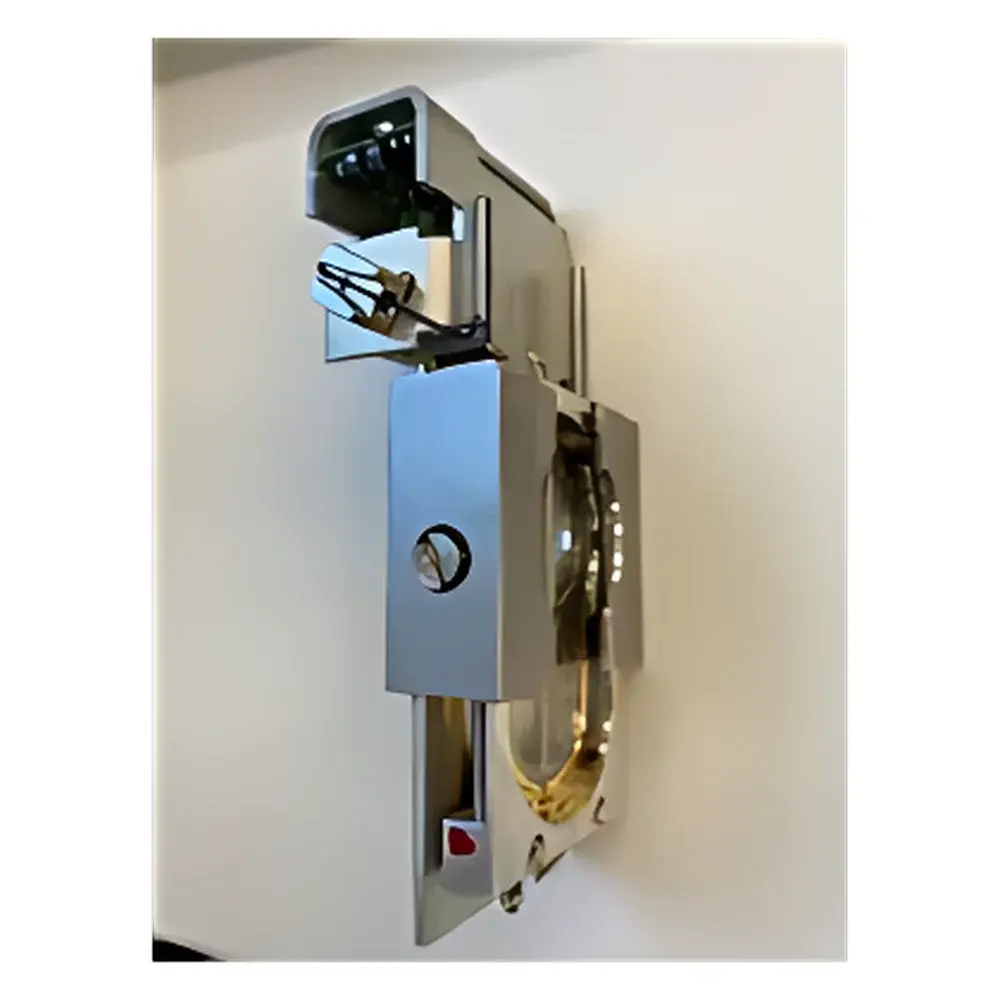
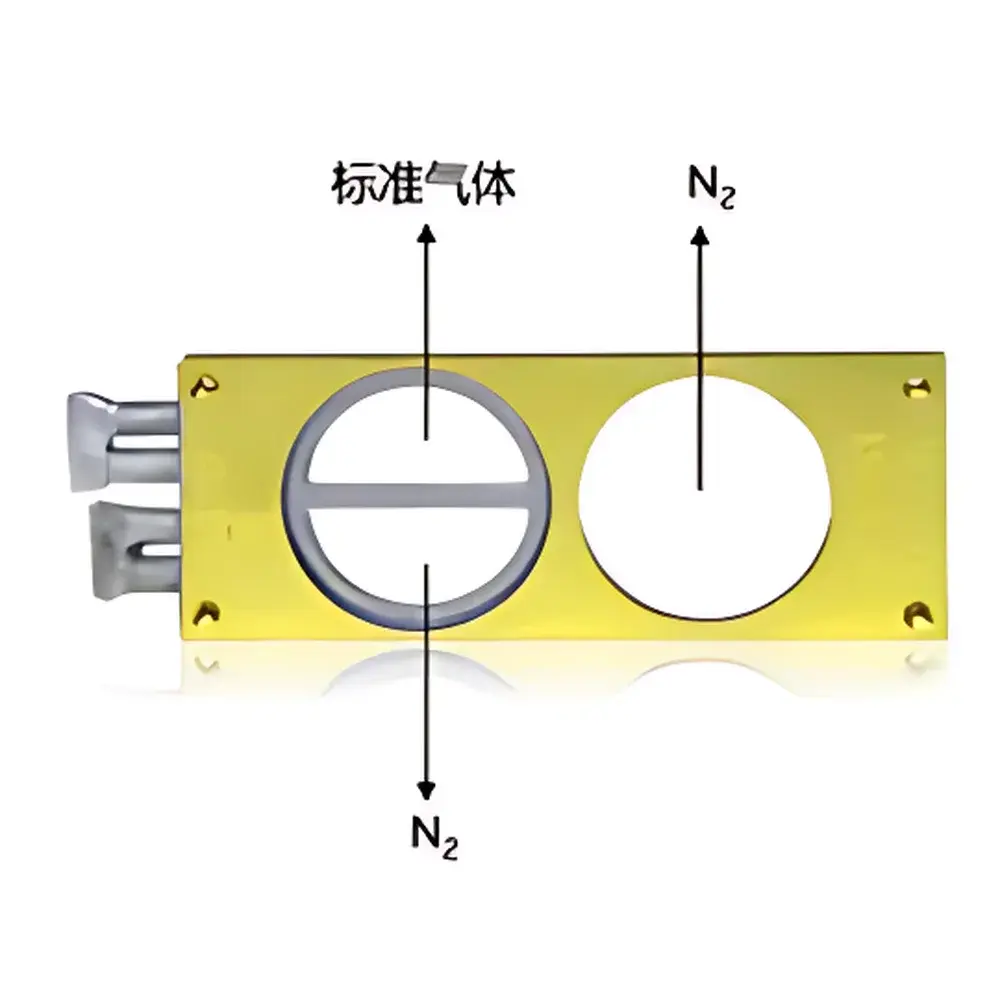
- Integrated Sealed Calibration Cell: A proprietary, welded-metal calibration chamber containing pre-mixed reference gas (e.g., N₂ + certified CO₂ concentration) and zero gas (high-purity N₂ or synthetic air). No consumables, no cylinder logistics, no leakage risk—validated for ≥10 years’ stability (TÜV test report TR-URAS26-2023).
- Dual-Beam Optical Architecture: Simultaneous measurement and reference optical paths compensate for source intensity drift, detector aging, and electronic gain variation—ensuring long-term baseline stability without manual intervention.
- Ceramic IR Source & Pneumatic Detector: Long-life, explosion-proof ceramic emitter (>15 years MTBF); gas-filled, narrow-band infrared detector optimized for CO₂, CH₄, N₂O, SF₆, R134a, SO₂, NO, CO, and O₂—delivering high selectivity and signal-to-noise ratio.
- Thermally Stabilized Optics: Internal temperature control (±0.1 °C) minimizes thermal lensing and refractive index shifts in the sample cell, critical for sub-ppm CO₂ quantification across wide dynamic ranges.
- Multi-Component Capability: Configurable for up to five simultaneous gas measurements (e.g., CO₂, CH₄, NO, SO₂, O₂) via spectral deconvolution algorithms—reducing footprint, maintenance overhead, and cross-calibration uncertainty versus discrete single-gas analyzers.
Sample Compatibility & Compliance
The Uras26 EL3000 accepts conditioned sample streams from extractive CEMS (Continuous Emission Monitoring Systems) or ambient air intakes, accommodating gas temperatures from 0–50 °C and dew points down to −40 °C (with optional chiller/dryer). Sample pressure range: 80–110 kPa (absolute); particulate filtration to ≤0.3 µm required upstream. Certified to EN 15267-3 QAL1 (TÜV SÜD ID: QAL1-URAS26-EL3000-2022) and mCERTs (UKAS Ref: MCERTS-2021-URAS26), it satisfies data integrity requirements under FDA 21 CFR Part 11 (audit trail, electronic signature support), ISO/IEC 17025, and GLP/GMP-aligned QA/QC workflows. All calibration events—including automatic cell-based zero/span—are timestamped, logged, and exportable with metadata (e.g., cell pressure, optical path length, detector voltage).
Software & Data Management
Operated via ABB’s standardized AIDA (Advanced Instrument Data Acquisition) firmware, the Uras26 supports Modbus TCP, Profibus DP, and OPC UA interfaces for seamless integration into DCS/SCADA systems. Embedded web server enables remote configuration, real-time diagnostics, and historical trend review (≥30 days onboard storage). Calibration logs, alarm history, and raw spectral data are exportable in CSV or XML format compliant with EPA CDX and EU ETS MRV reporting templates. Audit trails record all user actions—including parameter changes, calibration initiations, and firmware updates—with immutable timestamps and operator IDs.
Applications
- Regulatory continuous emission monitoring (CEM) of CO₂, CH₄, and N₂O from power plants, cement kilns, refineries, and waste incinerators per EU IED Annex VIII and EPA 40 CFR Part 75 Appendix A.
- Ambient air quality networks tracking background GHG concentrations (e.g., ICOS, NOAA GML stations) where low-drift, unattended operation is mandatory.
- Carbon capture, utilization, and storage (CCUS) process monitoring—verifying CO₂ purity (>99.5 vol%) and detecting trace contaminants (SOₓ, NOₓ, H₂O) in pipeline transport streams.
- Landfill and biogas upgrading facilities measuring CH₄/CO₂ ratios and detecting siloxanes or H₂S in raw biogas feeds.
- Industrial hygiene and occupational safety applications requiring real-time CO, NO, and SO₂ detection alongside CO₂ as an IAQ indicator.
FAQ
Does the integrated calibration cell require periodic refilling or replacement?
No. The cell is permanently sealed using ABB’s proprietary sputter-welded gold-plated stainless steel housing and fused silica windows. It contains no moving parts or consumables and is certified for ≥10 years of stable performance without recalibration or servicing.
Can the Uras26 be validated against external standards during routine QA checks?
Yes. While the internal cell enables autonomous calibration, the instrument includes dedicated inlet ports for traceable external gas challenges per EN 14181 QAL2/QAL3 procedures—fully compatible with third-party audit requirements.
What is the minimum detectable CO₂ concentration in the 0–5 ppm range?
The analyzer achieves a limit of detection (LOD) of ≤0.5 ppm (3σ of zero gas baseline noise) when configured with extended-path optics and signal averaging—verified per ISO 11355-2.
Is the Uras26 suitable for corrosive or high-moisture flue gas streams?
It requires upstream conditioning: heated sampling line (180 °C), thermoelectric cooler (to <5 °C dew point), and particulate filtration. Optional corrosion-resistant wetted materials (Hastelloy C-276, PTFE seals) are available for aggressive matrices.
How does the dual-chamber design improve measurement robustness compared to single-beam NDIR?
By continuously comparing sample and reference beam intensities, the dual-chamber architecture inherently compensates for lamp output decay, window fouling, and amplifier drift—reducing long-term drift to <0.5% FS/year without manual adjustment.
Related Products







