
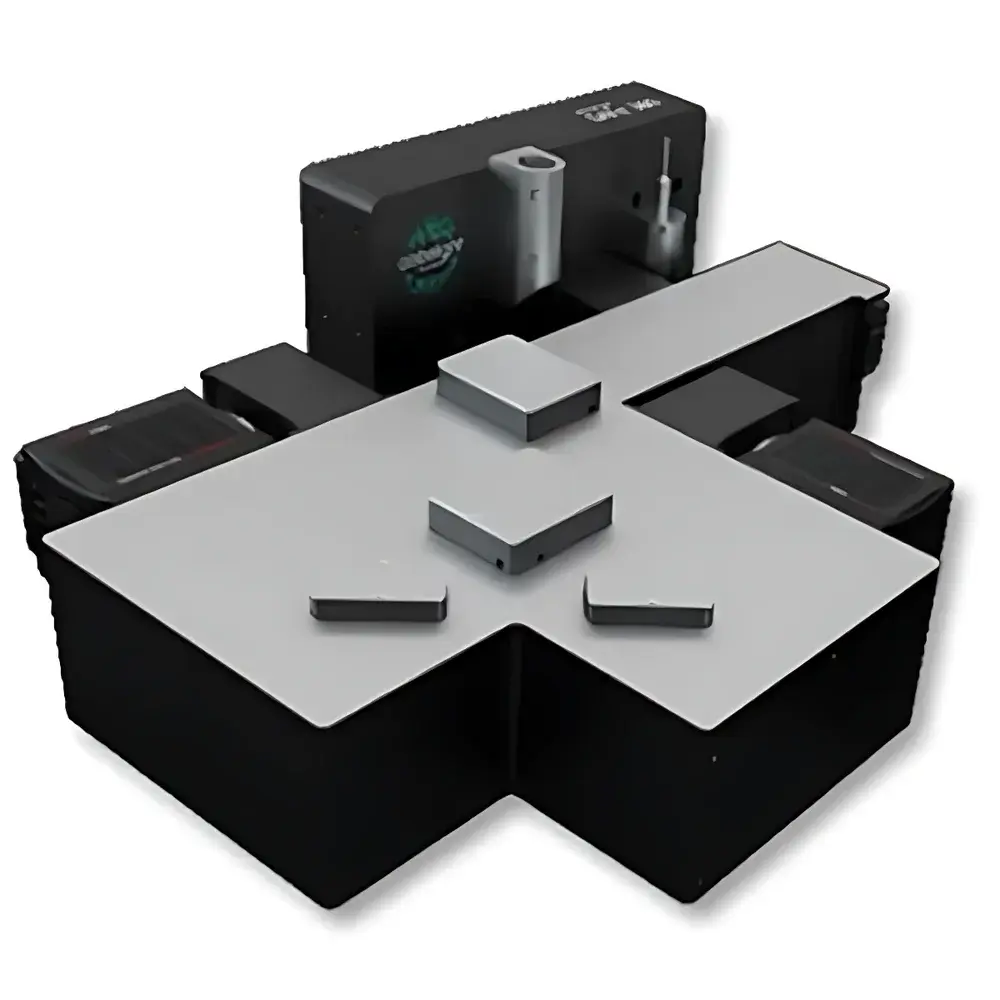
Abbelight SAFe 360 3D Automated Fluorescence Detection and Analysis System for Extracellular Vesicles
| Brand | Abbelight |
|---|---|
| Origin | France |
| Model | SAFe 360 |
| Resolution | 20 nm |
| Field of View | 200 × 200 µm² |
| Category | Super-Resolution Microscope (SMLM) |
| Technique | Single-Molecule Localization Microscopy (SMLM) with 3D axial localization |
Overview
The Abbelight SAFe 360 is a purpose-built, fully automated 3D fluorescence detection and analysis platform engineered for label-specific, single-extracellular-vesicle (EV) characterization without prior purification. It leverages advanced single-molecule localization microscopy (SMLM), combined with astigmatic or modulated excitation-based 3D point spread function (PSF) engineering, to achieve isotropic spatial resolution down to 20 nm in all three dimensions. Unlike conventional flow cytometry or ensemble fluorescence assays, the SAFe 360 operates on an immunocapture principle: EVs are immobilized onto functionalized glass substrates via antibody-coated surfaces targeting canonical tetraspanins (e.g., CD63, CD81, CD9), enabling selective interrogation of biologically defined subpopulations directly from complex biofluids—including whole plasma, serum, urine, ascites, and conditioned cell culture media. This eliminates centrifugation-, filtration-, or size-exclusion-based enrichment steps that introduce bias, aggregation, or loss of low-abundance subtypes. The system integrates hardware-synchronized autofocus, multi-color sequential imaging, and real-time drift correction to ensure high reproducibility across large fields of view (200 × 200 µm²), making it suitable for statistically robust population-level analysis of heterogeneous EV isolates.
Key Features
- Label-free immunocapture workflow: Enables direct analysis of native EVs from unpurified clinical and biological samples
- True 3D super-resolution imaging: Achieves <20 nm lateral and axial resolution using calibrated PSF shaping (e.g., astigmatism or double-helix) and Bayesian localization algorithms
- Automated multi-parameter quantification: Simultaneously extracts vesicle diameter (via cluster radius estimation), surface marker co-expression status (single-/dual-/triple-positive), and intra-vesicular cargo distribution (e.g., GFP-tagged proteins post-permeabilization)
- Multi-channel compatibility: Supports up to four spectrally distinct fluorophores (e.g., Alexa Fluor 488, 568, 647, and CF680) with hardware-decoupled excitation and emission path control
- High-throughput sample handling: Integrated XYZ stage with auto-focus and tile-scan capability enables unattended acquisition across ≥100 fields per run
- Embedded calibration traceability: On-system reference bead imaging validates resolution and registration accuracy before each experiment, supporting ISO/IEC 17025-aligned quality assurance protocols
Sample Compatibility & Compliance
The SAFe 360 accepts native, minimally processed biospecimens—including EDTA-plasma, heparinized serum, urine supernatants, malignant effusions, and tumor-conditioned media—without requirement for ultracentrifugation or commercial kit-based isolation. Its surface chemistry supports stable, oriented immobilization of EVs while preserving membrane integrity and antigen epitope accessibility. All reagents used in the immunocapture assay (antibody conjugates, blocking buffers, wash solutions) are compatible with Good Laboratory Practice (GLP) documentation standards. Data provenance—including instrument configuration, acquisition timestamps, calibration logs, and raw localization lists—is stored in FAIR-compliant HDF5 format, facilitating audit readiness for FDA 21 CFR Part 11 and EU Annex 11 compliance when deployed in regulated environments such as biomarker qualification or therapeutic EV manufacturing QC.
Software & Data Management
Acquisition and analysis are unified within Abbelight’s proprietary SMLM Suite v5.x, a modular application built on Python-based scientific computing libraries (NumPy, SciPy, scikit-image) and Qt-based GUI architecture. Core modules include: (i) AutoCapture — adaptive exposure and focus optimization; (ii) LocaTrack — drift-corrected single-molecule fitting with Cramér–Rao lower bound (CRLB) uncertainty estimation; (iii) VesicleCluster — DBSCAN-based spatial clustering with adaptive density thresholds to define individual EV boundaries; (iv) CoLocal — quantitative Pearson and Manders coefficients calculated per vesicle for multi-target colocalization; and (v) StatReport — exportable PDF/CSV reports with statistical summaries (mean ± SD, median, IQR) for size distributions, marker ratios, and spatial correlation metrics. Raw data and processed results adhere to MIAME/MINSEQE metadata standards and can be exported to OMERO or BioImage Archive repositories.
Applications
The SAFe 360 serves critical roles across translational EV research domains: (i) Oncology — identification of CAR+ EV subsets predictive of immune-related adverse events (e.g., ICANS) in CAR-T therapy monitoring; (ii) Neurodegeneration — nanoscale mapping of phospho-tau (pT217) enrichment on brain-derived EVs as a CSF-accessible biomarker; (iii) Infectious disease — visualization of bacterial membrane microdomain protein organization (e.g., HflKC) in outer membrane vesicles; (iv) Ophthalmology — quantification of galectin-3–mediated endocytic lattices on retinal pigment epithelium–derived EVs; (v) Vaccine development — assessment of antigen-loading efficiency and surface topology in engineered exosome vaccines; and (vi) Regenerative medicine — tracking integrin activation states on mesenchymal stromal cell–derived EVs during homing and adhesion processes.
FAQ
Does the SAFe 360 require EV pre-purification?
No. The system uses antibody-functionalized substrates to capture target EV subpopulations directly from crude biofluids, eliminating need for ultracentrifugation or size-exclusion chromatography.
Can it distinguish between exosomes and other small EVs?
Yes — through combinatorial immunoprofiling (e.g., CD63+/CD9+/CD81+ vs. CD63−/CD9+/CD81+) and morphometric analysis (diameter, sphericity, surface protein density), enabling phenotypic stratification beyond size alone.
Is the 20 nm resolution validated per ISO 19439:2021?
Yes — resolution validation follows ISO 19439 Annex B guidelines using NIST-traceable fluorescent beads (100 nm) and full-width-at-half-maximum (FWHM) measurement across ≥500 localizations per bead under identical acquisition conditions.
How is data integrity ensured during long-duration acquisitions?
Real-time thermal drift compensation, periodic reference bead imaging, and checksummed HDF5 storage with embedded SHA-256 hashes ensure bit-level fidelity and regulatory traceability.
What biosafety level (BSL) is required for operation?
The system is designed for BSL-2 laboratories; integrated UV-C decontamination cycles and sealed fluidics prevent aerosol generation during sample loading and washing steps.




