
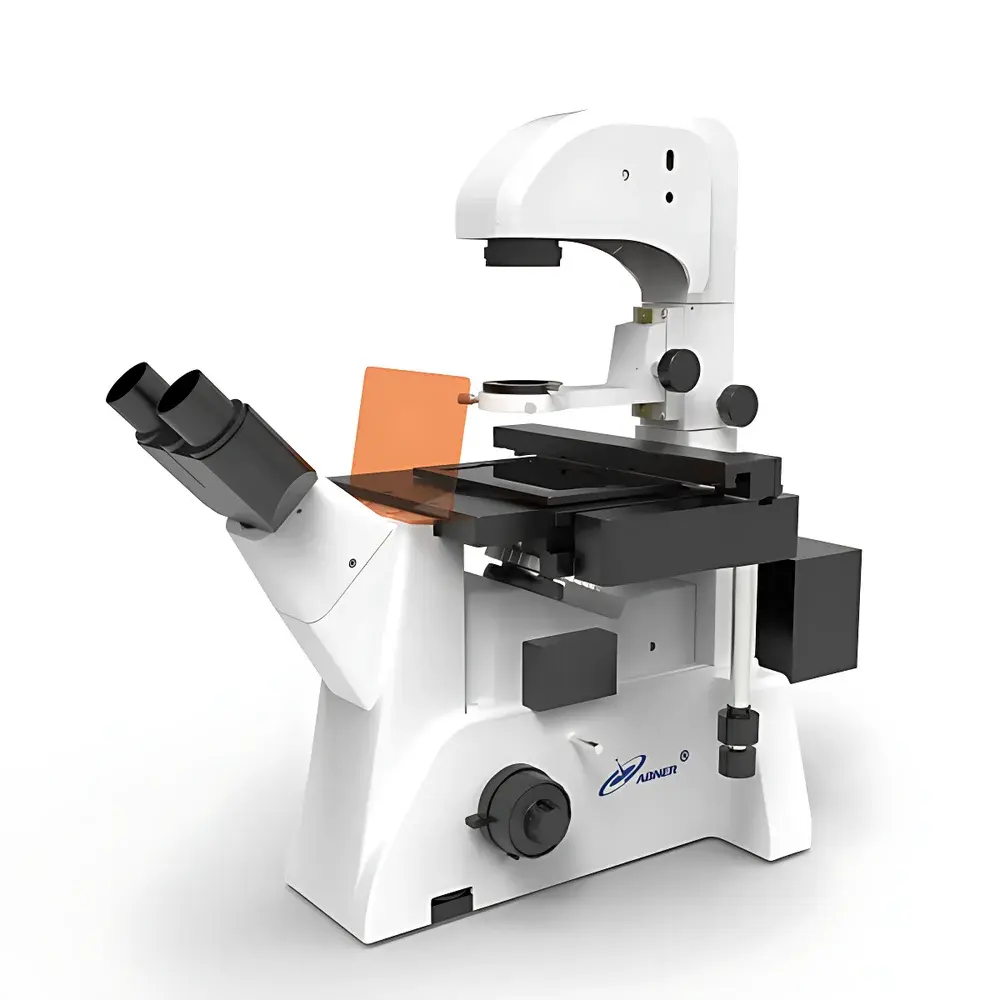
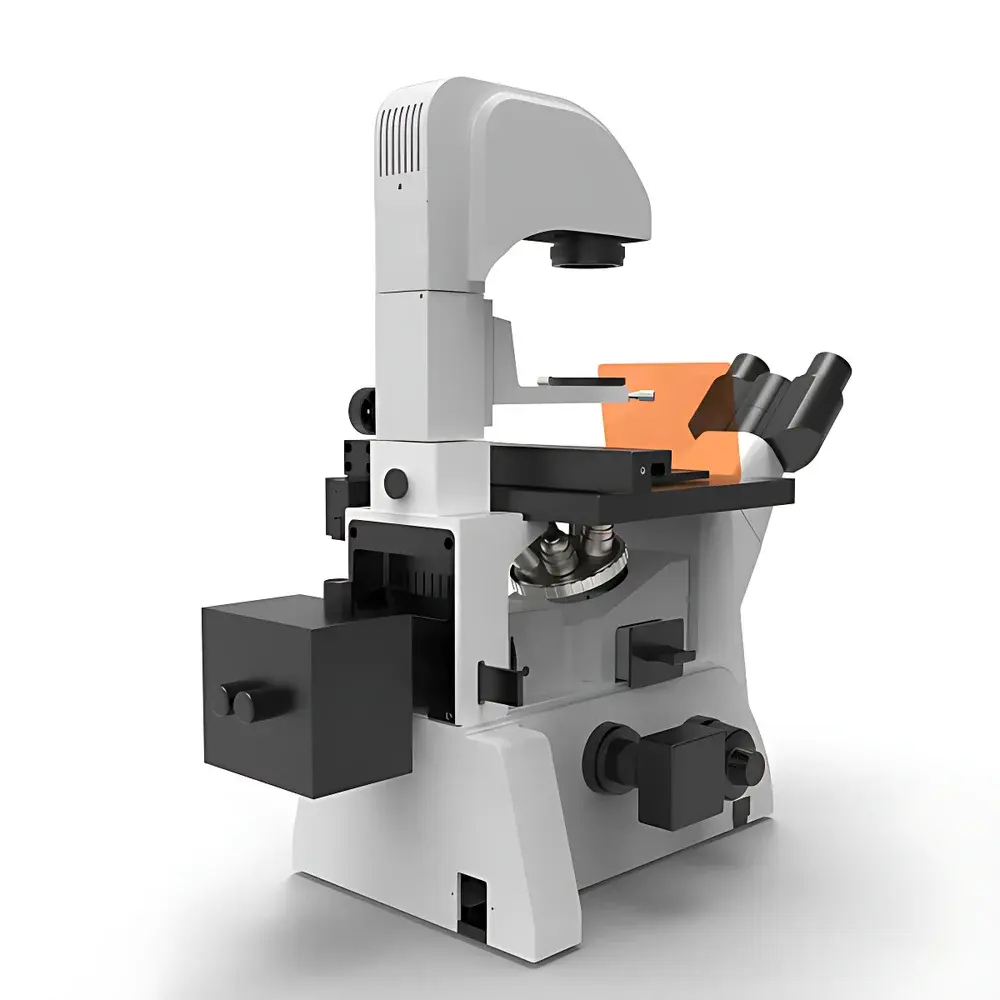
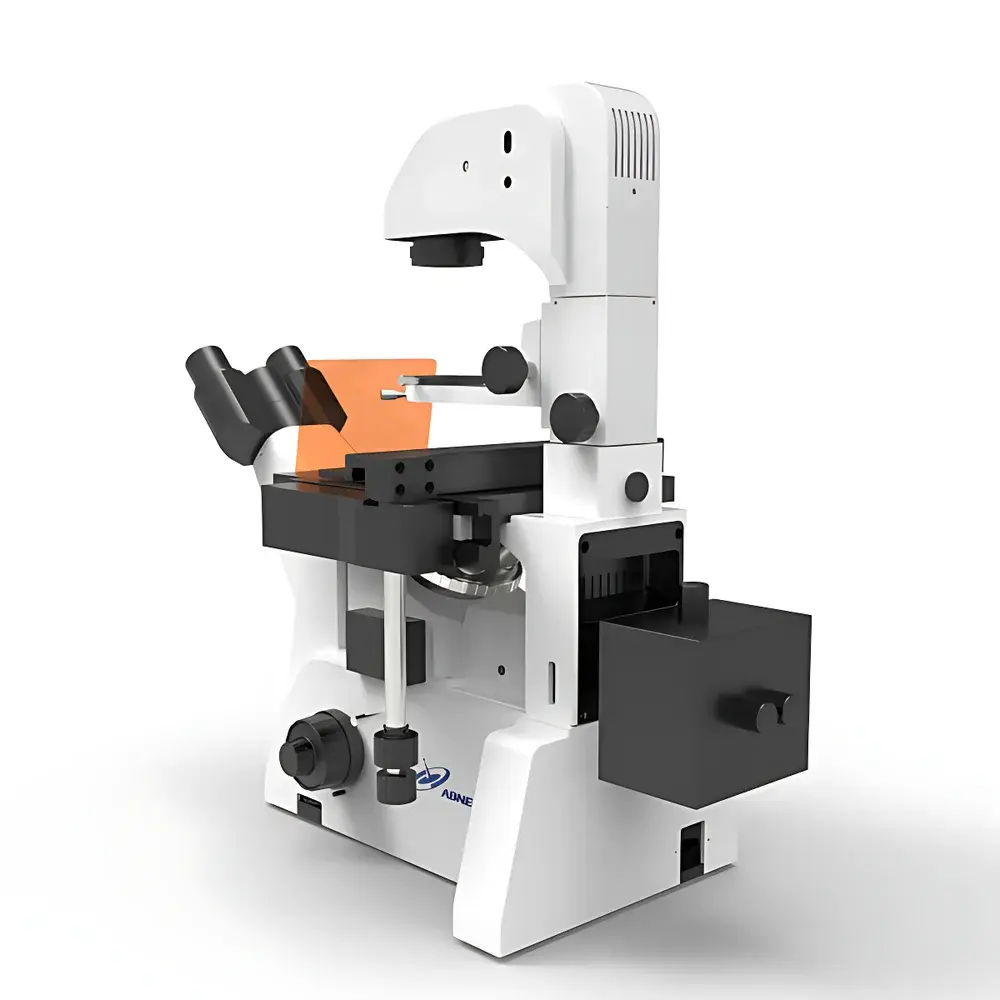
Abner ABN-FLU-03 Inverted Fluorescence Microscope
| Brand | Abner |
|---|---|
| Origin | Jiangsu, China |
| Model | ABN-FLU-03 |
| Instrument Type | Inverted Fluorescence Microscope |
| Excitation Light Source | High-Stability LED |
| Objective Lenses | 4×, 10×, 20×, 40× (Long Working Distance) |
| Eyepieces | 10× Widefield |
| Fluorescence Filter Sets | B (Excitation 460–490 nm), G (Excitation 510–550 nm), U (Excitation 330–385 nm) |
| Illumination | LED-based Epifluorescence Illuminator |
| Focus Mechanism | Manual or Motorized Coaxial Fine/Coarse Adjustment |
| Condenser | Long-Arms Phase Contrast & DIC-Compatible Condenser |
| Observation Head | Ergonomic Dual-Eyepiece Binocular Tube with ≥45° Inclination |
| Control Mode | Semi-Automatic or Fully Automated via External Controller |
| Regulatory Status | Not a Medical Device |
| Compliance | Designed for Research Use Only (RUO) |
Overview
The Abner ABN-FLU-03 Inverted Fluorescence Microscope is an engineered optical platform optimized for high-fidelity epifluorescence imaging of live and fixed biological specimens under native culture conditions. Its inverted optical architecture—featuring objectives positioned beneath the specimen stage and illumination/detection pathways above—enables direct observation of cells in standard tissue culture vessels (e.g., Petri dishes, flasks, and multi-well plates) without mechanical disturbance or environmental compromise. The system operates on the principle of widefield epifluorescence microscopy: excitation light from high-stability LEDs is directed through dichroic mirrors and bandpass filters to selectively illuminate fluorophores; emitted fluorescence passes through emission filters and is captured by an external scientific camera or visualized through the binocular observation head. This configuration ensures minimal phototoxicity during time-lapse experiments while maintaining spatial resolution suitable for subcellular localization studies (e.g., organelle tracking, protein co-localization, and calcium dynamics). Designed for research-grade reproducibility, the ABN-FLU-03 integrates thermally stable mechanical components, low-drift Z-axis mechanics, and vibration-damped base construction—key attributes required for quantitative fluorescence intensity measurements across extended acquisition timelines.
Key Features
- Inverted optical layout with long-working-distance objective compatibility (4× to 40×), enabling unobstructed access to culture vessels up to 20 mm in height
- Triple-band LED-based fluorescence illumination system with precisely aligned B/G/U filter sets (460–490 nm, 510–550 nm, and 330–385 nm excitation bands), supporting common fluorophores including DAPI, FITC, TRITC, and Hoechst
- Ergonomic binocular observation tube with ≥45° inclination angle and interpupillary adjustment, reducing operator fatigue during prolonged imaging sessions
- Motorized or manual coaxial focusing system with dual-speed coarse/fine controls and ≤1 µm minimum step resolution for precise Z-stack acquisition
- Universal C-mount interface (1× magnification relay) and standardized USB 3.0/USB-C output for seamless integration with sCMOS, EMCCD, or CMOS cameras
- Modular design accommodating optional upgrades: motorized XY stage, environmental chamber (37°C ±0.5°C, 5% CO₂), and automated filter wheel
Sample Compatibility & Compliance
The ABN-FLU-03 supports a broad range of sample formats—including glass-bottom dishes, chambered coverslips, 6–96-well plates, and suspension cultures in specialized holders—without requiring mounting media or coverslip inversion. Its long-working-distance condenser accommodates phase contrast and differential interference contrast (DIC) observation modes, facilitating multimodal correlative imaging. All optical components are manufactured to ISO 10110 surface quality standards, and the LED illumination system complies with IEC 62471 Photobiological Safety requirements for Class 1 LED devices. The microscope is designated for Research Use Only (RUO) and is not intended for diagnostic or clinical applications. It meets general laboratory equipment safety standards per IEC 61010-1 and is compatible with GLP-compliant workflows when paired with audit-trail-enabled acquisition software.
Software & Data Management
The ABN-FLU-03 interfaces with third-party acquisition platforms such as NIS-Elements (Nikon), ZEN Blue (Zeiss), or open-source solutions like Micro-Manager and Fiji/ImageJ via standard DCAM, GenICam, or TWAIN protocols. Optional Abner-branded control software provides synchronized LED intensity modulation, automated filter switching, Z-stack acquisition with user-defined step intervals, and time-lapse scheduling. All acquired images include embedded metadata (objective ID, exposure time, LED power level, filter position, timestamp) compliant with MIAME and OME-TIFF specifications. Export formats include TIFF (16-bit linear), PNG, and HDF5 for downstream analysis in Python (scikit-image, napari) or MATLAB environments. Audit trail functionality—including user login, parameter change logs, and acquisition history—is available upon integration with validated LIMS or ELN systems.
Applications
- Live-cell imaging of GFP/RFP-tagged proteins in adherent and suspension cultures over hours to days
- Immunofluorescence quantification of receptor expression and translocation in primary tumor cell lines
- High-content screening (HCS) in 96-well plates for cytotoxicity, apoptosis, and nuclear morphology assays
- Multi-channel co-localization analysis using spectral unmixing-ready filter sets
- Functional material characterization—including quantum dot distribution, polymer self-assembly, and hydrogel degradation kinetics—via fluorescence lifetime-compatible illumination
- Teaching and core facility deployment where robustness, intuitive operation, and serviceability are prioritized
FAQ
Is the ABN-FLU-03 compliant with FDA 21 CFR Part 11 for regulated environments?
No—it is classified as a Research Use Only instrument and does not include electronic signature, audit trail, or role-based access control out-of-the-box. These features may be enabled via validated third-party software integrations.
Can the system be upgraded to support confocal imaging?
The ABN-FLU-03 is a widefield platform; confocal capability requires a separate spinning-disk or laser-scanning module. Mechanical and optical interfaces are designed to accommodate such add-ons via OEM partnerships.
What is the maximum working distance supported by the 40× objective?
The standard 40× objective provides ≥3.5 mm working distance, sufficient for imaging through 0.17 mm-thick glass-bottom dishes with full immersion correction.
Does the LED illumination support intensity ramping for photobleaching control?
Yes—intensity is digitally adjustable from 1% to 100% in 0.1% increments via TTL or analog voltage input, enabling precise light dosing for FRAP or photoactivation experiments.
Is service and calibration documentation provided with shipment?
Each unit ships with a Certificate of Conformance, optical alignment report, and factory calibration log traceable to NIST-standard reference slides (e.g., USAF 1951 target, fluorescent microbeads). On-site installation and IQ/OQ validation support are available under extended service contracts.



