
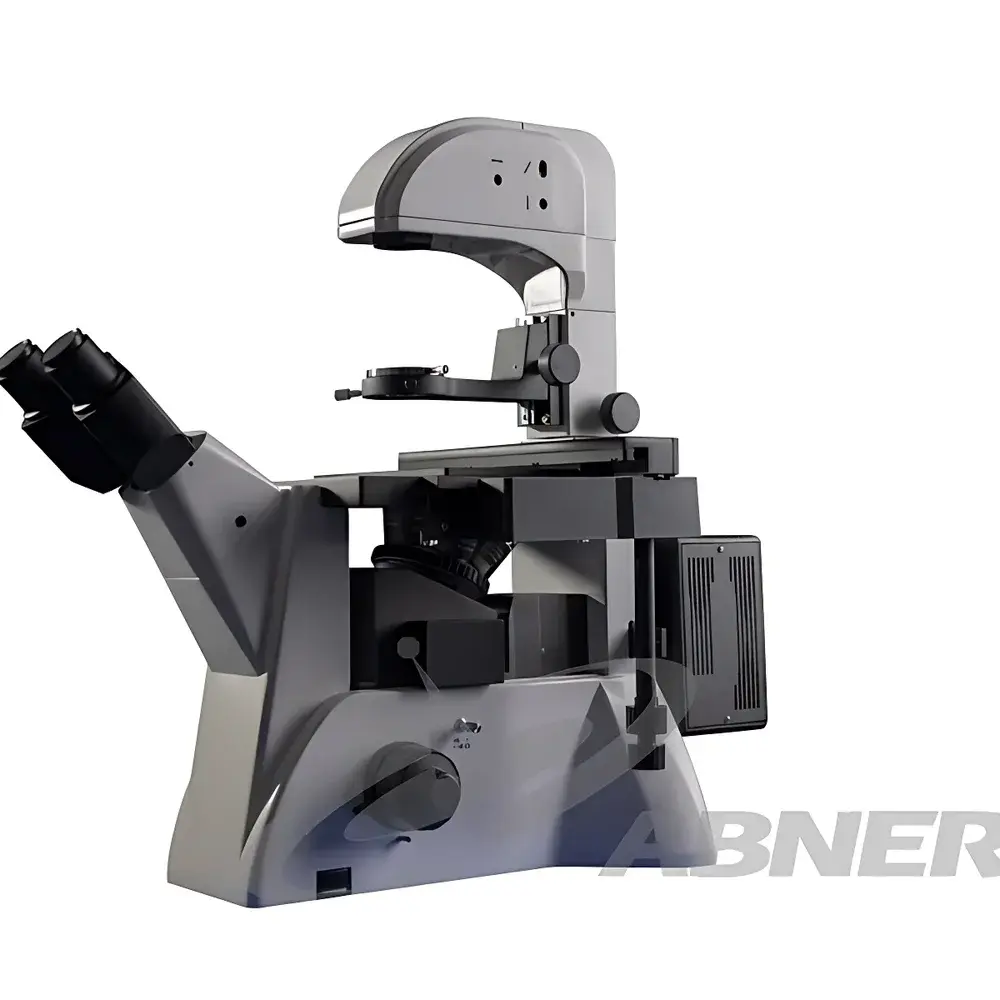
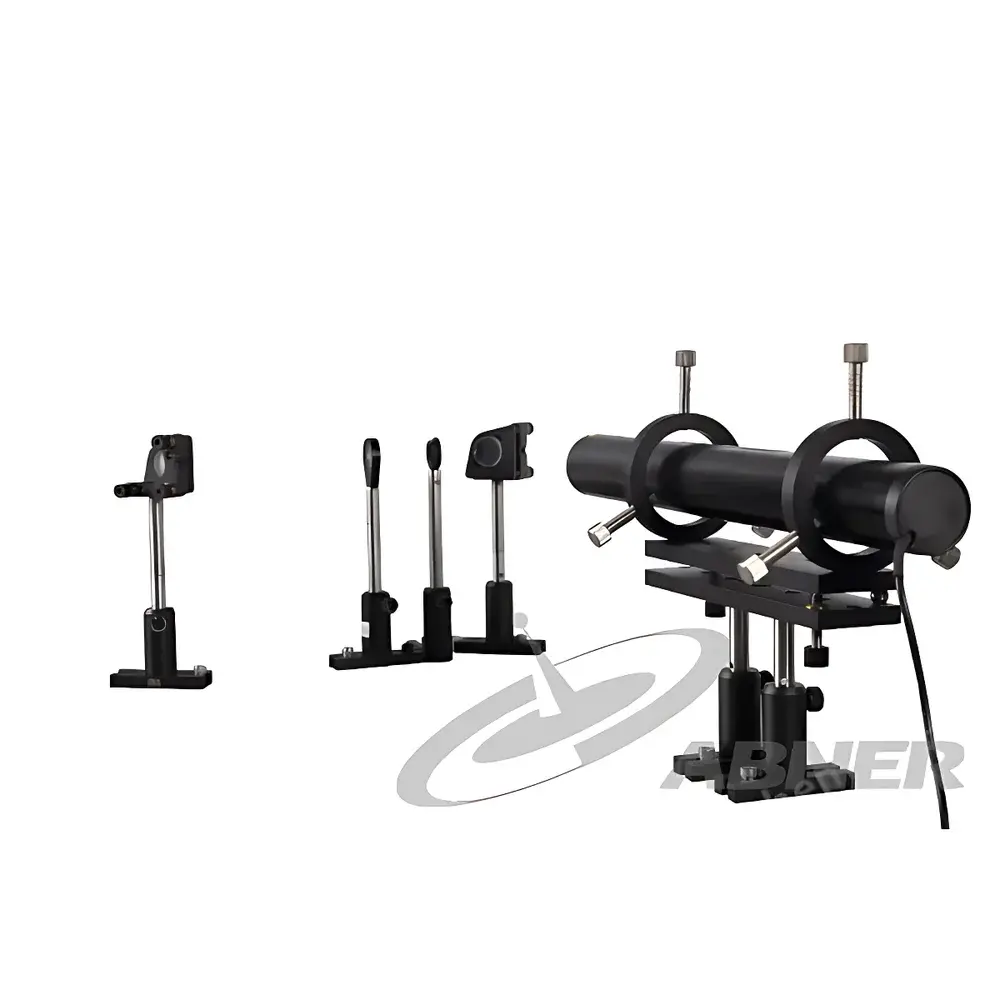
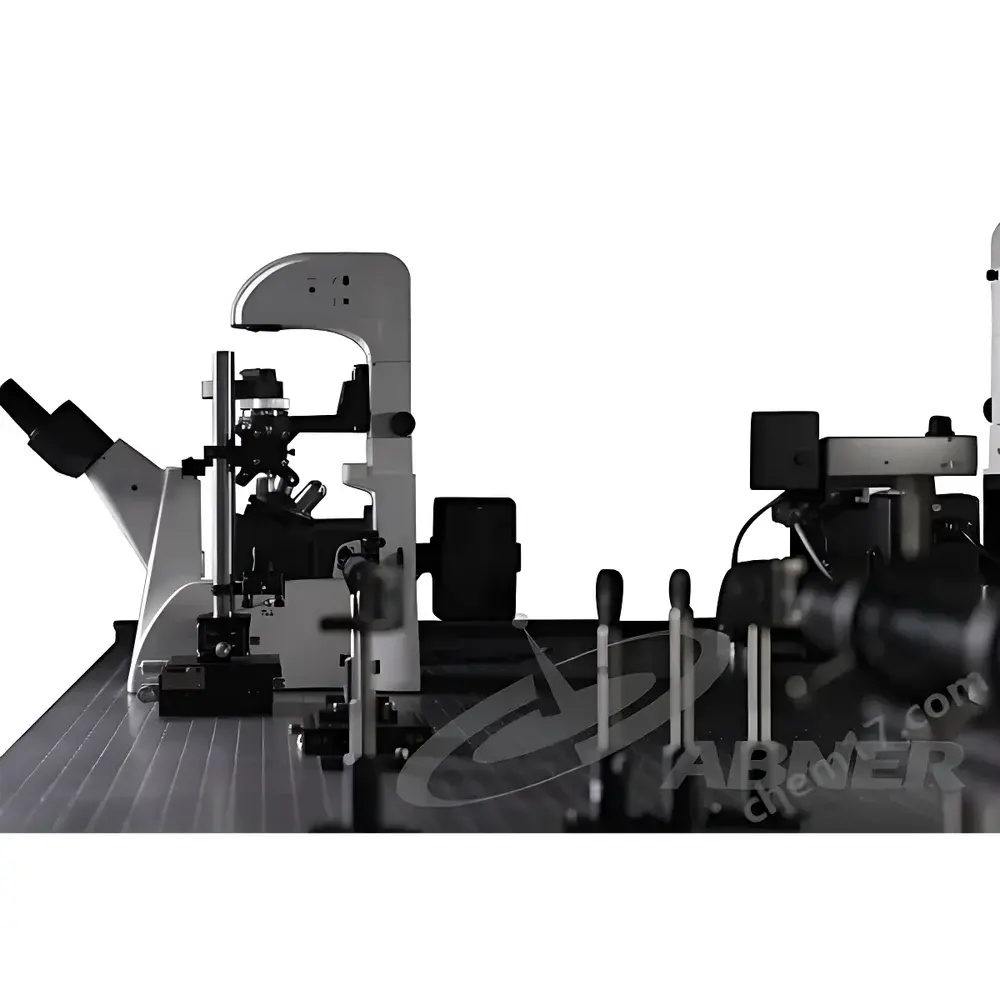
Abner ABN-GN Optical Coupling System for Laser-Based Liquid Crystal Characterization
| Brand | Abner |
|---|---|
| Origin | Jiangsu, China |
| Manufacturer Type | Authorized Distributor |
| Origin Category | Domestic (China) |
| Model | ABN-GN |
| Price | USD 42,000 (FOB Jiangsu) |
| Translation Stage | Motorized or Manual Precision Linear Translation Stage |
Overview
The Abner ABN-GN Optical Coupling System is a purpose-built laser beam conditioning and micro-observation platform engineered for quantitative optical characterization of liquid crystalline materials. It operates on the principle of controlled Gaussian beam manipulation—integrating collimated laser input, magnification via reflective or refractive beam expansion optics, and diffraction-limited focusing through high-numerical-aperture (NA) microscope objectives. Unlike generic optomechanical mounts, this system is calibrated for stable wavefront preservation across visible to near-infrared wavelengths (405–1064 nm), enabling reproducible illumination geometry essential for polarized light microscopy, birefringence mapping, and dynamic phase transition analysis. Its architecture supports both static alignment verification and time-resolved imaging protocols, making it suitable for academic labs conducting fundamental soft matter physics research and industrial R&D teams developing next-generation LCD/OLED alignment layers.
Key Features
- Three-fold beam expansion capability with RMS wavefront error < λ/10 @ 633 nm, achieved via kinematically mounted, anti-reflection-coated Galilean or Keplerian expander modules
- Interchangeable objective turret accommodating standard RMS-threaded objectives (10× to 100×, NA 0.25–0.95), each pre-aligned to the optical axis with < 5 µm lateral deviation
- Motorized or manual translation stage (±12.5 mm travel, 0.5 µm repeatability) with orthogonal micrometer-adjustable tilt compensation for sample-leveling critical to uniform illumination
- Integrated mounting interface compatible with standard optical tables (M6 tapped holes on baseplate) and modular breadboard integration via SM1-threaded lens tubes
- Thermally stabilized aluminum housing with passive damping to minimize mechanical drift (< 0.3 µrad/°C angular sensitivity) during long-duration acquisition sequences
Sample Compatibility & Compliance
The ABN-GN system accommodates standard liquid crystal cell formats including 25 × 25 mm and 50 × 50 mm glass substrates with ITO electrodes, as well as custom-fabricated capillary cells (inner diameter 100–500 µm). It supports environmental control integration—e.g., temperature stages compliant with ASTM E2847 (standard practice for calibration of thermal measurement systems) and humidity chambers meeting ISO 17025 environmental monitoring requirements. All optical components conform to ISO 10110 surface quality specifications (scratch-dig 20–10), and mechanical assemblies meet ISO 9001 traceability standards for component sourcing and assembly documentation. The system is designed for use in GLP-compliant laboratories; full audit trails for stage position, laser power logging (via optional photodiode interface), and objective selection are supported when paired with third-party data acquisition software.
Software & Data Management
While the ABN-GN operates as a hardware platform without embedded firmware, its motorized translation stage integrates seamlessly with industry-standard motion controllers (e.g., Thorlabs Kinesis, Newport Motion Control SDK) supporting LabVIEW, Python (PyVISA), and MATLAB APIs. Positional metadata (stage coordinates, objective ID, timestamp) can be synchronized with external imaging systems (sCMOS cameras, polarimeters) via TTL triggers and ASCII-based serial handshaking. For regulated environments, the system supports 21 CFR Part 11-compliant electronic records when used with validated third-party acquisition suites that provide user authentication, electronic signatures, and immutable audit logs—critical for QC/QA workflows in display material qualification per IEC 62341-6-3 (OLED testing standards).
Applications
- Quantitative birefringence imaging of nematic, smectic, and cholesteric phases under applied electric or magnetic fields
- In-situ observation of director reorientation kinetics during voltage ramping, with temporal resolution down to 10 ms/frame using synchronized camera triggering
- Defect topology analysis (disclinations, skyrmions) via polarization-resolved interferometry
- Photoalignment layer characterization using UV-polarized irradiation through the same optical path
- Calibration reference setup for ellipsometric and reflectometric liquid crystal parameter extraction (e.g., Δn, elastic constants)
FAQ
Is the ABN-GN system compatible with ultrafast lasers?
Yes—when equipped with dispersion-compensated expander optics and fused silica objectives, it supports pulse durations ≥ 100 fs at 800 nm, provided average power remains below 500 mW to avoid thermal lensing in coated elements.
Can the system be upgraded for automated focus stacking?
Yes—the motorized Z-axis option (sold separately) enables programmable focus stepping with sub-micron precision, fully controllable via Python scripts or LabVIEW VIs.
Does Abner provide optical alignment certification?
Each unit ships with a factory-generated beam profiling report (M² measurement, centroid stability over 1 hour) and mechanical axis collimation certificate traceable to NIM (National Institute of Metrology, China).
What safety certifications does the system meet?
The mechanical frame complies with CE machinery directive 2006/42/EC; laser safety interlocks must be implemented externally per IEC 60825-1:2014 based on the integrated laser source classification.
Is technical support available for integration with custom microscopy platforms?
Abner’s application engineering team provides remote configuration assistance and mechanical interface drawings (STEP files) for OEM integration under NDA.



