
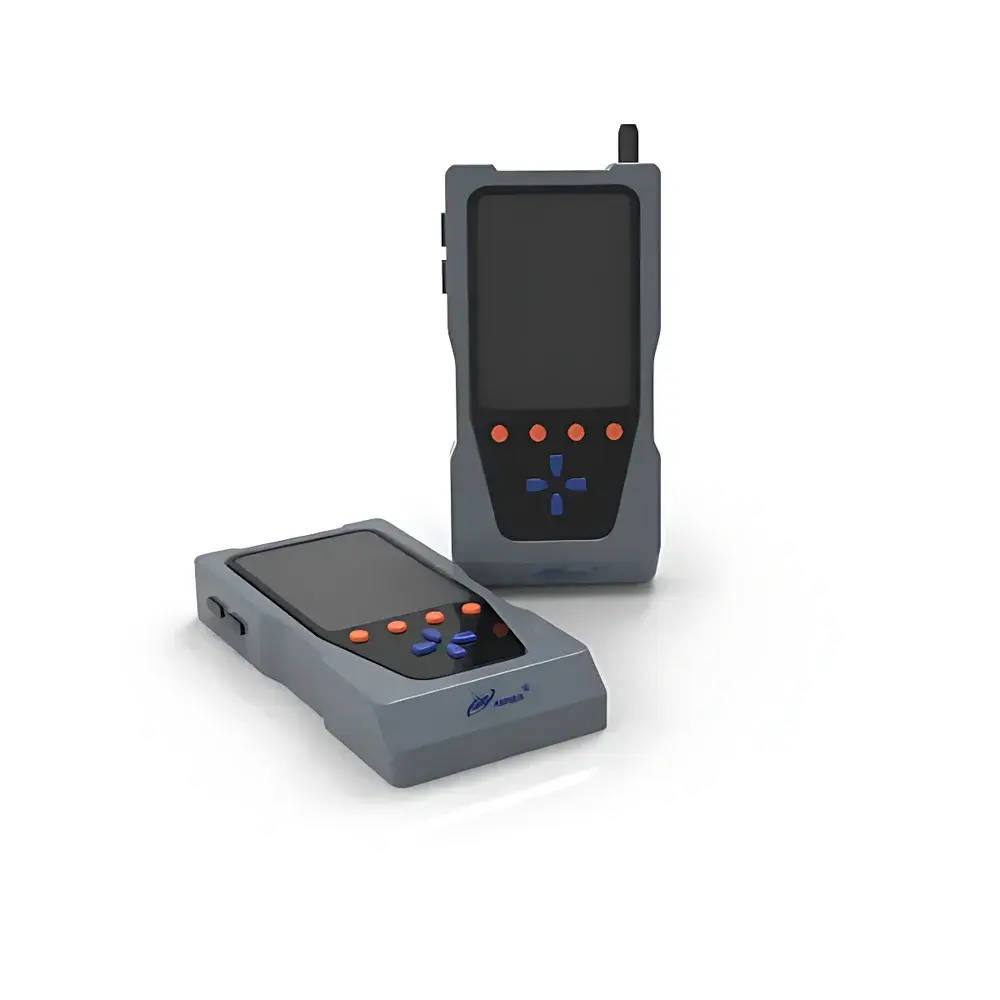
Abner ABN-HRAM-001 Handheld Raman Spectrometer
| Brand | Abner |
|---|---|
| Origin | Jiangsu, China |
| Model | ABN-HRAM-001 |
| Instrument Type | Handheld Raman Spectrometer |
| Spectral Range | 200–3100 cm⁻¹ |
| Resolution | 6 cm⁻¹ (@25 μm grating) |
| Laser Wavelength | 785 ± 0.5 nm |
| Laser Linewidth | ≤0.08 nm |
| Max Laser Power | 500 mW (software-adjustable) |
| Integration Time | 1 ms – 65 s |
| Detector | 16 MP high-sensitivity CMOS |
| Working Distance | 7.5 mm |
| Dimensions | 183 × 89 × 36 mm |
| Weight | ~500 g |
| Display | 5.72″ industrial capacitive touchscreen |
| Protection Rating | IP66 |
| Drop Resistance | 1.2 m |
| Operating Temperature | 0–45 °C |
| Operating Humidity | 5–80 % RH |
| Connectivity | Wi-Fi, Bluetooth, GPS, NFC |
| Interface | USB Type-C |
Overview
The Abner ABN-HRAM-001 Handheld Raman Spectrometer is an engineered solution for field-deployable molecular identification based on inelastic light scattering (Raman effect). It operates at a stabilized 785 nm excitation wavelength—optimized to minimize fluorescence interference while maintaining sufficient photon energy for robust vibrational mode excitation across organic and inorganic compounds. The instrument employs a compact Czerny–Turner optical architecture with a 25 μm ruled holographic grating and a back-illuminated 16-megapixel CMOS detector, delivering spectral coverage from 200 to 3100 cm⁻¹ with a resolution of 6 cm⁻¹ (FWHM). Designed for real-time, non-contact, non-destructive analysis, it enables direct measurement of solids, powders, and liquids without sample preparation—making it suitable for regulatory-compliant screening workflows in environments where laboratory access is impractical or time-prohibitive.
Key Features
- True handheld ergonomics: Weighing only ~500 g with dimensions of 183 × 89 × 36 mm, the ABN-HRAM-001 supports single-hand operation and extended field use; its IP66-rated enclosure ensures dust-tightness and resistance to powerful water jets, while the 1.2 m drop-tested chassis meets MIL-STD-810G mechanical durability requirements.
- Adaptive laser control: The 785 nm diode laser features software-adjustable output (0–500 mW), enabling power optimization per sample type to balance signal intensity against thermal degradation risk—particularly critical for thermally labile pharmaceuticals or polymers.
- High-fidelity spectral acquisition: With integration times programmable from 1 ms to 65 s and sub-millisecond triggering, the system supports both rapid qualitative screening and deep quantitative profiling. The 16 MP CMOS sensor provides high dynamic range and low read noise, enhancing detection sensitivity for trace analytes.
- Field-ready human interface: A 5.72-inch industrial-grade capacitive touchscreen operates reliably with gloves and under variable ambient lighting; intuitive menu navigation and on-device spectral library matching reduce operator training burden.
- Multimodal connectivity: Integrated Wi-Fi, Bluetooth 5.0, GPS, and NFC support synchronized data logging, geotagged reporting, remote firmware updates, and secure pairing with enterprise LIMS or mobile forensic platforms.
Sample Compatibility & Compliance
The ABN-HRAM-001 is validated for direct analysis of unprepared solid, powdered, and liquid samples—including tablets, crystals, illicit substances, explosives precursors, pigments, and polymer films. Its 7.5 mm fixed working distance and auto-focus assist ensure consistent spot illumination and reproducible signal collection. While not certified as a Class I medical device, the instrument complies with IEC 61010-1 (safety requirements for electrical equipment) and IEC 60825-1 (laser product safety). Its spectral output is compatible with ASTM E1840-20 (Standard Guide for Raman Shift Standards) and supports method development aligned with USP (Raman Spectroscopy) and Ph. Eur. 2.2.48. Data integrity safeguards—including timestamped spectra, operator ID tagging, and audit-trail-enabled configuration logs—facilitate GLP/GMP-aligned documentation in regulated QC/QA environments.
Software & Data Management
The embedded firmware runs Abner’s proprietary RamanView™ OS, supporting real-time spectral subtraction, baseline correction (Asymmetric Least Squares), peak fitting (Voigt profile), and multivariate correlation algorithms (e.g., PCA, PLS-DA). Onboard libraries include >2,500 reference spectra (NIST-traceable standards, pharmaceutical actives, controlled substances, and common adulterants), searchable via fingerprint matching with adjustable similarity thresholds. All spectra are saved in open-format .spc and .csv files; cloud synchronization via encrypted HTTPS channels enables centralized spectral database management. Optional FDA 21 CFR Part 11 compliance modules provide electronic signature capability, role-based access control, and immutable audit trails for regulated users.
Applications
- Pharmaceutical Quality Control: Rapid verification of API identity and excipient composition in raw materials or finished dosage forms—reducing reliance on HPLC for incoming inspection.
- Forensic & Law Enforcement: In situ identification of unknown white powders, clandestine drug synthesis intermediates, or explosive residues at crime scenes or border checkpoints.
- Materials Science Research: Spatial mapping of strain distribution in 2D materials (e.g., graphene, MoS₂), phase transitions in battery cathodes, or crystallinity assessment in thin-film semiconductors.
- Environmental Monitoring: Field detection of microplastics in soil or water sediments using characteristic C–H and C=O vibrational signatures.
- Educational Use: Hands-on demonstration of Raman selection rules, resonance enhancement effects, and spectral interpretation fundamentals in undergraduate chemistry and physics laboratories.
FAQ
What laser safety class does the ABN-HRAM-001 comply with?
The instrument is classified as Class 3B under IEC 60825-1 when operating above 5 mW; integrated interlocks, beam shutter logic, and automatic power reduction during idle states ensure compliance with occupational exposure limits (ANSI Z136.1).
Can the device perform quantitative analysis?
Yes—when coupled with calibration standards and validated chemometric models (e.g., PLS regression), it supports semi-quantitative concentration estimation for homogeneous matrices; accuracy depends on sample homogeneity, fluorescence background, and instrument stability over time.
Is spectral library customization supported?
Yes—users may import custom reference spectra in .spc or .jdx format, assign metadata (CAS number, batch ID, confidence threshold), and deploy them locally or via network-synced repositories.
Does the system support external triggering or synchronization with other instruments?
The USB Type-C port supports trigger-in and trigger-out TTL signals, enabling hardware-synchronized acquisition with thermal cameras, NIR spectrometers, or automated stage controllers for correlative multimodal analysis.
What maintenance is required for long-term operational reliability?
No routine optical alignment is needed due to monolithic optical bench design; periodic verification using silicon (520.7 cm⁻¹) and cyclohexane (2920 cm⁻¹) reference peaks is recommended every 6 months or after significant mechanical shock.




