
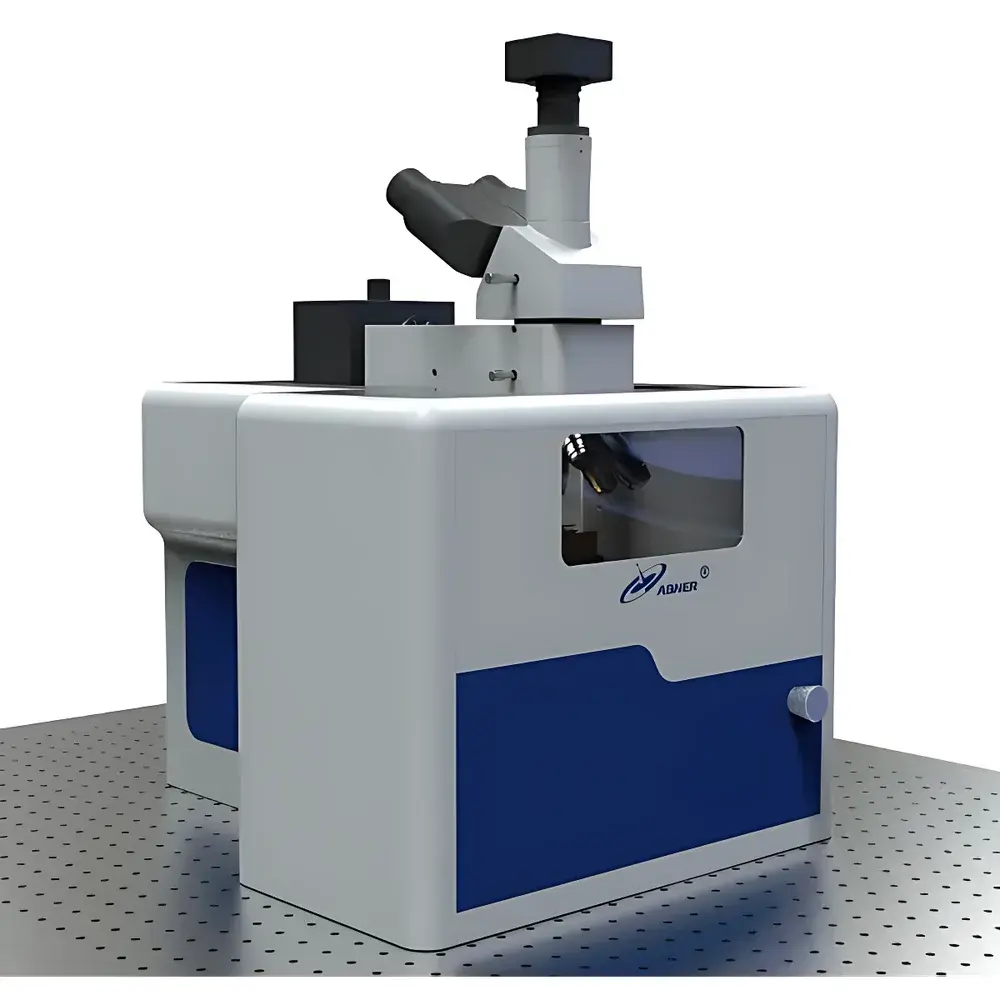
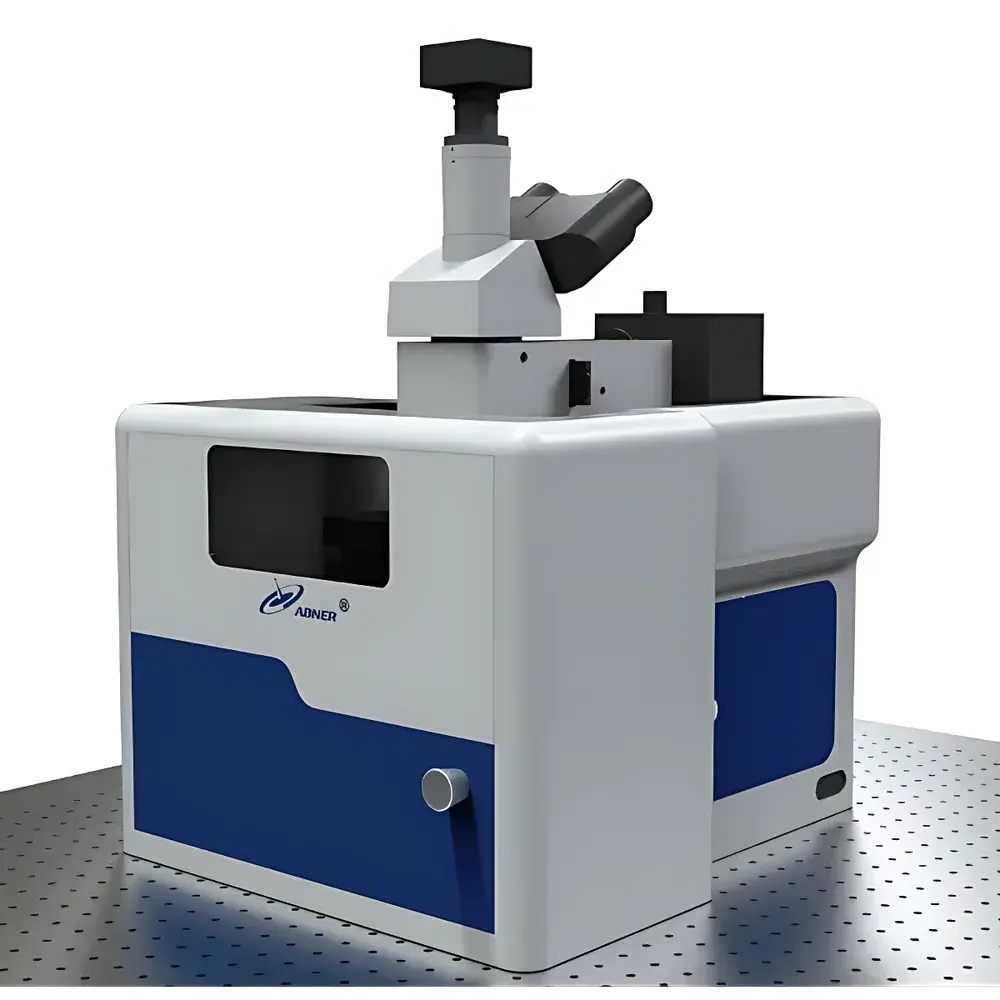
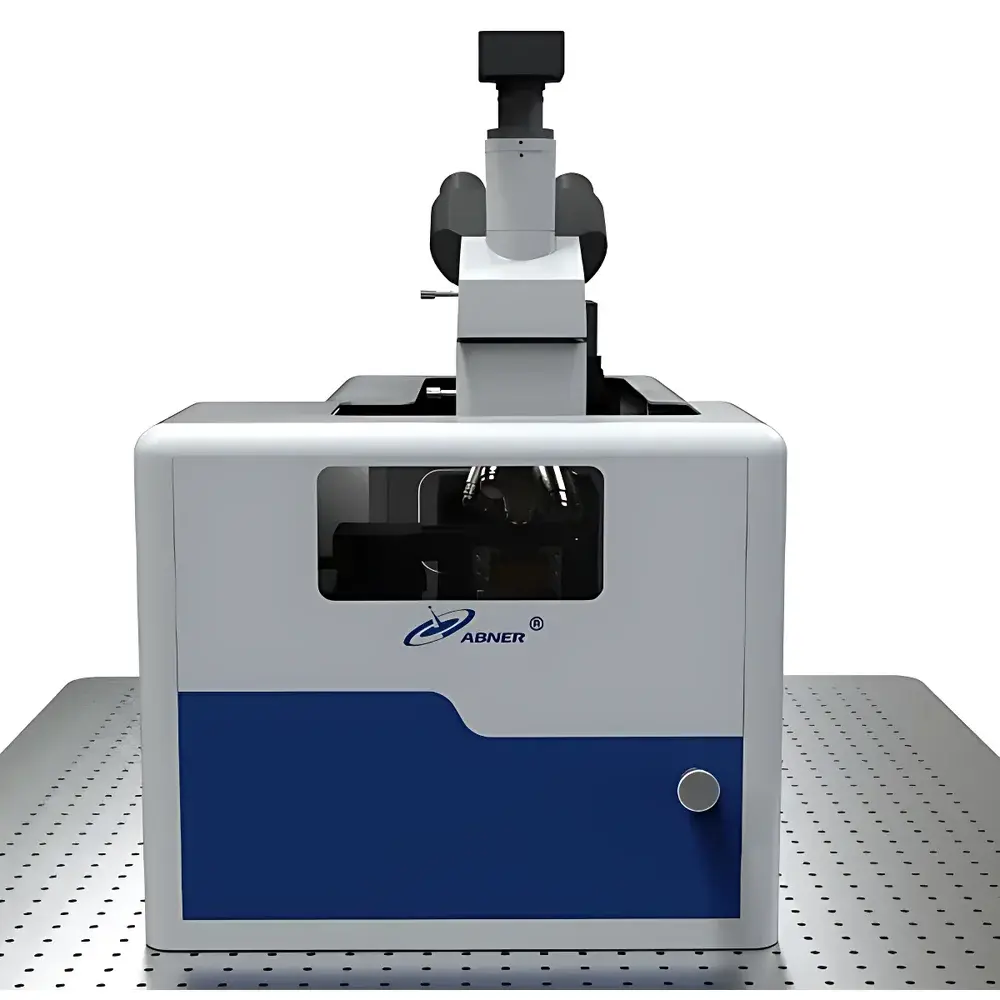
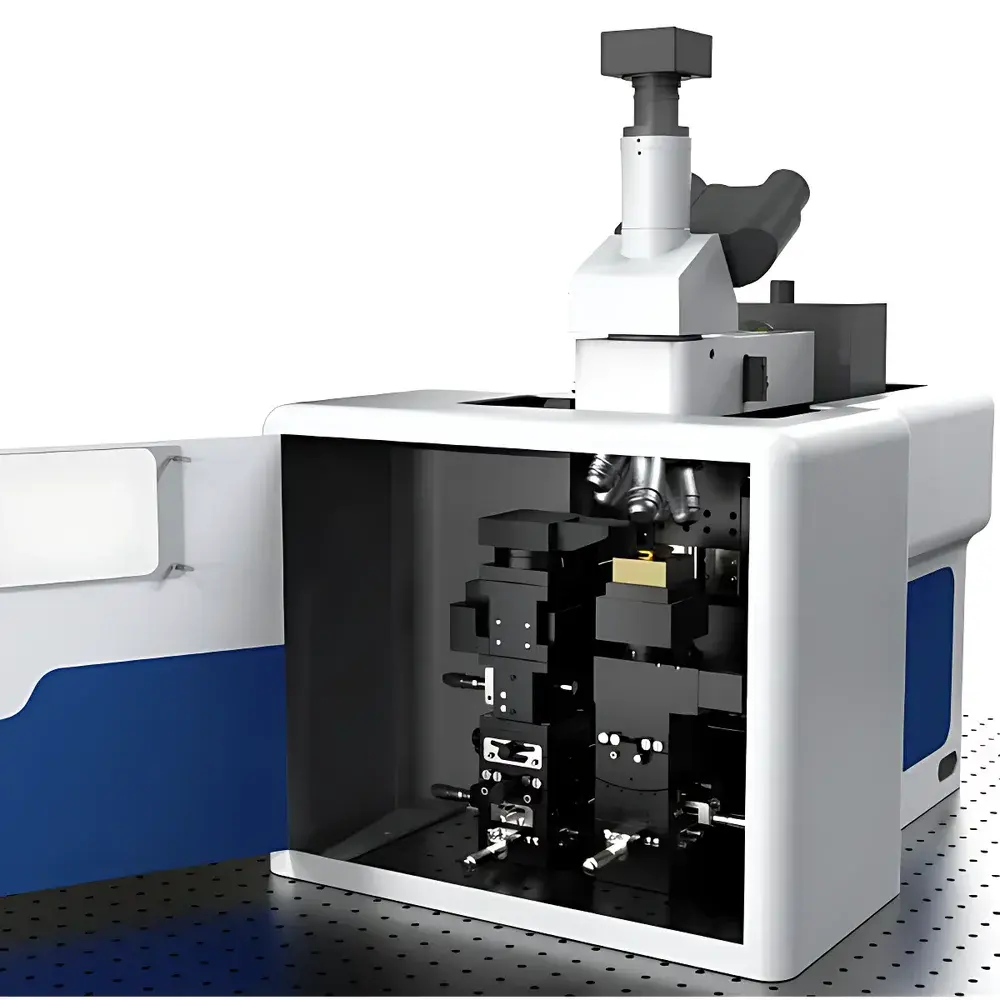
Abner Semi-Automatic 2D Material Transfer Stage
| Brand | Abner |
|---|---|
| Origin | Jiangsu, China |
| Manufacturer Type | Authorized Distributor |
| Product Category | Domestic |
| Model | Semi-Automatic 2D Sample Transfer Stage |
| Price | USD 13,800 (FOB Jiangsu) |
| Product Type | Manual Translation Stage with Motorized XY Positioning |
| Motor Type | STP-2B1003-08 Stepper Motor |
| Step Angle | 1.8° (microstepping mode: 1.45°/10) |
| Max Speed | 125.5 mm/min |
| Min Displacement Resolution | 100 µm/min |
| Max Load Capacity (Platform) | 8 kg |
| Max Travel Range | 0–50 cm (X/Y) |
| Drive Mechanism | Precision Lead Screw |
| Sample Stage Load Limit | 1 kg |
| Max Sample Size | 1.25 mm (diameter) |
| Vacuum Adsorption Head | Integrated Negative-Pressure Gripper |
| Heating Module | Integrated Hotplate, 25–200 °C (±1.5 °C stability) |
| Imaging System | Long Working Distance Microscope, Real-Time Visual Alignment |
| Control Interface | 7″ LCD Touchscreen (1024×640×480), USB 3.0 (≥5 Gbps), Windows 10 (64-bit) Compatible |
| Software API Support | C/C++, C#, VB.NET, DirectShow, TWAIN |
| Environmental Operating Range | 0–40 °C, ≤90% RH (non-condensing) |
| Image Output Formats | PNG, JPEG |
Overview
The Abner Semi-Automatic 2D Material Transfer Stage is an engineered solution for precise, reproducible handling and deterministic placement of atomically thin materials—including graphene, transition metal dichalcogenides (TMDs), and hexagonal boron nitride (hBN)—onto target substrates. Unlike fully automated robotic transfer systems, this platform adopts a hybrid control architecture: motorized XY translation stages provide micron-level positional repeatability and programmable motion sequencing, while manual θ-rotation and vacuum-assisted release mechanisms enable intuitive, real-time operator intervention during critical alignment and contact stages. Its design adheres to the physical constraints of van der Waals assembly—minimizing shear stress, suppressing interfacial trapping, and preserving crystal integrity—making it suitable for both research-grade heterostructure fabrication and pedagogical demonstration in condensed matter physics and nanoelectronics laboratories.
Key Features
- Motorized XY Precision Platform: Dual-axis stepper-driven lead-screw stages deliver repeatable positioning within ±1 µm over 50 cm travel range; compatible with programmable motion profiles via embedded touchscreen or external host PC.
- Manual Angular Adjustment (θ-axis): Fine-tuned rotational control enables precise orientation alignment—critical for constructing moiré superlattices, aligned heterojunctions, and polarization-sensitive photonic devices.
- Vacuum Adsorption Head: Low-pressure (< −60 kPa) gripper system ensures non-destructive pickup and controlled release of fragile monolayers without polymer residue or mechanical wrinkling.
- Integrated Resistive Heating Stage: Uniform temperature distribution (25–200 °C, ±1.5 °C stability) supports thermal-release protocols for PMMA, PDMS, and polycarbonate (PC)-assisted transfers.
- Real-Time Optical Alignment System: Long working distance microscope (≥20 mm) with adjustable magnification provides sub-micron visual feedback during layer registration—essential for edge-to-edge alignment and defect avoidance.
- Open-architecture Control Interface: Native support for C/C++, C#, VB.NET, DirectShow, and TWAIN APIs allows seamless integration into custom automation workflows or synchronized acquisition platforms (e.g., Raman mapping, PL imaging).
Sample Compatibility & Compliance
The stage accommodates standard wafer fragments (up to 1.25 mm diameter), exfoliated flakes, CVD-grown films on Cu/Ni foils or SiO₂/Si wafers, and polymer-supported transfers. It complies with general laboratory safety standards for low-voltage DC operation (Class I, EN 61010-1) and electromagnetic compatibility (EN 61326-1). While not certified for ISO 14644 cleanroom use, its sealed vacuum path and minimal particulate generation make it suitable for Class 1000–10,000 environments when operated under laminar flow hoods. The heating module meets IEC 60519-1 requirements for industrial resistance heaters.
Software & Data Management
The embedded Windows 10-based controller features a dedicated GUI for stage calibration, motion scripting, and image capture (PNG/JPEG). All user-defined movement sequences are timestamped and stored locally with metadata (temperature setpoint, vacuum pressure, elapsed time). Audit trail functionality—including operator ID logging and parameter change history—is configurable to align with GLP-compliant documentation practices. Exported motion logs are CSV-formatted for traceability in QC/QA reports or publication supplementary data packages.
Applications
- Monolayer and few-layer 2D material transfer onto SiO₂/Si, quartz, sapphire, and flexible polymer substrates
- Heterostructure assembly (e.g., graphene/hBN, MoS₂/WSe₂) for gate-tunable tunneling devices
- Moiré pattern engineering via angular stacking for correlated electron studies
- Teaching labs: hands-on training in cleanroom-adjacent transfer techniques without requiring full automation infrastructure
- Process development for scalable 2D-integrated photodetectors, memristors, and spintronic test structures
FAQ
Is this system compatible with glovebox integration?
Yes—the vacuum head and heating stage operate independently of ambient atmosphere; optional inert-gas purge ports can be added for N₂/Ar-compatible operation.
Can third-party microscopes be mounted?
The optical rail interface conforms to standard SM1 (1.035″-40) threading; custom adapter plates are available for Thorlabs, Olympus, and Zeiss objectives.
What level of vacuum does the adsorption head generate?
Typical operating vacuum is −60 to −80 kPa (absolute), adjustable via integrated pressure regulator and monitored in real time on the touchscreen display.
Does the controller support synchronization with external instruments?
Yes—via TTL trigger I/O and software API callbacks, enabling coordinated timing with laser sources, lock-in amplifiers, or camera exposure signals.
Is firmware update capability included?
Firmware updates are delivered via USB flash drive and validated through SHA-256 checksum verification prior to installation.




