
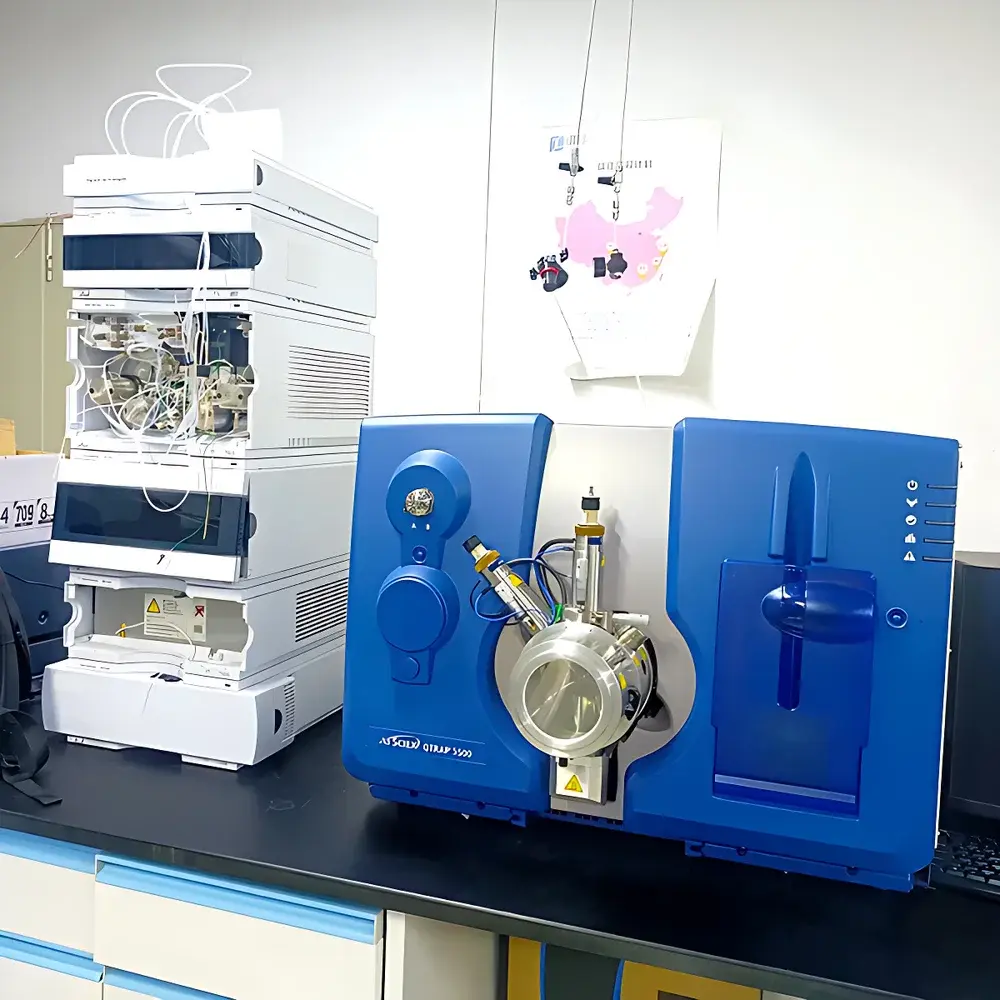
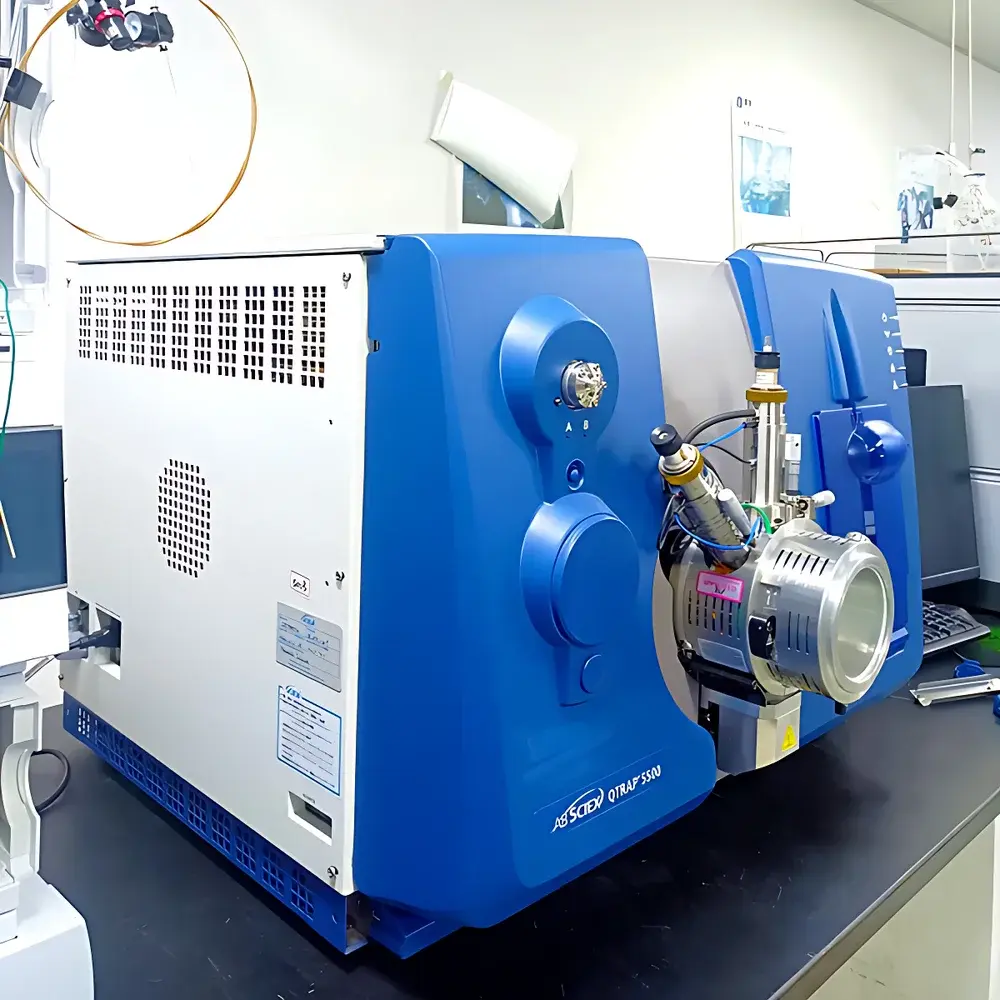
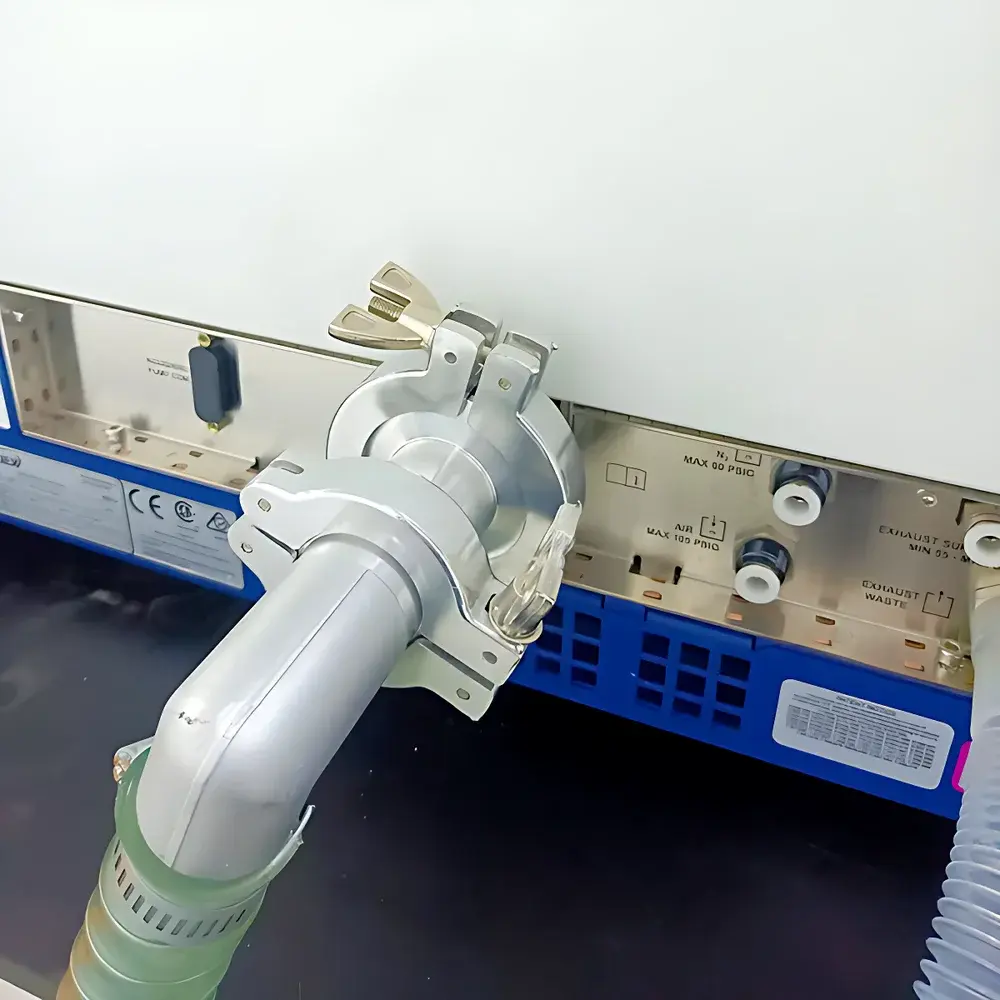
ABSCI LCMSMS5500 Triple Quadrupole Liquid Chromatography Tandem Mass Spectrometer
| Brand | ABSCI |
|---|---|
| Origin | USA |
| Manufacturer Type | Authorized Distributor |
| Origin Category | Imported |
| Model | 5500 |
| Instrument Type | Triple Quadrupole (TQ) |
| Application Scope | General-Purpose |
| Mass Range | m/z 5–1250 |
| MS/MS Sensitivity (ESI) | 50 fg, S/N > 500:1 |
| Resolution | 0.7 amu |
| Mass Accuracy | ±0.1 Da/24 h |
| Polarity Switching Time | ≤50 ms |
| Scan Speed | ≥12,000 amu/s |
| LC Pressure Capability | 15,000 psi |
| Column Temperature Range | 5–65 °C |
| Operating Pressure Range | 1200 psi |
Overview
The ABSCI LCMSMS5500 is a high-performance triple quadrupole liquid chromatography tandem mass spectrometer (LC-MS/MS) engineered for robust, high-throughput quantitative and qualitative analysis of low-abundance analytes in complex matrices. It integrates ultra-high-pressure liquid chromatography (UHPLC) with a proven triple quadrupole mass analyzer architecture—where Q1 selects precursor ions, Q2 serves as a collision cell for controlled fragmentation, and Q3 analyzes product ions—enabling highly selective multiple reaction monitoring (MRM), enhanced product ion (EPI), and neutral loss scanning. The system operates on electrospray ionization (ESI) and atmospheric pressure chemical ionization (APCI) sources, supporting both positive and negative ion modes with polarity switching in under 50 ms. Its mass range spans m/z 5 to 1250, with scan speeds exceeding 12,000 amu/s and long-term mass axis stability of ≤±0.1 Da over 24 hours—critical for longitudinal studies and regulated bioanalysis.
Key Features
- Triple quadrupole mass analyzer with unit-mass resolution (0.7 amu) and sub-0.1 Da mass accuracy over 24-hour operation
- UHPLC-compatible interface delivering up to 15,000 psi backpressure tolerance and precise column temperature control (5–65 °C)
- High-sensitivity ESI source achieving 50 fg on-column detection limit with signal-to-noise ratio >500:1 in MRM mode
- Fast polarity switching (≤50 ms) enabling simultaneous quantification of acidic and basic compounds within a single run
- Robust vacuum architecture maintaining stable operation at up to 1200 psi source and interface pressures
- Modular design compliant with ISO 9001-certified manufacturing and CE-marked electrical safety standards
Sample Compatibility & Compliance
The LCMSMS5500 is validated for analysis of small-molecule analytes (MW 5–1250 Da) in polar or moderately polar matrices. Compatible sample formats include aqueous or organic solutions (acetonitrile, methanol, ethanol), lyophilized powders (0.1–1 mg primary component), and clarified biological extracts. Samples must be free of non-volatile salts (e.g., phosphates, sulfates, hydrochlorides), surfactants, strong acids/bases, high-boiling solvents (DMSO, chloroform, benzene), and macromolecular interferences (proteins, polysaccharides, lipids, plasticizers). For metabolomics or PK/PD studies, samples require pre-clearing via 12,000 × g centrifugation (15 min) or 0.22 µm filtration. All submissions must include structural information (exact mass, functional groups, reference standards where available), stability data, and handling conditions. The system supports method validation per ICH M10, USP , and FDA Bioanalytical Method Validation Guidance, with full audit trail capability for 21 CFR Part 11 compliance when paired with validated LIMS or CDS software.
Software & Data Management
Controlled via ABSCI’s proprietary Analyst® Software v1.7.x suite, the LCMSMS5500 provides integrated instrument control, real-time MRM optimization, spectral library searching (NIST, mzCloud), and automated peak integration with customizable integration algorithms. Raw data files (.wiff) are stored in vendor-neutral .mzML format upon export, ensuring interoperability with open-source platforms (e.g., OpenMS, Skyline). The software includes built-in calibration verification protocols, QC batch reporting, and electronic signature support aligned with GLP/GMP documentation requirements. Audit trails record all user actions—including method edits, acquisition parameter changes, and data reprocessing—with time-stamped, immutable logs exportable for regulatory submission.
Applications
- Pharmaceutical development: Quantitative bioanalysis of drugs and metabolites in plasma, urine, and tissue homogenates; impurity profiling per ICH Q3B
- Clinical toxicology: High-sensitivity detection of therapeutic drugs, endogenous hormones, and inborn error metabolites (e.g., acylcarnitines, amino acids) in neonatal screening
- Food safety: Targeted screening of veterinary drug residues (e.g., clenbuterol), adulterants (melamine), and mycotoxins at EU-MRL and FDA action levels
- Environmental monitoring: Quantification of emerging contaminants (phthalates, PFAS, pesticides) in cosmetics, coatings, and wastewater
- Forensic toxicology: Multi-analyte confirmation of opioids, stimulants, and novel psychoactive substances (NPS) in postmortem blood and hair
FAQ
What ionization sources are supported?
ESI and APCI sources are standard; optional heated ESI (H-ESI) and differential mobility spectrometry (SelexION) modules are available for enhanced selectivity.
Is the system compliant with 21 CFR Part 11?
Yes—when deployed with validated Analyst® Software and appropriate administrative controls (role-based access, electronic signatures, audit trail retention).
Can the LCMSMS5500 perform untargeted analysis?
While optimized for targeted MRM, it supports information-dependent acquisition (IDA) and EPI scans for semi-targeted identification; full untargeted workflows require complementary high-resolution instruments.
What maintenance intervals are recommended?
Source cleaning every 72 hours of operation; turbo pump oil change every 12 months; annual mass calibration and detector gain optimization per manufacturer service protocol.
Are application notes and SOP templates available?
Yes—ABSCI provides validated methods for >200 compound classes, including WHO essential medicines, EPA priority pollutants, and CLIA-approved clinical panels.





