
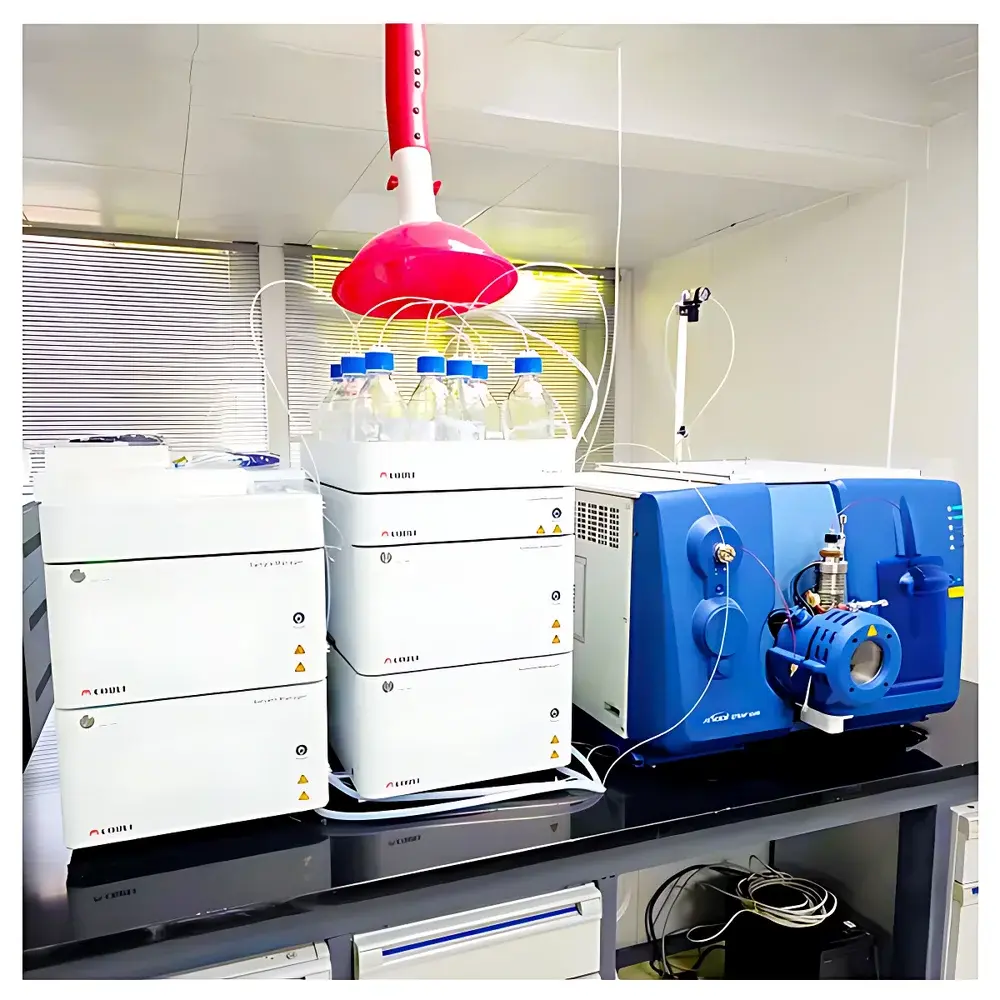
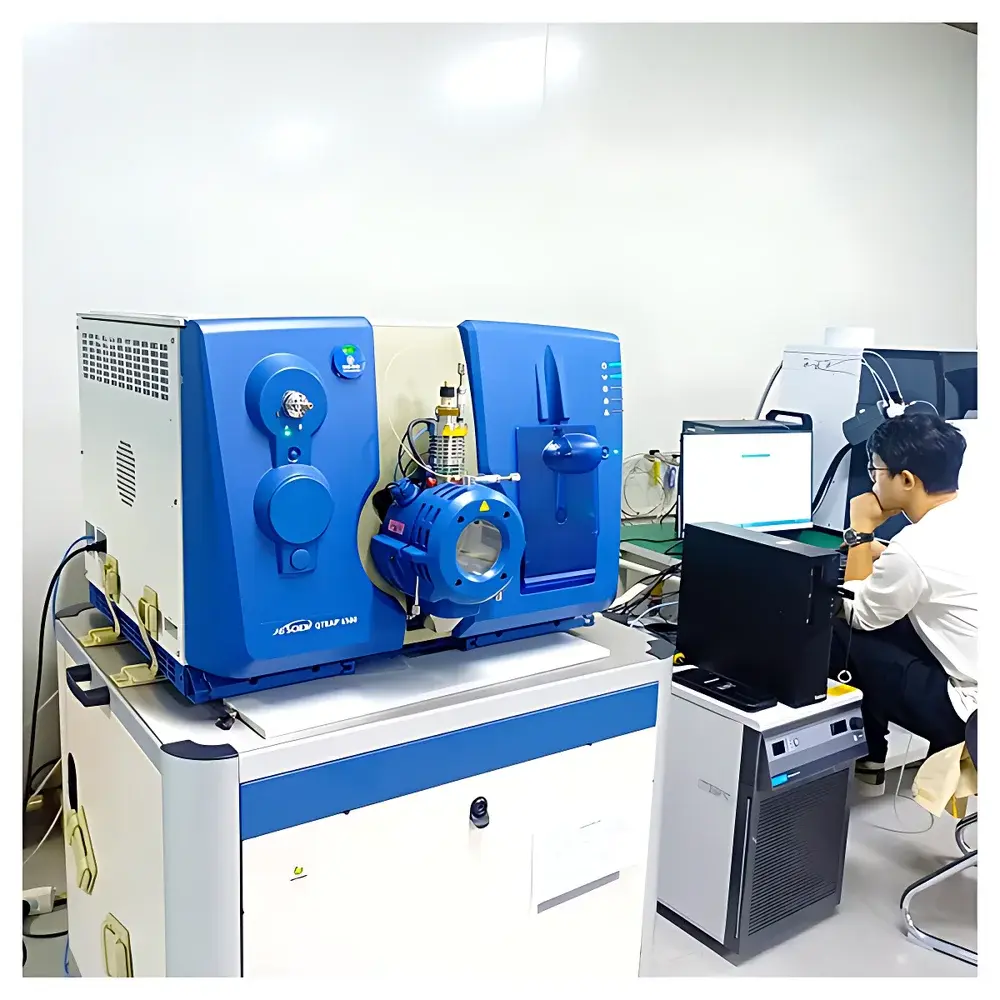
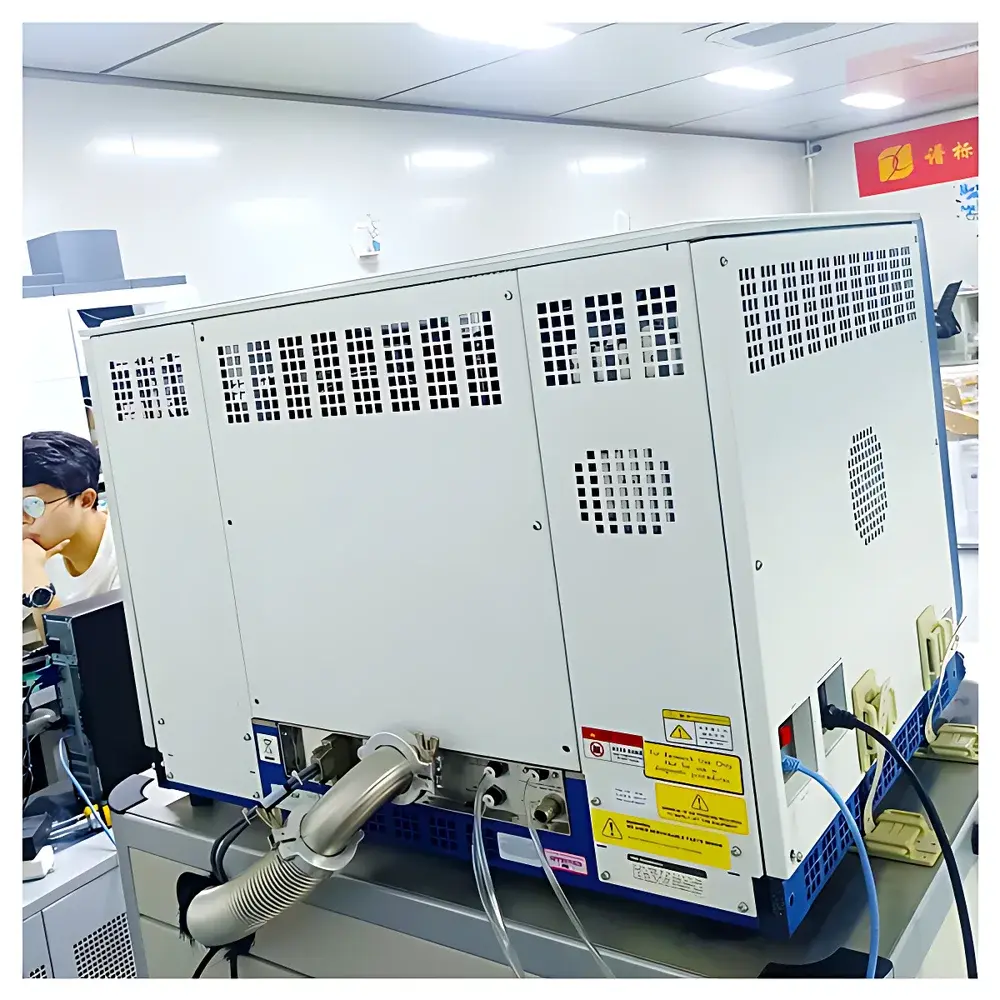
ABSCI Triple Quadrupole LC-MS/MS System 6500
| Brand | ABSCI |
|---|---|
| Origin | USA |
| Manufacturer Type | Authorized Distributor |
| Instrument Type | Triple Quadrupole |
| Application Scope | General-Purpose |
| Mass Range | 10–2000 m/z |
| Sensitivity | 100.1 fg on-column (for reserpine, SRM) |
| Resolution | 0.5 Da (unit resolution at peak width at half height) |
| Mass Accuracy | ±0.1 Da (external calibration) |
| Source Pressure | 1200 Torr (ESI/APCI source operating pressure) |
Overview
The ABSCI Triple Quadrupole LC-MS/MS System 6500 is a high-performance, general-purpose liquid chromatography tandem mass spectrometry platform engineered for robust quantitative and qualitative analysis in regulated and research laboratories. Built upon a triple quadrupole architecture, the system operates using electrospray ionization (ESI) or atmospheric pressure chemical ionization (APCI) sources coupled to a high-efficiency HPLC or UHPLC front end. The instrument employs collision-induced dissociation (CID) in the second quadrupole (q2) to generate structurally informative product ions, enabling highly selective multiple reaction monitoring (MRM) and enhanced product ion (EPI) scanning modes. Its design emphasizes analytical reproducibility, low detection limits, and compatibility with complex biological, environmental, and pharmaceutical matrices. The system is intended for laboratories requiring compliance-ready workflows, including those adhering to FDA 21 CFR Part 11, GLP, and ISO/IEC 17025 standards.
Key Features
- Triple quadrupole mass analyzer with independently controlled q1, q2, and q3 segments for precise precursor ion selection, fragmentation, and product ion detection
- High-efficiency ESI/APCI dual-source configuration with adjustable gas flows, capillary voltage, and source temperature for broad compound coverage
- Mass range of 10–2000 m/z supports analysis of small molecules, peptides, metabolites, and polar additives
- Unit mass resolution (0.5 Da full width at half maximum) ensures accurate isolation of target analytes in crowded spectral regions
- Mass accuracy of ±0.1 Da under standard external calibration conditions supports confident identification when combined with retention time alignment
- Source operating pressure up to 1200 Torr enhances desolvation efficiency and signal stability across variable mobile phase compositions
- Optimized duty cycle and dwell time algorithms enable simultaneous monitoring of >100 MRM transitions per run without compromising sensitivity or chromatographic fidelity
Sample Compatibility & Compliance
The ABSCI 6500 accommodates samples introduced via standard reversed-phase, HILIC, or ion-pairing LC methods, with compatibility extending to microbore, analytical, and narrow-bore column formats (i.d. 2.1 mm to 4.6 mm). It supports aqueous-organic gradients containing volatile buffers (e.g., ammonium formate, ammonium acetate) and is compatible with post-column infusion for system suitability testing. From a regulatory standpoint, the system’s firmware architecture supports audit trail generation, electronic signatures, and user-access-level controls required under FDA 21 CFR Part 11. Routine performance verification follows ASTM D7592 (for pesticide residue quantitation) and USP <1225> (validation of compendial procedures), while routine calibration and tuning align with manufacturer-recommended protocols for ICH Q2(R2)-compliant method validation.
Software & Data Management
Control, acquisition, and processing are managed through ABSCI’s proprietary Analyst™ software suite (v1.7.2 or later), which provides integrated method development tools, automated calibration/tuning sequences, and batch-oriented quantitative reporting. The software includes built-in support for AIA/ANDI-compliant data export, secure database archiving (SQL Server-based), and customizable report templates compliant with LIMS integration standards. All raw data files are stored in vendor-neutral .wiff format, supporting third-party reprocessing via open-source libraries such as ProteoWizard or commercial platforms like SimLynx and Skyline. Audit trails record all parameter modifications, calibration events, and user logins with timestamps and operator IDs—enabling full traceability during internal audits or regulatory inspections.
Applications
The ABSCI 6500 is routinely deployed in pharmaceutical quality control (residual solvents, genotoxic impurities, extractables/leachables), clinical toxicology (therapeutic drug monitoring, forensic screening), environmental analysis (PFAS, pesticides, endocrine disruptors), food safety (mycotoxins, veterinary drug residues), and academic metabolomics (targeted pathway analysis). Its MRM sensitivity enables sub-pg/mL quantitation in plasma, urine, and tissue homogenates; its scan speed and dynamic range support both high-throughput screening and low-abundance biomarker verification. Method transfer between ABSCI 6500 systems demonstrates high inter-instrument reproducibility—critical for multi-site studies governed by ISO 17043 proficiency testing schemes.
FAQ
What ionization sources are supported on the ABSCI 6500?
ESI and APCI sources are standard; optional nano-ESI and MALDI interfaces are available via OEM partnership modules.
Is the system compatible with UHPLC separation pressures?
Yes—the front-end interface supports inlet pressures up to 1300 bar when paired with certified UHPLC systems.
Does the 6500 meet GLP/GMP documentation requirements?
Yes—software-configurable audit trails, electronic signatures, and 21 CFR Part 11–compliant security settings are enabled by default.
What is the recommended maintenance interval for the ion source and detector?
Source cleaning is advised every 2–4 weeks depending on sample matrix complexity; detector gain calibration is performed quarterly or after 500 hours of operation.
Can the system be upgraded to support high-resolution MSE-type acquisition?
No—the 6500 is a dedicated triple quadrupole platform; high-resolution capabilities require migration to ABSCI’s QTOF or Orbitrap-based systems.
Related Products




