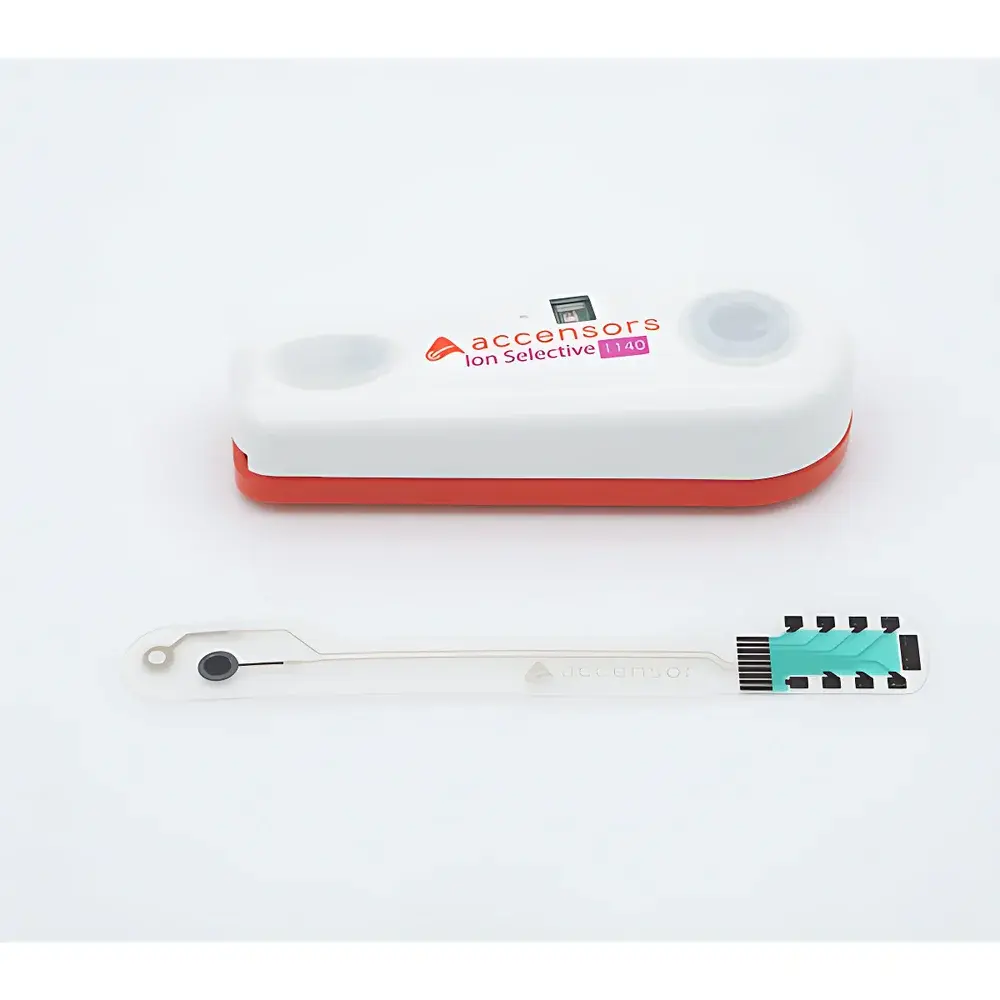
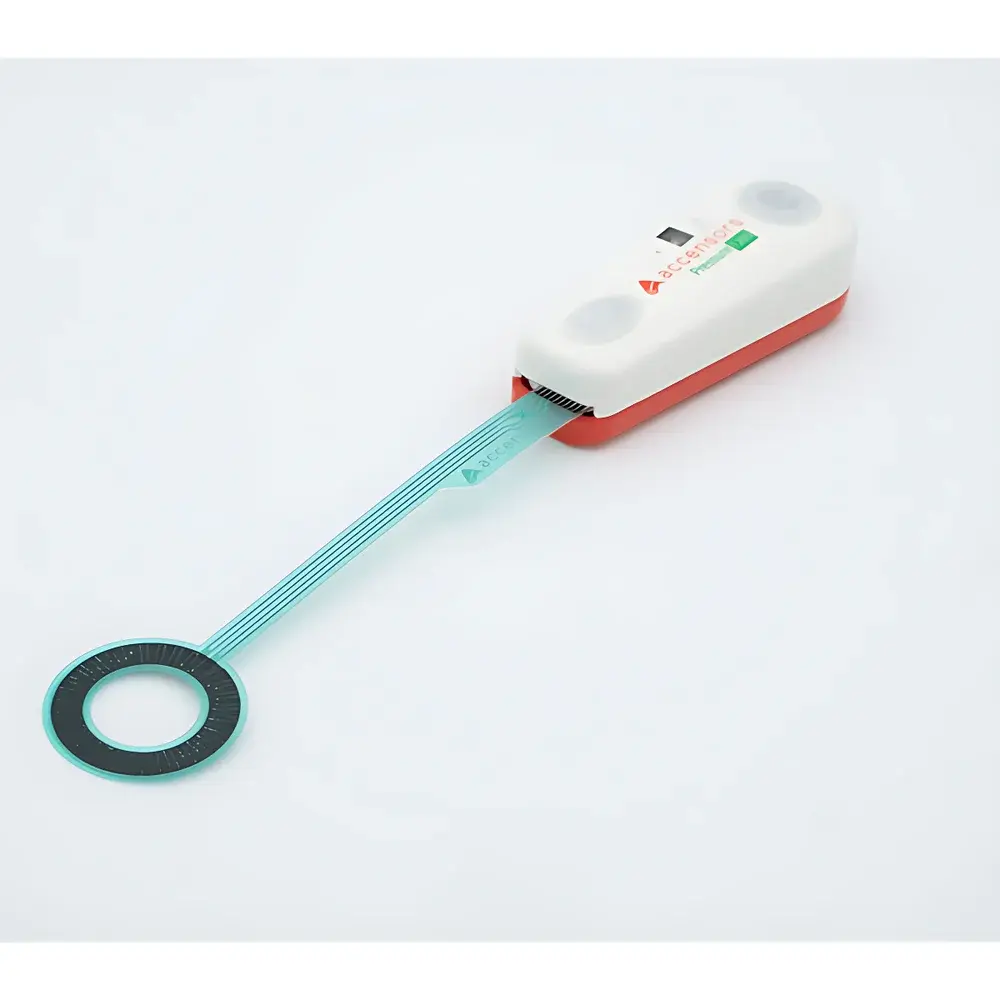
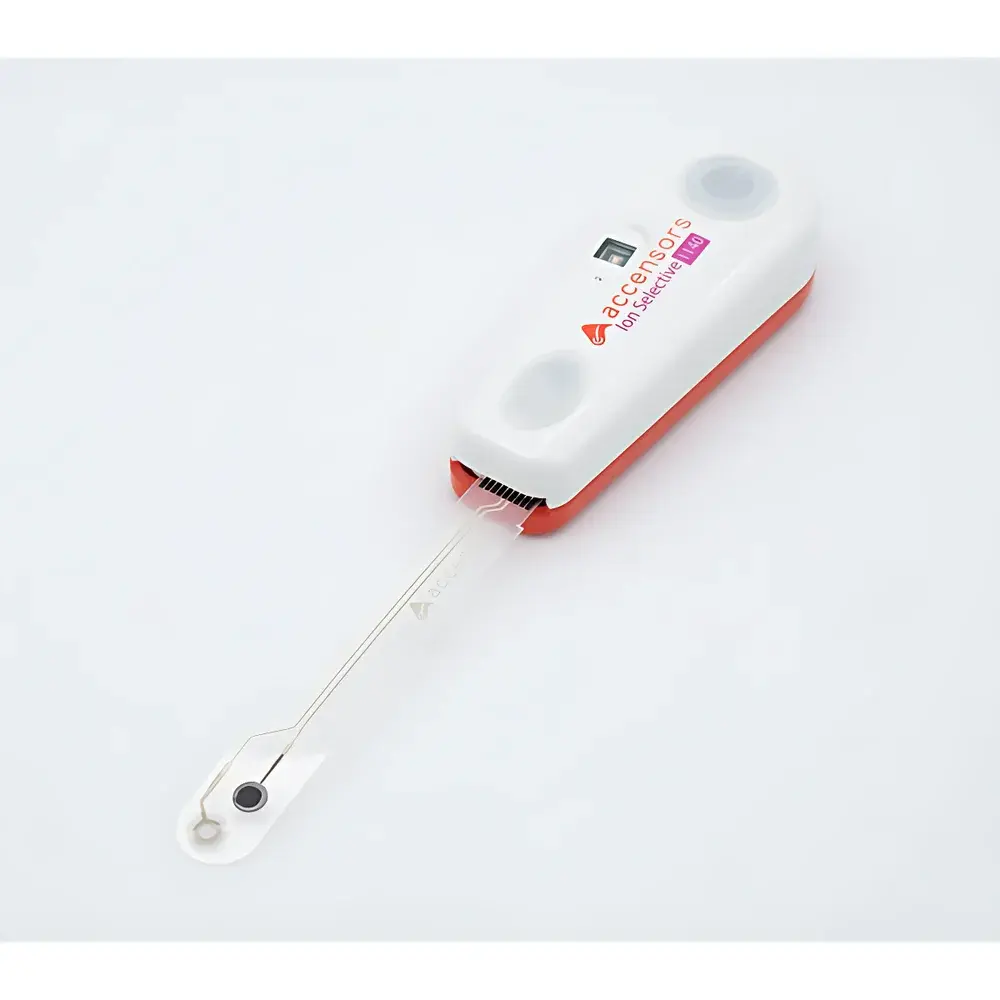
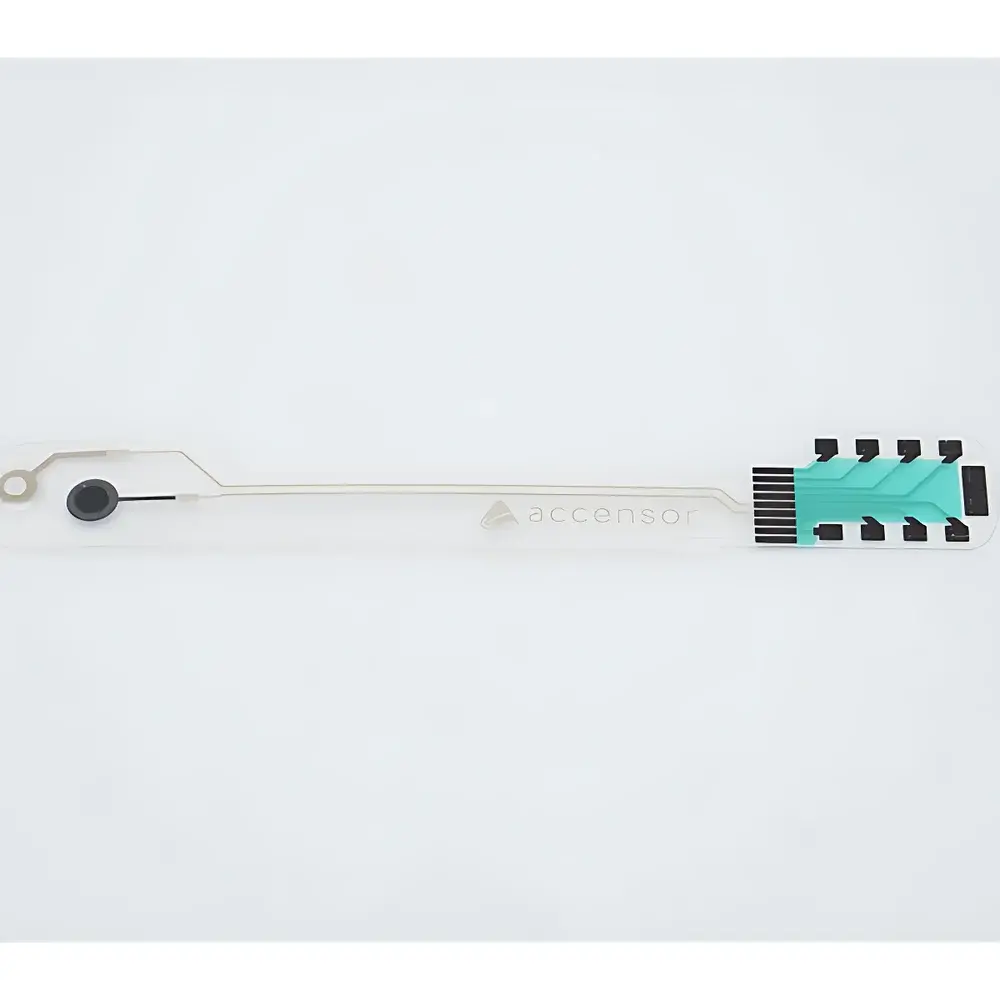
Accensors SMD Foil Sensor
| Brand | Accensors |
|---|---|
| Origin | Germany |
| Manufacturer Type | Authorized Distributor |
| Product Category | Imported |
| Model | SMD Foil Sensor |
| Unit Price | USD 72 (converted from ¥500 at 1 USD ≈ ¥6.95) |
Overview
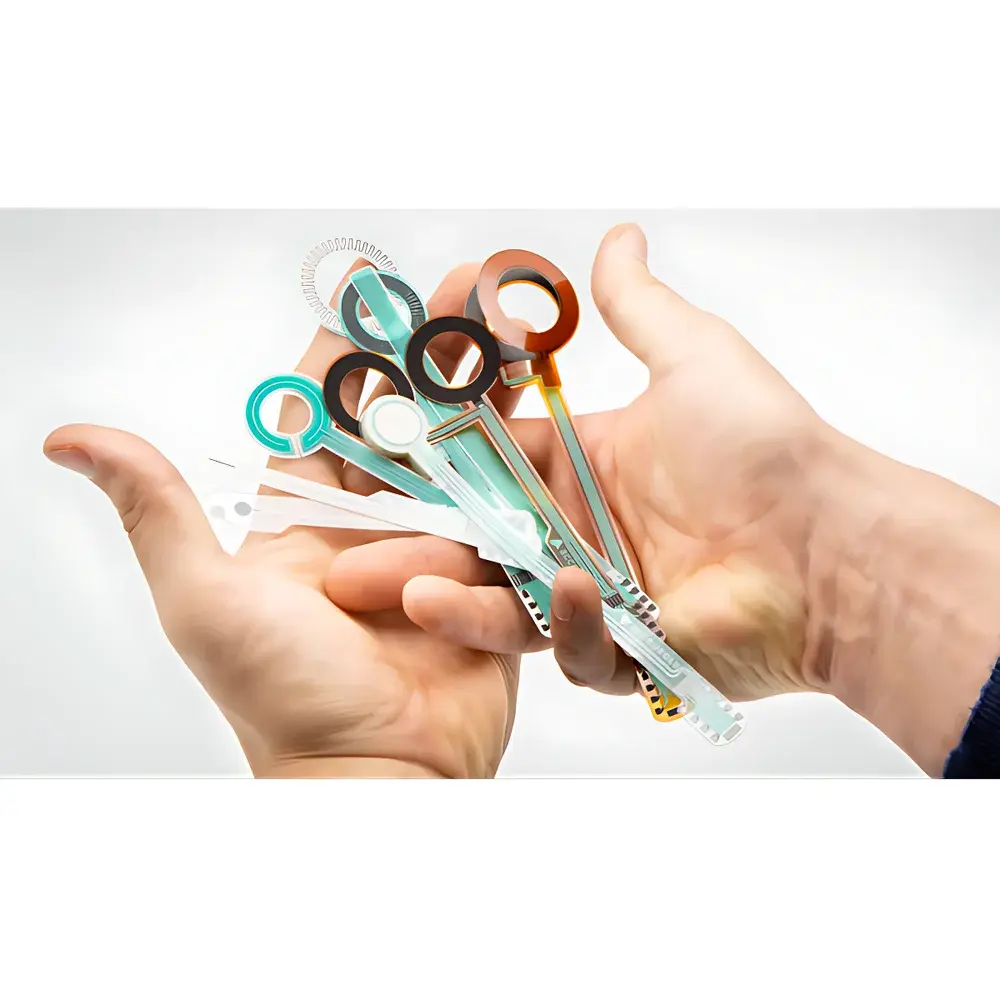
The Accensors SMD Foil Sensor is a thin-film, surface-mountable electrochemical and physical sensing platform engineered for rapid integration into printed circuit boards (PCBs), flexible printed circuits (FPCs), and disposable diagnostic devices. Built on polymer-based flexible substrates (e.g., PET, PI), these sensors employ additive manufacturing techniques—including screen printing, precision dispensing, pick-and-place assembly, and laser ablation—to realize functional multilayer architectures. Each sensor integrates conductive traces, electrode structures (working, reference, counter), and active sensing elements within a total thickness of ≤30 µm. The measurement principle varies by configuration: potentiometric ion-selective electrodes (e.g., pH, Na⁺, K⁺, Mg²⁺) rely on Nernstian potential shifts across ion-selective membranes; resistive temperature sensors operate via 4-wire platinum or nickel-based trace configurations with <1 mA excitation current; capacitive humidity sensors utilize dielectric constant changes in hygroscopic polymer layers; and piezoresistive force/pressure variants exploit strain-induced resistance modulation in patterned metal or carbon composites. Designed for compatibility with standard SMT reflow profiles (peak ≤260 °C), the SMD Foil Sensor eliminates wire bonding, soldering, or mechanical housing—enabling direct “peel-and-stick” deployment onto conductor tracks.
Key Features
- Fully flexible, ultra-thin architecture (≤30 µm total thickness) enabling conformal mounting on curved or dynamic surfaces
- SMD-compatible footprint with standardized land patterns (0603 to 1206 equivalents) for automated pick-and-place integration
- Electrochemical variants certified for aqueous media exposure: pH range 5–9 (Nernst slope ≥55 mV/pH), Na⁺ detection limit 100 µM, K⁺ linear range 10⁻⁵–1 M
- 4-wire RTD-style temperature sensors with ±0.1 °C repeatability over −20 °C to +85 °C
- Integrated corrosion-resistant contact pads (Au/Ni barrier stack) and encapsulated electrode edges for long-term stability in humid environments
- Multi-parameter capability: co-integration of pH + temperature + impedance on single foil substrate
- Biocompatible materials compliant with ISO 10993-5 (cytotoxicity) and RoHS/REACH directives
Sample Compatibility & Compliance
The SMD Foil Sensor operates in liquid, semi-solid, and ambient gaseous environments. Electrochemical variants require hydration maintenance post-use (storage in buffer or humidified chamber); dry-out permanently degrades ion-selective membrane performance. Physical sensors (temperature, humidity, pressure) function reliably across 0–100% RH and −20 °C to +85 °C. All sensors meet IEC 61000-4-2 (ESD immunity, ±8 kV contact discharge) and IEC 60601-1 (for medical device integration). For in vitro diagnostic applications, sensor designs align with ISO 13485 quality management requirements and support FDA 21 CFR Part 11-compliant data integrity when paired with Accensors’ Bluetooth-enabled readout units (e.g., ACO 1140 series). Traceability documentation includes lot-specific calibration certificates per ISO/IEC 17025-accredited procedures.
Software & Data Management
Accensors provides cross-platform firmware and application software (Windows desktop, iOS, Android) for real-time acquisition, visualization, and export of time-series sensor data. The BLE 5.0 interface supports simultaneous streaming from up to four SMD sensors per readout unit. Raw voltage, resistance, capacitance, and calculated parameter values (pH, [Na⁺], °C, %RH) are timestamped with UTC synchronization and stored locally with optional cloud backup (AWS IoT Core). Audit trails record user actions, calibration events, and firmware updates—meeting GLP/GMP documentation requirements. Export formats include CSV, HDF5, and XML with embedded metadata (sensor ID, lot number, environmental conditions). SDKs (C++, Python, LabVIEW) enable OEM integration into custom instrument control systems.
Applications
- Point-of-Care Diagnostics: Integration into microfluidic cartridges for rapid immunoassay monitoring (cTnI, NT-proBNP, creatinine) and electrolyte profiling in whole blood or saliva
- Smart Medical Devices: Embedding in urinary catheters (urea, pH, conductivity), intravascular probes (pressure + temperature), and wearable epidermal patches (pulse oximetry + sweat pH + lactate)
- Bioprocess Monitoring: Direct mounting on bioreactor ports or single-use bags for real-time pH, DO, and temperature feedback without sterilizable ports
- Lab Automation: Disposable foil sensors in 96-well plates and Petri dishes for high-throughput cell culture condition tracking (pH drift, metabolic impedance)
- Industrial IoT: Conformal attachment to HVAC ducts (humidity + temp), food packaging liners (headspace gas pH, CO₂), and pipeline joints (strain + temperature)
FAQ
Can the SMD Foil Sensor be reflow-soldered using standard PCB assembly processes?
Yes—designed for lead-free reflow profiles (peak 260 °C, 60 s max dwell), with thermal expansion matched to FR-4 and polyimide substrates.
What is the shelf life of unused ion-selective SMD sensors?
18 months when stored sealed under inert gas at 4–25 °C; desiccant packs must remain intact until first use.
Is calibration required before each measurement session?
Single-point calibration suffices for most applications; two-point (e.g., pH 4.01/7.00) recommended for trace-level accuracy per ISO 15197.
How is sensor drift compensated during extended measurements?
Built-in reference electrode stabilization algorithms and automatic baseline correction using dual-sensor differential mode (available in firmware v2.3+).
Are custom geometries and multi-analyte configurations available?
Yes—Accensors offers full design collaboration under NDA, including bespoke electrode layouts, non-standard footprints, and hybrid physical/electrochemical arrays.