
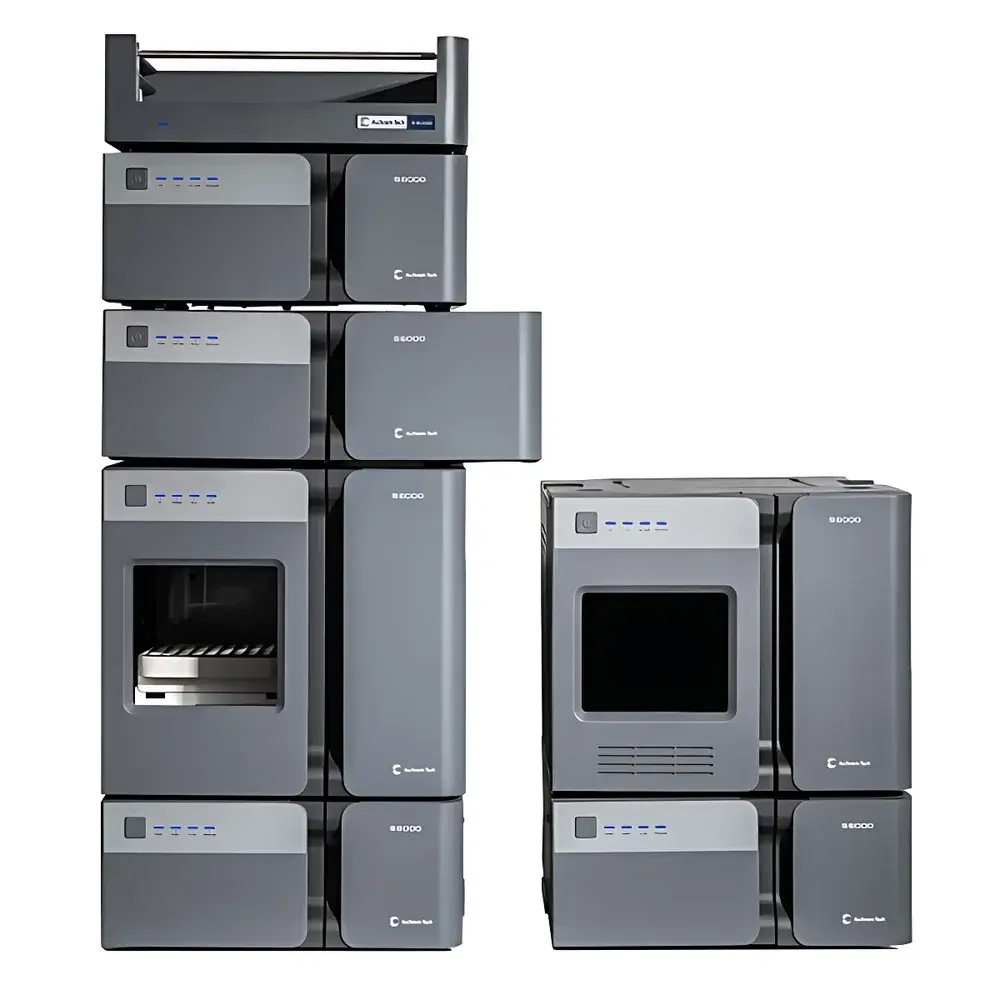
Acchrom-Tech PAH Analysis System
| Brand | Acchrom-Tech |
|---|---|
| Origin | Liaoning, China |
| Manufacturer Type | Original Equipment Manufacturer (OEM) |
| Country of Origin | China |
| Model | PAH Analysis System |
| Instrument Type | Dedicated High-Performance Liquid Chromatography (HPLC) System |
| Application Scope | Specialized for Polycyclic Aromatic Hydrocarbons (PAHs) in Environmental Matrices |
| Configuration | Online Solid-Phase Extraction (SPE) coupled with HPLC and Fluorescence Detection (FLD) |
| Optional Upgrade Path | Online SPE–LC–MS/MS Interface Module |
Overview
The Acchrom-Tech PAH Analysis System is a purpose-built, regulatory-compliant liquid chromatographic platform engineered for the trace-level quantification of 16 priority polycyclic aromatic hydrocarbons (PAHs) as defined by U.S. EPA Method 8310 and China’s HJ 478–2009, GB 5749–2022, and related environmental monitoring standards. It operates on the principle of online solid-phase extraction (SPE) coupled with reversed-phase high-performance liquid chromatography (RP-HPLC) and highly selective fluorescence detection (FLD), enabling direct injection of aqueous samples without solvent-intensive, laborious, or hazardous offline sample preparation. The system targets ultra-trace analytes—including benzo[a]pyrene (BaP), classified as a Group 1 human carcinogen by IARC—down to sub-ppt (ng/L) levels in drinking water, surface water, groundwater, and wastewater matrices. Its architecture eliminates manual SPE cartridge conditioning, elution, evaporation, and reconstitution steps, thereby reducing analyst exposure to toxic solvents (e.g., dichloromethane, acetonitrile), minimizing procedural variability, and enhancing analytical reproducibility across routine monitoring workflows.
Key Features
- Integrated online SPE–HPLC–FLD configuration with dual-column switching and backflush capability for robust matrix removal and column protection
- Automated method sequencing: full unattended operation from sample loading, SPE enrichment, column transfer, gradient elution, fluorescence excitation/emission wavelength optimization, to data acquisition
- Fluorescence detector with programmable excitation (200–400 nm) and emission (250–550 nm) wavelengths, optimized for native PAH fluorescence signatures (e.g., BaP: λex = 384 nm, λem = 406 nm)
- Calibration traceability to NIST-traceable PAH standard solutions (certified reference materials, CRM), supporting calibration ranges from 0.5 ng/L to 500 ng/L with linear dynamic response (R² ≥ 0.999)
- Modular design allowing seamless integration of an electrospray ionization (ESI) source and triple quadrupole mass spectrometer (QqQ-MS/MS) as a front-end upgrade for confirmatory analysis and expanded target screening
- Compliance-ready hardware architecture: supports audit trails, electronic signatures, and instrument qualification documentation per FDA 21 CFR Part 11 and ISO/IEC 17025 requirements
Sample Compatibility & Compliance
The system is validated for direct analysis of raw and filtered aqueous samples (drinking water, river water, effluent, leachate) without derivatization or cleanup. It accommodates 10–100 mL sample volumes and handles moderate turbidity (<5 NTU) and dissolved organic carbon (DOC) up to 10 mg/L via optimized SPE sorbent chemistry (graphitized carbon black + C18 hybrid phase). Soil and air particulate extracts (e.g., from PUF/XAD-2 cartridges) may be introduced post-sonication and filtration (0.45 µm PVDF). All operational protocols align with EPA 8310, ISO 17993:2021 (water quality — determination of PAHs), and China’s HJ 478–2009. System suitability tests include retention time stability (<0.2% RSD), peak symmetry (0.8–1.5), and signal-to-noise ratio (>100:1 at 10 ng/L BaP).
Software & Data Management
Controlled via AcchromChrom v3.2 software—a Windows-based, 21 CFR Part 11-compliant platform featuring role-based user access, method versioning, real-time chromatogram overlay, automated integration parameter adjustment, and built-in reporting templates compliant with GLP/GMP laboratory reporting standards. Raw data files (.acd) are stored with embedded metadata (instrument parameters, calibration history, audit log timestamps). Export formats include CSV, PDF, and XML for LIMS integration. Software supports automatic recovery from power interruption and maintains full instrument state synchronization during method transitions.
Applications
- Routine regulatory monitoring of 16 EPA priority PAHs in municipal drinking water treatment plants and environmental surveillance networks
- Source identification and trend analysis of PAH contamination in watersheds impacted by industrial discharge, urban runoff, or coal combustion emissions
- Validation of remediation efficacy at contaminated sites (e.g., former gasworks, coke plants) through time-series groundwater profiling
- Support for toxicological risk assessment studies requiring accurate BaP-equivalent concentrations (TEQ)
- Platform expansion to multi-residue analysis of emerging contaminants: per- and polyfluoroalkyl substances (PFAS), microcystins, pharmaceuticals and personal care products (PPCPs), endocrine-disrupting compounds (EDCs), and pesticide metabolites—via LC–MS/MS upgrade
FAQ
Does the system require derivatization for PAH detection?
No. Native PAH fluorescence is leveraged; no chemical derivatization is needed.
Can it analyze soil or sediment samples directly?
No. Solid matrices require standardized extraction (e.g., ASE, Soxhlet) and filtration prior to injection.
What is the typical analysis time per sample?
Approximately 35–45 minutes, including online SPE enrichment (15 min), HPLC separation (20–25 min), and detector stabilization.
Is method validation documentation provided?
Yes—includes system suitability test protocols, LOD/LOQ determination reports (based on 3σ/10σ of blank noise), precision (intra-day/inter-day RSD ≤ 5%), and accuracy (recovery 85–115% at 10–100 ng/L).
How is carryover mitigated in high-concentration sample sequences?
The system implements post-run needle wash (acetonitrile/water), column backflush, and guard column regeneration cycles programmed within each method sequence.





