
Acclima SWHMS Active Layer Soil Water-Heat Monitoring System
| Brand | Acclima, Inc. |
|---|---|
| Origin | USA |
| Model | SWHMS |
| Instrument Type | Multi-parameter Soil Monitoring System |
| Compliance | ASTM D5084, ISO 18643, USCRN Protocols, GLP-aligned Data Logging |
| Power Supply | 6–17 VDC |
| Communication | SDI-12, RS-232/RS-485 (via CR1000X) |
| Operating Temperature | −40 °C to +85 °C |
| Enclosure Rating | IP67/IP68 (sensor-specific) |
Overview
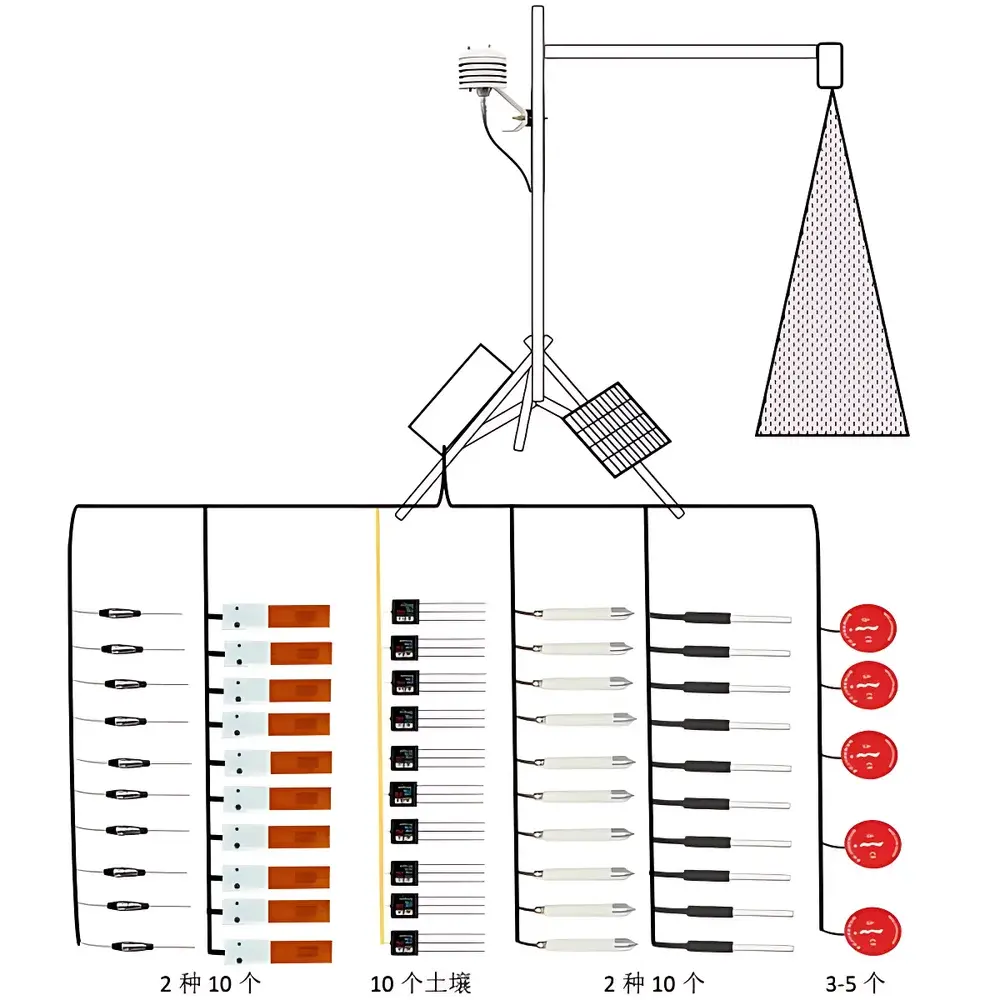
The Acclima SWHMS Active Layer Soil Water-Heat Monitoring System is a field-deployable, multi-sensor environmental observatory engineered for long-term, high-fidelity characterization of permafrost active layer dynamics. It operates on the principle of integrated physical property measurement—simultaneously quantifying thermal, hydrological, and electrical properties across vertical soil profiles—to support process-based modeling of freeze-thaw cycles, moisture migration, heat storage, and energy partitioning at the land–atmosphere interface. Unlike single-parameter soil loggers, the SWHMS integrates time-domain reflectometry (TDR), precision thermistor networks, passive heat flux transduction, and infrared surface radiometry into a unified architecture synchronized by the Campbell Scientific CR1000X datalogger. This enables continuous, co-located acquisition of volumetric water content (θv), soil temperature (Ts), thermal conductivity (λ), thermal flux (Q), bulk electrical conductivity (σb), and surface skin temperature (Tskin)—all traceable to NIST- and NPL-calibrated references and aligned with international standards including ISO 18643 (soil thermal properties), ASTM D5084 (in-situ saturated hydraulic conductivity estimation), and WMO Guide to Meteorological Instruments and Methods of Observation (CIMO Guide).
Key Features
- Modular sensor architecture supporting up to 16 depth-resolved TDR315H probes (15 cm length, 5 ps timing resolution) for sub-second θv, σb, and dielectric permittivity (εr) profiling in saline and frozen soils.
- HTP03 integrated air temperature/humidity/pressure sensor with PT1000-grade thermometry (±0.1 °C accuracy, −30 °C to +70 °C), ceramic RH sensing (±1.8% RH, 0–80% RH), and MEMS barometry (±1 hPa), all housed in a compact, low-power SDI-12 node.
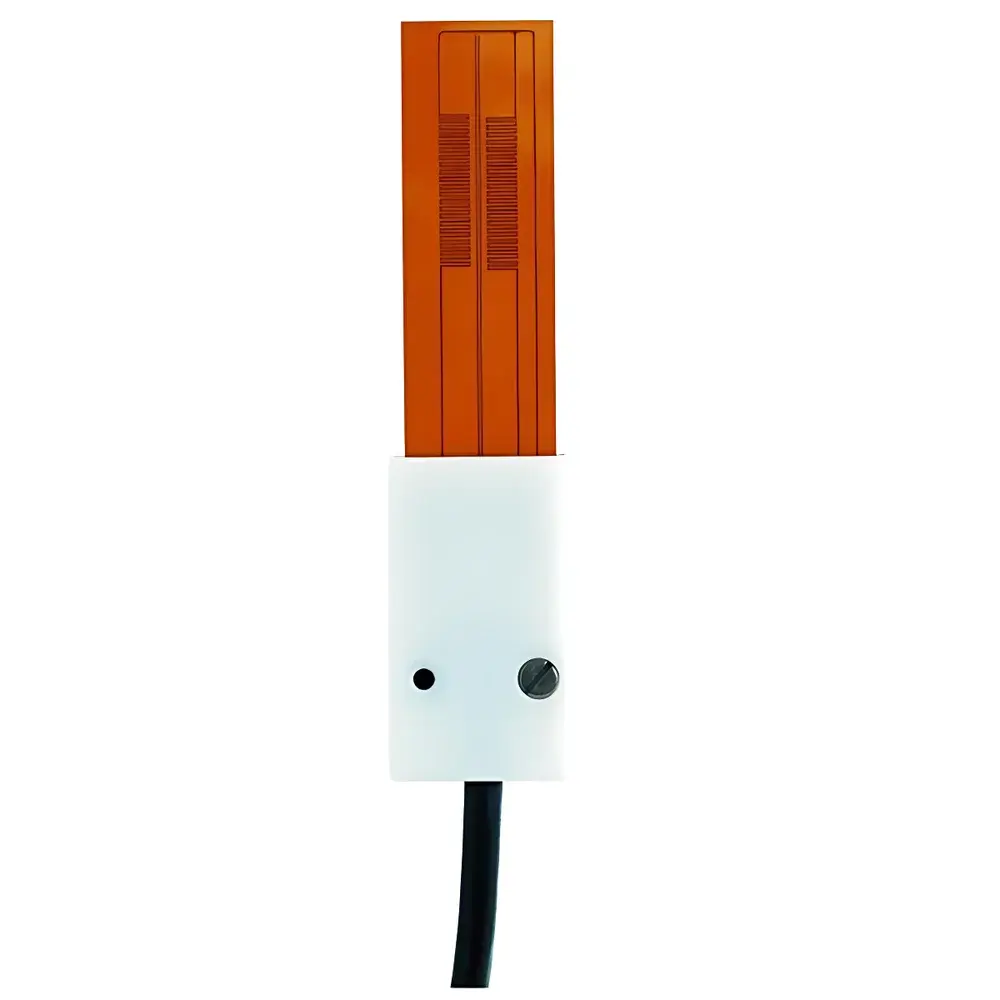
- HFP01 soil heat flux plates (50 μV·W⁻¹·m² sensitivity) calibrated per ISO 8302 and ASTM C177, providing passive, drift-free measurements of conductive heat transfer across undisturbed soil horizons.
- TP01 thermal conductivity sensor (0.3–5 W·m⁻¹·K⁻¹ range) with dual thermopile arrays and pulsed heating protocol—enabling concurrent estimation of λ, thermal diffusivity (α), and volumetric heat capacity (Cv) without reliance on empirical pedotransfer functions.
- ST-SDI12 high-stability soil temperature probes (PT1000, ±0.1 °C, −60 °C to +120 °C) and SI-111-SS contactless infrared radiometers (±0.2 °C, 8–14 μm spectral band) for decoupling subsurface conduction from surface radiation balance.
- CR1000X datalogger backbone featuring 16 single-ended/8 differential analog inputs, 2 pulse counters, microSD-expandable storage (up to 8 GB), GPS-synchronized timestamping (±10 μs), and deterministic 100 kHz scan rate for phase-resolved waveform capture of TDR signals.
Sample Compatibility & Compliance
The SWHMS is validated for deployment in mineral soils, organic tundra peats, glacial till, and seasonally frozen loams typical of Arctic, alpine, and boreal periglacial environments. Sensor materials—including flame-retardant epoxy housings (Soil-5MTE), stainless-steel sheaths (SI-111-SS), and polyimide foil substrates (TP01)—are selected for chemical inertness in acidic, alkaline, and saline pore solutions. All sensors meet IP67/IP68 ingress protection ratings and operate reliably under sustained subzero conditions (−40 °C ambient, −30 °C soil). Data acquisition workflows comply with Good Laboratory Practice (GLP) requirements for audit trails, metadata embedding (sensor ID, calibration date, installation depth), and 21 CFR Part 11–compatible electronic signatures when paired with Campbell’s LoggerNet software. Field installations adhere to the Chinese National Standard “Observation Specification for Permafrost Active Layer” (QX/T 262–2015) and the WMO CIMO Guide Chapter 12 (Soil Monitoring).
Software & Data Management
Data are acquired via Campbell Scientific’s LoggerNet v5.x or PC400 software, which supports automated SDI-12 polling, CR1000X program compilation, and scheduled data retrieval over cellular, satellite, or LoRaWAN telemetry. Raw waveforms from TDR315H are processed using Acclima’s proprietary firmware algorithms—applying deconvolution, impedance matching correction, and temperature-compensated εr inversion—to derive θv with <0.07% RMS repeatability. Thermal parameters from TP01 and HFP01 undergo transient analytical inversion (e.g., Parker method for λ, Fourier series fitting for Q) within the included MATLAB-based SWHMS Analysis Toolkit. Export formats include CF-compliant NetCDF, CSV with ISO 8601 timestamps, and SQL-ready tables. Metadata follows the ISA-Tab standard for environmental omics integration, facilitating interoperability with FLUXNET, NEON, and ITEX databases.
Applications
- Quantification of active layer thickness (ALT) evolution and interannual variability in response to climate forcing.
- Validation of coupled land surface models (e.g., CLM, Noah-MP) for latent/sensible heat partitioning and frost table depth prediction.
- Monitoring of thermokarst initiation through spatially distributed thermal–hydrological anomaly detection.
- Calibration of remote sensing products (e.g., SMAP, Sentinel-1) for near-surface soil moisture and freeze–thaw state retrieval.
- Long-term ecological research (LTER) on carbon–water coupling in tundra ecosystems under warming scenarios.
- Engineering site assessment for infrastructure stability in permafrost regions (e.g., pipeline corridors, road embankments).
FAQ
What is the minimum required vertical sensor spacing for resolving active layer thermal gradients?
A 10 cm interval is recommended between ST-SDI12 probes from 0–100 cm depth to resolve the characteristic exponential decay of diurnal thermal waves; finer spacing (5 cm) is advised within the top 20 cm where phase change dominates.
Can the SWHMS operate autonomously for >12 months without maintenance in remote Arctic locations?
Yes—when powered by a 20 Ah LiFePO₄ battery bank with solar charging (15 W panel), average system current draw remains below 12 mA (sleep mode) and peak draw is 14 months of unattended operation at −20 °C average temperature.
How does the system handle signal degradation in high-salinity or ice-saturated soils?
TDR315H employs adaptive waveform analysis and 5 ps timebase resolution to distinguish early-time reflection arrivals even in εr > 35 media; TP01’s passive thermal measurement eliminates electromagnetic interference concerns entirely.
Is raw TDR waveform data accessible for custom processing?
Yes—CR1000X stores full 2048-point digitized waveforms in binary format; Acclima provides documented binary structure specifications and Python reference parsers upon request.
Does the SWHMS support integration with third-party SCADA or cloud platforms?
Via Modbus TCP (through CR1000X’s RS-485 port) or MQTT (using optional cellular gateway), data streams can be ingested into AWS IoT Core, Azure IoT Hub, or custom OPC UA architectures with full metadata tagging.
Related Products







