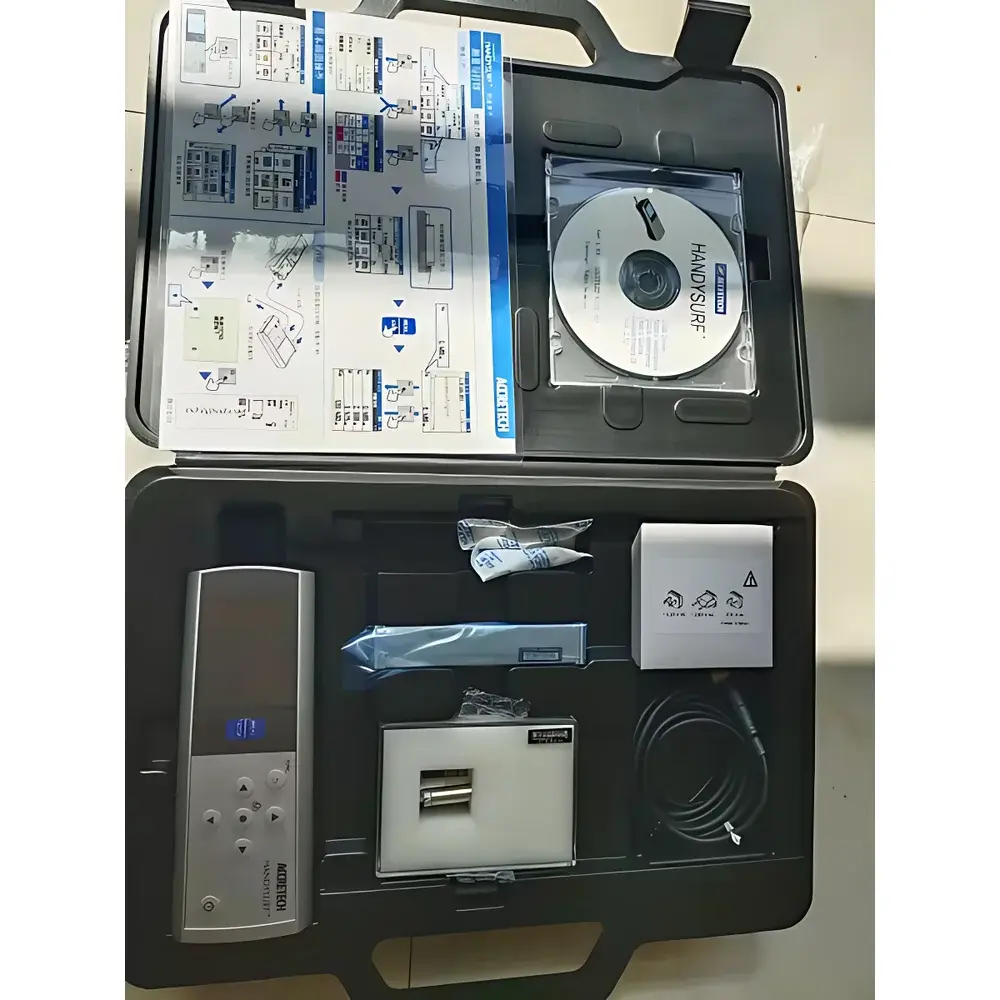
Accretech HANDYSURF+ Portable Contact Profilometer
| Brand | Accretech |
|---|---|
| Origin | Japan |
| Model | HANDYSURF+ |
| Measurement Principle | Stylus-based contact profilometry |
| Measurement Method | Contact (diamond stylus) |
| Filter Type | 2RC |
| Evaluation Length | 0.2–16 mm |
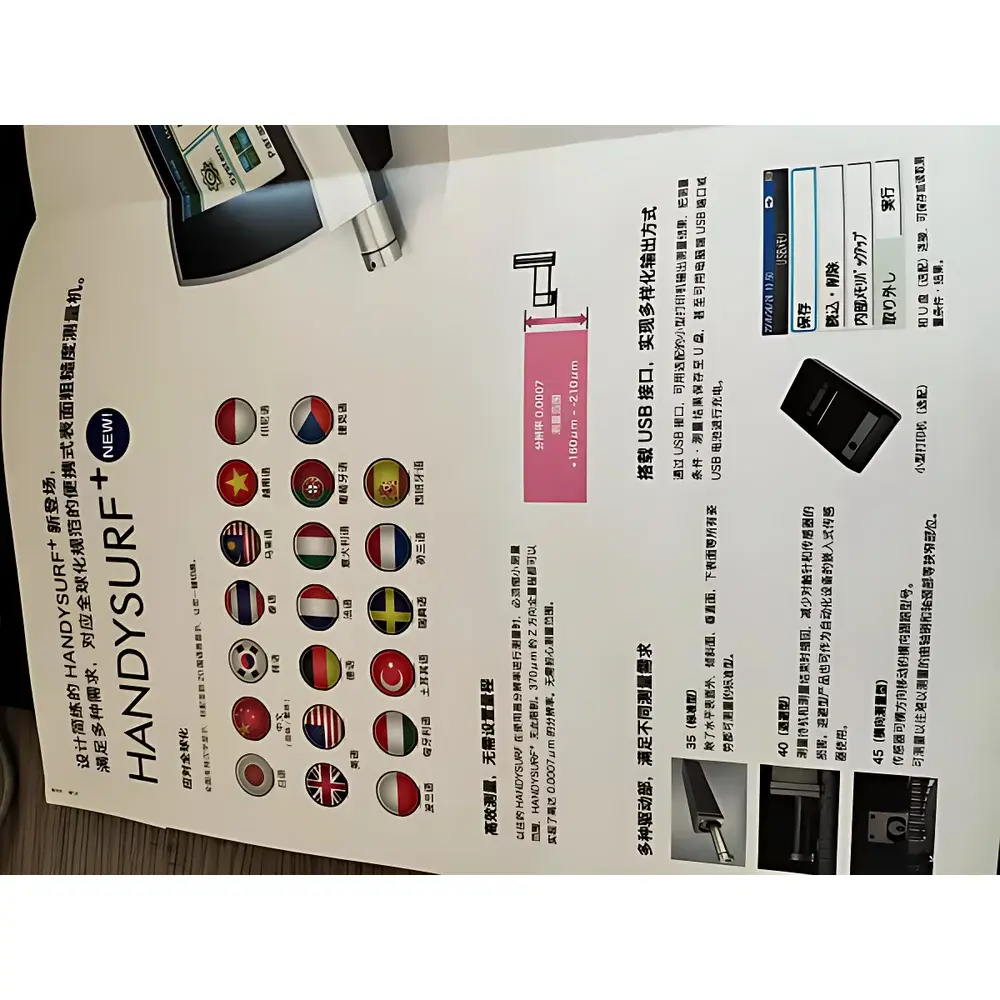
| Vertical Resolution | 0.0007 µm |
| Maximum Specimen Height Range | −210 to +160 µm |
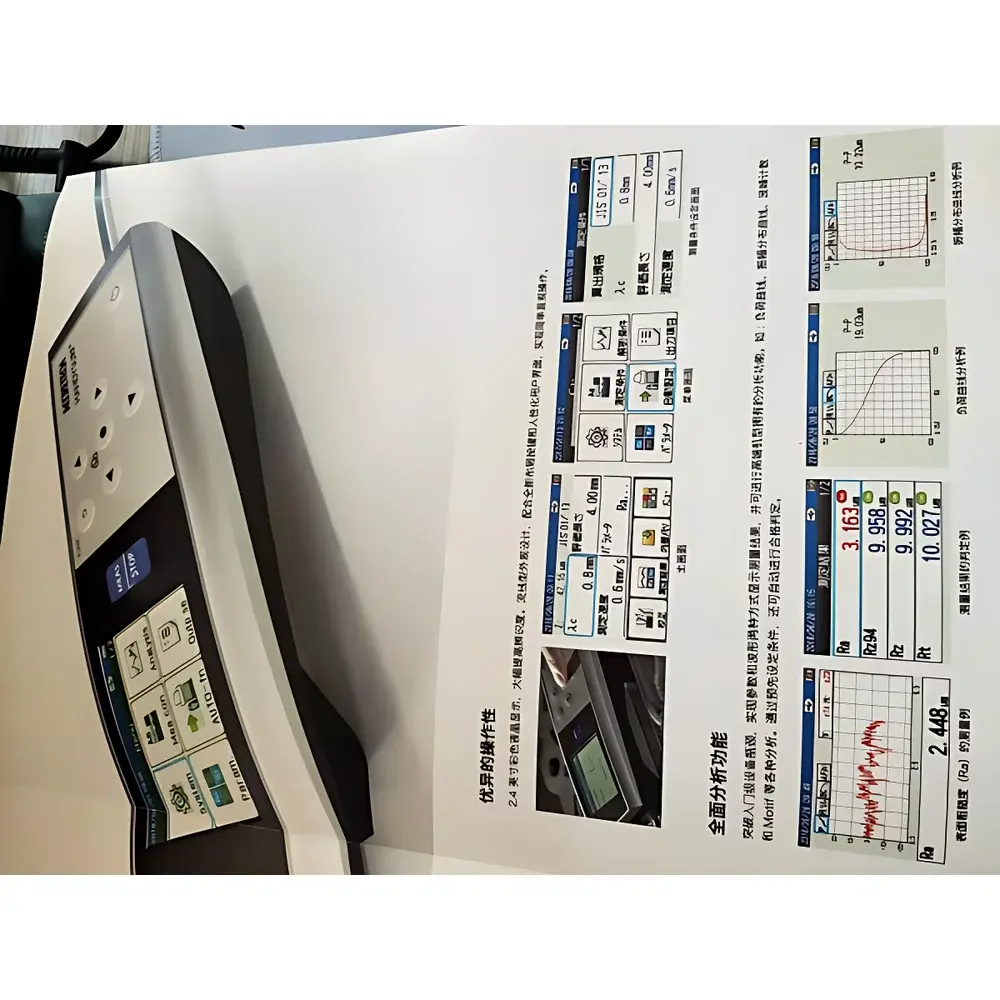
| Display | 2.4-inch color LCD with Chinese/Japanese/English interface support |
| Compliance | ISO 4287, ISO 4288, ISO 13565-1/2/3, JIS B 0601, ASME B46.1 |
Overview
The Accretech HANDYSURF+ is a next-generation portable contact surface roughness tester engineered for high-precision in-field and workshop-based metrology of machined, ground, polished, or coated surfaces. Based on proven stylus profilometry principles—where a diamond-tipped probe traverses the surface at controlled speed and load—the instrument captures vertical displacement data with sub-nanometer resolution to quantify micro-topographic features. As the upgraded successor to the E-35B platform, the HANDYSURF+ integrates enhanced signal processing, expanded evaluation length capability (up to 16 mm), and dual-mode visualization (numerical parameters + full-profile waveform) without compromising portability or operational robustness. Its compact form factor, battery-powered operation, and ergonomic handheld design make it suitable for shop-floor verification, incoming inspection, maintenance diagnostics, and multi-site quality audits across automotive, aerospace, medical device, and precision mold manufacturing environments.
Key Features
- High-resolution vertical sensing: 0.0007 µm (0.7 nm) resolution enables detection of fine finishing artifacts such as burnishing marks, tool feed patterns, and polishing scratches.
- Wide specimen height accommodation: −210 µm to +160 µm vertical range supports measurement of recessed features, stepped surfaces, and protruding microstructures without repositioning or fixture adaptation.
- Compliant 2RC Gaussian filter implementation per ISO 11562, ensuring standardized separation of roughness, waviness, and form components in accordance with international metrological practice.
- Intuitive 2.4-inch color LCD with multilingual UI (English, Japanese, Chinese), optimized contrast and touch-responsive button layout for glove-compatible operation in industrial settings.
- On-device analysis suite including Abbott-Firestone bearing ratio (load curve), amplitude distribution histograms, peak count statistics, and Motif analysis per ISO 12085—functions traditionally reserved for benchtop systems.
- Automated pass/fail judgment based on user-defined tolerance limits for Ra, Rz, Rq, Rsk, Rku, and other 20+ ISO/JIS/ASME parameters; results logged with timestamp and operator ID.
Sample Compatibility & Compliance
The HANDYSURF+ accommodates a broad spectrum of metallic, ceramic, and polymer workpieces—including hardened steel, aluminum alloys, sintered carbides, anodized surfaces, and injection-molded plastics—without requiring vacuum chucks or complex fixturing. Its low-force stylus (typically 0.75 mN nominal) minimizes plastic deformation on soft materials while maintaining traceable contact geometry (2 µm radius, 90° included angle). All reported parameters comply with ISO 4287 (surface roughness parameters), ISO 4288 (rules for assessment), ISO 13565-1/2/3 (material ratio curve characterization), and JIS B 0601. The system supports GLP/GMP-aligned documentation workflows when paired with optional PC software, enabling audit-ready records with electronic signatures compliant with FDA 21 CFR Part 11 requirements.
Software & Data Management
Data acquisition, analysis, and reporting are fully supported via the optional HANDYSURF PC software (Windows 10/11 compatible), which provides extended statistical process control (SPC) tools, comparative overlay of multiple profiles, batch report generation (PDF/CSV/XLSX), and secure database archiving. Raw profile data is stored in ASCII format for third-party integration with MES, QMS, or PLM platforms. Audit trails record all parameter changes, calibration events, and result modifications—including user identity, timestamp, and reason for change—ensuring full traceability in regulated environments. Firmware updates are delivered via USB flash drive with version-controlled checksum verification.
Applications
- Verification of grinding, honing, lapping, and EDM surface finishes in powertrain component production.
- In-process monitoring of cutting tool wear through progressive Ra/Rz trend analysis on test coupons.
- Supplier qualification audits requiring ISO-compliant roughness certification for critical sealing surfaces (e.g., hydraulic manifolds, valve bodies).
- Maintenance engineering assessments of wear-induced topography changes on bearing races, gear teeth, and turbine blades.
- Research and development of functional surfaces where texture correlates with friction, adhesion, lubrication retention, or biocompatibility.
- Calibration laboratory support for transfer standards and reference specimens under ISO/IEC 17025-accredited procedures.
FAQ
What standards does the HANDYSURF+ conform to for roughness measurement?
It complies with ISO 4287, ISO 4288, ISO 13565-1/2/3, JIS B 0601, and ASME B46.1 for parameter definition, filtering, and evaluation methodology.
Can the device measure curved or inclined surfaces?
Yes—its articulated probe arm and tilt-compensated sensor architecture allow reliable measurement on convex, concave, and angled surfaces up to ±15° without external leveling fixtures.
Is calibration traceable to national metrology institutes?
Accretech provides NIST-traceable calibration certificates (optional) for both vertical and lateral axes, with uncertainty budgets documented per ISO/IEC 17025 guidelines.
Does the system support automated reporting for quality documentation?
Yes—predefined templates generate PDF reports with embedded profile plots, parameter tables, pass/fail status, and digital signature fields aligned with internal QA protocols.
How is data integrity ensured during field use?
All measurements include embedded metadata (date/time, operator ID, probe serial number, environmental temperature), and the onboard memory employs write-protected sectors to prevent accidental overwrites or tampering.