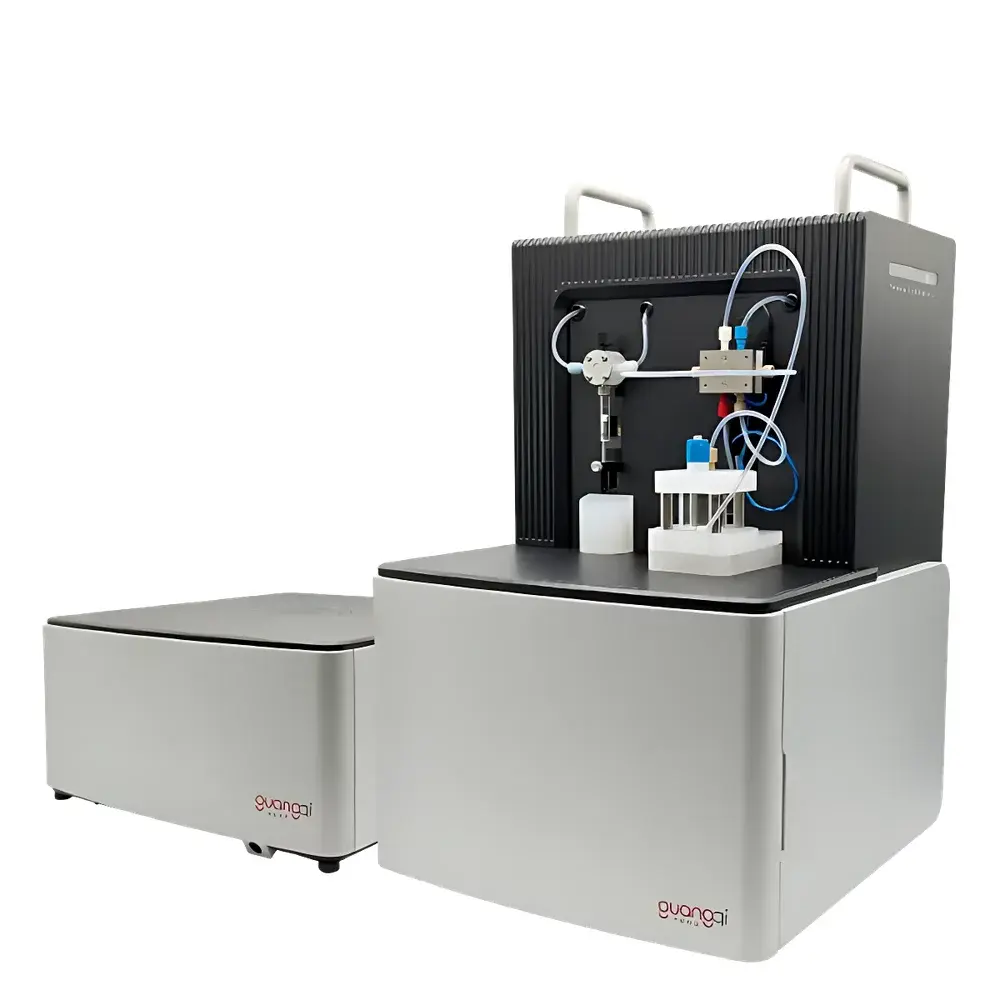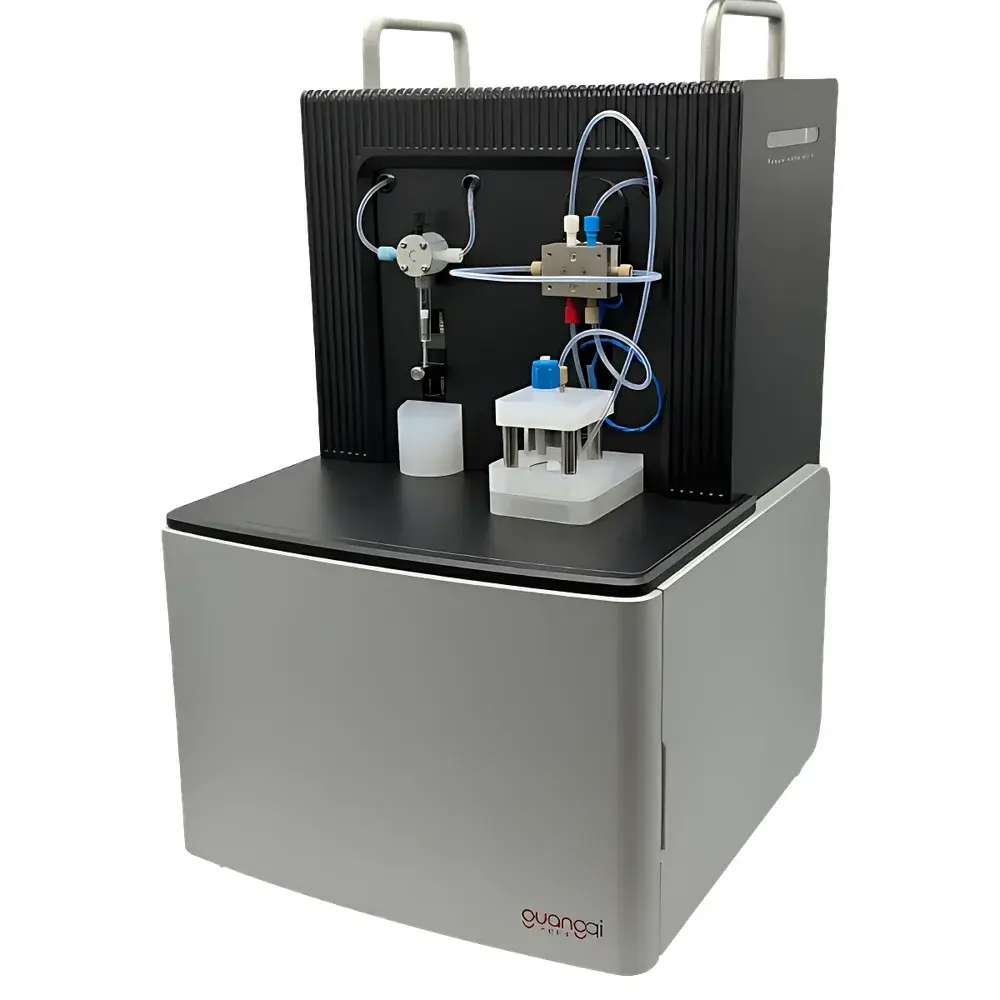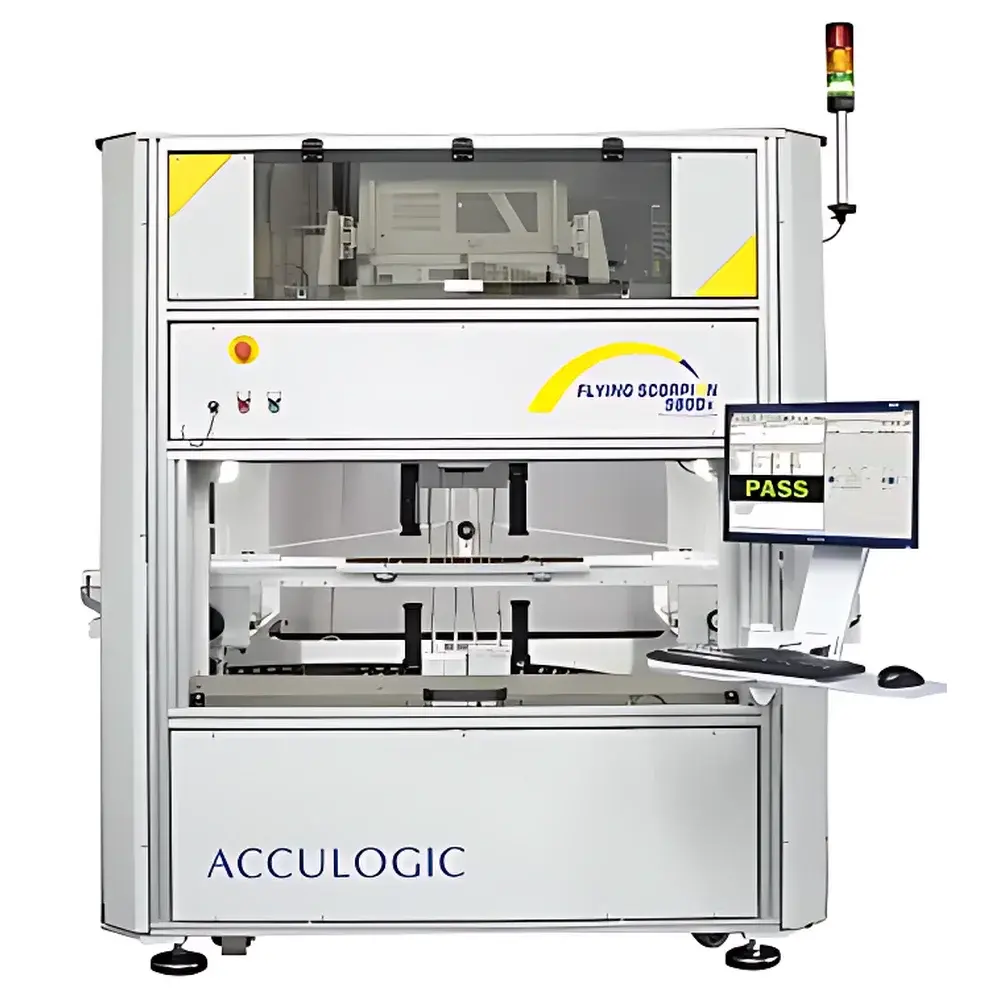
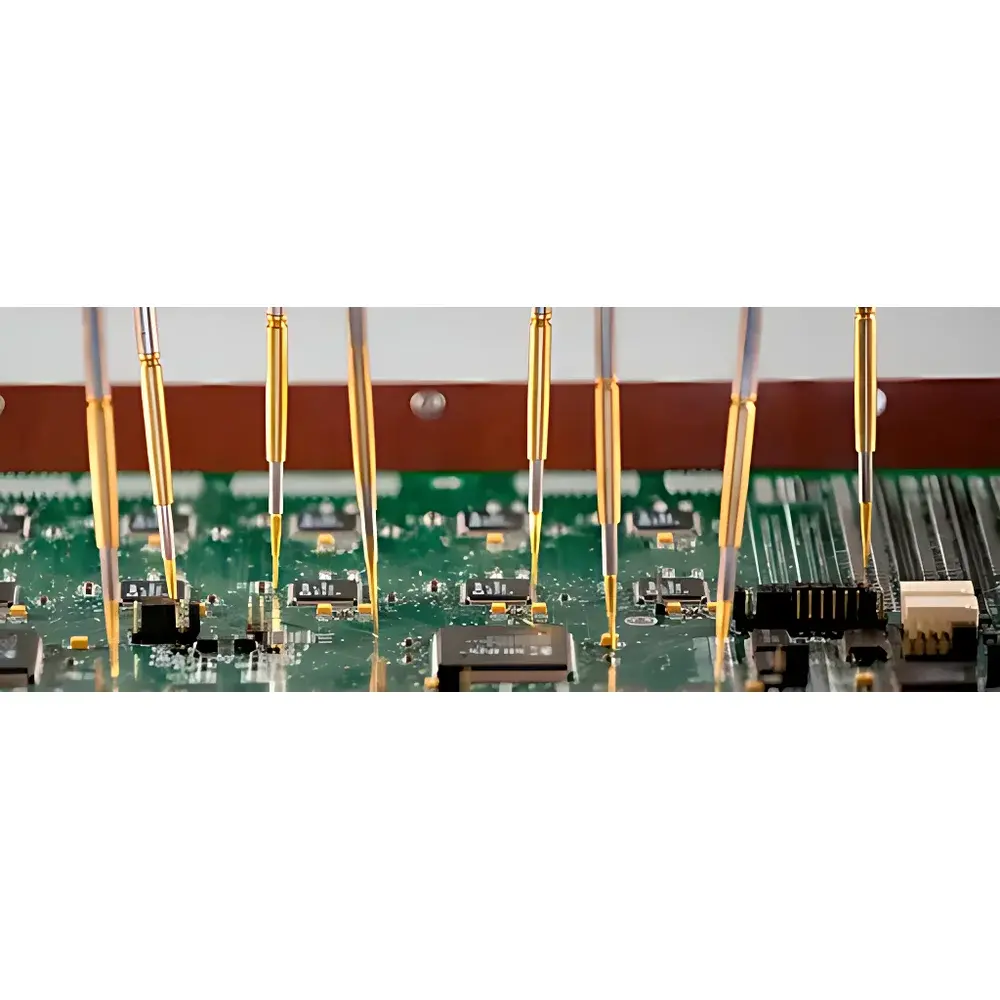
Acculogic FLS980 Flying Probe Test System
| Brand | Acculogic |
|---|---|
| Origin | Canada |
| Model | Acculogic FLS980 |
| Type | Flying Probe Tester for PCBs |
| Positioning Repeatability | ±10 µm |
| Minimum Step Resolution | 1 µm |
| Programmable Probe Angle | ±6° |
| Max. Configurable Probes | 22 (dual-side) |
| Max. PCB Size | 813 × 965 mm (32″ × 38″) |
| Max. Component Height | 85 mm |
| Max. Probe Tip Radius Range | 50–500 µm |
| Measurement Speed | Up to 1000 measurements/sec |
| Electrical Test Capability | Analog, Digital, Mixed-Signal, Boundary Scan (JTAG), Powered Functional Test up to GHz range |
| Compliance | Supports GLP/GMP audit trails, ASTM F2413-18 (PCB test methodology reference), ISO/IEC 17025 traceability framework (via software logging) |
Overview
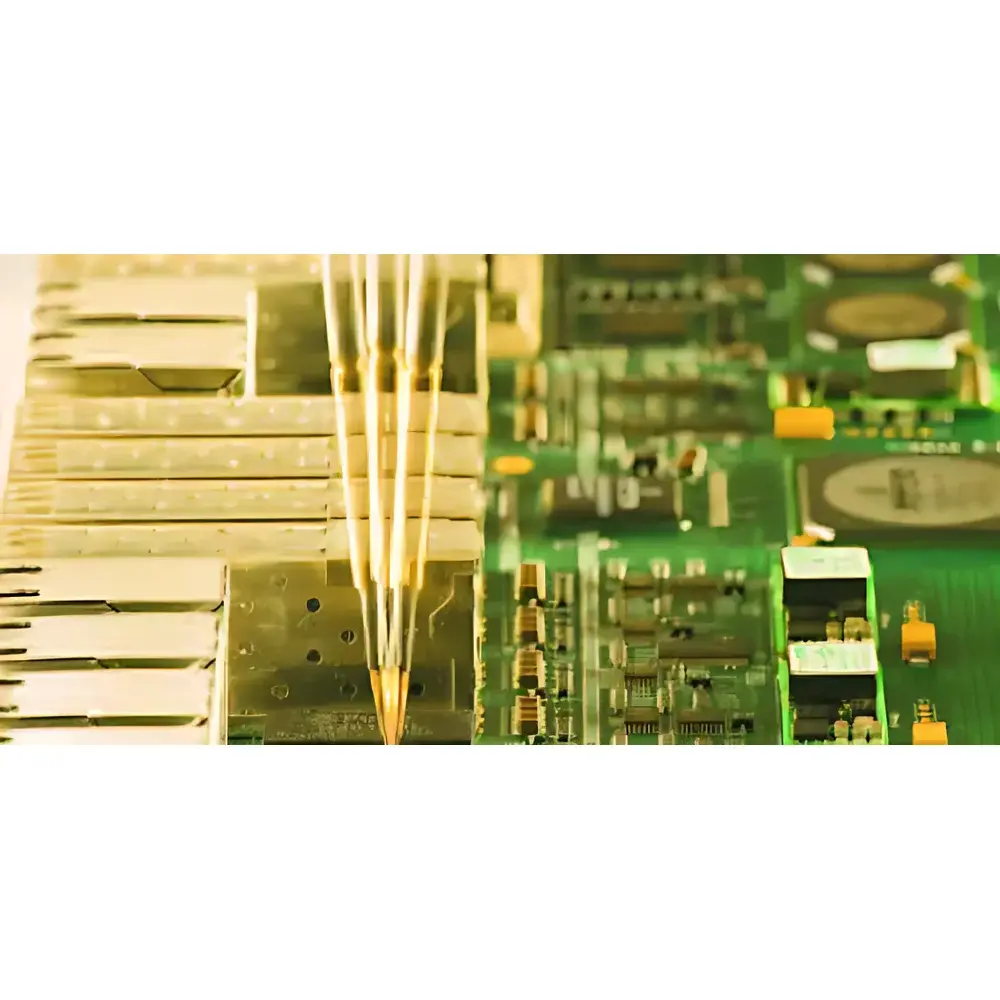
The Acculogic FLS980 Flying Probe Test System is a high-precision, dual-sided automated test platform engineered for functional and parametric validation of modern printed circuit boards (PCBs) where traditional bed-of-nails fixtures are impractical or obsolete. Designed specifically for advanced electronics manufacturing environments—including high-mix, low-volume production, prototyping labs, and failure analysis centers—the FLS980 employs a closed-loop linear motor shuttle architecture combined with programmable-angle probe modules to achieve sub-10 µm positioning repeatability. Its core measurement principle integrates synchronized motion control, real-time vision-based fiducial registration, laser-assisted board warpage mapping, and high-fidelity analog/digital stimulus-response acquisition. Unlike open-loop mechanical systems, the FLS980’s AccuFast™ drive system eliminates backlash and wear by maintaining a 20 µm air gap between shuttle and stator—ensuring frictionless, maintenance-free operation over extended duty cycles. This architecture directly addresses industry challenges posed by miniaturized components (e.g., 01005, 008004), fine-pitch BGAs, chip-scale packages (CSP), and increasingly dense HDI stack-ups where physical access and mechanical stability are critical constraints.
Key Features
- Closed-loop dual-shuttle motion control with 1 µm minimum step resolution and ±10 µm positioning repeatability across X, Y, and Z axes
- Up to 22 independently programmable flying probes—configurable in mixed top/bottom arrangements using APM 800 (0° to +6°), BPM 700 (+6° fixed), or VPM 600 (0° vertical) modules
- Real-time probe angle adjustment from –6° to +6° per module, enabling optimal contact geometry on warped or uneven substrates
- Integrated high-resolution baseline camera with calibrated illumination and sub-pixel image processing for fiducial detection and positional offset compensation
- LaserScan™ warpage profiling system that quantifies board deformation in all three planes (X/Y/Z), feeding correction data into motion planning algorithms
- 4-wire Kelvin measurement capability across all probes, supporting resistance, capacitance, inductance, diode, transistor, and passive network characterization
- Simultaneous analog stimulus/response acquisition at up to 1000 measurements per second with programmable voltage/current sourcing and protection circuitry
- Powered functional testing support up to GHz-frequency ranges via high-bandwidth signal routing and synchronized digital pattern generation
Sample Compatibility & Compliance
The FLS980 accommodates PCBs up to 813 mm × 965 mm (32″ × 38″) with component heights up to 85 mm and probe-accessible features as small as 100 µm. It supports rigid, flex-rigid, and multilayer laminates—including those with embedded passives or microvias—without requiring custom tooling. Probe tip geometries (conical, cupped, domed) and radii (50–500 µm) are selected based on pad metallurgy, solder mask integrity, and reliability requirements. The system complies with foundational metrology standards referenced in IPC-A-610, IPC-J-STD-001, and ASTM F2413-18 for PCB test methodology. While not certified as medical or aerospace-specific hardware, its software architecture supports audit-ready logging aligned with ISO/IEC 17025 documentation practices and provides configurable electronic signatures compatible with FDA 21 CFR Part 11 requirements when deployed in regulated environments under appropriate validation protocols.
Software & Data Management
The Integrator™ control suite serves as the unified interface for test program development, motion calibration, measurement configuration, and result analysis. It includes NetScan™ topology analysis for netlist-driven test optimization and JTAG/Boundary Scan integration compliant with IEEE 1149.1 and 1149.6 standards. All measurement data—including timestamps, probe coordinates, raw ADC values, pass/fail thresholds, and environmental metadata—are stored in structured SQLite databases with optional export to CSV, XML, or industry-standard STDF formats. Audit logs record operator actions, parameter changes, calibration events, and firmware updates with immutable timestamps—enabling full traceability for GLP/GMP-aligned workflows. Remote diagnostics and predictive maintenance alerts are accessible via secure HTTPS API endpoints, facilitating integration into MES and factory automation ecosystems.
Applications
- High-mix, low-volume NPI (New Product Introduction) validation where fixtureless testing reduces time-to-test
- Failure analysis and root-cause investigation of field returns, including solder joint integrity, opens/shorts, and parametric drift
- Verification of complex power delivery networks (PDNs) using multi-point impedance mapping and DCIR analysis
- Functional verification of mixed-signal subsystems—including PMICs, clock trees, and sensor interfaces—under powered conditions
- Reverse engineering support through automated net identification, component footprint extraction, and schematic reconstruction
- Process qualification and yield improvement studies leveraging statistical process control (SPC) dashboards built into the reporting engine
FAQ
What is the maximum PCB thickness the FLS980 can accommodate?
The system supports standard FR-4 and high-Tg laminates up to 6.35 mm (0.25″) thick, with optional Z-axis extension kits available for specialized applications.
Does the FLS980 support thermal testing or in-circuit thermal profiling?
While it does not include integrated thermal chambers, the FLS980 can interface with external thermal controllers via digital I/O and Modbus TCP, enabling synchronized temperature-stimulus-response testing protocols.
Can legacy test programs from other flying probe platforms be imported?
Yes—Integrator™ includes translators for common formats including GenRad, Teradyne, and Keysight legacy scripts, with manual validation recommended for boundary scan and timing-critical sequences.
Is offline programming supported without physical hardware?
Offline test development is fully supported using virtual board models, synthetic fiducial libraries, and simulated warpage profiles—all validated against actual machine kinematics before deployment.
How is probe wear monitored and compensated?
Each probe module reports tip wear metrics via integrated strain gauges and optical feedback; the software applies dynamic compensation offsets during motion planning and triggers maintenance alerts when thresholds are exceeded.
Related Products