
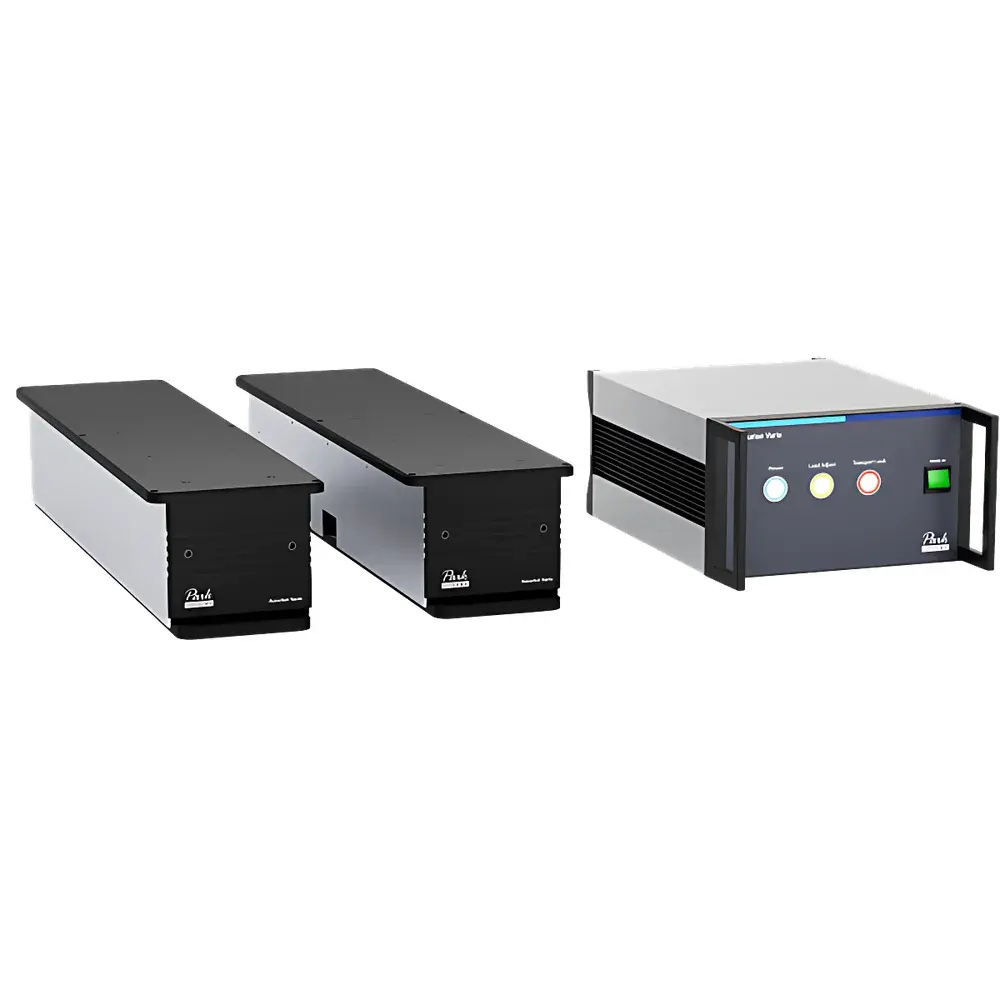
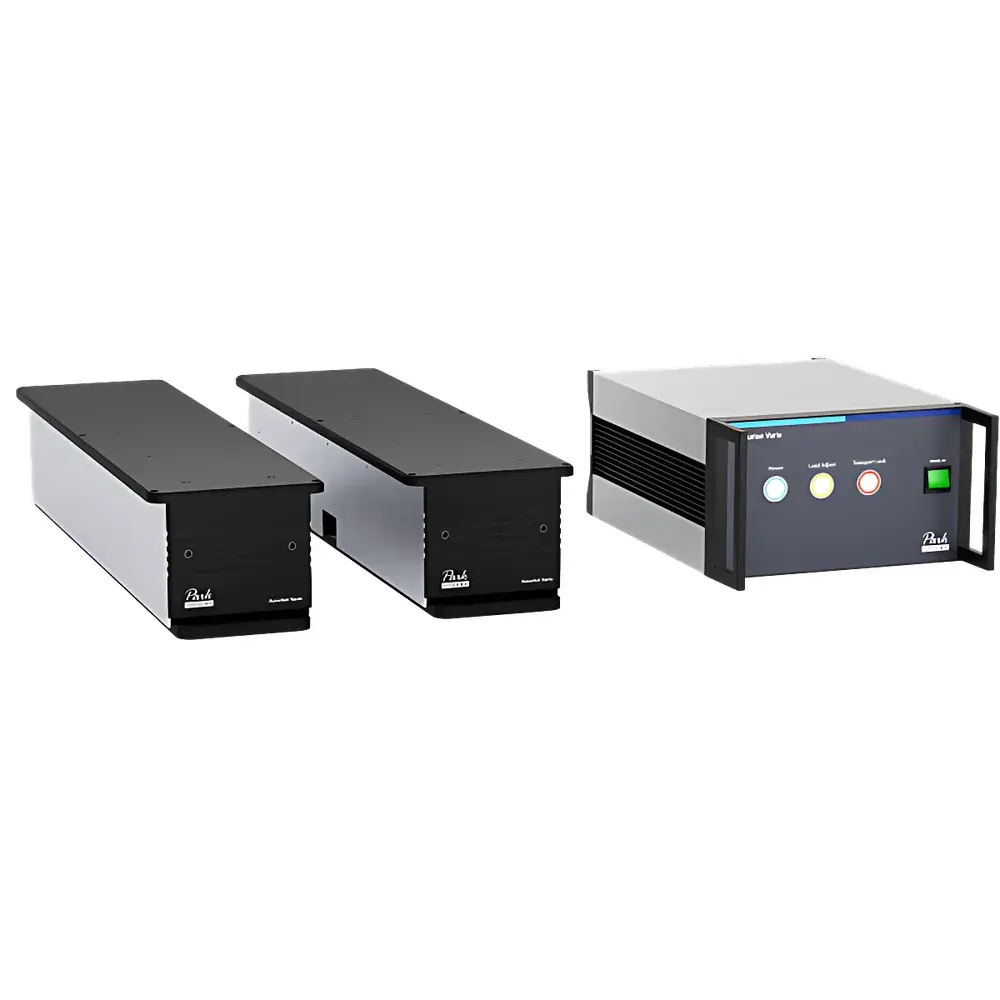
Accurion VarioBasic Active Vibration Isolation Table
| Brand | Accurion |
|---|---|
| Origin | Germany |
| Model | VarioBasic |
| Load Capacity | 0–300 kg or 0–600 kg (configurable per module) |
| Dimensions (VarioBasic 40 / 60 / 90) | 396×120×111 mm / 636×130×111 mm / 932×130×111 mm |
| Active Isolation Bandwidth | 0.6 Hz (or 1 Hz) to 200 Hz |
| Degrees of Freedom | 6-DOF active control |
| Settling Time | ≤ 0.3 s |
| Power Supply | Standard AC mains (no compressed air required) |
| Compliance | Designed for ISO 20483-compliant lab environments |
Overview
The Accurion VarioBasic Active Vibration Isolation Table is an engineered solution for laboratories requiring high-fidelity mechanical stability in the presence of ambient floor-borne and airborne vibrations. Unlike passive pneumatic isolation systems—whose performance degrades significantly below 5 Hz due to inherent resonance and limited damping—the VarioBasic employs real-time, feedback-controlled electromagnetic actuators across all six degrees of freedom (6-DOF) to generate instantaneous counter-forces that cancel incoming disturbances. This closed-loop architecture eliminates low-frequency resonance peaks typical of air-spring tables and delivers consistent attenuation from as low as 0.6 Hz up to 200 Hz. The system is particularly suited for applications involving scanning probe microscopy (SPM), optical interferometry, nanoindentation, laser-based metrology, and other high-resolution measurement techniques where sub-nanometer positional drift or microsecond-scale transient instability compromises data integrity.
Key Features
- True 6-degree-of-freedom active vibration cancellation using integrated inertial sensors and high-bandwidth electromagnetic actuators
- Ultra-fast settling time of ≤ 0.3 seconds following mechanical perturbation—more than two orders of magnitude faster than conventional passive isolators (typically 30–60 s)
- Configurable load capacity: supports either 0–300 kg or 0–600 kg per table unit, scalable via modular dual- or quad-element configurations
- No external infrastructure required: operates solely on standard AC power; no compressed air supply, plumbing, or dedicated HVAC conditioning needed
- Compact form factor with standardized footprint options (VarioBasic 40/60/90), enabling integration into space-constrained cleanrooms and benchtop setups
- Passive stiffness at 1 Hz exceeds that of typical pneumatic tables by a factor of 20–30, ensuring exceptional static position stability under static and quasi-static loads
- Intuitive front-panel interface with tactile push-button controls—no software installation or training required for basic operation
Sample Compatibility & Compliance
The VarioBasic accommodates a broad range of instrumentation footprints and mass distributions without requiring custom mounting plates or structural modifications. Its modular design allows seamless integration beneath commercial AFMs, SEM sample stages, optical coherence tomography (OCT) platforms, and ultra-low-force tensile testers. From a regulatory standpoint, the system is designed to support instrument qualification workflows aligned with ISO/IEC 17025, ASTM E1776, and USP guidelines for analytical instrument verification. While the VarioBasic itself does not carry FDA 21 CFR Part 11 certification (as it is a mechanical subsystem rather than a data-generating device), its stable platform enables compliant operation of connected instruments subject to electronic record and signature requirements. All units are manufactured in Germany under ISO 9001-certified processes and conform to CE marking directives for electromagnetic compatibility (EMC) and low-voltage safety.
Software & Data Management
The base VarioBasic configuration operates autonomously via embedded firmware and requires no host computer connection. For advanced users, optional USB- or Ethernet-enabled controller modules provide access to real-time diagnostic telemetry—including broadband acceleration spectra, actuator displacement logs, and system health status—via Accurion’s proprietary VarioControl software suite (Windows/macOS compatible). Raw sensor data can be exported in CSV or HDF5 format for post-processing in MATLAB, Python (SciPy/Pandas), or LabVIEW environments. Audit trails for parameter changes, firmware updates, and operational events are timestamped and exportable, supporting laboratory quality management systems (QMS) and periodic review requirements under GLP and GMP frameworks.
Applications
- Atomic force microscopy (AFM) and scanning tunneling microscopy (STM) in non-basement lab spaces
- High-magnification optical profilometry and white-light interferometry
- Nano-mechanical testing including dynamic nanoindentation and scratch analysis
- Laser Doppler vibrometry and phase-shifting digital holography
- Quantum optics experiments requiring long coherence times and minimal path-length fluctuation
- In-line metrology stations for semiconductor wafer inspection and thin-film characterization
FAQ
Does the VarioBasic require compressed air or external vacuum sources?
No. It operates exclusively on standard AC mains power (100–240 VAC, 50/60 Hz) and contains no pneumatic components.
Can multiple VarioBasic units be synchronized for larger equipment?
Yes—dual- and quad-module configurations are factory-assembled and calibrated as unified systems; independent units may also be networked via optional synchronization modules for coordinated multi-table operation.
What is the typical service life of the electromagnetic actuators?
Based on accelerated lifetime testing per IEC 60068-2-64, the core actuator assembly is rated for ≥ 50,000 hours of continuous operation under nominal load conditions.
Is recalibration required after relocation or environmental change?
No routine recalibration is needed. The system performs automatic self-diagnostic checks during power-up and adapts its control parameters based on real-time sensor feedback.
How does the VarioBasic handle transient shocks, such as door slams or elevator movement?
Its wide bandwidth (0.6–200 Hz) and fast response (<0.3 s settling) enable effective suppression of both harmonic and impulsive disturbances commonly generated by building infrastructure.



