
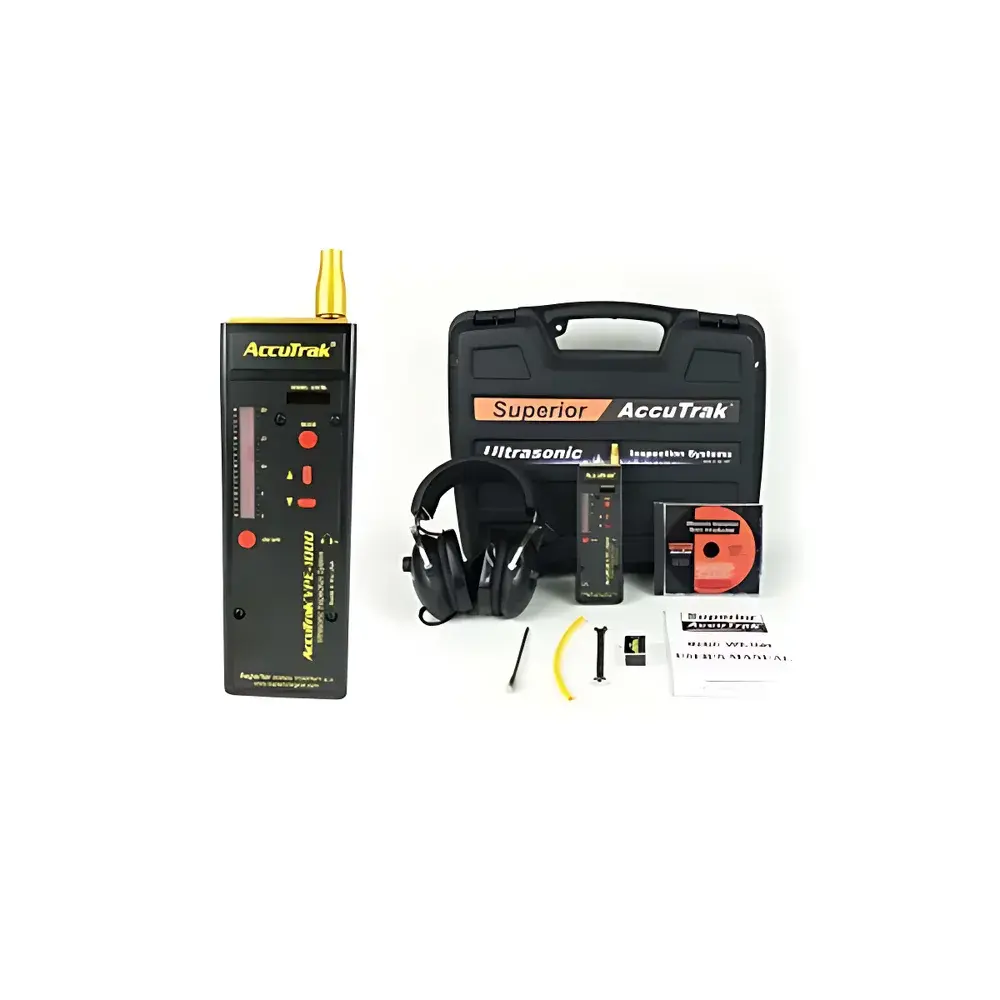
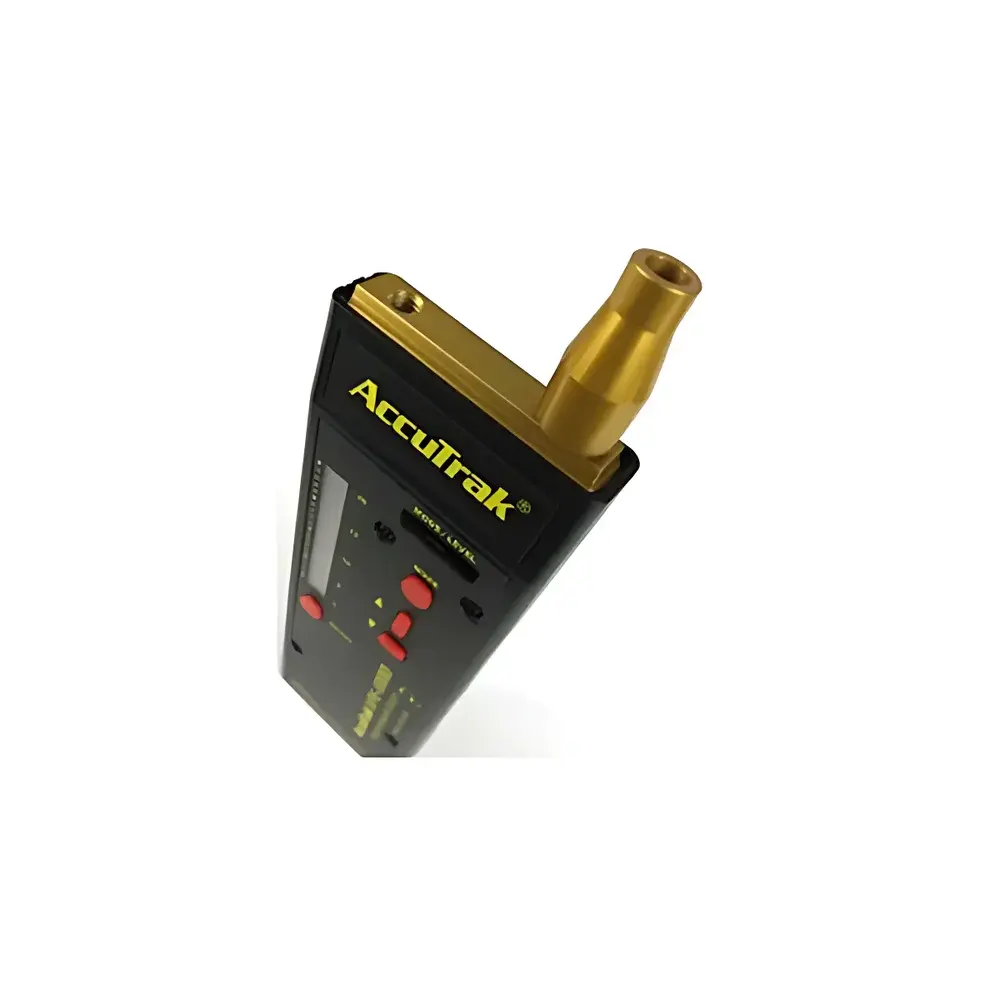
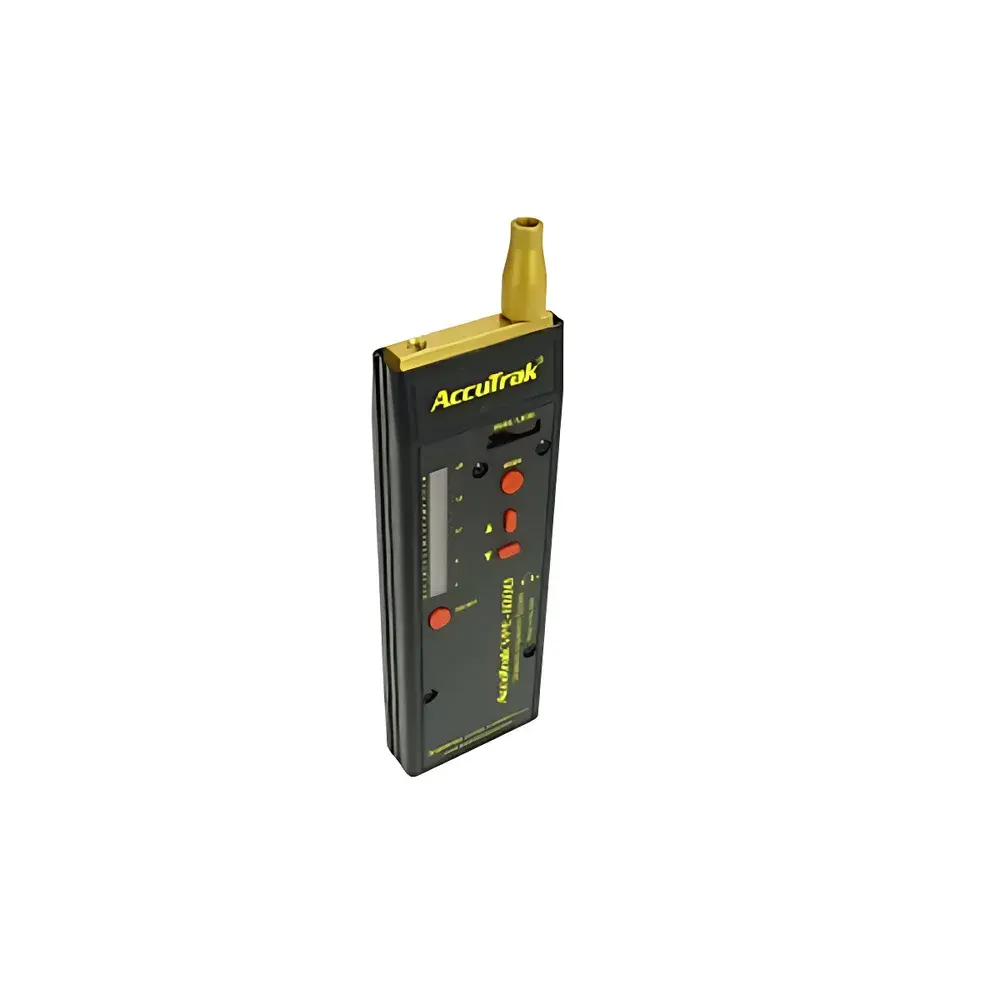
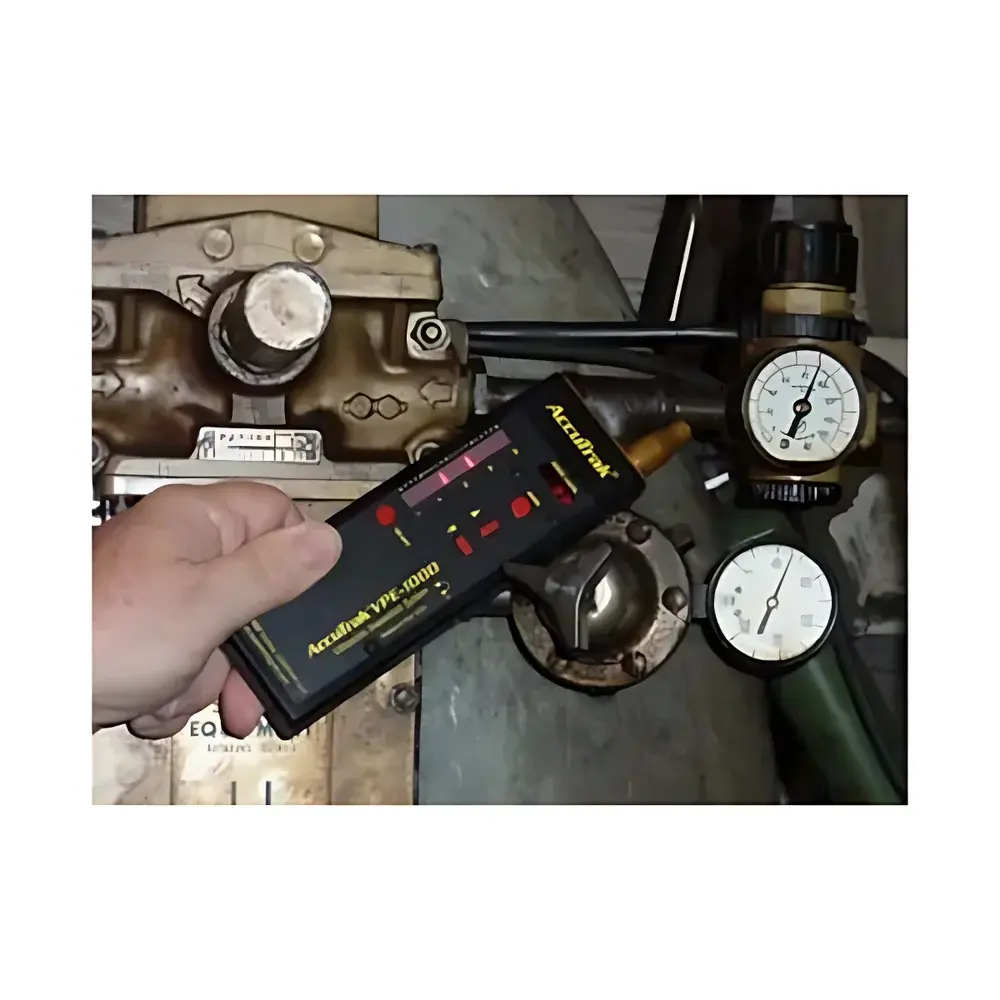
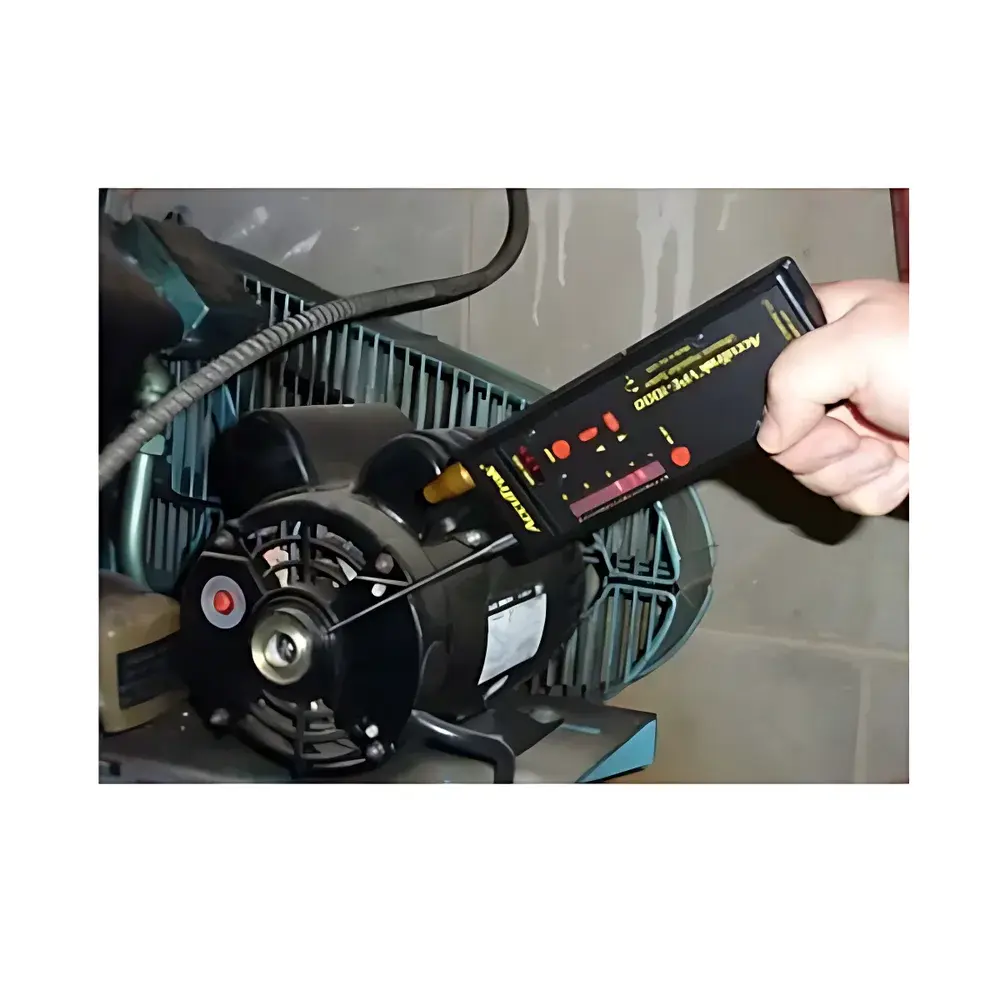
AccuTrak VPE-1000 Digital Ultrasonic Leak Detector
| Brand | AccuTrak (USA) |
|---|---|
| Origin | USA |
| Model | VPE-1000 |
| Weight | 233 g |
| Dimensions | 17.97 cm × 6.1 cm × 2.22 cm |
| Sensor Frequency Range (Airborne) | 34–42 kHz |
| Sensor Frequency Range (Contact Probe) | 16–24 kHz |
| Sensitivity | −80 dB/V·µbar |
| Heterodyne Oscillator | Digital |
| Sensitivity Control | 256-step digital |
| Volume Control | 256-step digital |
| Audio Output Bandwidth | 0–4 kHz |
| Display | 20-segment bar graph with peak-hold + alphanumeric LCD |
Overview
The AccuTrak VPE-1000 Digital Ultrasonic Leak Detector is a precision-engineered, handheld diagnostic instrument designed for non-invasive detection of high-frequency acoustic emissions associated with gas leaks, mechanical friction, electrical arcing, and valve degradation in industrial, commercial, and institutional facilities. Operating on the principle of heterodyne frequency conversion, the VPE-1000 downshifts ultrasonic energy—typically generated by turbulent gas flow across orifices, partial discharges in electrical components, or surface fatigue in rotating machinery—into the audible range (0–4 kHz) without signal distortion or analog drift. Unlike analog ultrasonic detectors reliant on analog amplification and fixed gain stages, the VPE-1000 employs a fully digital signal path: an onboard microcontroller digitizes transducer output in real time, applies programmable filtering, and delivers calibrated amplitude data to both visual and audio outputs. This architecture ensures high reproducibility across operators and environments, supporting consistent pass/fail assessments under ISO 55001-aligned asset management frameworks.
Key Features
- Dual-sensor architecture: Independent airborne and contact-mode ultrasonic transducers, each with dedicated digital gain control and optimized frequency response—34–42 kHz for air-coupled detection; 16–24 kHz for structure-borne vibration analysis via waveguide probe.
- Digital heterodyne processing: Eliminates analog oscillator drift; enables stable, repeatable frequency translation with ±0.5% center-frequency accuracy over temperature ranges from −10 °C to +50 °C.
- 256-step digital sensitivity and volume controls: Allow granular adjustment to isolate weak signals in high-noise environments (e.g., compressor rooms, HVAC plant rooms) without saturation or clipping.
- Integrated dual-display interface: Simultaneous 20-segment LED bar graph with true peak-hold functionality and a 4-digit alphanumeric LCD—enabling quantitative amplitude tracking (dB scale) alongside real-time trend visualization.
- Lightweight aluminum/ABS chassis (233 g): Anodized per MIL-A-8625 Type III, Class 2 (gold finish), with black ABS structural housing—engineered for durability, ESD safety, and ergonomic one-handed operation during extended surveys.
- Standard 3.5 mm stereo audio output: Compatible with noise-canceling headsets and external data loggers; supports integration into predictive maintenance workflows using third-party audio analysis software.
Sample Compatibility & Compliance
The VPE-1000 detects ultrasonic emission signatures from a broad spectrum of failure modes across pressurized, vacuum, and electrical systems. It is routinely deployed for leak verification per ASTM E2613–21 (Standard Guide for Ultrasonic Leak Detection), steam trap assessment per ANSI/ISA-75.23, and bearing condition monitoring aligned with ISO 13373-1. While not certified as intrinsically safe (IS), its low-power design (<150 mW active draw) and absence of spark-prone circuitry permit use in non-hazardous classified areas (Class I, Division 2; Zone 2). The device meets FCC Part 15 Class B and CE EMC Directive 2014/30/EU requirements. All firmware and calibration routines are traceable to NIST-traceable reference sources, supporting GLP/GMP documentation needs where audit trails are required.
Software & Data Management
The VPE-1000 operates as a standalone field instrument with no embedded operating system or network connectivity—ensuring immunity to cybersecurity vulnerabilities and eliminating software licensing dependencies. All signal processing occurs locally within the ASIC-based digital core. For long-term trending, users may record audio output via external devices and perform post-processing using industry-standard tools (e.g., MATLAB, Audacity, or NI LabVIEW) to extract RMS amplitude, spectral centroid, or kurtosis metrics. The included user manual documents full metrological traceability of sensor calibration, including linearity error (<±1.2 dB over full dynamic range) and thermal coefficient of sensitivity (±0.03 dB/°C). Firmware updates—when released—are delivered via USB-to-serial adapter and validated using SHA-256 checksums.
Applications
- Compressed air & vacuum systems: Quantify leak rates down to 0.05 scfm at 100 psi using comparative amplitude mapping across pipe networks and pneumatic actuators.
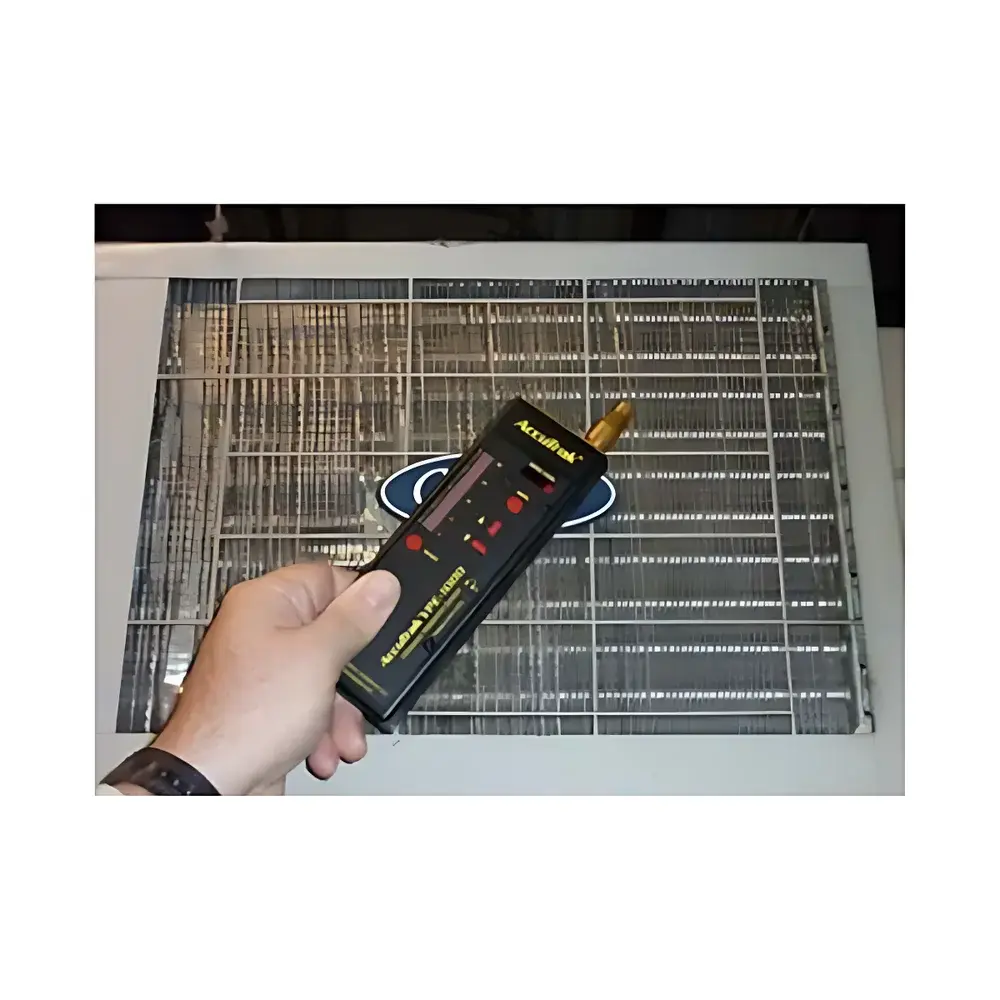
- Refrigeration & HVAC: Locate refrigerant leaks (R-134a, R-410A, ammonia) without halogen sniffers or dye injection; assess expansion valve performance via ultrasonic signature modulation during phase transition.
- Steam distribution: Identify failed traps, leaking isolation valves, and eroded seat surfaces within 3–5 seconds per component—supporting ASME PCC-2 repair validation protocols.
- Electrical infrastructure: Detect corona discharge, tracking, and loose connections in switchgear, bus ducts, and transformer bushings prior to thermal runaway events.
- Mechanical condition monitoring: Monitor bearing health (early-stage spalling, lubrication starvation), misalignment-induced friction, and belt slippage in pumps, fans, and conveyors.
- Building diagnostics: Verify envelope integrity in LEED-certified facilities; locate air infiltration paths around windows, doors, and curtain walls during blower door testing.
FAQ
What is the minimum detectable leak size for compressed air at 100 psi?
The VPE-1000 can reliably identify leaks producing ultrasonic energy ≥−80 dB/V·µbar at 1 meter distance—corresponding to approximately 0.05 standard cubic feet per minute (scfm) under typical industrial conditions.
Does the device require periodic factory recalibration?
No annual recalibration is mandated. However, users are advised to perform a functional check using the built-in test tone generator before each survey day, per ISO/IEC 17025 Clause 7.7.1.
Can the VPE-1000 be used underwater or in explosive atmospheres?
It is neither submersible nor rated for hazardous locations. Use only in dry, non-classified environments.
Is the contact probe interchangeable with other AccuTrak models?
Yes—the 3.5 mm stereo connector and mechanical interface are standardized across the VPE series; however, frequency response and sensitivity differ between probe types and must be accounted for in amplitude interpretation.
How does the digital peak-hold function improve measurement consistency?
It captures and retains the maximum amplitude value over a user-defined interval (default: 2 sec), mitigating transient masking effects from background noise bursts and enabling reliable comparison across multiple test points.







