
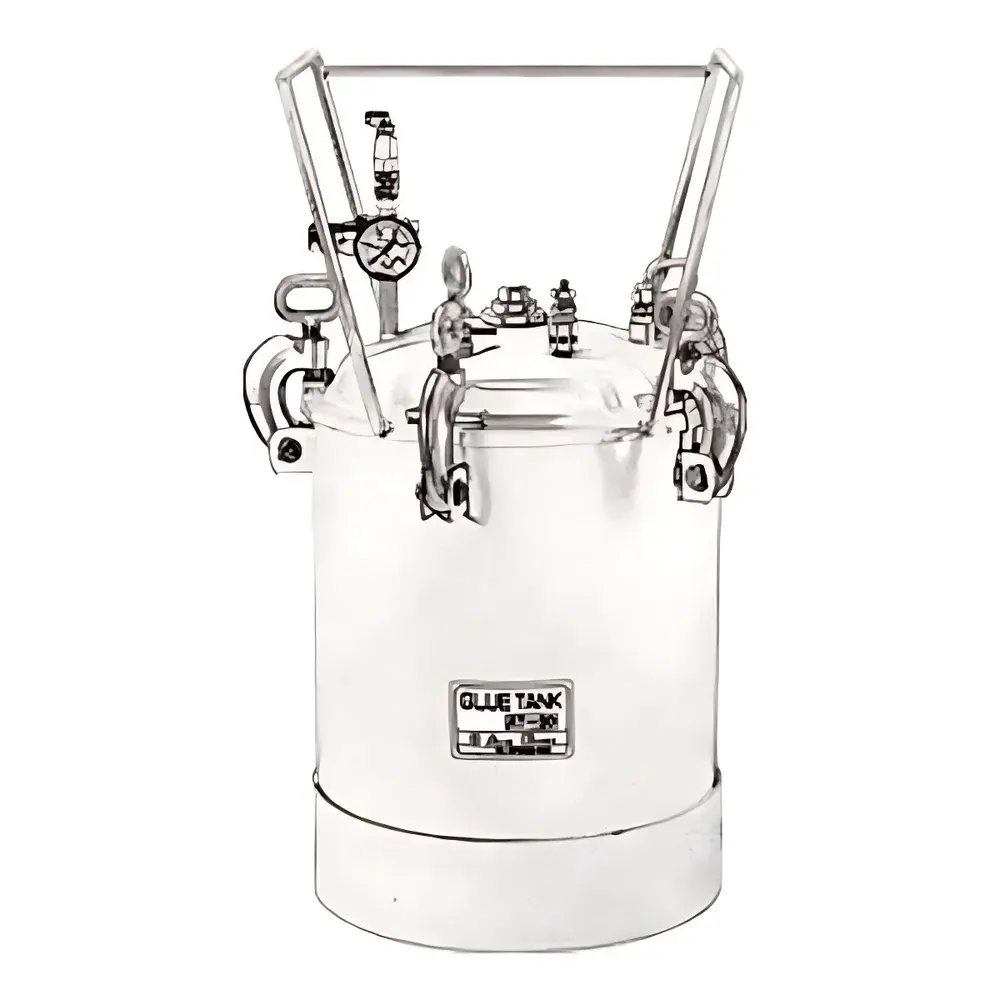
ACE GIKEN AT-F1000 / AT-F4000 Large-Scale Stainless Steel Bioreactor Tanks (10–80 L Working Volume)
| Brand | ACE GIKEN |
|---|---|
| Origin | Japan |
| Model | AT-F1000 / AT-F4000 |
| Capacity Range | 10–80 L (working volume) |
| Construction Material | SUS314 stainless steel |
| Sterilization Method | Vacuum-assisted thermal sterilization |
| Pressure Rating | Up to 0.34 MPa (AT-F1000/2000), 0.18 MPa (AT-F4000/6000/8000) |
| Agitation Options | Static (no agitation) or Air-driven agitation (AM series) |
| Inner Vessel Available | Yes, model-specific SUS314 inner containers |
| Compliance | Designed for GLP-compliant bioprocess development and pilot-scale cell culture applications |
Overview
The ACE GIKEN AT-F1000 and AT-F4000 are robust, vacuum-compatible stainless steel bioreactor tanks engineered for scalable suspension culture, microbial fermentation, and upstream bioprocess development in academic, contract development and manufacturing (CDMO), and industrial R&D laboratories. Designed and manufactured in Japan under stringent JIS and ISO 9001 quality systems, these vessels operate on a fundamental principle of controlled gas exchange and pressure-stabilized thermal sterilization—enabling reliable, repeatable batch processing without integrated sensors or motorized agitators. Unlike conventional stirred-tank bioreactors, the AT-F series relies on passive mixing (for static configurations) or externally supplied sterile air for gentle agitation (AM variants), making them particularly suitable for shear-sensitive mammalian or insect cell cultures, yeast propagation, and anaerobic or microaerophilic microbial cultivation where precise dissolved oxygen control is not required but sterility integrity and mechanical durability are critical.
Key Features
- Japanese-engineered construction using high-purity SUS314 stainless steel—resistant to chloride-induced pitting and compatible with repeated autoclave cycles and caustic cleaning-in-place (CIP) protocols
- Modular pressure-rated design: AT-F1000 and AT-F2000 support up to 0.34 MPa (3.4 bar) working pressure; AT-F4000 through AT-F8000 rated to 0.18 MPa (1.8 bar) for enhanced safety at larger volumes
- Dual configuration options: “Static” (non-agitated) models for sedimentation-based processes or storage; “AM” (Air-Mix) variants with calibrated air sparging ports and sterile filter inlets for low-shear gas-driven homogenization
- Interchangeable, precision-fitted inner vessels—available per model (10 L to 80 L)—allow segregation of process streams, facilitate cleaning validation, and minimize cross-contamination risk during multi-product campaigns
- Vacuum-assisted sterilization capability enables rapid, uniform heat penetration during steam sterilization cycles—validated for compliance with ISO 13408-1 (sterility assurance for pharmaceutical containers) and aligned with USP <1211> sterility requirements
- Flange-mounted port architecture (DIN 11851 or ISO-KF compatible upon request) supports integration of standard 1/4″–1/2″ sanitary fittings, pressure transducers, temperature probes, and sterile sampling valves
Sample Compatibility & Compliance
These tanks accommodate a broad range of biological materials—including adherent and suspension mammalian cells, hybridomas, CHO lines, Pichia pastoris, E. coli, and primary human tissue explants—within defined shear and pH stability envelopes. The absence of internal moving parts eliminates mechanical stress artifacts common in impeller-based systems, supporting high-viability harvests in sensitive differentiation or transient transfection workflows. All AT-F series vessels comply with Japanese Pharmaceutical Affairs Law (PAL) manufacturing standards and meet material traceability requirements per ASTM A240/A240M for austenitic stainless steels. Documentation packages include material certifications (MTRs), pressure vessel test reports (hydrostatic + vacuum leak testing), and sterilization cycle validation templates compatible with FDA 21 CFR Part 11–compliant electronic records.
Software & Data Management
While the AT-F1000/AT-F4000 are hardware-only platforms (no embedded controllers or digital interfaces), they are fully interoperable with third-party process monitoring systems via standardized analog (4–20 mA) and digital (RS-485 Modbus RTU) signal inputs. Laboratories routinely integrate these tanks into DeltaV™, PI System™, or LabVIEW™-based architectures for centralized logging of jacket temperature, headspace pressure, sparge flow rate, and sterilization cycle timestamps. Audit trails, user access controls, and electronic signature functionality are implemented at the supervisory system level—ensuring full alignment with ALCOA+ data integrity principles and facilitating GLP/GMP audit readiness.
Applications
- Pilot-scale expansion of clinical-grade cell banks prior to bioreactor inoculation
- Long-term maintenance of low-passage primary cells under controlled hypoxic conditions
- Media preparation, buffer storage, and sterile intermediate hold steps in cGMP manufacturing suites
- Process characterization studies requiring vessel-to-vessel comparability across scale (10 L → 80 L)
- Training platforms for aseptic technique, SIP (steam-in-place), and containment procedures in biosafety Level 2 environments
- Non-regulated research use in synthetic biology chassis development and metabolic engineering screening
FAQ
Are AT-F series tanks compliant with ASME BPVC Section VIII Division 1?
No—they are not formally stamped as ASME-coded pressure vessels. However, all units undergo hydrostatic pressure testing at 1.5× maximum allowable working pressure (MAWP) and vacuum leak testing per JIS B 8265, with full test documentation provided.
Can I retrofit an AT-F4000 with a motorized stirrer?
Not recommended. The tank’s structural flange geometry and port layout are optimized for static or air-agitated operation only. Mechanical agitation would require custom engineering and void warranty and sterility certification.
What is the maximum recommended operating temperature?
Jacketed operation supports 4°C to 121°C; prolonged exposure above 100°C requires confirmation of gasket material compatibility (EPDM standard; FKM optional).
Do inner vessels come with surface finish certification?
Yes—electropolished inner vessels are supplied with Ra ≤ 0.4 µm surface roughness verification reports per ASTM E1572 and ISO 15730.
Is vacuum-assisted sterilization validated for depyrogenation?
Vacuum cycles enhance steam penetration but do not replace dry-heat depyrogenation (≥250°C for ≥30 min). Depyrogenation must be performed separately per USP <1211> if endotoxin clearance is required.



