
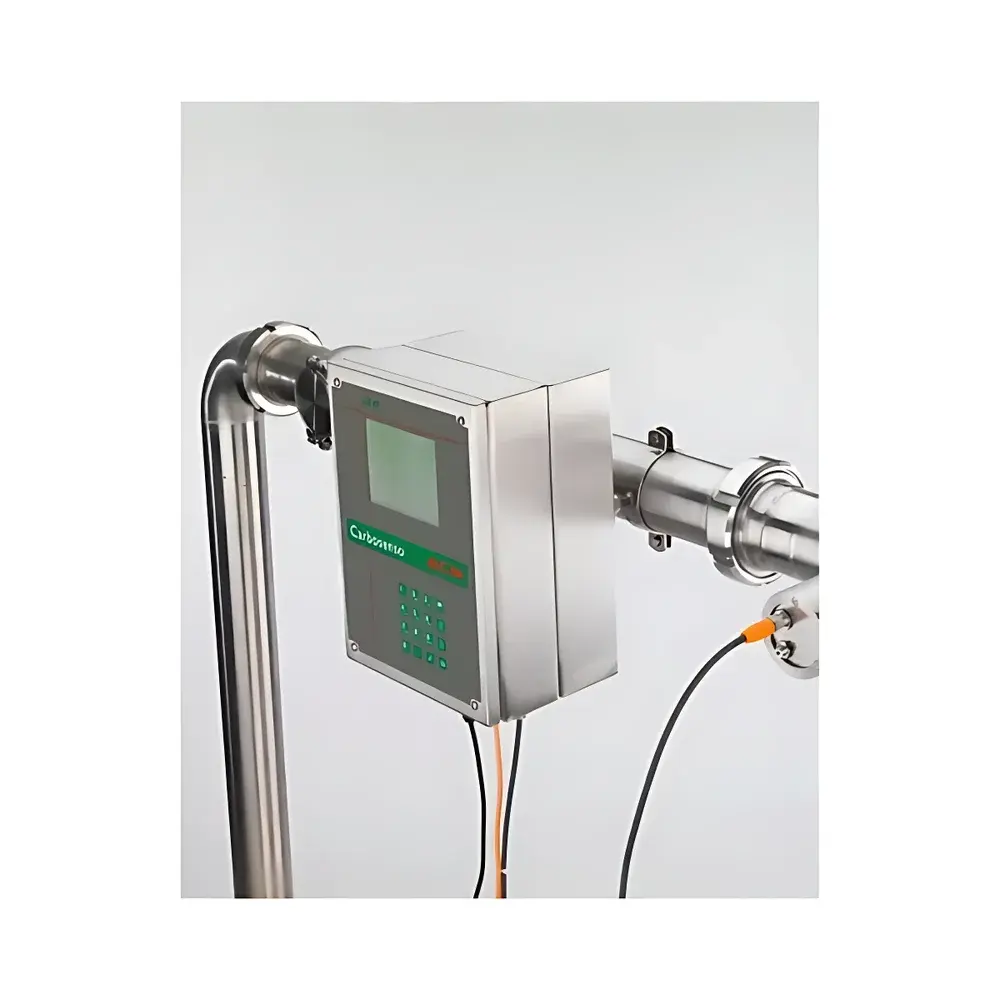
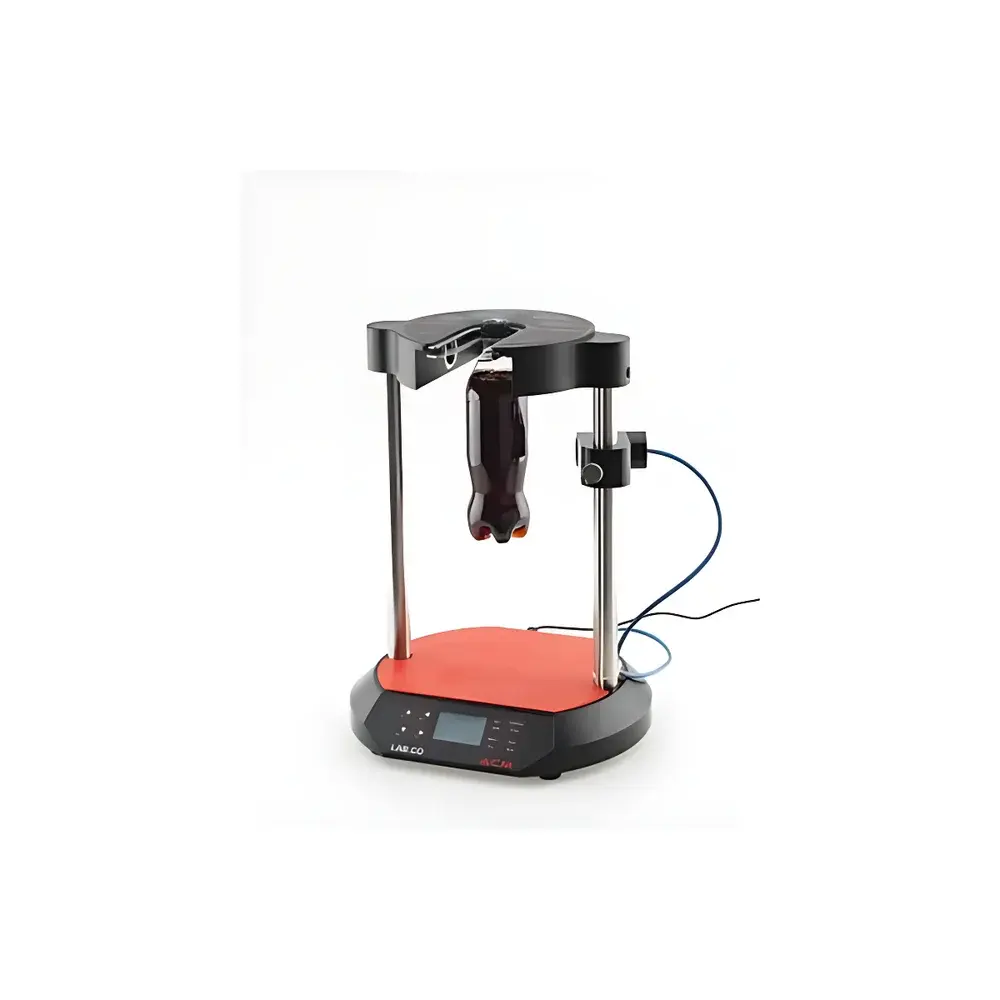
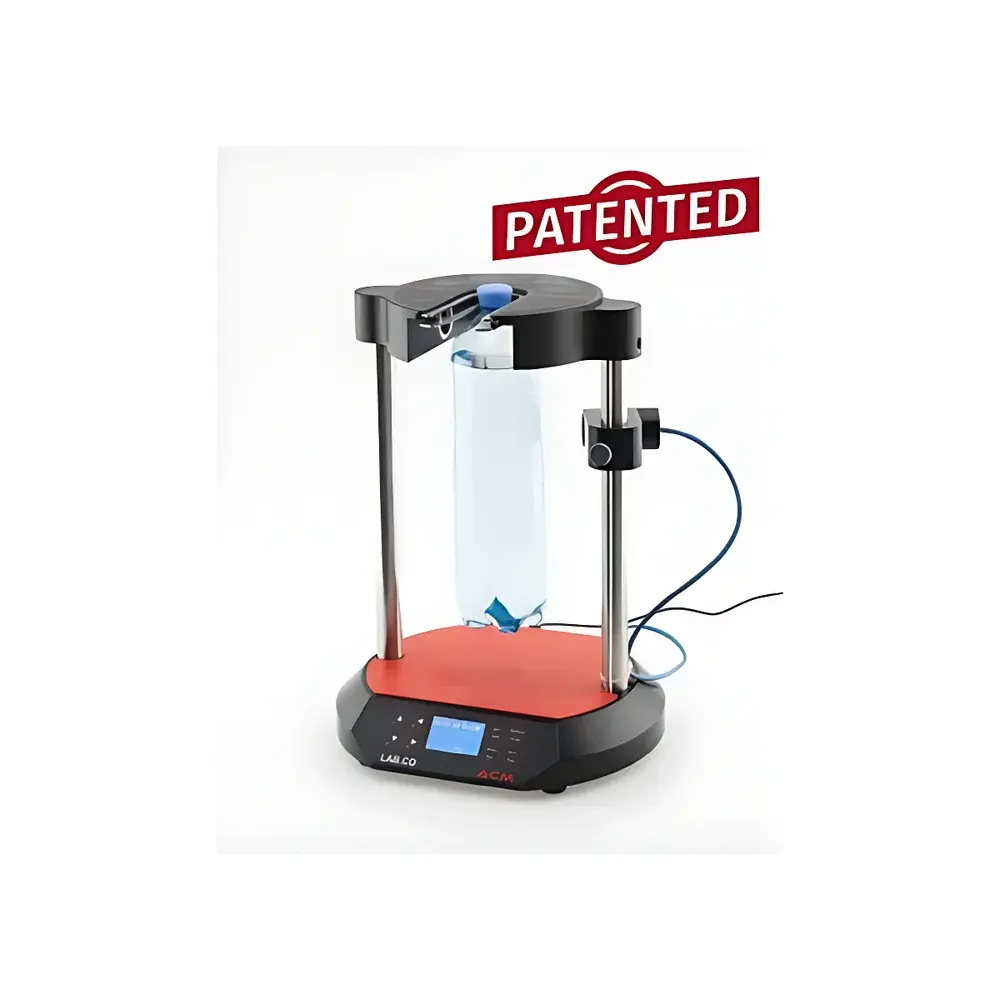
ACM LR.10 Online Refractometer
| Brand | ACM |
|---|---|
| Origin | Austria |
| Model | LR.10 |
| Type | Online Refractometer |
| Temperature Control | Yes |
| Digital Display | Yes |
| Measurement Range | 0–30 °Brix |
| Accuracy | ±0.005 °Brix |
| Operating Temperature | 0–50 °C |
| IP Rating | IP65 |
| Communication Interface | RS485, Profibus |
| Compliance | Designed for hygienic process environments (CIP-compatible, 10 bar pressure rating) |
Overview
The ACM LR.10 Online Refractometer is a high-precision, in-line optical measurement instrument engineered for continuous real-time monitoring of soluble solids concentration—expressed as degrees Brix (°Brix)—in liquid process streams. Based on the fundamental principle of critical-angle refractometry, the LR.10 directs a collimated light beam through a sapphire prism in direct contact with the process fluid; the resulting angle of total internal reflection is detected by a high-resolution digital photodiode array and converted into a refractive index value, which is then linearly correlated to °Brix via factory-calibrated polynomial algorithms traceable to NIST-standard sucrose solutions. Unlike offline benchtop refractometers or conductivity-based proxies, this method delivers inherent immunity to color, turbidity, suspended solids, and dissolved CO₂—making it especially suitable for demanding applications in beverage, food, and bioprocessing industries where compositional stability and regulatory traceability are critical.
Key Features
- Laser-based critical-angle detection system ensuring long-term measurement stability with typical drift < ±0.002 °Brix per month under continuous operation
- Integrated Peltier-controlled temperature stabilization (±0.1 °C) enabling automatic temperature compensation across 0–50 °C process ranges
- Hygienic stainless-steel (1.4435/SS316L) wetted parts and CIP/SIP-compatible design rated for up to 10 bar pressure and thermal cycling to 130 °C
- IP65-rated electronics housing with explosion-proof optional variants (ATEX/IECEx Zone 2) for hazardous area deployment
- Dual communication protocols: standard RS485 Modbus RTU and optional Profibus DP v1 support for seamless integration into DCS, SCADA, or PLC-based control architectures
- Real-time analog output (4–20 mA) with HART 7.5 capability and configurable alarm thresholds for deviation detection and process interlock signaling
Sample Compatibility & Compliance
The LR.10 is validated for use with low-to-medium viscosity aqueous solutions including fruit juices, wort, dairy permeates, sugar syrups, and pharmaceutical buffers. It maintains accuracy in the presence of fine particulates (< 50 µm), microbubbles, and non-absorbing colloids—eliminating the need for inline filtration in most applications. The instrument complies with key industry hygiene standards including EHEDG Doc. 8 (Type EL-A), 3-A Sanitary Standards 74-01, and FDA 21 CFR Part 11 requirements when paired with ACM’s certified data acquisition software. Its calibration protocol supports GLP/GMP audit trails with electronic signature-capable calibration logs, version-controlled reference curves, and secure user access levels (admin/operator/auditor).
Software & Data Management
ACM’s proprietary RefraSoft™ configuration and visualization suite provides browser-based commissioning, real-time trend analysis, and automated calibration validation reports. The software supports CSV/Excel export, OPC UA server integration, and configurable data logging intervals down to 100 ms. All measurement data—including raw refractive index, compensated °Brix, process temperature, signal quality metrics, and diagnostic status flags—are timestamped with UTC synchronization and stored locally on an industrial-grade SD card (optional cloud backup via MQTT). Audit trail functionality records every parameter change, calibration event, and user login with immutable SHA-256 hashing compliant with ISO/IEC 17025 and Annex 11 expectations.
Applications
- Beverage manufacturing: Real-time Brix control during juice concentration, soft drink syrup blending, and carbonated beverage formulation (often co-deployed with ACM CO.20 dissolved CO₂ sensors)
- Brewing & distilling: Continuous extract monitoring in fermentation vessels, mash tun endpoint detection, and alcohol-free beer dilution control
- Dairy processing: RO/UF retentate concentration tracking, whey protein standardization, and spray-drying feed consistency assurance
- Pharmaceutical excipient production: Sucrose, dextrose, and maltodextrin solution concentration verification prior to lyophilization or tablet granulation
- Chemical intermediates: Monitoring glycol, glycerol, and organic acid concentrations in batch reactors and continuous flow synthesis lines
FAQ
What is the maximum allowable process pressure and temperature for the LR.10?
The sensor head is rated for continuous operation at up to 10 bar and 50 °C; optional high-temp versions support intermittent exposure to 130 °C during CIP cycles.
Does the LR.10 require periodic recalibration with sucrose standards?
While factory calibration is stable for ≥12 months under normal conditions, ACM recommends quarterly verification using certified 10.000 ±0.003 °Brix sucrose reference solutions traceable to PTB or NIST.
Can the LR.10 measure opaque or highly colored liquids?
Yes—unlike absorption-based methods, critical-angle refractometry relies solely on interface optics and is unaffected by sample color, haze, or non-scattering particulates.
Is third-party system integration supported beyond Profibus and RS485?
Yes: optional Ethernet/IP, Modbus TCP, and OPC UA gateways are available; custom API wrappers can be commissioned for MES/ERP-level data ingestion.
How is cleaning-in-place (CIP) validated for the LR.10?
Each unit ships with a CIP validation certificate documenting thermal cycle endurance, pressure integrity testing, and post-CIP zero-point recovery performance within ±0.002 °Brix tolerance.



