ACM LR.14 Online Refractometer
| Brand | ACM |
|---|---|
| Origin | Austria |
| Model | LR.14 |
| Measurement Principle | Critical Angle Refractometry |
| Brix Range | 0–75 °Brix |
| Process Temperature Range | 0–50 °C |
| Output Signal | 4–20 mA / HART / Modbus RTU |
| IP Rating | IP65/IP67 (sensor housing) |
| Wetted Materials | 316L stainless steel, sapphire prism, FKM or EPDM seals |
| Compliance | ATEX/IECEx optional, FDA-compliant wetted materials, CE marked |
Overview
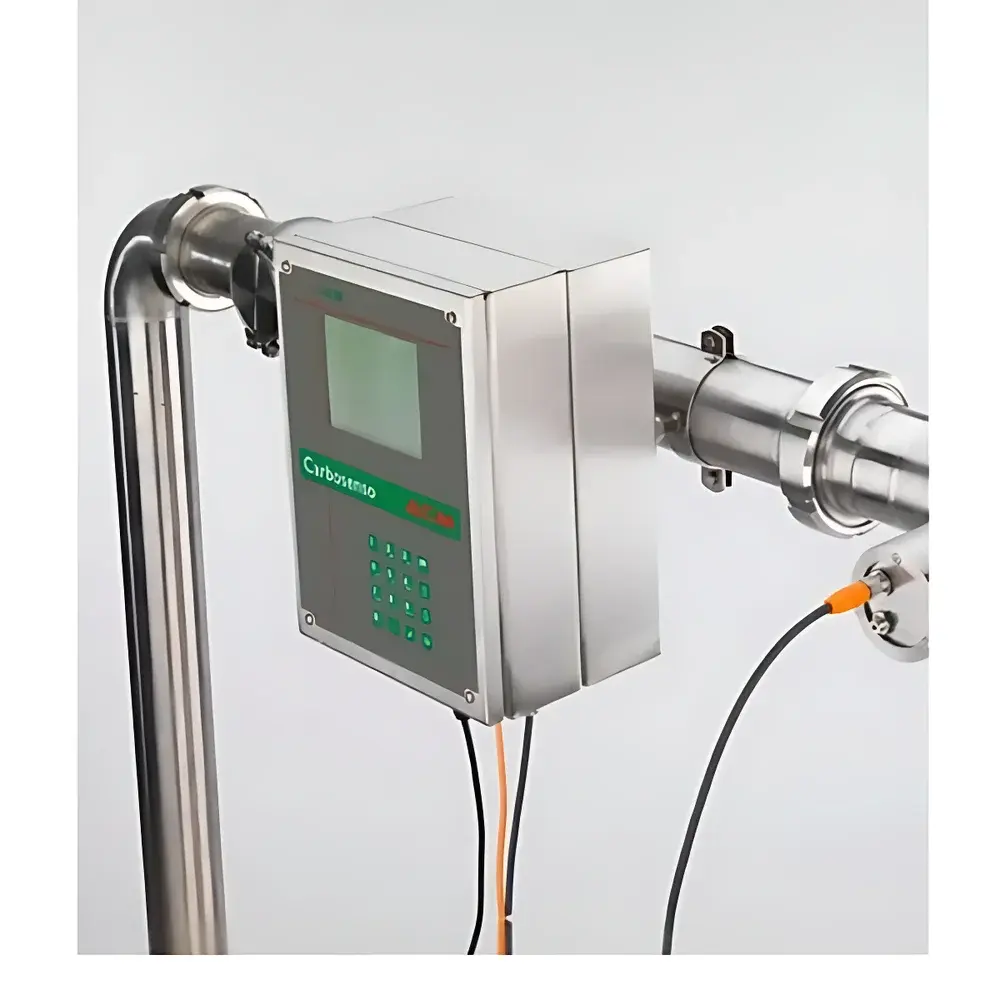
The ACM LR.14 Online Refractometer is an industrial-grade inline process analyzer engineered for continuous, real-time measurement of refractive index and derived concentration parameters—primarily °Brix—in liquid streams across beverage, food, brewing, and chemical manufacturing environments. It operates on the principle of critical angle refractometry: a collimated light beam passes through a sapphire prism in direct contact with the process medium; the angle at which total internal reflection occurs is precisely measured and converted into refractive index (nD), then linearly correlated to °Brix using factory-calibrated polynomial algorithms traceable to NIST-standard sucrose solutions. Unlike offline benchtop units or sampling-based systems, the LR.14 integrates directly into pressurized pipelines or open-channel flow cells, eliminating sample lag, evaporation artifacts, and operator-dependent variability. Its optical architecture is inherently insensitive to suspended solids, color, or turbidity—enabling stable operation in unfiltered wort, fruit pulps, syrups, and concentrated sugar solutions where traditional conductivity or density-based methods fail.
Key Features
- High-precision sapphire prism sensor with temperature-compensated optics, ensuring <±0.1 °Brix accuracy across full 0–75 °Brix range
- Integrated Pt100 RTD temperature sensor (±0.2 °C) for real-time thermal compensation per ISO 21542:2020
- Robust 316L stainless steel body with optional hygienic tri-clamp (DIN 11851) or flanged (DIN/ANSI) process connections
- Configurable analog (4–20 mA) and digital (HART v7, Modbus RTU over RS-485) outputs for seamless integration into DCS, PLC, or SCADA systems
- No moving parts, no consumables, no reagents—designed for >10 years of maintenance-free operation in continuous 24/7 processes
- Optional ATEX Zone 1 / IECEx certification for installation in hazardous areas (Group II, Category 2G)
- Self-diagnostic firmware with optical path integrity monitoring, prism fouling detection, and signal-to-noise ratio logging
Sample Compatibility & Compliance
The LR.14 is validated for use with aqueous solutions containing sugars (sucrose, glucose, fructose), organic acids (citric, malic), alcohols (up to 15 %v/v), and common preservatives (potassium sorbate, sodium benzoate). It maintains measurement stability in media with up to 15 wt% suspended solids (e.g., unfiltered wort, juice pulp, molasses) and pH 2.0–12.0. All wetted surfaces comply with FDA 21 CFR §177.2400 (food-contact polymers) and EU Regulation (EC) No. 1935/2004. The instrument meets electromagnetic compatibility requirements per EN 61326-1:2013 and carries CE marking under the EU Measuring Instruments Directive (MID 2014/32/EU) for legal metrology applications where applicable. Calibration traceability is documented to national standards via accredited calibration certificates (ISO/IEC 17025).
Software & Data Management
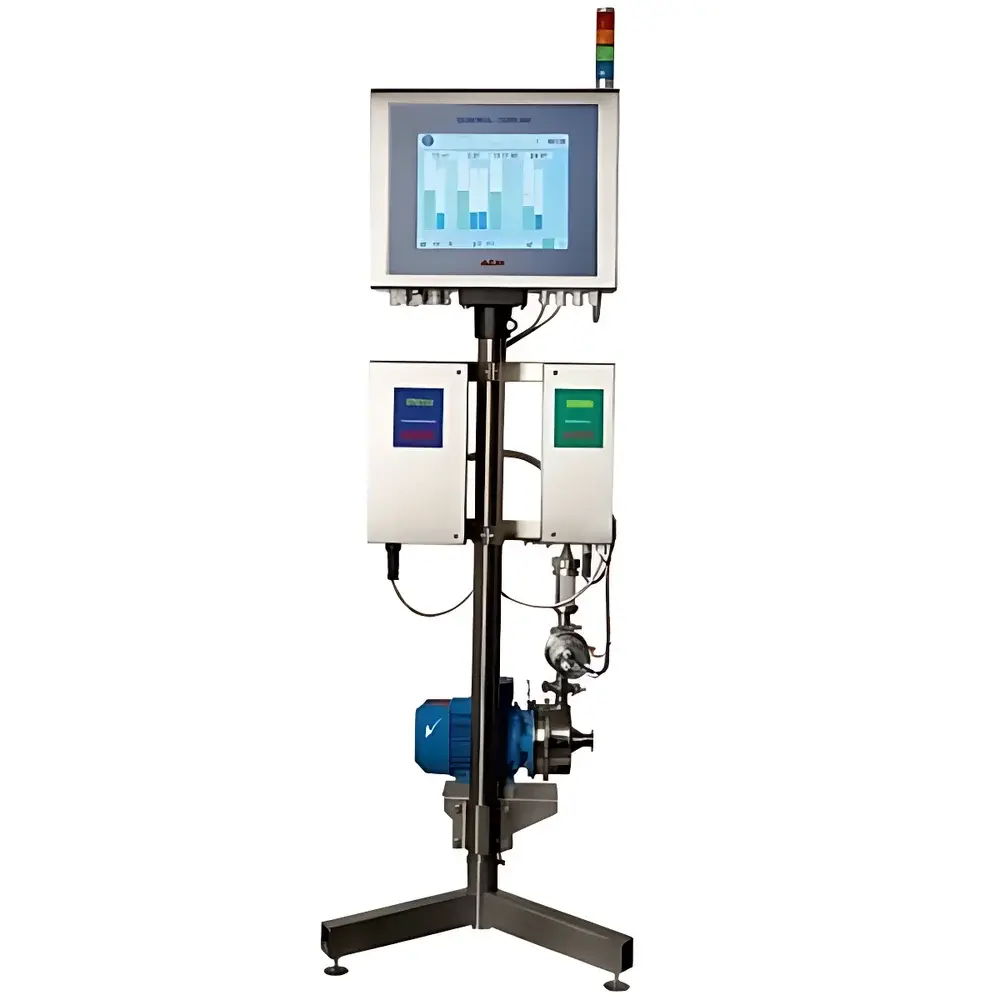
The LR.14 supports configuration and diagnostics via ACM’s QUATROL Configuration Suite—a Windows-based engineering tool enabling parameter setup, zero/span calibration, alarm thresholds, and linearization curve editing. For enterprise-level deployment, it interfaces natively with ACM’s QUATROL.50B and QUATROL.50S monitoring platforms, allowing multi-sensor fusion (e.g., concurrent °Brix + CO₂ + O₂ + density) and automated calculation of derived parameters: original gravity (°Plato), alcohol by volume (% vol), real extract, apparent attenuation, and caloric content (kcal/kJ per 100 mL). Audit trails, user access control, and electronic signatures align with FDA 21 CFR Part 11 requirements when deployed with QUATROL’s validated software environment. Raw sensor data is timestamped with microsecond resolution and exportable in CSV or OPC UA format for LIMS or MES integration.
Applications
The LR.14 delivers process-critical data in dynamic production stages where composition shifts rapidly and manual sampling introduces unacceptable delay or risk. In soft drink concentrate plants, it monitors syrup dilution ratios in real time during blending, preventing over- or under-sweetening before filling. In breweries, it tracks extract loss during lautering and hop addition, feeding feedback loops to optimize mash efficiency. In juice concentration lines, it controls evaporator vacuum and steam flow by detecting subtle °Brix gradients at feed, intermediate, and final concentrate streams. For ethanol production, it verifies fermentation broth sugar depletion prior to distillation. In pharmaceutical excipient manufacturing, it verifies glycerin or propylene glycol concentration in liquid dosage forms. Its extended 0–75 °Brix range uniquely supports high-solids applications such as corn syrup refining, molasses handling, and liquid sugar storage tank inventory management—where lower-range refractometers saturate or drift.
FAQ
What is the maximum allowable process pressure for the LR.14 sensor?
Standard models are rated for continuous operation up to 10 bar (145 psi); custom variants support up to 40 bar upon request.
Can the LR.14 be installed in vertical pipe runs?
Yes—orientation-independent design allows mounting in horizontal, vertical, or angled configurations without performance degradation.
Does the LR.14 require periodic recalibration?
No routine recalibration is needed; however, verification against certified sucrose standards is recommended every 6–12 months depending on process fouling potential and quality system requirements.
Is cleaning-in-place (CIP) compatible?
Fully compatible with standard CIP cycles using NaOH (1–2 %), nitric acid (0.5–1 %), or peracetic acid; sapphire prism withstands repeated thermal shock from 0–85 °C.
How does the LR.14 handle air bubbles or foam in the process stream?
The optical sensing zone is designed to minimize bubble entrapment; integrated flow conditioning ensures laminar, bubble-free contact—foam-prone applications benefit from optional vortex breakers or ultrasonic deaeration upstream.