
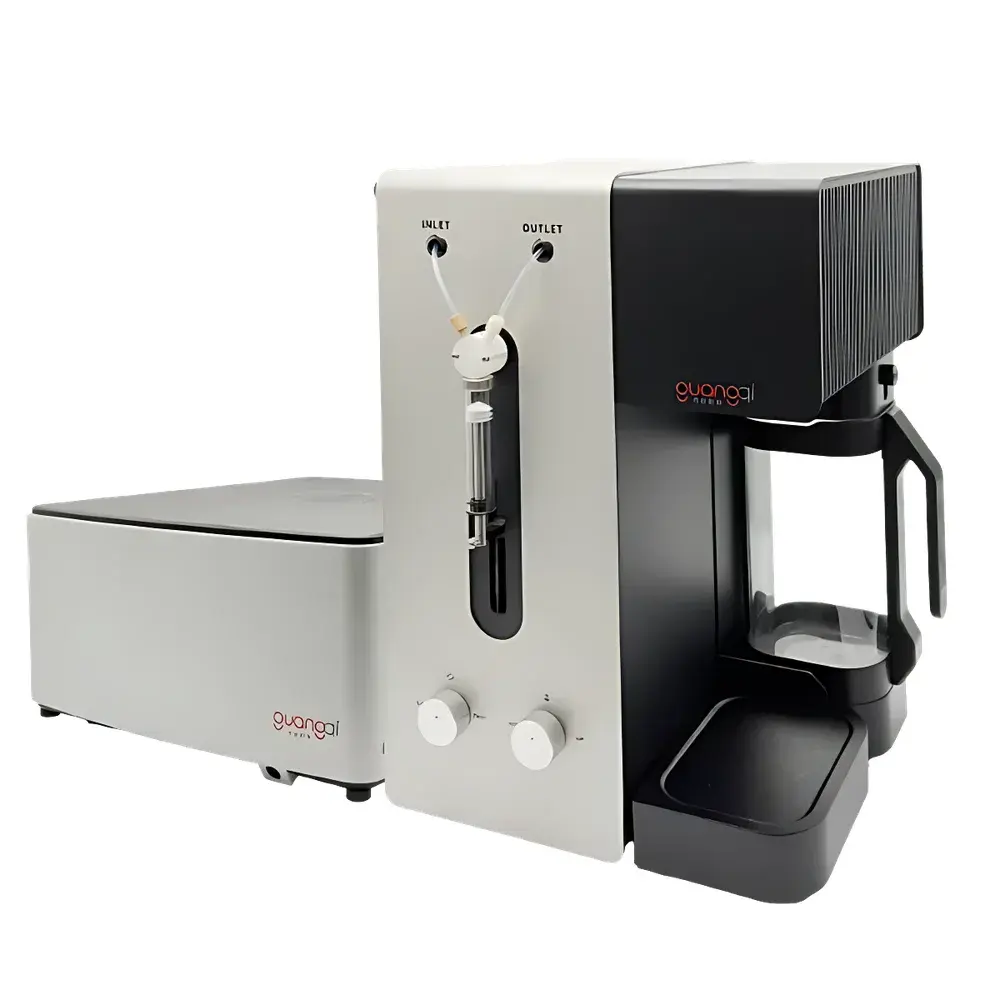
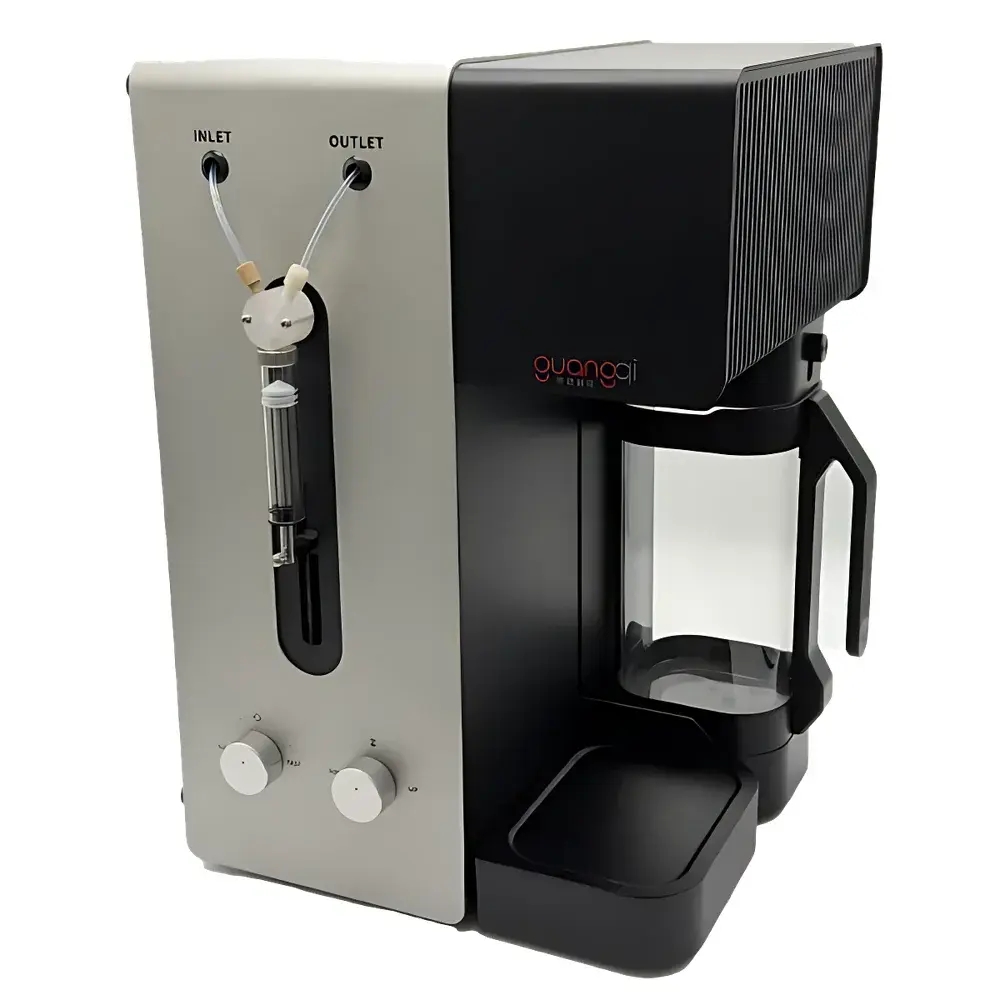
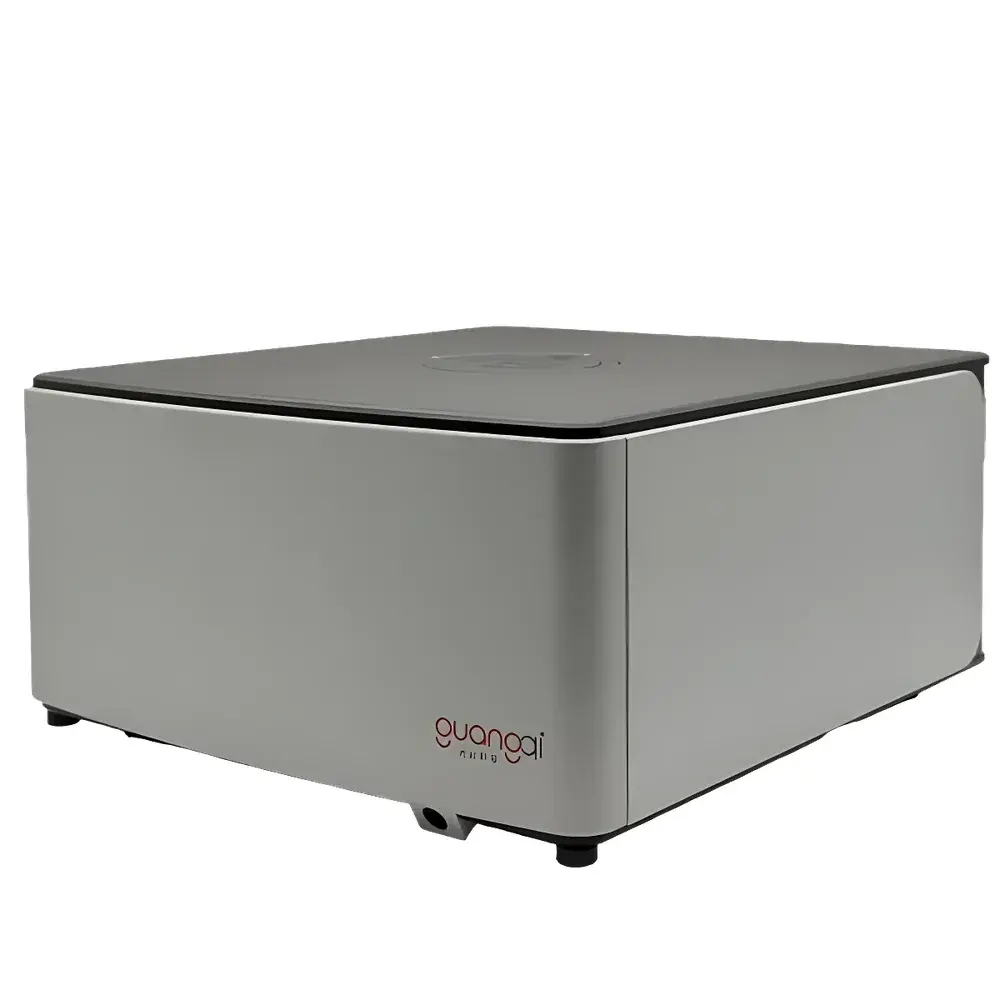
Acona A2000 SIS Insoluble Particle Detector
| Brand | Acona |
|---|---|
| Origin | Shanghai, China |
| Manufacturer Type | Direct Manufacturer |
| Region of Origin | Domestic (China) |
| Model | Acona A2000 SIS |
| Price Range | USD 1,400 – 63,000 |
Overview
The Acona A2000 SIS Insoluble Particle Detector is an advanced, regulatory-compliant instrument engineered for high-precision quantification and sizing of insoluble particulates in parenteral drug products, biologics, ophthalmic solutions, and CMP slurries. It operates on the Single Particle Optical Sensing (SPOS) principle—also known as direct imaging via light extinction and scattering—enabling true particle-by-particle enumeration and classification. Unlike ensemble techniques such as laser diffraction (LD), which infer distribution from bulk optical properties, the A2000 SIS captures individual particle events with deterministic resolution, delivering quantitative number-based particle size distributions (PSD) across a validated dynamic range of 0.5–400 µm. Its design adheres rigorously to USP (Subvisible Particles in Therapeutic Protein Products), USP (Subvisible Particulate Matter in Injectable Products), and EP 2.9.19, making it suitable for routine QC release testing and stability-indicating studies under cGMP conditions.
Key Features
- Ultra-low volume sampling: Minimum sample intake of 50 µL—fully compliant with USP requirements for precious or low-yield formulations.
- Dual-mode optical detection: Integrated LE400 sensor simultaneously acquires extinction and scattering signals per particle, optimizing sensitivity for submicron particles (<2 µm) while preserving counting accuracy for larger aggregates (up to 400 µm).
- 1024-channel ultra-high-resolution analysis: Delivers 0.01 µm bin width resolution, eliminating spectral overlap and enabling unambiguous discrimination of multimodal distributions (e.g., 0.8 µm, 2.0 µm, and 5.0 µm reference standards appear as three distinct, non-overlapping peaks).
- 10 ppt (parts-per-trillion) detection limit: Achieves exceptional sensitivity for large particle count (LPC) monitoring—approximately 6,000× more sensitive than conventional LD systems in the >10 µm range—critical for detecting rare but clinically significant aggregates in monoclonal antibody formulations and lipid emulsions.
- Modular architecture: Host system supports optional APS (Automatic Particle Suspension) dilution module for automated handling of high-concentration suspensions and viscous emulsions per USP .
- Field-serviceable optics: Sensor cartridge is tool-free removable, allowing rapid cleaning, calibration verification, or replacement without system downtime or third-party intervention.
Sample Compatibility & Compliance
The A2000 SIS accommodates a broad spectrum of pharmaceutical matrices—including aqueous injectables, oil-in-water emulsions, lyophilized reconstitutes, and abrasive CMP slurries—without requiring filtration or centrifugation prior to analysis. All fluidic pathways are constructed from USP Class VI-certified materials, and wetted components meet ISO 10993 biocompatibility criteria. The system is fully aligned with FDA 21 CFR Part 11 requirements for electronic records and signatures, supporting audit-ready operation in regulated environments. It satisfies data integrity principles outlined in ALCOA+ (Attributable, Legible, Contemporaneous, Original, Accurate, Complete, Consistent, Enduring, Available) and facilitates GLP/GMP compliance through built-in validation protocols, IQ/OQ documentation templates, and traceable hardware/firmware version control.
Software & Data Management
The embedded Acona ParticleSuite™ software provides role-based access control with over 30 granular permission tiers—including test execution, calibration management, report generation, database purge, and firmware update authorization. Comprehensive audit trail logs capture every user action (login/logout, parameter change, calibration event, report export) with immutable timestamps and operator ID linkage. All raw event data and processed PSDs are stored in an encrypted SQLite database with automatic daily backup and configurable retention policies. Native LIMS integration is supported via ASTM E1482-compliant HL7 and CSV export formats. Electronic signature workflows comply with Annex 11 and ICH GCP guidelines; final reports include Pass/Fail determinations based on configurable USP/EP acceptance criteria and support digital signing with PKI certificate binding.
Applications
- QC release testing of sterile injectables per USP , , and
- Stability study monitoring of protein therapeutics for aggregation onset
- Process characterization of filtration steps and filling line performance
- Raw material qualification (e.g., polysorbate 80, phospholipids)
- CMP slurry quality control in semiconductor manufacturing
- Investigational analysis of visible particle formation mechanisms
- Root cause analysis of container closure integrity failures
FAQ
Does the A2000 SIS require daily calibration with NIST-traceable standards?
Yes—calibration verification using certified polystyrene latex (PSL) standards is recommended before each analytical run or at least once per shift. The system includes automated calibration check routines with pass/fail thresholds aligned with USP .
Can the instrument analyze undiluted whole blood or highly viscous suspensions?
Not directly—the A2000 SIS requires samples within defined viscosity and conductivity ranges. However, the optional APS module enables programmable serial dilution and homogenization for complex matrices such as liposomal suspensions and concentrated protein solutions.
Is raw event data exportable for third-party statistical analysis?
Yes—individual particle event files (.evt) containing timestamp, pulse height, width, area, and dual-signal ratios are exportable in ASCII format, enabling advanced multivariate analysis in MATLAB, Python, or JMP.
How does the system handle coincident particle events?
The LE400 sensor employs real-time pulse deconvolution algorithms and adjustable coincidence correction thresholds. At concentrations exceeding 10⁵ particles/mL, APS-assisted dilution is advised to maintain counting accuracy within ±3% RSD.
What validation documentation is provided with the system?
Acona supplies a complete validation package including URS, FRS, DQ/IQ/OQ protocols, traceable calibration certificates, and PQ templates aligned with ASTM E2456 and ISO/IEC 17025 requirements.






