
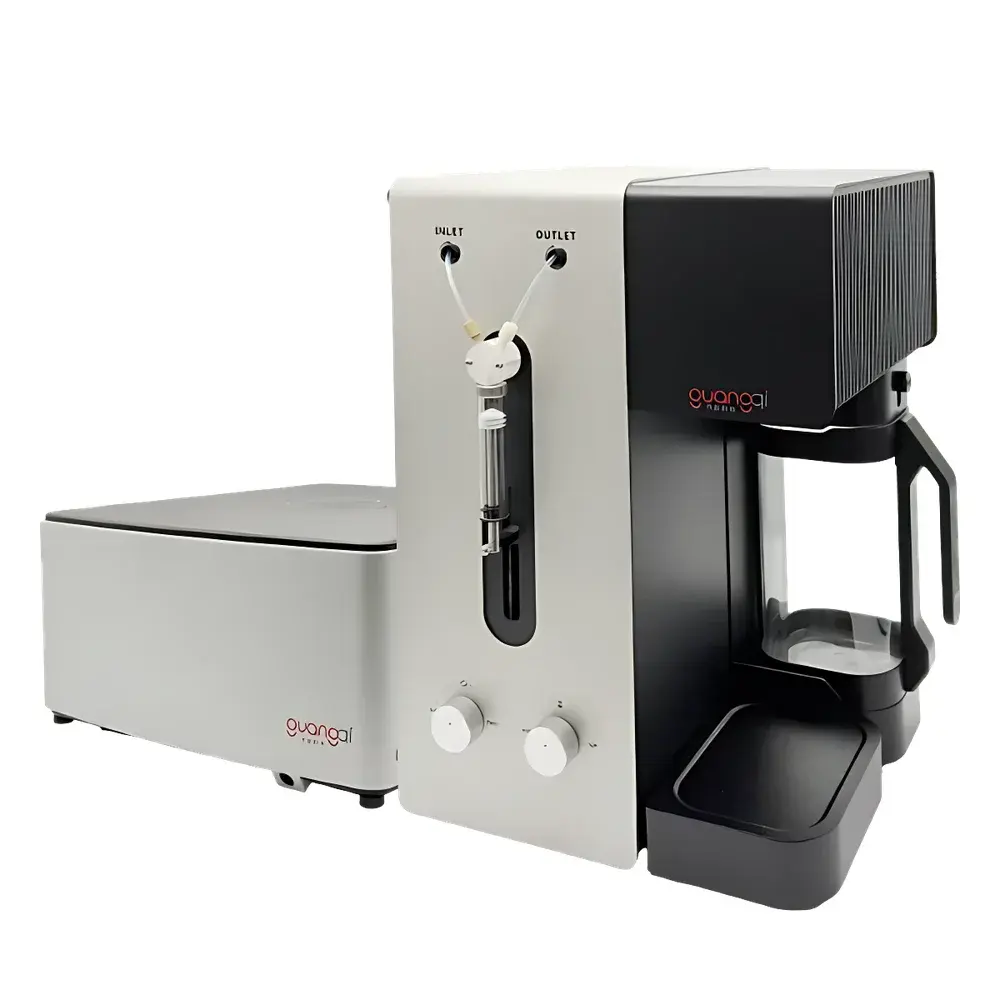
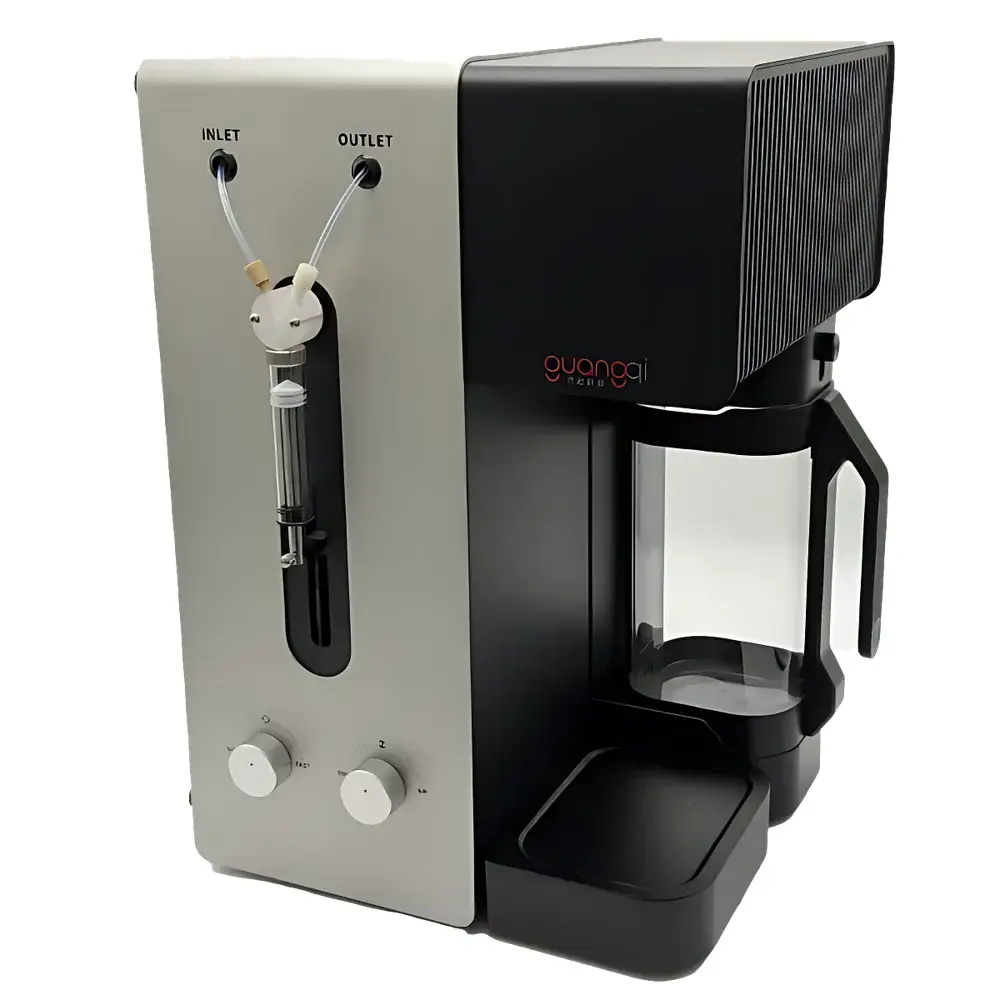
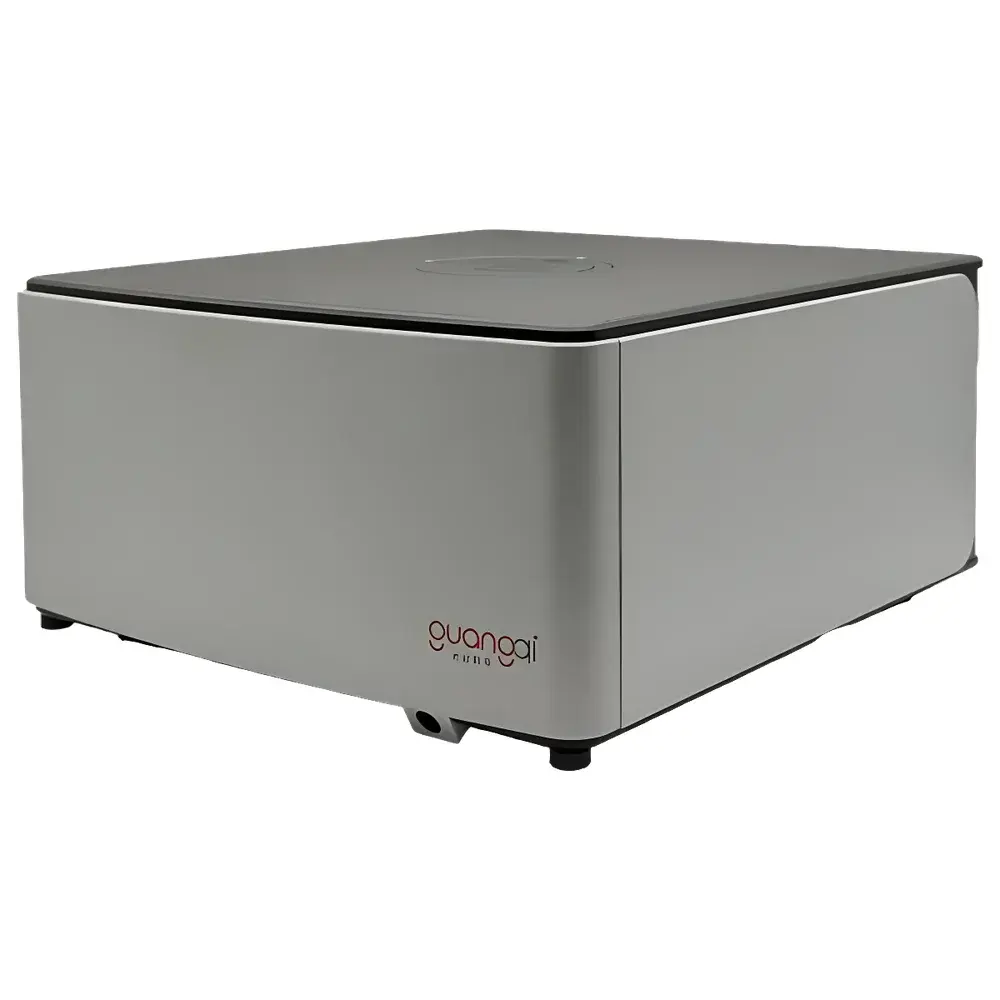
Acona A2000SIS CP/USP Pharmacopeial Insoluble Particle Analyzer
| Brand | Acona |
|---|---|
| Origin | Shanghai, China |
| Manufacturer Type | Direct Manufacturer |
| Regional Category | Domestic (China) |
| Model | Acona A2000SIS CP/USP |
| Price Range | USD 1,400 – 63,000 |
Overview
The Acona A2000SIS CP/USP Insoluble Particle Analyzer is a regulatory-grade, single-particle optical sensing (SPOS) instrument engineered for precise quantification and sizing of insoluble particulates in parenteral drug products, biologics, and sterile injectables. It operates in full compliance with United States Pharmacopeia , , and , as well as European Pharmacopoeia 2.9.19 and Chinese Pharmacopoeia 0903. Unlike ensemble-averaging techniques such as laser diffraction (LD) or dynamic light scattering (DLS), the A2000SIS employs a true “one-particle-at-a-time” detection principle based on dual-mode optical sensing—simultaneous extinction and scattering measurement—enabling high-fidelity particle counting and sizing across a continuous 0.5–400 µm dynamic range. Its design prioritizes trace-level sensitivity, volumetric accuracy at sub-100 µL sample volumes, and end-to-end data integrity required for FDA, EMA, and NMPA submissions.
Key Features
- Ultra-low volume sampling: Minimum injection volume of 50 µL, validated per USP for precision and reproducibility (RSD ≤ 5% at 50 µL)
- Dual-mode SPOS detection: Integrated LE400 sensor simultaneously captures extinction (for robust sizing of particles ≥1 µm) and scattering (for enhanced sensitivity to submicron particles down to 0.5 µm)
- 1024-channel high-resolution analysis: Achieves 0.01 µm bin resolution—enabling clear deconvolution of multi-modal distributions (e.g., distinct 0.8 µm, 2 µm, and 5 µm peaks) without spectral overlap or artificial broadening
- 10 ppt (parts-per-trillion) detection limit: Capable of resolving low-abundance large particles (LPCs) with >6000× higher sensitivity than conventional LD systems—critical for monitoring aggregation onset in monoclonal antibodies and lipid nanoparticles
- Modular architecture: Supports optional APS (Automatic Particle Suspension) dilution module for compliant handling of concentrated suspensions and emulsions per USP
- Field-serviceable sensor assembly: Sensor head is mechanically isolated and tool-free removable—minimizing downtime during calibration, cleaning, or replacement
Sample Compatibility & Compliance
The A2000SIS accommodates a broad spectrum of pharmaceutical formulations including small-molecule IV solutions, protein therapeutics, liposomal suspensions, PEGylated conjugates, and ophthalmic preparations. All fluidic pathways are constructed from USP Class VI-certified materials; wetted surfaces are non-leaching and compatible with common solvents (e.g., ethanol, isopropanol, saline, and phosphate-buffered saline). The system fully satisfies cGMP, GLP, and ISO 9001 requirements for analytical instrumentation used in regulated environments. Validation documentation—including IQ/OQ/PQ protocols, traceable calibration certificates (NIST-traceable reference standards), and risk-based URS—ships standard with each unit.
Software & Data Management
The embedded Acona ParticleSuite v4.x software is 21 CFR Part 11 compliant, featuring role-based access control with over 30 granular permission tiers (e.g., “Run Test”, “Modify Method”, “Delete Raw Data”, “Approve Report”). All user actions—including login/logout, method execution, calibration events, report generation, and database modifications—are time-stamped, digitally signed, and stored in an immutable audit trail. Audit logs support keyword search, date-range filtering, and export in CSV or PDF format. Data integrity safeguards include automatic encrypted database backups (local + optional network share), LIMS integration via ASTM E1384-compliant HL7/SOAP API, and electronic signature workflows aligned with Annex 11 and ICH GCP guidelines.
Applications
- Final container testing of injectables per USP and EP 2.9.19
- Stability-indicating assay for subvisible particle formation during accelerated and real-time storage studies
- Process characterization of filtration steps (e.g., 0.22 µm sterilizing filters) and filling line validation
- Comparability assessment of biosimilar candidates against reference products
- Root cause analysis of visible particle incidents using high-resolution PSD deconvolution
- Raw material qualification (e.g., excipients, glass vials, rubber stoppers) per USP
FAQ
Does the A2000SIS meet USP requirements for low-volume particle testing?
Yes. Its microfluidic sampling system achieves ±1.5% volumetric accuracy at 50 µL, with RSD ≤ 4.8% across six replicate injections—fully satisfying USP Section 5.2 criteria.
Can it differentiate between silicone oil droplets and protein aggregates?
Yes. Dual-mode optical sensing enables refractive index discrimination: silicone oil (n ≈ 1.41) yields stronger scattering relative to extinction than protein aggregates (n ≈ 1.45–1.50), allowing semi-quantitative classification when combined with calibrated reference materials.
Is method transfer supported between different A2000SIS units?
Yes. All instruments ship with identical optical alignment protocols, factory-calibrated sensor response curves, and standardized SOP templates—ensuring <±3% inter-unit variability in count concentration across the 1–100 µm range.
What validation support is provided for regulatory submissions?
Acona supplies full validation packages including URS, FDS, DQ/IQ/OQ/PQ protocols, raw test data, calibration records, and 21 CFR Part 11 implementation reports—all structured per PDA Technical Report No. 81 and WHO TRS 1033 Annex 4.
How often does the LE400 sensor require recalibration?
Annual recalibration is recommended under routine use; however, daily performance verification using NIST-traceable polystyrene latex (PSL) standards (0.5, 2, 5, 10 µm) is mandatory per cGMP Annex 15 and must be documented in the audit trail.





