
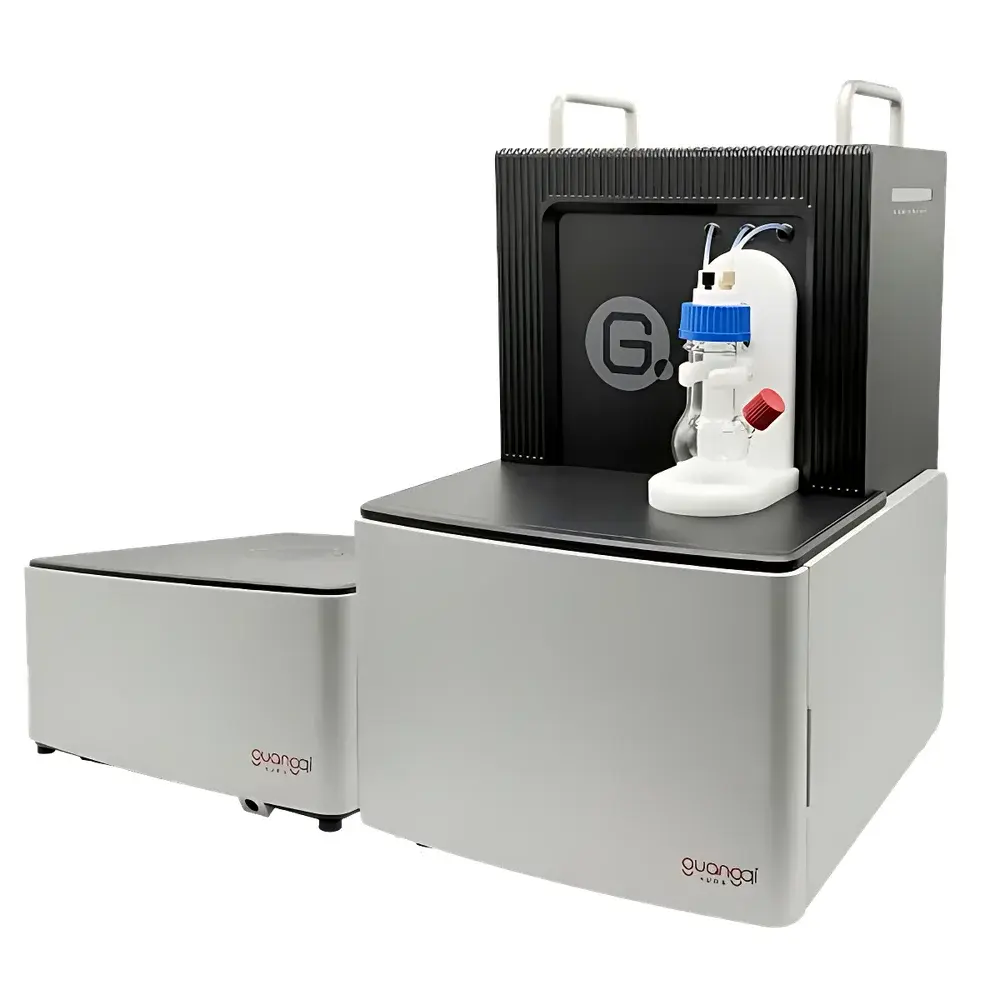
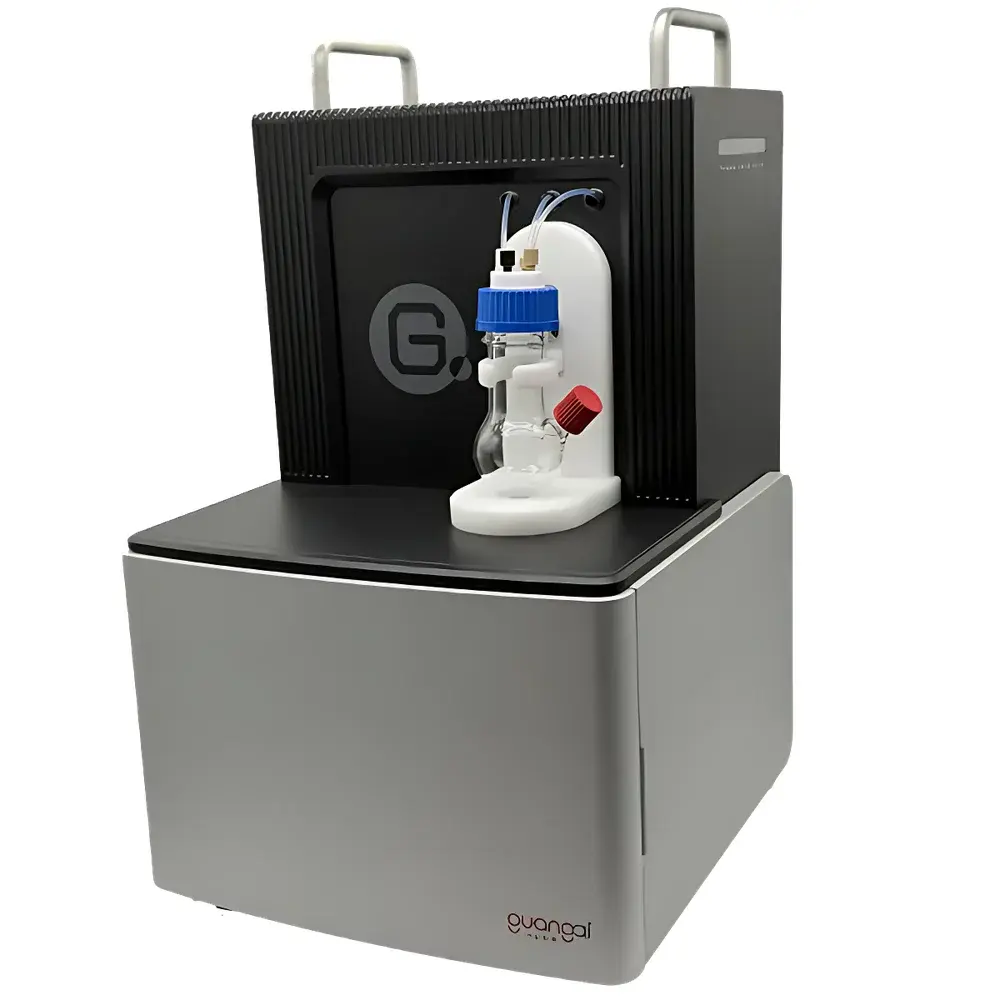
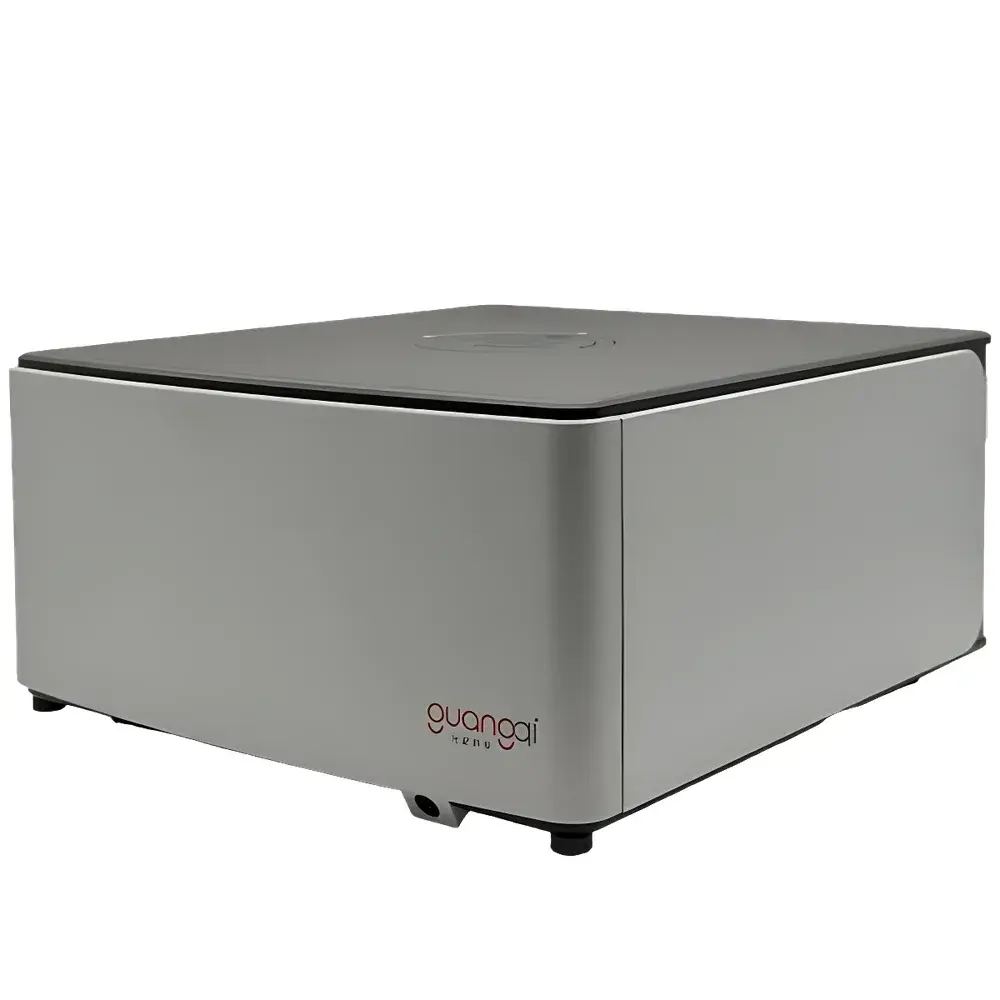
Acona A7000 AD Optical Particle Counter (SPOS)
| Brand | Acona |
|---|---|
| Origin | Shanghai, China |
| Manufacturer | Acona Technology Co., Ltd. |
| Model | A7000 AD |
| Instrument Type | Optical Particle Counter (Single-Particle Optical Sizing, SPOS) |
| Detection Principle | Combined Extinction + Light Scattering |
| Dynamic Range | 0.5–400 µm |
| Resolution | 1024 channels, down to 0.01 µm bin width |
| Sensitivity | ≤10 ppt (particles per trillion) for large particle counting (LPC) |
| Compliance | FDA 21 CFR Part 11, cGMP/GLP-ready |
| Software | Embedded audit-trail-enabled control suite with role-based access, electronic signature, and LIMS integration capability |
Overview
The Acona A7000 AD Optical Particle Counter is an advanced Single-Particle Optical Sizing (SPOS) instrument engineered for high-fidelity, quantitative particle analysis in demanding industrial and regulated environments. It operates on the dual-physical-mode principle—simultaneously leveraging light extinction (for robust sizing of larger particles) and light scattering (for enhanced sensitivity to sub-micron entities)—within a single LE400 hybrid sensor architecture. This co-located detection strategy eliminates method-dependent bias and enables continuous, high-resolution measurement across a validated dynamic range of 0.5 µm to 400 µm. Unlike ensemble-averaging techniques such as laser diffraction or dynamic light scattering, the A7000 AD implements true individual-particle interrogation: each particle passing through the sensing zone is sized and counted in real time, yielding statistically rigorous number-weighted and volume-weighted particle size distributions (PSD). Its design targets applications where trace-level large particle contamination (LPC), batch-to-batch distribution fidelity, or regulatory data integrity are mission-critical—particularly in pharmaceutical parenteral manufacturing, semiconductor CMP slurry qualification, biologics formulation stability assessment, and advanced optical material dispersion QC.
Key Features
- Integrated automatic dilution module: Dynamically adjusts sample concentration in real time to maintain optimal particle flux (≤10⁴ particles/mL in sensing zone), eliminating coincidence error and enabling direct analysis of undiluted high-concentration suspensions.
- Dual-mode LE400 sensor: Simultaneous extinction and scattering detection ensures consistent sizing accuracy across the full 0.5–400 µm range, with improved resolution below 2 µm and superior counting linearity above 100 µm.
- 1024-channel high-resolution acquisition: Delivers 0.01 µm bin resolution—enabling clear deconvolution of multimodal distributions (e.g., distinguishing 0.8 µm, 2.0 µm, and 5.0 µm reference standards as discrete peaks without spectral merging).
- 10 ppt-level large particle sensitivity: Achieves ≥6000× higher LPC detection sensitivity than conventional laser diffraction systems, critical for monitoring aggregation onset in protein therapeutics or residual abrasives in polishing slurries.
- Real-time concentration correction: Dilution factor is automatically embedded into raw count data; final reports display native (undiluted) particle concentration per mL without manual post-processing.
Sample Compatibility & Compliance
The A7000 AD accommodates aqueous and non-aqueous suspensions, low-viscosity oils, and clarified biological fluids—including cell culture supernatants, monoclonal antibody formulations, and nanoparticle dispersions—provided they meet minimum optical clarity requirements (OD < 0.3 at 650 nm). Sample introduction is compatible with syringe pumps (flow rate: 10–100 µL/min) and optional autosamplers. The system conforms to ISO 21501-4 for light extinction particle characterization and supports validation protocols aligned with USP , , and EP 2.9.30. Full 21 CFR Part 11 compliance is embedded at the firmware and software level: electronic signatures are cryptographically bound to reports, audit trails record all user actions (login/logout, calibration, test execution, report generation, data deletion), and role-based permissions govern access to >30 discrete functional modules (e.g., “Calibration Supervisor”, “QC Analyst”, “System Administrator”).
Software & Data Management
The Acona Control Suite v4.x is a Windows-based, database-driven application featuring native SQL Server Express backend storage. All measurement data—including raw pulse histograms, channelized counts, and metadata (sample ID, operator, timestamp, instrument configuration)—are stored immutably. The software supports automated Pass/Fail evaluation against configurable specification limits (e.g., NMT 25 particles ≥10 µm per mL), generates PDF reports with embedded digital signatures, and exports structured CSV/Excel files for statistical process control (SPC) integration. Audit logs are searchable by date range, user, or event type and exportable in tamper-evident PDF format. Optional LIMS interface modules support HL7 and ASTM E1384-compliant bidirectional data exchange, including sample registration, result posting, and instrument status polling.
Applications
- Pharmaceutical quality control: Quantitative LPC monitoring of injectables, vaccines, and ophthalmic solutions per USP and Annex 1 requirements.
- Semiconductor manufacturing: Residual abrasive particle quantification in CMP slurries and post-CMP rinse water.
- Biotechnology: Aggregation kinetics studies of therapeutic proteins and viral vectors under stress conditions.
- Advanced materials: Characterization of pigment dispersions, quantum dot colloids, and ceramic nanopowder slurries.
- Academic research: Validation of nanoparticle synthesis reproducibility and membrane filtration efficiency testing.
FAQ
Does the A7000 AD require daily recalibration?
No—sensor baseline stability is verified via built-in reference pulse checks before each run; full calibration using NIST-traceable polystyrene latex standards is recommended every 30 days or after maintenance.
Can it analyze opaque or highly viscous samples?
Samples must be optically transparent at the sensor wavelength (650 nm); viscosity should not exceed 20 cP to ensure laminar flow through the 100 µm aperture.
Is raw pulse data accessible for third-party analysis?
Yes—time-stamped pulse height and width arrays are exportable in HDF5 format, preserving full metrological traceability.
How is data integrity ensured during power failure?
The embedded database performs atomic write operations; unsaved measurements are retained in volatile cache and committed upon recovery, with checksum-verified journaling.
What training and documentation are provided?
Includes IQ/OQ protocol templates, 21 CFR Part 11 implementation guide, SOP drafting toolkit, and remote operator certification program.



