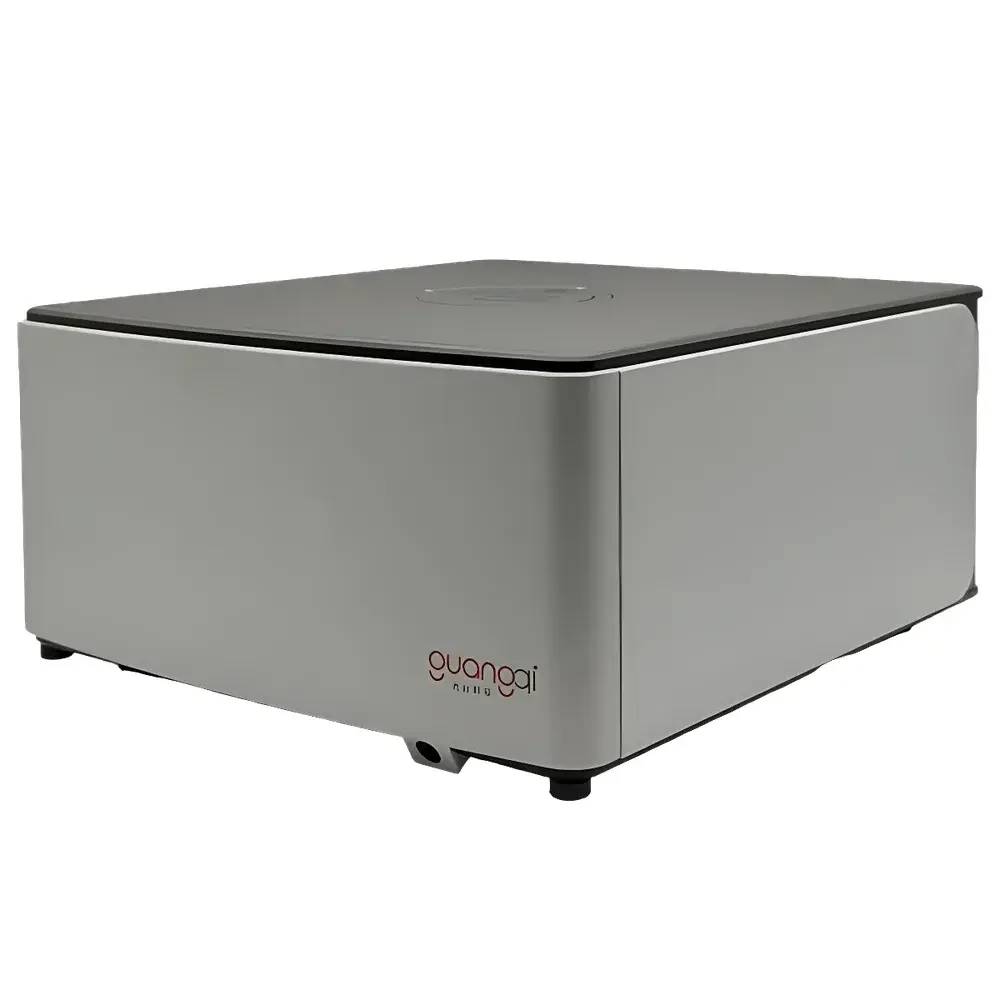
Acona A7000 APS Semiconductor-Grade Particle Size Analyzer
| Brand | Acona |
|---|---|
| Origin | Shanghai, China |
| Manufacturer Type | Original Equipment Manufacturer (OEM) |
| Product Category | Domestic |
| Model | Acona A7000 APS |
| Price Range | USD 1,400 – 140,000 |
Overview
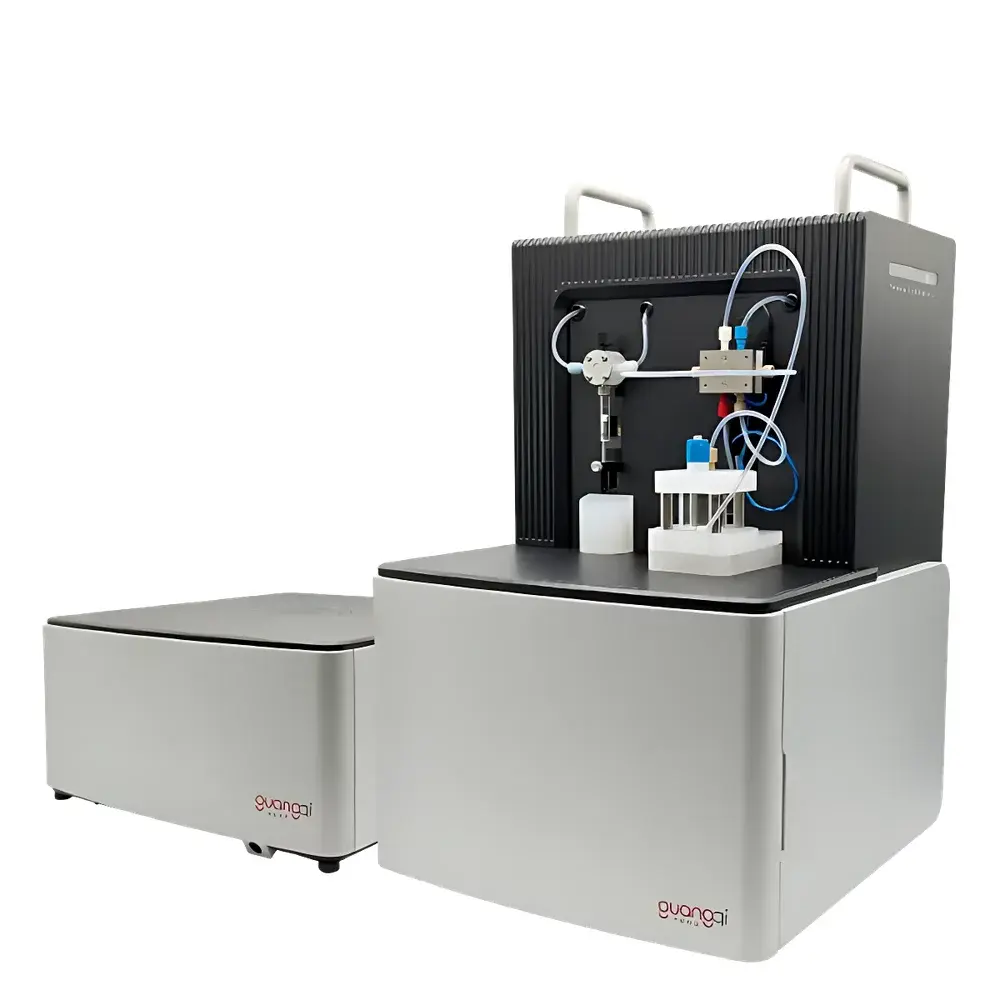
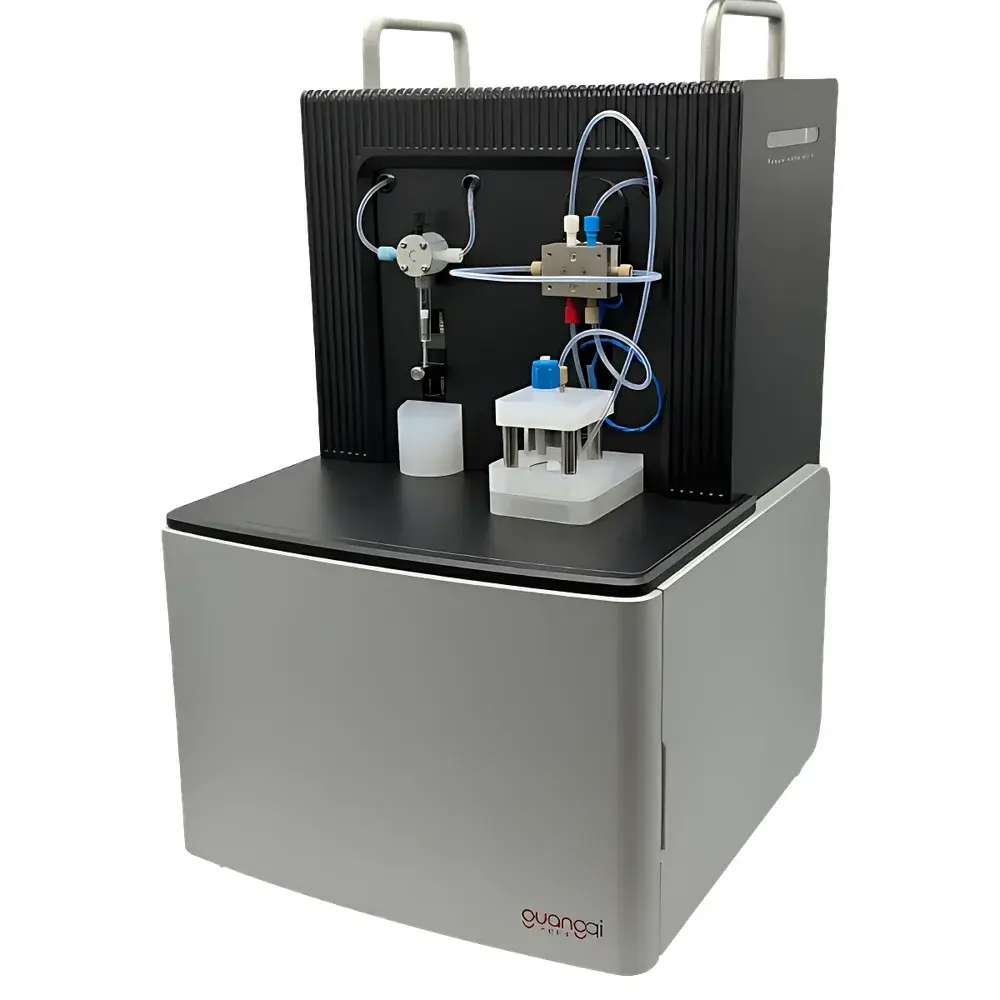
The Acona A7000 APS is a high-precision, semiconductor-grade particle size analyzer engineered for ultra-sensitive, quantitative single-particle detection in critical process and quality control environments. It employs Single Particle Optical Sensing (SPOS) — a proven, regulatory-accepted methodology grounded in Coulter principle–derived optical extinction and scattering detection — to deliver true number-weighted and volume-weighted particle size distributions (PSD) across an extended dynamic range of 0.5–400 µm. Unlike ensemble-averaging techniques such as laser diffraction (LD), the A7000 APS performs individual particle interrogation in real time, enabling resolution of low-abundance, high-risk large particles (LPCs) that drive yield loss in CMP slurries, sterility failure in parenterals, or defect formation in photoresists. Its architecture integrates fluidic intelligence, dual-mode optical sensing, and regulatory-compliant software — making it a primary measurement tool for ISO 14644 cleanroom monitoring, USP <729> fat emulsion testing, and ICH Q5C stability assessment.
Key Features
- Patented Two-Stage Automatic Dilution System: Enables direct analysis of undiluted samples up to 10¹¹ particles/mL; eliminates manual dilution error and ensures full traceability of dilution factor in concentration recalculations.
- Dual-Mode SPOS Detection (Extinction + Scattering): LE400 optical sensor simultaneously captures both light blockage and angular scattering signals per particle, optimizing sensitivity for sub-micron particles and accuracy for >10 µm aggregates.
- 1024-Channel High-Resolution Histogramming: Delivers 0.01 µm bin resolution — sufficient to resolve adjacent peaks (e.g., 0.8 µm, 2.0 µm, and 5.0 µm standards) without spectral merging or artificial broadening.
- 10 ppt (parts-per-trillion) Detection Limit: Achieves ~6,000× higher sensitivity for large particle counts (LPC) than conventional LD systems, validated against NIST-traceable latex standards and industry reference materials.
- Robust Fluidic Design with Low Carryover: Chemically inert wetted path (PEEK, sapphire, fused silica); <0.1% carryover between runs; compatible with aggressive solvents including concentrated H₂SO₄, HNO₃, and KOH solutions used in slurry formulation.
Sample Compatibility & Compliance
The A7000 APS supports aqueous and non-aqueous dispersions, including high-viscosity fluids (up to 100 cP), opaque slurries (e.g., SiO₂, Al₂O₃ CMP formulations), protein aggregates, liposomal suspensions, and photoresist carriers. It meets essential compliance requirements for regulated industries: fully compliant with 21 CFR Part 11 (electronic records/signatures), aligned with USP <729>, EP 2.9.19, and CP 2020 Vol II Appendix IX J for fat emulsion testing; supports GLP/GMP audit readiness via immutable audit trails, role-based access control (RBAC), and automated database backup. All firmware and calibration logs are time-stamped, user-identified, and exportable in CSV/PDF formats.
Software & Data Management
The embedded Acona APS Control Suite provides intuitive instrument control, real-time histogram visualization, and automated pass/fail reporting per predefined SOPs. It includes configurable test templates for PFAT5 calculation, LPC trend analysis, and batch-to-batch comparison. Data integrity is enforced through encrypted local SQL database storage, optional LIMS integration via ASTM E1384-compliant API, and scheduled automatic backups to network drives. Audit trail entries capture every action — from login/logout and parameter modification to report generation and electronic signature events — with hash-verified immutability. Software validation packages (IQ/OQ/PQ documentation) are available upon request.
Applications
- Semiconductor Manufacturing: In-line monitoring of CMP slurry stability; quantification of >2 µm particles during recirculation; evaluation of acid-mediated aggregation in alumina abrasives; qualification of photoresist filtration efficiency.
- Biopharmaceutical Development: USP <729>-compliant PFAT5 assessment of lipid emulsions and liposomal drug products; detection of subvisible protein aggregates in mAb formulations; stability-indicating trend analysis of particle growth kinetics.
- Advanced Materials R&D: Characterization of conductive inks, quantum dot dispersions, and ceramic nanopowders; validation of homogenization and milling processes; assessment of colloidal stability under thermal or shear stress.
- Quality Control Laboratories: Release testing of sterile injectables, ophthalmic solutions, and vaccine adjuvants; root cause analysis of filter clogging or vial particulate contamination.
FAQ
What particle size range does the A7000 APS cover?
The system measures particles from 0.5 µm to 400 µm using dual-mode SPOS detection, with optimal resolution and counting statistics maintained across the full range.
Is the instrument compliant with FDA 21 CFR Part 11?
Yes — all software modules support electronic signatures, audit trail logging, user authentication, and data integrity safeguards required for regulated pharmaceutical and medical device applications.
Can the A7000 APS analyze highly viscous or opaque samples?
Yes — its pressure-driven flow cell and high-sensitivity LE400 sensor enable reliable detection in samples up to 100 cP viscosity and moderate optical opacity, including undiluted CMP slurries and concentrated emulsions.
How does the two-stage dilution system improve measurement reproducibility?
It removes inter-operator variability by automating sample preparation, ensuring identical dilution ratios across runs and eliminating pipetting error, evaporation loss, or mislabeling risks.
Does the system support integration with enterprise LIMS or MES platforms?
Yes — via standardized RESTful API compliant with ASTM E1384 and HL7 protocols; custom drivers available for Siemens Opcenter, Thermo Fisher SampleManager, and LabVantage deployments.