
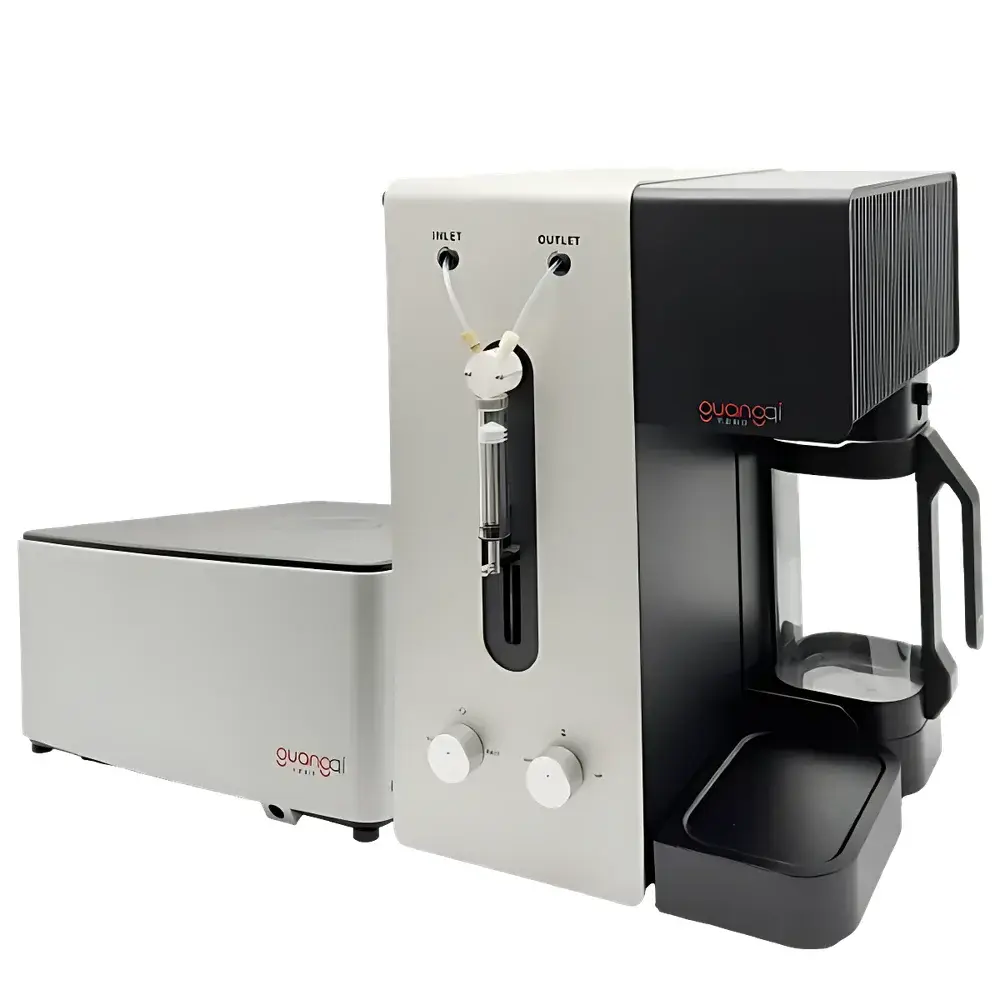
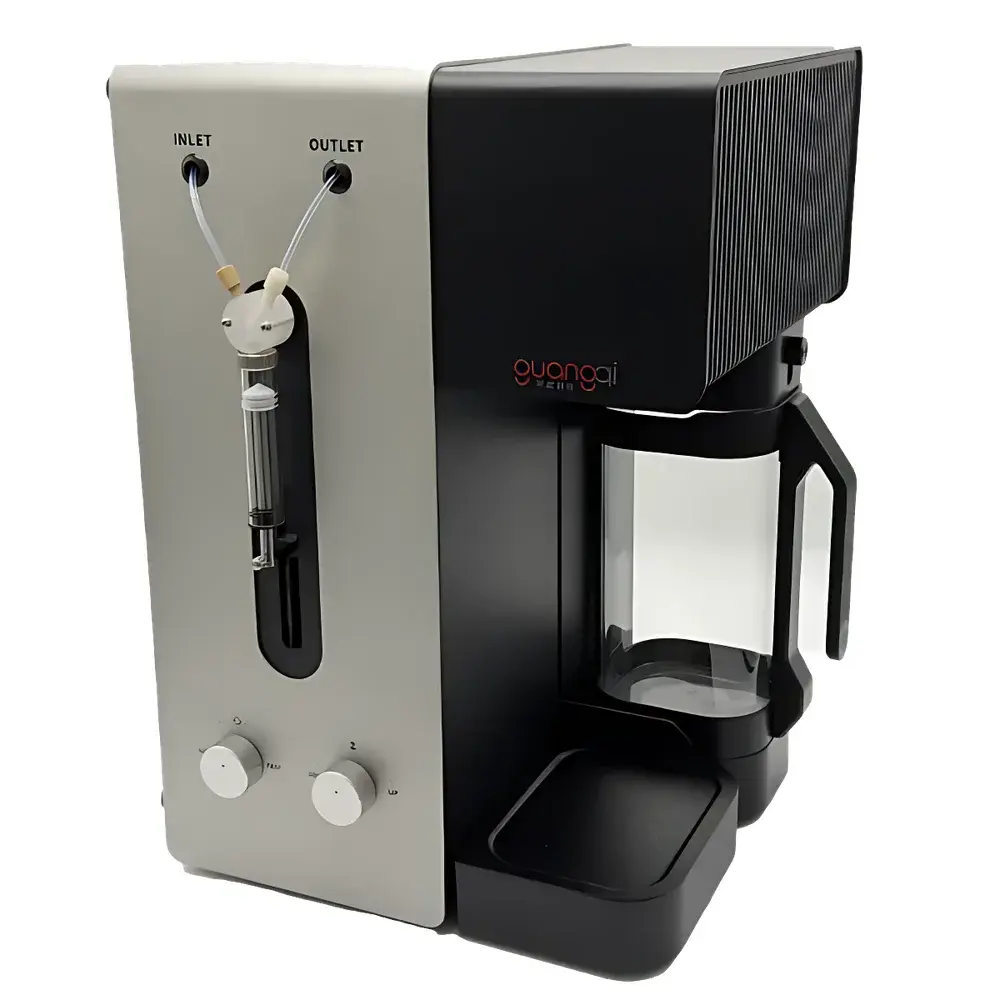
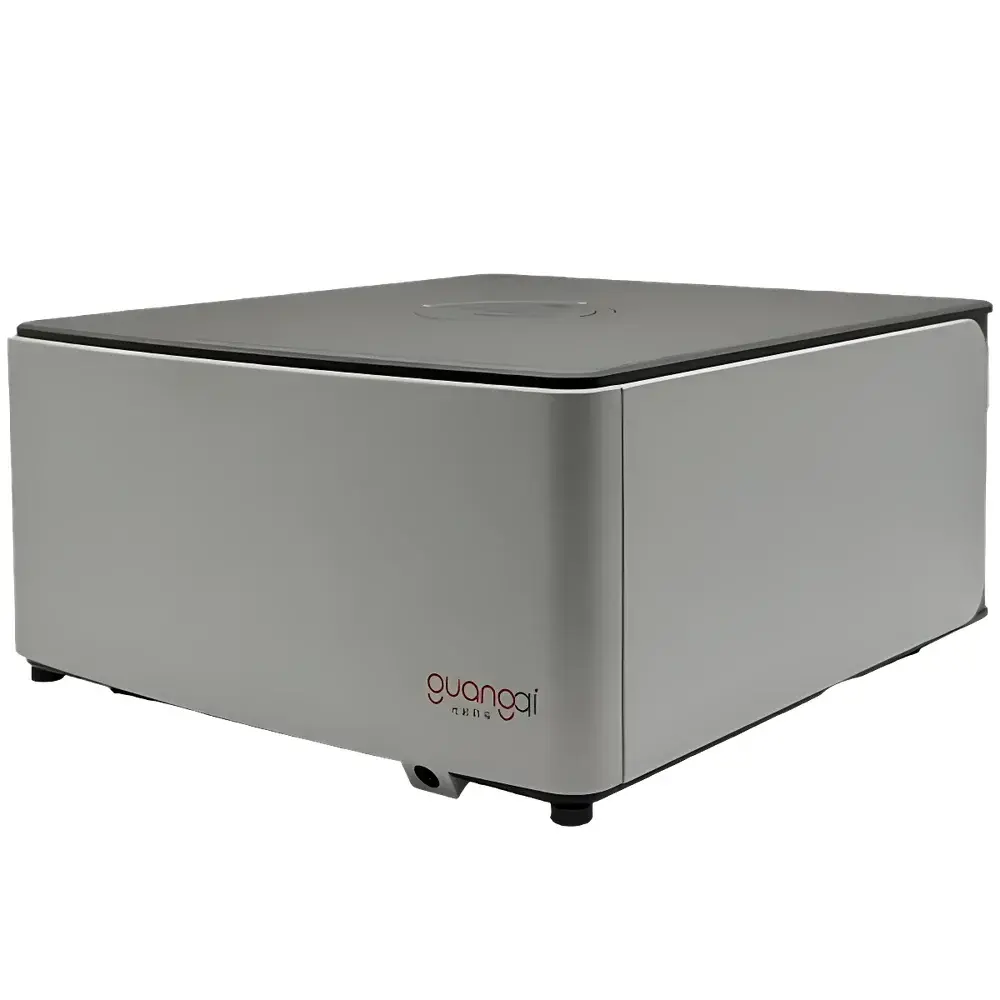
Acona A7000SIS Optical Particle Counter
| Brand | Acona |
|---|---|
| Origin | Shanghai, China |
| Manufacturer Type | Manufacturer |
| Product Category | Domestic |
| Model | Acona A7000SIS |
| Instrument Type | Optical Particle Counter |
| Detection Principle | Single Particle Optical Sizing (SPOS) with Dual-Mode Extinction & Scattering |
| Dynamic Range | 0.5–400 µm |
| Minimum Sample Volume | 50 µL |
| Resolution | 0.01 µm |
| Data Channels | 1024 |
| Sensitivity | 10 ppt (particles per trillion) |
| Compliance | USP <787>, USP <729>, 21 CFR Part 11, cGMP/GLP |
Overview
The Acona A7000SIS Optical Particle Counter is an advanced, laboratory-grade particle sizing and counting instrument engineered for high-precision analysis of suspensions, injectables, CMP slurries, emulsions, and colloidal dispersions. It implements the Single Particle Optical Sizing (SPOS) principle—where each particle passing through the sensing zone is individually interrogated using dual-mode optical detection: light extinction (for volumetric quantification) and light scattering (for enhanced sensitivity to submicron particles). This hybrid optical architecture enables simultaneous high-resolution sizing and statistically robust counting across an exceptionally wide dynamic range—from 0.5 µm to 400 µm—without dilution-induced bias or ensemble-averaging artifacts inherent in laser diffraction or dynamic light scattering methods.
Key Features
- Dual-Physics SPOS Detection: Integrated LE400 sensor combines extinction and scattering modalities within a single flow cell, delivering orthogonal signal validation and minimizing false positives/negatives—particularly critical for detecting low-abundance large particles (LPCs) in parenteral drug products.
- Ultra-Low Volume Sampling: Engineered for precious or volume-limited samples; supports accurate analysis with as little as 50 µL sample volume while maintaining RSD < 3% (n ≥ 10), fully compliant with USP requirements for sub-100 µL injection protocols.
- 1024-Channel High-Resolution Analysis: Delivers true particle size distribution (PSD) with 0.01 µm bin resolution—enabling clear deconvolution of multimodal populations (e.g., 0.8 µm, 2 µm, and 5 µm standards appear as three distinct, non-overlapping peaks).
- 10 ppt Sensitivity: Capable of detecting trace-level particulates at concentrations as low as 10 particles per trillion—approximately 6,000× more sensitive than conventional laser diffraction for large particle counting (LPC) in high-value formulations such as ophthalmic solutions or lipid nanoparticles.
- Modular Architecture: Sensor module is mechanically and electrically decoupled for rapid replacement or calibration; optional APS (Automatic Precision Dilution) module supports automated dilution of concentrated samples per USP for emulsion and liposome analysis.
Sample Compatibility & Compliance
The A7000SIS is validated for use with aqueous and non-aqueous suspensions, protein therapeutics, vaccine formulations, semiconductor CMP slurries, and sterile injectables. Its fluidic path is constructed from chemically inert, USP Class VI-certified materials and supports both syringe- and pump-driven sampling. Regulatory compliance includes full alignment with USP (Subvisible Particulate Matter in Therapeutic Protein Injections), USP (Subvisible Particulate Matter in Liposomal and Emulsion Products), ISO 21501-4 (Calibration and Verification of Particle Counters), and EU Annex 1 requirements for particle monitoring in aseptic processing environments. All hardware and firmware are designed to support audit-ready operations under cGMP and GLP frameworks.
Software & Data Management
The embedded Acona Control Suite v4.x is a 21 CFR Part 11-compliant software platform built for regulated laboratories. It features role-based access control with over 30 granular permission tiers—including test execution, calibration management, report generation, database backup, and firmware update authorization. Comprehensive audit trails log every user action (login/logout, parameter changes, calibration events, report exports) with immutable timestamps and operator IDs. Data integrity safeguards include automatic encrypted database backups, tamper-evident digital signatures on all reports, and native LIMS integration via ASTM E1384-compliant HL7 and CSV export protocols. Pass/Fail criteria are programmable per USP/EP monographs, and electronic signatures comply with FDA’s eSignature rule (21 CFR Part 11 Subpart B).
Applications
- Quality control of monoclonal antibody (mAb) formulations and biosimilars per USP
- Stability assessment of lipid nanoparticle (LNP) vaccines and mRNA delivery systems
- Process validation and lot release testing of ophthalmic and injectable products
- Contamination monitoring in semiconductor slurry preparation and polishing processes
- Colloidal stability evaluation of nanoemulsions, microspheres, and polymeric micelles
- Root cause analysis of aggregation events during formulation development and storage
FAQ
What regulatory standards does the A7000SIS support for pharmaceutical applications?
The system complies with USP , USP , ISO 21501-4, and 21 CFR Part 11. Full validation documentation (IQ/OQ/PQ) and risk assessments are available upon request.
Can the A7000SIS analyze undiluted high-concentration samples?
Yes—when equipped with the optional APS module, it performs real-time, precision dilution down to 1:10,000, enabling direct analysis of viscous emulsions and concentrated colloids without manual intervention.
How is sensor calibration verified and maintained?
Calibration is performed using NIST-traceable polystyrene latex (PSL) standards; the system supports multi-point verification across the full 0.5–400 µm range. Sensor drift compensation algorithms are applied automatically during each run.
Is remote data access or cloud integration supported?
Local network deployment is standard; secure cloud connectivity (via TLS 1.2+ encrypted API) and on-premise server hosting options are available under enterprise licensing agreements.
What maintenance is required for routine operation?
Daily cleaning with IPA/water rinse; quarterly optical alignment verification; annual sensor performance qualification using certified reference materials—all documented within the integrated maintenance log.



