
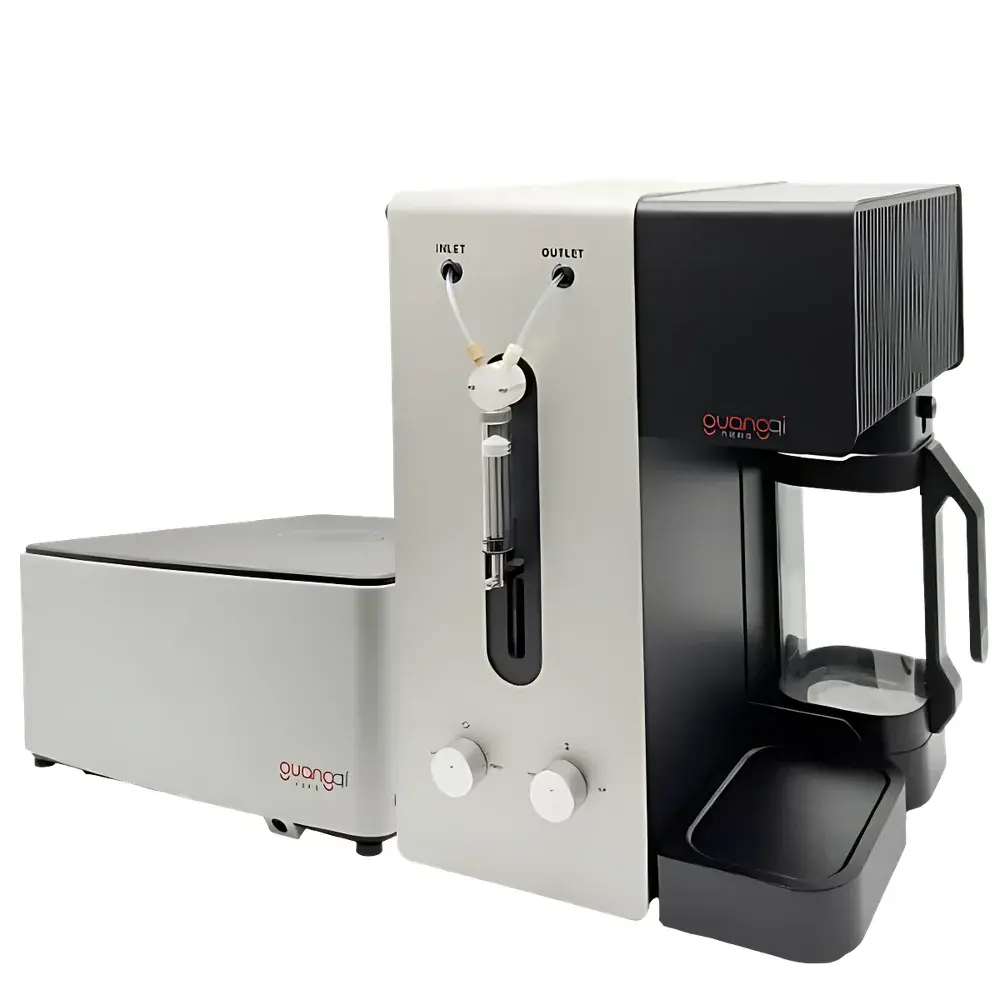
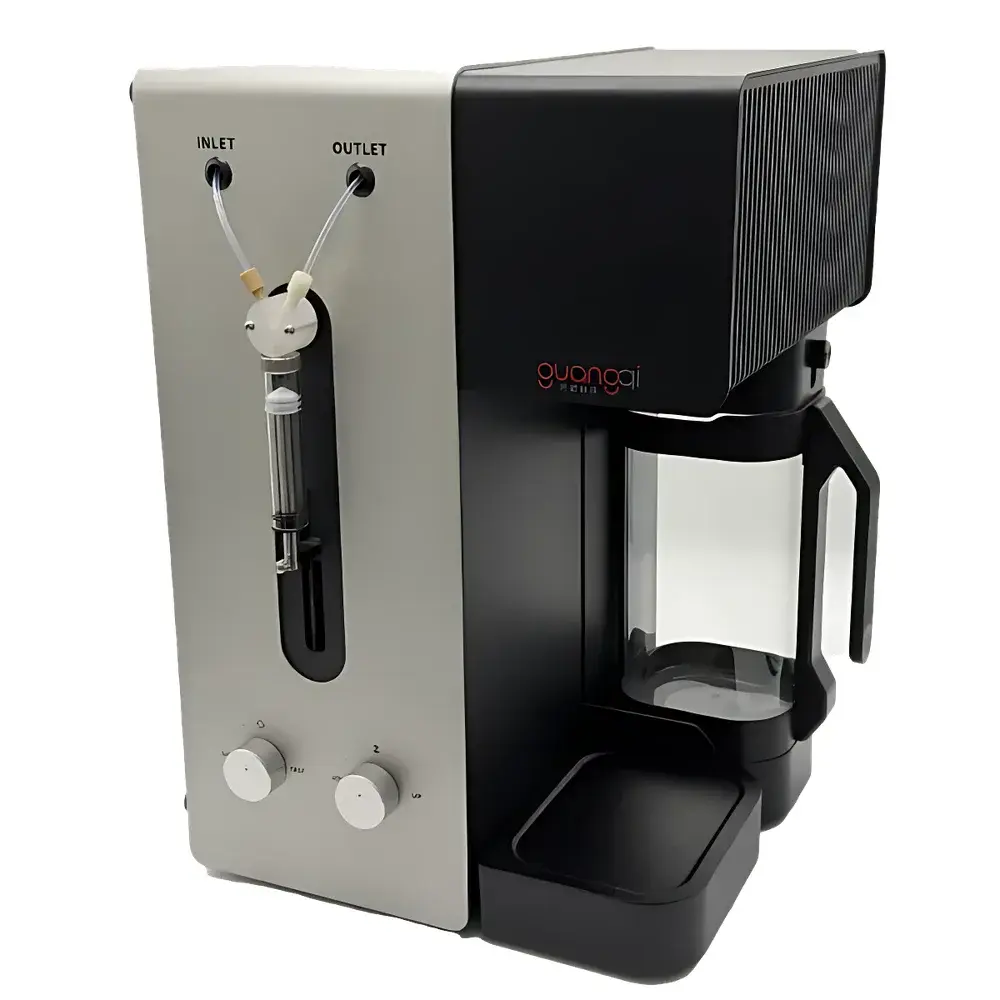
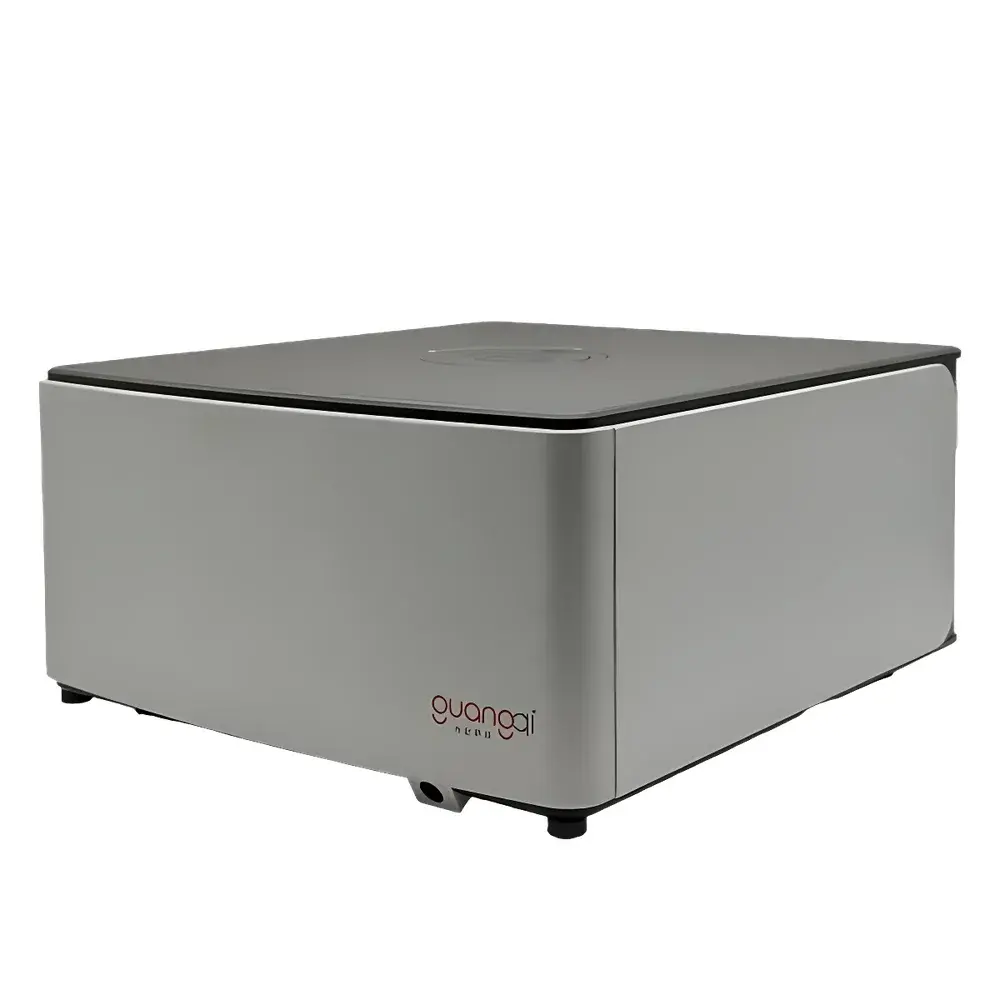
Acona A7000SIS Single-Particle Optical Sizing (SPOS) Particle Counter
| Brand | Acona |
|---|---|
| Origin | Shanghai, China |
| Manufacturer | Acona Technology Co., Ltd. |
| Model | Acona 7000 SIS |
| Instrument Type | Optical Particle Counter (SPOS-based) |
| Detection Principle | Dual-mode Extinction + Light Scattering |
| Dynamic Range | 0.5–400 µm |
| Minimum Sample Volume | 50 µL |
| Channel Resolution | 1024 channels |
| Size Resolution | 0.01 µm |
| Sensitivity | 10 ppt (particles per trillion) |
| Compliance | USP <787>, USP <729>, 21 CFR Part 11, cGMP/GLP |
Overview
The Acona A7000SIS is a high-precision, dual-mode Single-Particle Optical Sizing (SPOS) particle counter engineered for quantitative, high-fidelity particle characterization in regulated and research-intensive environments. Unlike ensemble-averaging techniques such as laser diffraction (LD), the A7000SIS employs a true single-particle detection architecture based on simultaneous optical extinction and light scattering measurements within a microfluidic flow cell. This principle ensures each particle passing through the sensor aperture is individually sized and counted—enabling direct quantification of number-weighted and volume-weighted particle size distributions (PSD) with minimal coincidence error. The system is optimized for applications demanding trace-level sensitivity, ultra-low sample consumption, and regulatory-compliant data integrity—particularly in biopharmaceutical formulation development, parenteral drug quality control, CMP slurry monitoring, and advanced colloidal material R&D.
Key Features
- Dual-Physics SPOS Detection: Integrates LE400 hybrid sensor technology to concurrently capture extinction (for robust sizing of sub-micron particles) and scattering (for enhanced signal-to-noise ratio on larger particles), delivering consistent accuracy across the full 0.5–400 µm range.
- Ultra-Low Volume Sampling: Engineered to meet USP volumetric precision requirements; supports reliable analysis from as little as 50 µL of sample without compromising repeatability (RSD <3% at 50 µL for ISO standard latex spheres).
- 1024-Channel High-Resolution Spectral Binning: Provides 0.01 µm bin width resolution—enabling unambiguous deconvolution of multimodal distributions (e.g., clear separation of 0.8 µm, 2.0 µm, and 5.0 µm reference standards) and eliminating artificial peak broadening inherent in low-channel systems.
- 10 ppt Sensitivity for Large Particle Counting (LPC): Detects rare, high-risk particles at concentrations as low as 10 particles per trillion—demonstrating >6000× higher LPC sensitivity than conventional LD instruments under identical test conditions.
- Modular Architecture: Supports field-upgradable modules including APS (Automatic Precision Dilution) for high-concentration or viscous samples compliant with USP ; sensor cartridge design enables rapid exchange and calibration traceability.
Sample Compatibility & Compliance
The A7000SIS accommodates aqueous suspensions, organic solvents, emulsions, and low-viscosity slurries—including protein therapeutics, liposomal formulations, vaccine adjuvants, CMP polishing agents, and nanocellulose dispersions. Its fluidic path is chemically inert (PEEK, sapphire, fused silica), minimizing adsorption and carryover. Regulatory alignment includes full support for USP (subvisible particle testing of injectables), USP (light obscuration and membrane filtration for emulsions), ISO 21501-4 (calibration and verification of particle counters), and ICH Q5A(R2) guidelines for particulate assessment in biologics. All hardware and firmware are validated per GAMP5 principles.
Software & Data Management
The embedded Acona Control Suite v4.x is designed for 21 CFR Part 11 compliance and operates under strict cGMP/GLP governance. It features role-based access control with over 30 granular permission sets (e.g., “Run Test”, “Modify Method”, “Delete Audit Log”, “Approve Report”). Comprehensive audit trails log every user action—including login/logout timestamps, parameter changes, calibration events, report generation, and electronic signature approvals—with immutable database storage and exportable CSV/CSV-UTF8 logs. Integrated LIMS connectivity via ASTM E1384-compliant HL7 and ODBC interfaces ensures seamless data transfer. Reports include automated Pass/Fail evaluation against configurable acceptance criteria (e.g., USP thresholds), digital signatures, and timestamped PDF/A-1a archival.
Applications
- Subvisible particle quantification in monoclonal antibody formulations, mRNA-LNPs, and sterile injectables per USP .
- Stability assessment of oil-in-water emulsions (e.g., propofol, lipid-based vaccines) per USP .
- Process monitoring of CMP slurries for semiconductor manufacturing—detecting agglomerates >1 µm that cause wafer defects.
- Characterization of nanomaterials (e.g., quantum dots, metal oxides) where number-based distribution informs toxicity and biodistribution profiles.
- QC release testing of excipients and active pharmaceutical ingredients where batch-to-batch particle heterogeneity impacts dissolution kinetics.
FAQ
What regulatory standards does the A7000SIS software support?
The system complies with 21 CFR Part 11, EU Annex 11, and ALCOA+ data integrity principles. Full audit trail, electronic signatures, and secure user authentication are enabled by default.
Can the A7000SIS analyze undiluted high-concentration samples?
Yes—when equipped with the optional APS module, it performs real-time, gravimetrically controlled dilution to maintain optimal particle flux (<1000 particles/sec) while preserving statistical representativeness.
How is sensor calibration verified?
Calibration is performed using NIST-traceable polystyrene latex standards (PSL) across three size ranges (0.5, 3.0, and 10.0 µm). Verification reports include linearity, limit of detection (LOD), and counting efficiency per ISO 21501-4 Annex B.
Is method transfer possible between A7000SIS units?
Yes—method files (.acm) contain complete instrument configuration, fluidic parameters, and analysis logic, enabling reproducible deployment across multiple systems in multi-site manufacturing networks.
Does the system support raw data export for third-party statistical analysis?
All 1024-channel histogram data, individual particle event logs (size, pulse height, time stamp), and metadata are exportable in ASCII, CSV, and HDF5 formats—fully compatible with MATLAB, Python (pandas/h5py), and JMP.
Related Products



