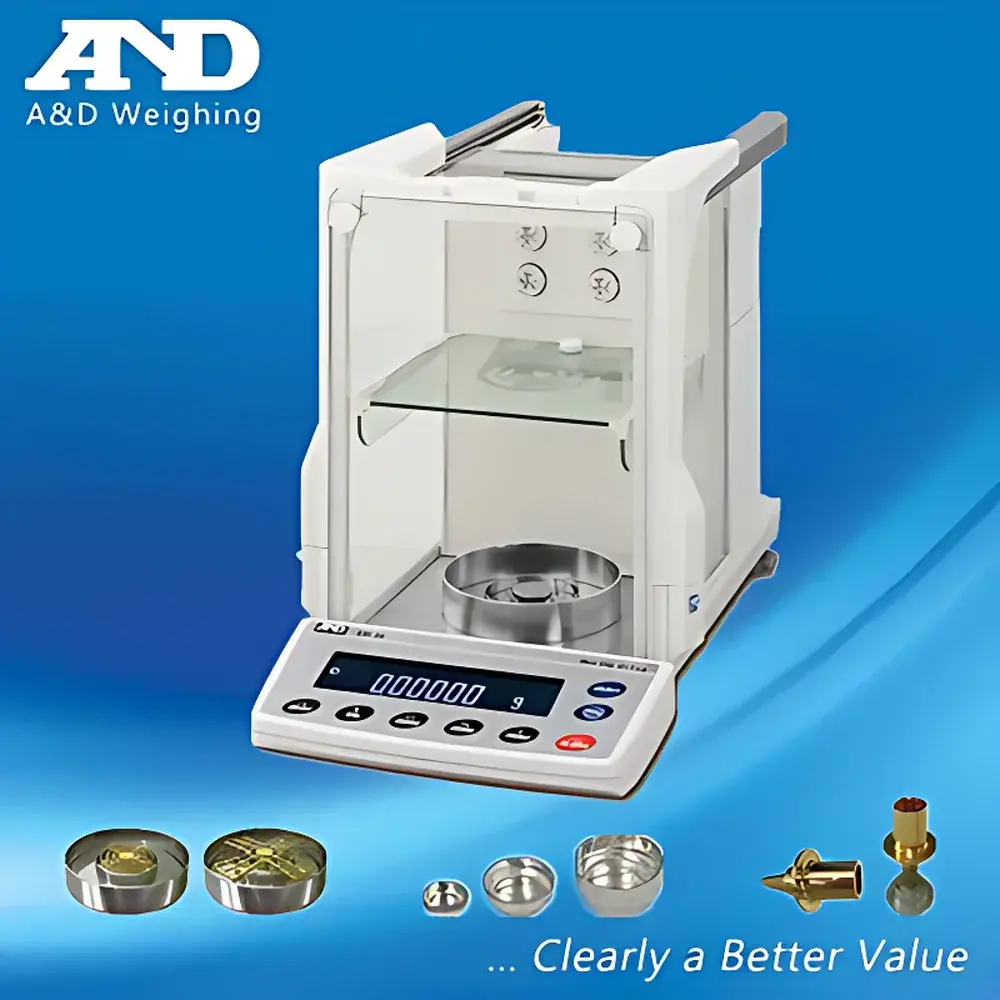
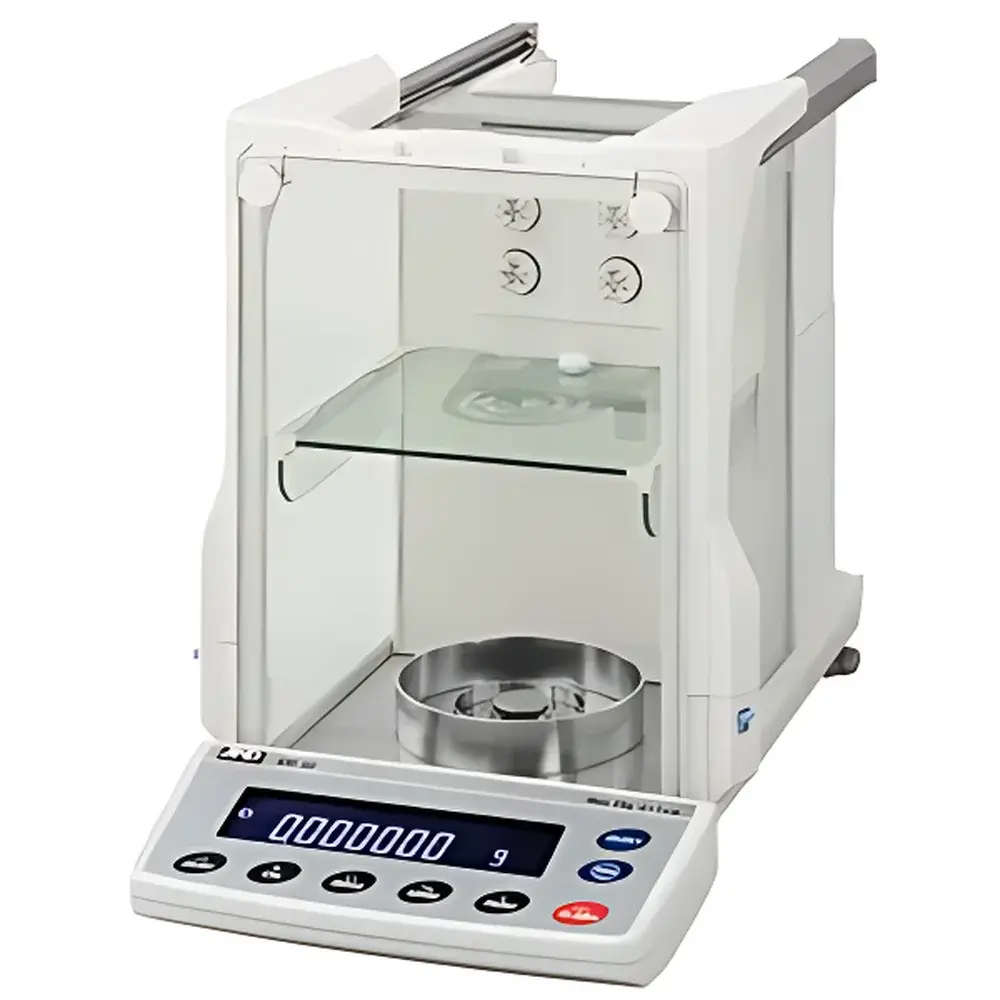
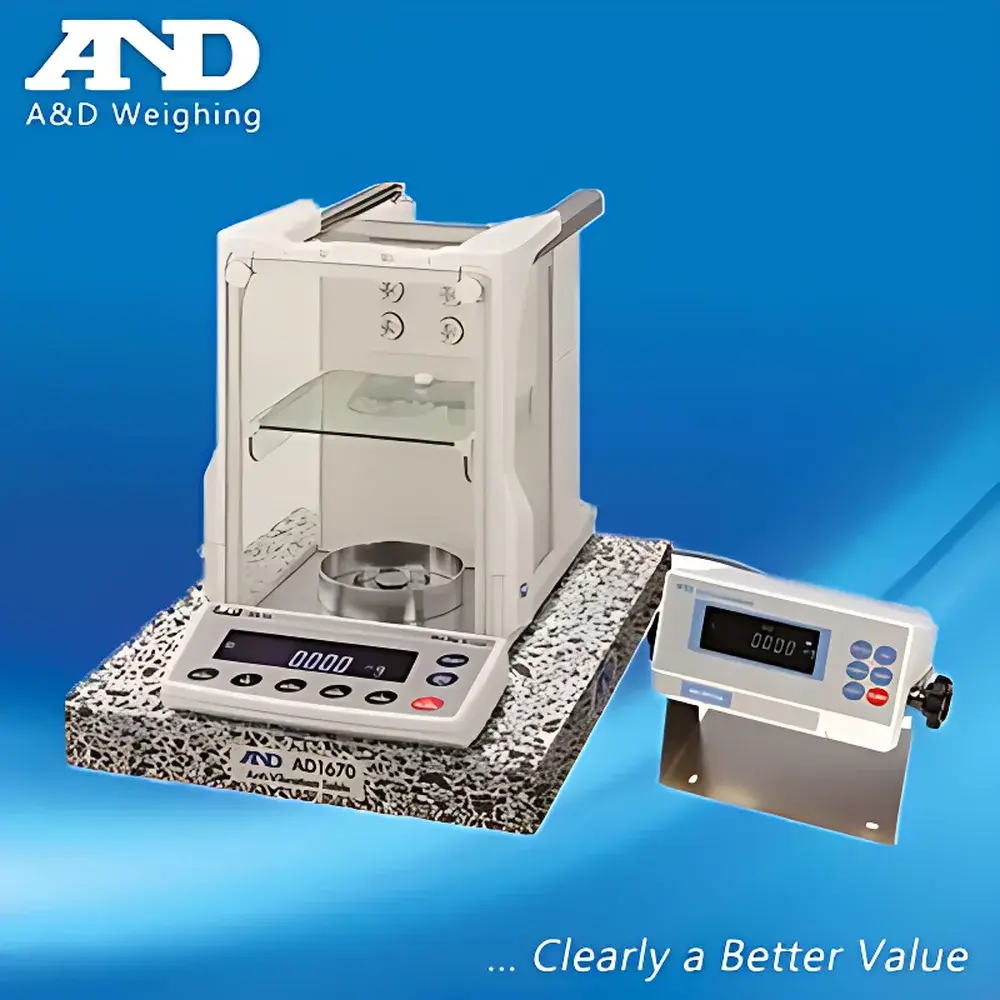
A&D BM-20 Automatic Microbalance
| Brand | A&D |
|---|---|
| Origin | Japan |
| Manufacturer | A&D Co., Ltd. |
| Type | Ultra-Micro Balance |
| Capacity | 520 g |
| Readability | 1 µg |
| Repeatability | ≤ ±0.001 mg |
| Calibration | Internal motorized calibration with built-in砝码 |
| Compliance | GLP/GMP/GCP/ISO-compliant data output |
| Interface | RS-232C and USB (dual simultaneous output) |
| Data Storage | 200 measurement records (100 timestamped), 50 calibration logs |
| Display | High-contrast white-backlit LCD |
| Draft Shield | Conductive-coated mesh-patterned glass with electrostatic neutralization (integrated ionizer) |
Overview
The A&D BM-20 Automatic Microbalance is an ultra-precision weighing instrument engineered for laboratories requiring trace-level mass determination under stringent regulatory and metrological conditions. Utilizing advanced electromagnetic force compensation (EMFC) technology, the BM-20 delivers stable, drift-compensated measurements at a readability of 1 µg across its full 520 g capacity range. Its design integrates a conductive anti-static draft shield—featuring mesh-patterned tempered glass and an integrated non-radioactive air ionizer—to eliminate electrostatic interference, a critical factor in ultra-micro weighing of low-mass, high-surface-area samples such as catalyst powders, pharmaceutical actives, or environmental filter residues. The balance operates within ISO/IEC 17025-accredited environments and supports audit-ready workflows through embedded time-stamped logging and configurable metadata tagging.
Key Features
- 1 µg readability with ≤ ±0.001 mg repeatability—validated per ASTM E898 and OIML R76 guidelines
- Motorized internal calibration system with temperature-compensated reference weights, enabling one-touch recalibration without manual intervention
- Patented dual-ring weighing chamber architecture eliminates stacked draft shields while maintaining Class I vibration immunity and ≥95% airflow stability (per USP & EP draft shield performance criteria)
- Ergonomic lateral sliding door mechanism—operable with left-hand actuation—enables simultaneous door control and sample placement, reducing operator-induced mechanical disturbance
- Conductive-coated mesh glass shield dissipates surface charge to <±5 V (measured per IEC 61340-4-1), minimizing electrostatic attraction during microgram-scale dosing
- Dual communication interface: RS-232C and USB-B ports support concurrent connection to PC + printer, PC + data logger, or PC + external display—no hub required
- Onboard memory stores 200 measurement entries (100 with ISO 8601 timestamps) and 50 calibration event records, including ambient temperature/humidity metadata when paired with optional sensors
Sample Compatibility & Compliance
The BM-20 accommodates diverse sample geometries—including crucibles, quartz filters, micro-vials, and irregularly shaped solids—within its expanded weighing chamber (W × D × H: 210 × 180 × 260 mm). Its draft shield design meets ISO 9001:2015 clause 7.6 requirements for measurement traceability and satisfies FDA 21 CFR Part 11 Annex 11 expectations for electronic record integrity when used with A&D’s optional Windows-based WinCT-Balance software. All data exports (CSV, TXT, PDF) include GLP/GMP-compliant headers: operator ID, balance serial number, calibration status, environmental parameters, and digital signature fields. The unit is CE-marked, JIS B 7721-compliant, and certified to OIML R76-1 Class I for legal-for-trade applications where permitted.
Software & Data Management
Supplied WinCT-Balance v3.x software enables real-time data acquisition, statistical process control (SPC) charting, and automated report generation in GLP/GMP formats (e.g., USP , EP 2.2.17). It supports 21 CFR Part 11-compliant user authentication (role-based access), electronic signatures, and immutable audit trails—including all parameter changes, calibration events, and data exports. Raw measurement logs include ISO 8601 timestamps synchronized via NTP (when connected to network), and export templates are customizable to match LIMS or ERP field structures. Optional integration with LabVantage, Thermo Fisher SampleManager, or Waters Empower is available via HL7 or ASTM E1384 drivers.
Applications
- Quantitative elemental analysis (ICP-MS, XRF sample prep) requiring sub-10 µg mass accuracy
- Environmental particulate matter (PM2.5/PM10) gravimetric analysis per EPA Method IO-4.2 and ISO 12103-1
- Pharmaceutical active ingredient (API) loss-on-drying (LOD) and content uniformity testing per USP
- Biochemical assay preparation—including enzyme kinetics substrates and radiolabeled tracer dilutions
- Reference material certification and inter-laboratory comparison studies under ILAC-G13
- Nanomaterial mass dosing for inhalation toxicology exposure chambers (OECD TG 412)
FAQ
What environmental conditions are required for optimal BM-20 performance?
The BM-20 requires stable ambient temperature (20–25 °C ±0.5 °C/h), relative humidity 40–60% RH, and vibration isolation per ISO 5347 Class 2. An anti-vibration table and dedicated AC line with surge suppression are strongly recommended.
Does the BM-20 support automatic tare and preset target weight functions?
Yes—user-defined tare values can be stored and recalled; “target weight” mode enables visual feedback (LED bar graph + audible tone) when approaching ±10 µg of a pre-set mass.
Is the internal calibration weight NIST-traceable?
Yes—the factory-installed calibration mass is individually certified with NIST-traceable uncertainty statements (k=2) documented in the Certificate of Conformance shipped with each unit.
Can the BM-20 be integrated into a fully automated sample handling workflow?
Via optional TTL-compatible external trigger input (0–5 V), the balance supports synchronization with robotic arms, auto-samplers, or dispensing systems using dry-contact or opto-isolated signals.
How often must the BM-20 be recalibrated in routine operation?
Per ISO/IEC 17025:2017 clause 5.10.4.2, internal calibration should be performed before first use, after relocation, following significant ambient shifts (>1 °C), and at user-defined intervals (e.g., every 2 hours during continuous operation). Full external verification with accredited standards is recommended quarterly.