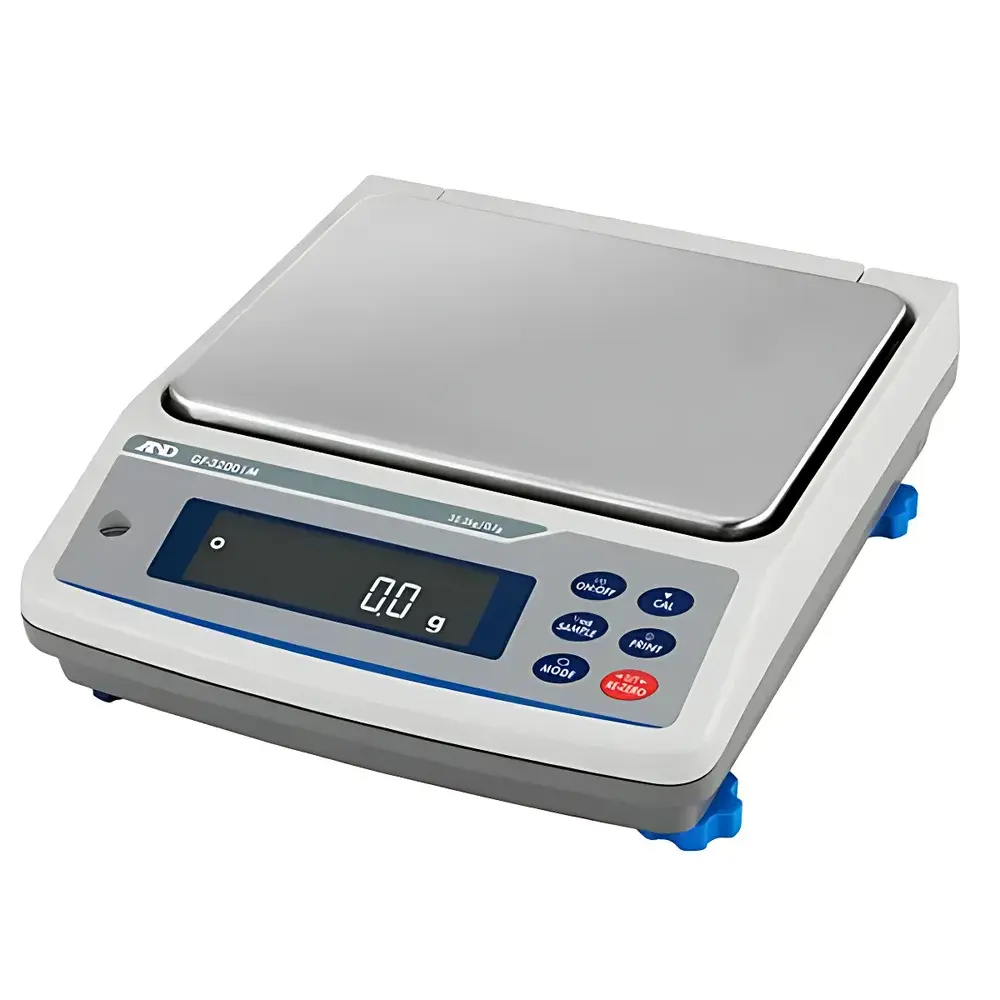
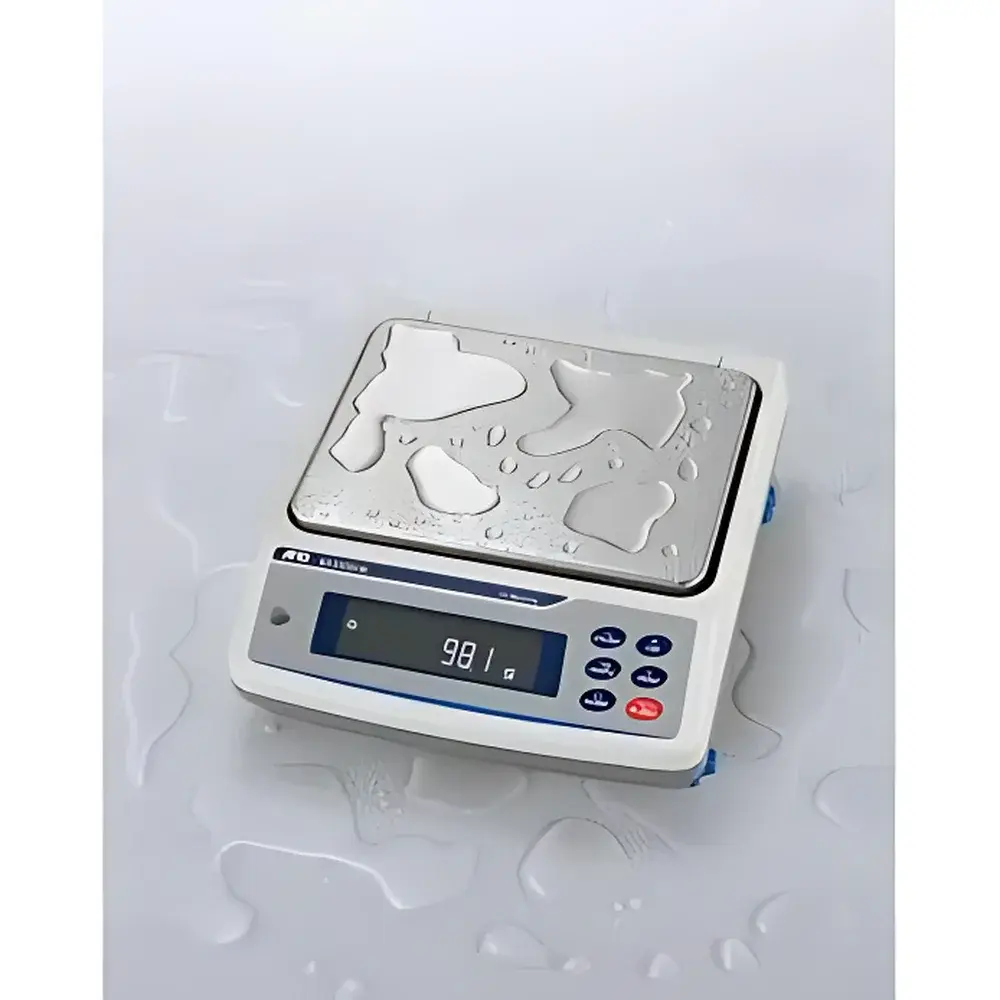
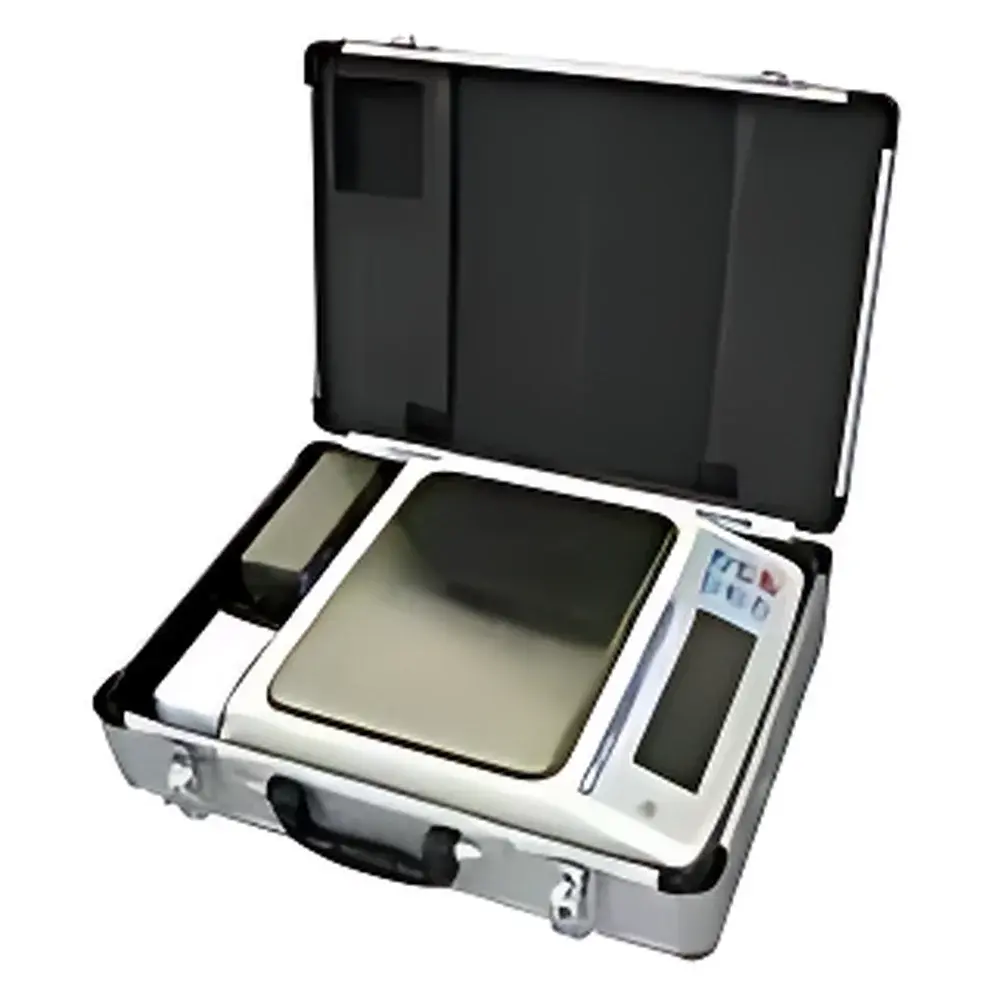
A&D GF32001M IP65 Dust- and Water-Resistant Industrial Precision Balance
| Brand | A&D |
|---|---|
| Origin | Japan |
| Manufacturer | A&D Co., Ltd. |
| Type | Internal Calibration Precision Balance |
| Maximum Capacity | 32.2 kg |
| Readability | 0.1 g |
| Repeatability | 0.1 g |
| Stabilization Time | ~1.5 s |
| Protection Rating | IP65 |
| Pan Material | SUS316 Stainless Steel |
| Interface | Dual RS-232C + USB |
| Data Storage | 200 weighing records / 50 unit mass sets / 50 calibration logs / 20 tare values / 20 upper/lower limit sets |
| Compliance | GLP/GMP/GCP/ISO-compliant report output |
| Optional Features | Animal Weighing, Dynamic Flow Rate Display (FRD), Impact Sensing Detection (ISD), Automatic Minimum Weight Verification (APA), Underhook Weighing, Comparison Mode, User Access Control |
Overview
The A&D GF32001M is an industrial-grade precision balance engineered for high-reliability operation in demanding production, quality control, and laboratory environments where dust, moisture, and mechanical stress are persistent challenges. Designed and manufactured in Japan by A&D Co., Ltd.—a globally recognized leader in metrological instrumentation—the GF32001M employs a robust SHS (Super Hybrid Sensor) load cell architecture to deliver rapid stabilization (~1.5 seconds), consistent repeatability (±0.1 g), and long-term measurement integrity across its full 32.2 kg capacity range. Its core measurement principle relies on electromagnetic force compensation (EMFC) technology, ensuring linearity, hysteresis-free response, and immunity to thermal drift under variable ambient conditions. The balance meets the stringent requirements of ISO/IEC 17025-accredited testing laboratories and complies with key regulatory frameworks including USP , ASTM E898, and OIML R76 for non-automatic weighing instruments. With an IP65 ingress protection rating—certified against low-pressure water jets and total dust ingress—the GF32001M supports washdown protocols common in food processing, pharmaceutical manufacturing, and chemical synthesis facilities.
Key Features
- IP65-rated enclosure with fully sealed electronics and SUS316 stainless steel weighing pan—suitable for high-humidity, dusty, or corrosive environments
- Internal automatic calibration (IntCal™) with temperature-compensated reference mass; eliminates manual recalibration during routine operation
- Impact Sensing Detection (ISD): real-time monitoring of mechanical shock events during loading/unloading; triggers visual alert and logs event timestamp for process traceability
- Automatic Performance Assessment (APA): dynamically verifies minimum weight (min. weighable quantity) based on current repeatability and uncertainty—aligned with USP and EU GMP Annex 18 requirements
- Flow Rate Display (FRD): calculates and displays real-time mass flow (g/s or kg/min) for liquid dispensing, powder transfer, or gravimetric feeding applications
- Dual communication interface: simultaneous RS-232C and USB connectivity enables concurrent data export to LIMS and bidirectional control of peripheral devices (e.g., printers, PLCs, labelers)
- Built-in GLP/GMP-compliant reporting engine: generates audit-ready records with operator ID, timestamp, calibration status, environmental metadata, and digital signature support
Sample Compatibility & Compliance
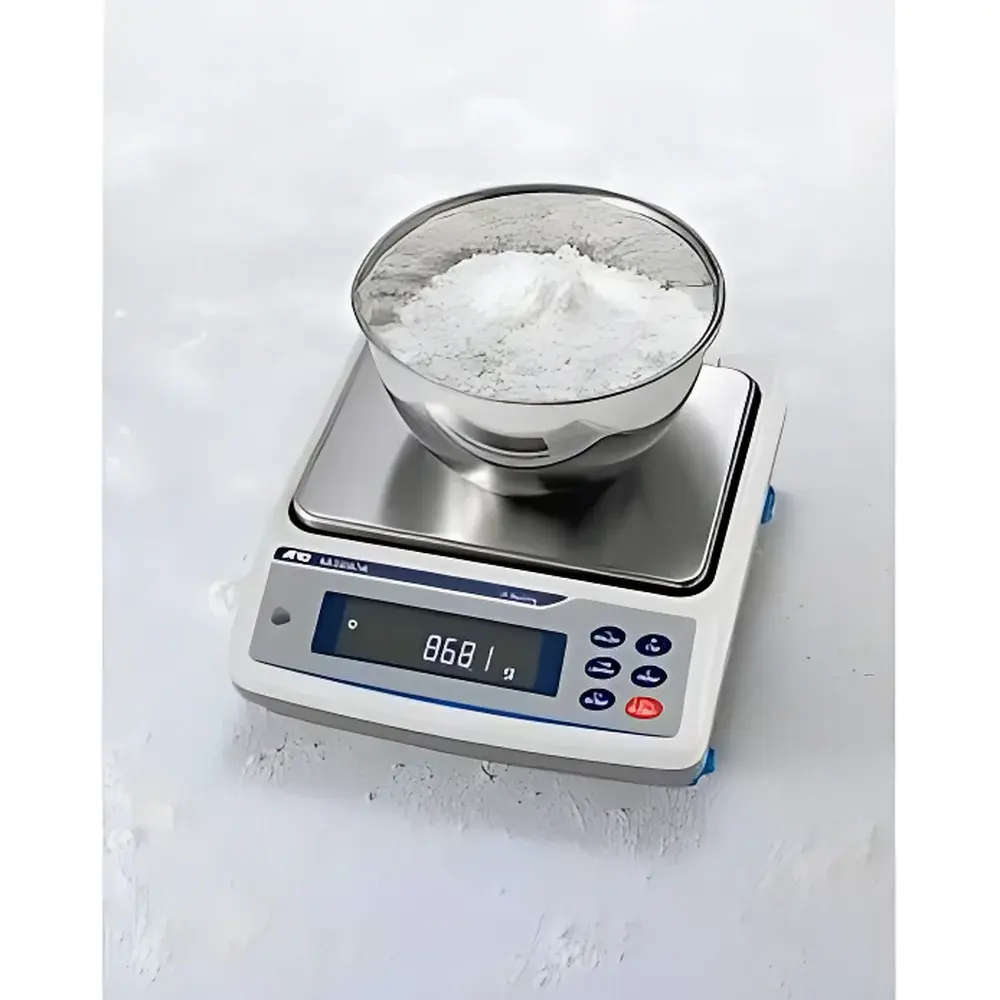
The GF32001M accommodates a wide range of sample types—from bulk powders and viscous slurries to packaged goods and irregularly shaped industrial components—thanks to its large 270 × 210 mm SUS316 pan and optional underhook assembly for density or suspended-mass measurements. Its IP65 certification conforms to IEC 60529 and is validated per EN 60529 test procedures. For regulated industries, the balance supports 21 CFR Part 11–compliant electronic records when integrated with validated software platforms, including audit trail logging, role-based user permissions (admin/operator/auditor), and tamper-evident data encryption. It satisfies ISO 9001:2015 clause 7.1.5.2 (monitoring and measuring resources) and is routinely deployed in FDA-audited facilities for raw material receipt, in-process checks, and finished product release testing.
Software & Data Management
The GF32001M features embedded firmware supporting seamless integration into enterprise data ecosystems. Weighing data—including gross/net/tare values, statistical summaries (mean, SD, CV%), and FRD-derived flow metrics—are stored locally (200 records) and exportable via CSV, TXT, or XML formats. All calibration events (internal/external), user logins, and configuration changes are time-stamped and archived with immutable metadata. Optional PC software (e.g., A&D WinCT or third-party LabArchives-compatible drivers) enables automated data archiving, SPC charting, and electronic batch record generation. Audit trails comply with ALCOA+ principles (Attributable, Legible, Contemporaneous, Original, Accurate, Complete, Consistent, Enduring, Available) and support periodic review per FDA guidance on data integrity.
Applications
- Pharmaceutical: raw material verification, tablet/capsule counting, blend uniformity sampling, and API dispensing under cGMP
- Food & Beverage: portion control, recipe formulation, loss-in-weight feeding, and HACCP-critical checkpoint weighing
- Chemical Manufacturing: catalyst dosing, solvent blending, and hazardous material handling with containment compliance
- Automotive & Aerospace: component weight verification, fastener counting, and composite layup mass tracking
- Research & Development: gravimetric reaction monitoring, polymer melt index preparation, and battery electrode coating mass validation
FAQ
Does the GF32001M support external calibration with certified weights?
Yes—it accepts external calibration via standard Class M1 or better weights and provides guided calibration routines compliant with ISO 17025 calibration procedures.
Can the balance be integrated into a PLC-controlled production line?
Yes—its dual RS-232C/USB interface supports Modbus RTU and ASCII command protocols for direct PLC communication and real-time weight-triggered logic execution.
Is the APA (Automatic Minimum Weight Verification) function validated per USP ?
Yes—the APA algorithm implements the repeatability-based calculation method specified in USP , using actual measured standard deviation under operational conditions to determine the minimum weighable quantity.
What environmental conditions affect stabilization time?
Stabilization remains ≤1.5 s within ambient temperatures of 10–40 °C and relative humidity ≤80% RH non-condensing; the SHS sensor includes active thermal compensation to mitigate drift.
How is data security maintained during USB transfers?
All USB data exports are unidirectional (balance-to-host only); no executable code or firmware updates are permitted via USB, preventing unauthorized modification per IEC 62443-3-3 SL2 requirements.