
ADC Bio ACE Automated Soil Respiration System
| Brand | ADC Bio |
|---|---|
| Origin | United Kingdom |
| Model | ACE Automated Soil Respiration System |
| CO₂ Analyzer Resolution | 1 ppm |
| Chamber Area | 415 cm² |
| Power Options | 12 V 40 Ah Rechargeable Battery (≈30 days field operation), Solar Panel, or 220 V AC |
| Sensor Expansion | Up to 6 soil temperature probes, 4 soil moisture sensors |
| Measurement Modes | Closed-chamber (transparent & opaque), Open-chamber (transparent & opaque) |
| Data Storage | Internal SD card |
| Operating Interface | 240×64 pixel LCD with 5-button microcontroller interface |
| Optional Modules | Soil O₂ sensor, Hyperspectral imaging module, IR thermal imaging module, ECODRONE® UAV integration kit, Custom gas extraction/sampling configuration |
Overview
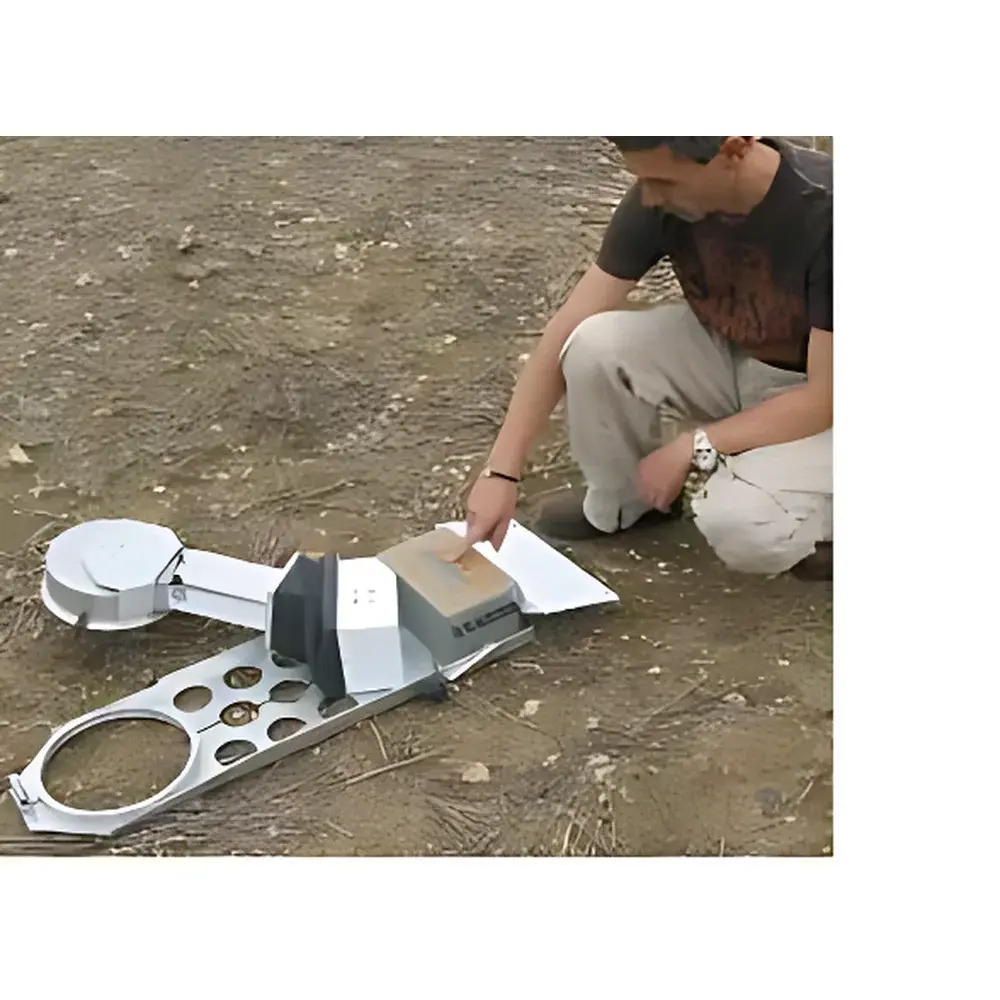
The ADC Bio ACE Automated Soil Respiration System is a field-deployable, integrated eddy-covariance–compatible flux measurement platform engineered for high-temporal-resolution, non-invasive quantification of soil CO₂ efflux using the dynamic closed- and open-chamber methodologies. Based on the well-established chamber-based principle—where CO₂ concentration gradients are measured over time within a defined headspace above the soil surface—the ACE system applies first-order exponential fitting or linear regression algorithms (user-selectable) to derive instantaneous soil respiration rates (µmol CO₂ m⁻² s⁻¹). Its dual-mode architecture enables rigorous discrimination between autotrophic and heterotrophic respiration components when deployed in paired transparent/opaque configurations, supporting mechanistic studies of biogeochemical carbon cycling under natural light conditions or controlled darkness. Designed for long-term unattended operation in remote terrestrial ecosystems—from arid shrublands to boreal peatlands—the ACE meets core requirements for GLP-aligned environmental monitoring and complies with ASTM D6759-22 (Standard Guide for Measuring Soil Respiration Using Dynamic Closed Chambers) and ISO 16634-2:2022 (Soil quality — Determination of total nitrogen — Part 2: Combustion method).
Key Features
- Fully integrated hardware architecture: motorized chamber actuation mechanism, NDIR-based CO₂ analyzer (1 ppm resolution), embedded data logger, and real-time control unit housed in a single ruggedized enclosure—no external PC, tubing, or calibration gas required.
- Four configurable chamber modes: closed-transparent, closed-opaque, open-transparent, and open-opaque—enabling simultaneous estimation of net ecosystem exchange (NEE), gross primary production (GPP), ecosystem respiration (Reco), and soil respiration (Rs) when deployed in multi-unit arrays.
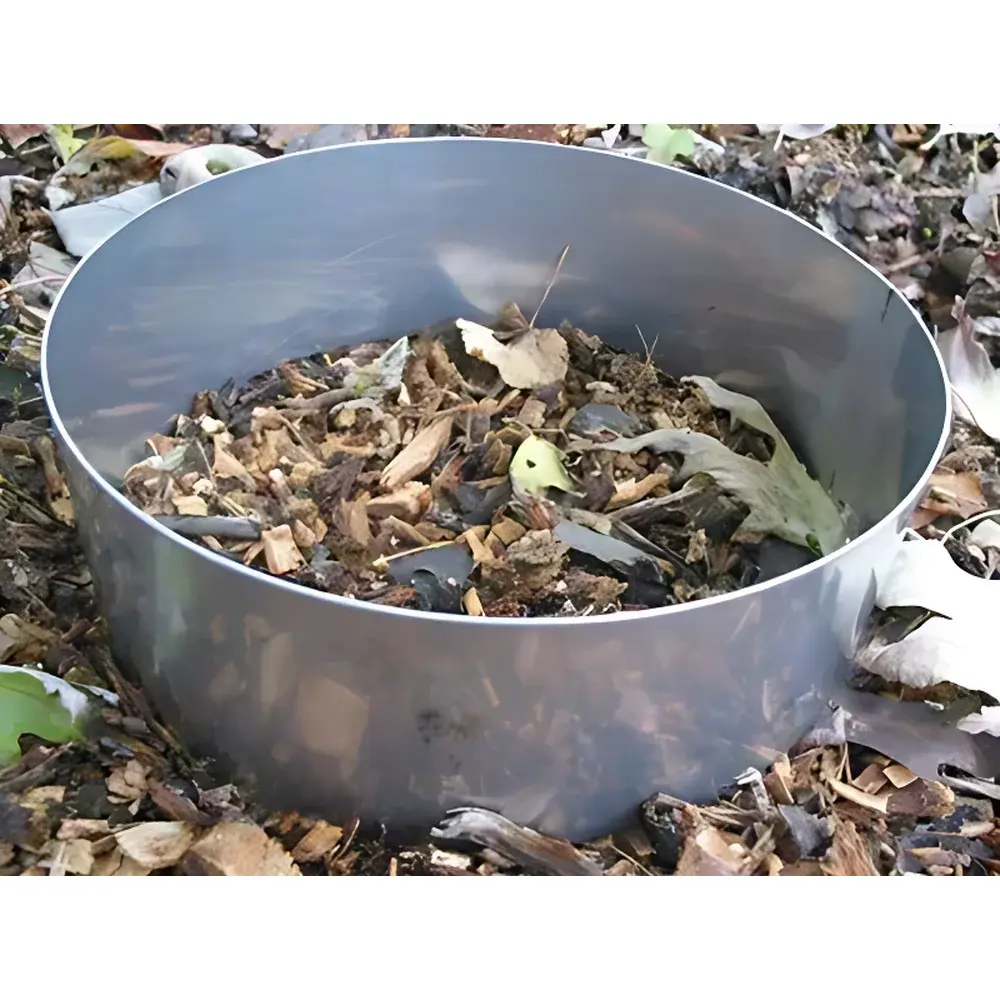
- Large-area (415 cm²) exchange surface optimized for low-flux environments; chamber transparency options support concurrent photosynthetic activity assessment in biological soil crusts, mosses, lichens, and short-stature vegetation.
- Modular sensor expansion capability: supports up to six calibrated thermistors (±0.1 °C accuracy) and four TDR/FDR soil moisture probes (±1.5% vol) across multiple depth horizons, synchronized with CO₂ flux acquisition.
- Flexible power management: operates continuously for ~30 days on a single 12 V 40 Ah deep-cycle battery; compatible with solar charging controllers (MPPT) and mains-powered operation for permanent station deployment.
- Onboard 240×64-pixel graphical LCD with intuitive five-button navigation interface—enables full system configuration, real-time data visualization, historical trace review, and diagnostic status checks without auxiliary devices.
Sample Compatibility & Compliance
The ACE system is validated for use across diverse soil types—including sandy loams, clay-rich vertisols, organic histosols, and saline-alkali substrates—as well as disturbed anthropogenic surfaces such as landfill caps and remediated brownfield sites. Its chamber sealing mechanism accommodates uneven topography via adaptive gasket pressure distribution, minimizing edge leakage artifacts. All firmware and data logging protocols adhere to FAIR (Findable, Accessible, Interoperable, Reusable) principles. Raw time-series datasets include embedded metadata tags compliant with CF-1.8 (Climate and Forecast) conventions, facilitating direct ingestion into FluxNet, AmeriFlux, and ICOS data portals. The system satisfies audit requirements for ISO/IEC 17025-accredited laboratories performing soil carbon flux certification under Verra’s VM0042 methodology and Gold Standard’s GS-SD-01 protocol.
Software & Data Management
Data are stored in standardized CSV and NetCDF-4 formats on removable SD cards, with automatic timestamping (UTC), GPS-tagged location stamps (when GNSS module is installed), and checksum-verified integrity validation. The optional ACE MASTER network coordinator software enables centralized synchronization, remote firmware updates, and cross-site statistical comparison across distributed ACE nodes. All data streams support export to MATLAB, R, Python (via xarray and pandas), and commercial platforms including EddyPro and FluxSuite. Audit trails—including operator ID, parameter changes, calibration events, and error logs—are maintained in accordance with FDA 21 CFR Part 11 requirements for electronic records and signatures when used in regulated carbon accounting applications.
Applications
- Long-term monitoring of soil carbon dynamics in response to climate change drivers (e.g., drought frequency, warming treatments, elevated CO₂ experiments).
- Validation and gap-filling of eddy covariance tower measurements through spatial upscaling using multi-point ACE networks.
- Assessment of agricultural management impacts—including tillage intensity, cover cropping, biochar amendment, and nematicide application—on belowground carbon turnover rates.
- Bioremediation efficacy tracking in hydrocarbon-contaminated soils via respiratory response kinetics to substrate pulses.
- Functional characterization of cryptobiotic soil crusts and polar microbial mats under diel light/dark cycles using paired transparent/opaque chambers.
- Integration with drone-based hyperspectral (400–2500 nm) and thermal infrared (7.5–14 µm) surveys to correlate surface spectral indices (e.g., NDVI, PRI, CWSI) with subsurface CO₂ production patterns.
FAQ
What chamber configurations are supported, and how do they affect physiological interpretation?
The ACE supports four distinct chamber modes. Closed-transparent chambers capture net CO₂ exchange (photosynthesis + respiration); closed-opaque chambers isolate dark respiration only. Open configurations reduce pressure artifacts in low-permeability soils but require ambient CO₂ reference sampling. Mode selection directly determines whether derived fluxes represent Rs (soil-only), Reco (ecosystem), or NEE (net exchange).
Can the ACE be deployed in extreme environments (e.g., deserts or permafrost regions)?
Yes. The system operates across −20 °C to +50 °C ambient temperatures. Its passive thermal shielding, condensation-resistant optical path, and low-power sleep-wake cycling enable reliable performance in arid and sub-Arctic settings. Optional frost-heave compensation mounts are available for tundra deployments.
Is remote diagnostics and firmware update capability available?
When connected to a cellular or LoRaWAN gateway (via optional RS-485 or LTE add-on), the ACE supports secure OTA (over-the-air) firmware updates, live telemetry streaming, and predictive maintenance alerts based on sensor drift trends and battery health metrics.
How does the ACE ensure measurement reproducibility across multiple units?
Each unit undergoes factory calibration against NIST-traceable CO₂ standards. Inter-unit variability is maintained below ±2.3% of reading (k=2) across the 0–5000 ppm range. Field recalibration is supported via zero-span verification using certified synthetic air and CO₂ gas mixtures.
What data security and compliance features are included for regulatory reporting?
All data files include SHA-256 hash signatures, immutable timestamps, and user-authenticated access logs. When configured with the ACE MASTER Server Edition, full 21 CFR Part 11 compliance—including electronic signatures, role-based permissions, and audit trail retention—is achieved for carbon credit verification submissions.







