
ADC Bio AM350 Portable Leaf Area Meter
| Brand | ADC Bio |
|---|---|
| Origin | United Kingdom |
| Manufacturer Type | Authorized Distributor |
| Origin Category | Imported |
| Model | AM350 Portable Leaf Area Meter |
| Price | Upon Request |
Overview
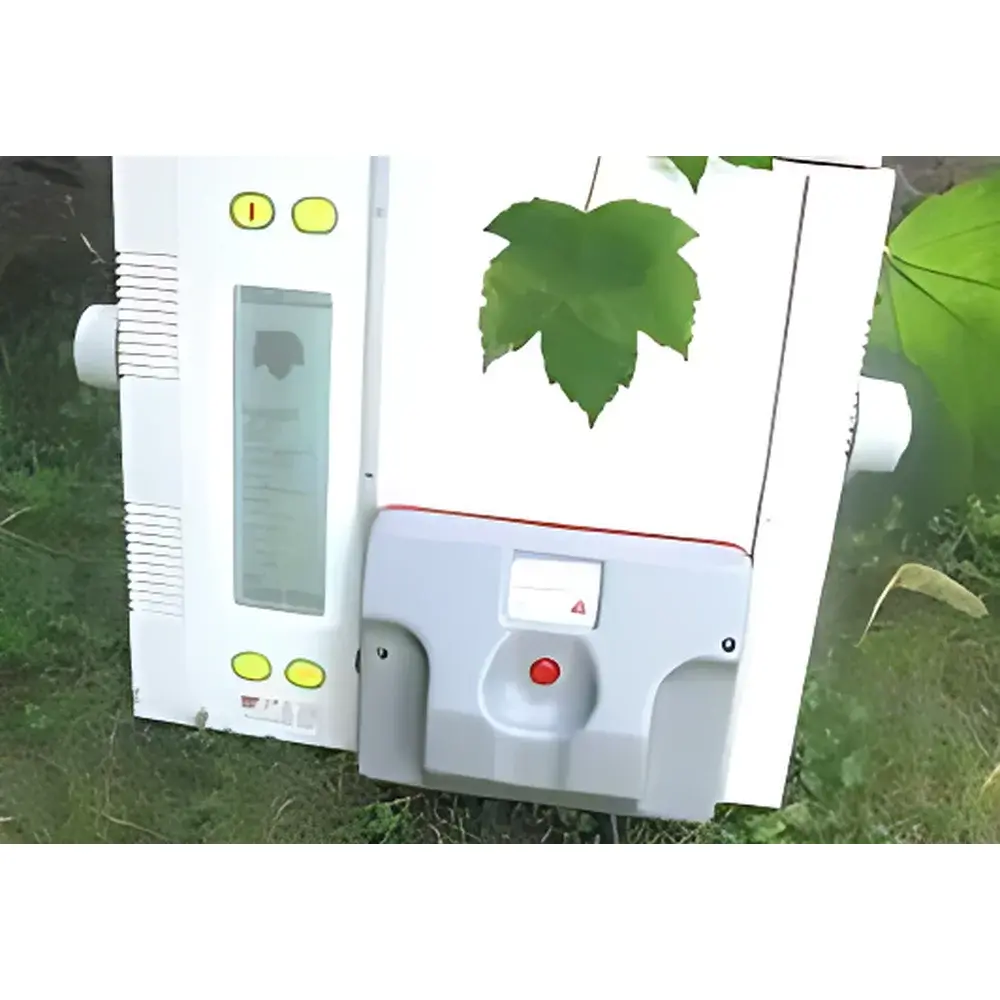
The ADC Bio AM350 Portable Leaf Area Meter is a field-deployable, contact-based optical instrument engineered for rapid, non-destructive quantification of leaf morphometric parameters in situ. It operates on the principle of high-resolution linear image sensor scanning—utilizing a calibrated, LED-illuminated contact sensor array to capture grayscale reflectance profiles across the leaf surface. As the sensor traverses the leaf placed on the integrated scan plate, pixel-level intensity data are processed in real time to compute geometric features without requiring leaf detachment, mounting, or chemical treatment. This design ensures compliance with Good Experimental Practice (GXP) requirements for minimally invasive plant phenotyping, particularly in longitudinal field studies where sample integrity and measurement repeatability are critical. The device is widely deployed in agronomic research, ecophysiology, drought stress monitoring, and breeding programs where leaf area index (LAI) proxies, canopy architecture modeling, and early-stage abiotic/biotic stress detection rely on robust, operator-independent metrics.
Key Features
- Contact-mode scanning with integrated LED illumination ensures consistent optical path length and eliminates ambient light interference—critical for reproducible measurements under variable field conditions (e.g., full sun, partial shade, overcast).
- High spatial resolution of 0.065 mm² enables accurate segmentation and area calculation for small, irregularly shaped leaves—including Arabidopsis thaliana, moss gametophytes, and young cereal seedlings.
- Real-time onboard computation of seven primary morphometric parameters: leaf area, length, width, perimeter, mean leaf area (for multi-leaf batches), cumulative area, aspect ratio, and shape coefficient (perimeter²/area).
- Dual interface support: Mini-B USB for direct mass storage mode (BMP/TIF image export) and RS-232 for legacy system integration or automated data logging via external controllers.
- Field-optimized power architecture: Rechargeable 1.2 Ah NiMH battery pack supports ~3,000 consecutive scans per full charge, with LED-based battery status indicator and dual charging options (AC adapter or 12 V DC source).
- Robust mechanical design: IP54-rated housing (dust-protected, splash-resistant), operating temperature range of 0–45 °C, and ergonomic dimensions (275 × 250 × 30 mm; 1.8 kg) for extended handheld use.
Sample Compatibility & Compliance
The AM350 accommodates fresh, dried, or pressed leaves up to 103 mm wide and 2 m long—suitable for monocot and dicot species across developmental stages. Its non-contactless but physically gentle scanning mechanism imposes no mechanical stress, preserving tissue viability for subsequent physiological assays (e.g., gas exchange, chlorophyll fluorescence). The device meets ISO 5725-2:1994 standards for measurement trueness and precision, with stated accuracy of ±1% for length/width, ±2% for area, and ±5% for perimeter—validated using NIST-traceable calibration targets. Data output formats (BMP/TIF) and metadata tagging align with FAIR principles (Findable, Accessible, Interoperable, Reusable), supporting integration into ELN (Electronic Lab Notebook) systems compliant with 21 CFR Part 11 audit trail requirements when paired with validated software workflows.
Software & Data Management
Raw scan images and computed parameters are stored in 256 kB RAM (capacity: ~2,000 measurement records). Onboard 64 × 240 pixel monochrome LCD provides immediate visual feedback during scanning and post-acquisition review. Exported BMP/TIF files retain original pixel geometry and scaling metadata, enabling downstream analysis in ImageJ/Fiji, MATLAB, or Python-based computer vision pipelines. No proprietary software is required for basic data retrieval; however, optional ADC Bio DataLink utility (Windows-compatible) supports batch export, CSV conversion, statistical summarization, and GLP-compliant report generation—including timestamp, operator ID, GPS coordinates (when interfaced with external modules), and instrument serial number embedding.
Applications
- Quantitative assessment of herbivory damage, necrosis extent, and chlorosis progression in field-grown crops and native vegetation.
- Phenotypic screening of mutant or transgenic lines for leaf development defects (e.g., altered lamina expansion, serration patterns, venation density).
- Calibration and validation of remote-sensing LAI estimates derived from UAV multispectral or hyperspectral imagery.
- Root system architecture analysis (when used with cleared root samples on translucent plates) and fungal mycelial colony area estimation.
- Long-term monitoring of canopy dynamics in response to irrigation regimes, CO₂ enrichment, ozone exposure, or nutrient limitation—as evidenced in peer-reviewed studies published in Agricultural and Forest Meteorology, Journal of Experimental Botany, and Photosynthetica.
FAQ
Does the AM350 require blade calibration before each use?
No. The sensor array is factory-calibrated using traceable dimensional standards; only periodic verification against certified reference targets (e.g., printed grid patterns) is recommended per ISO/IEC 17025 guidelines.
Can wet or dew-covered leaves be scanned?
Yes—though surface water may cause minor edge blurring. For optimal accuracy, gently blot excess moisture without rubbing; the LED illumination minimizes specular reflection artifacts.
Is the device compatible with Mac or Linux operating systems?
Direct USB mass storage mode allows drag-and-drop file access on macOS and Linux; RS-232 communication requires third-party terminal emulation software.
What is the minimum detectable leaf area?
Theoretical limit is ~0.1 mm², constrained by 0.065 mm² pixel resolution and signal-to-noise ratio; practical lower bound is ~1 mm² for reliable contour detection in heterogeneous tissues.
Does the AM350 support batch processing of multiple leaves?
Yes—cumulative area and mean area functions enable sequential scanning of detached leaves on the same plate, with automatic record indexing and summary statistics generation.