
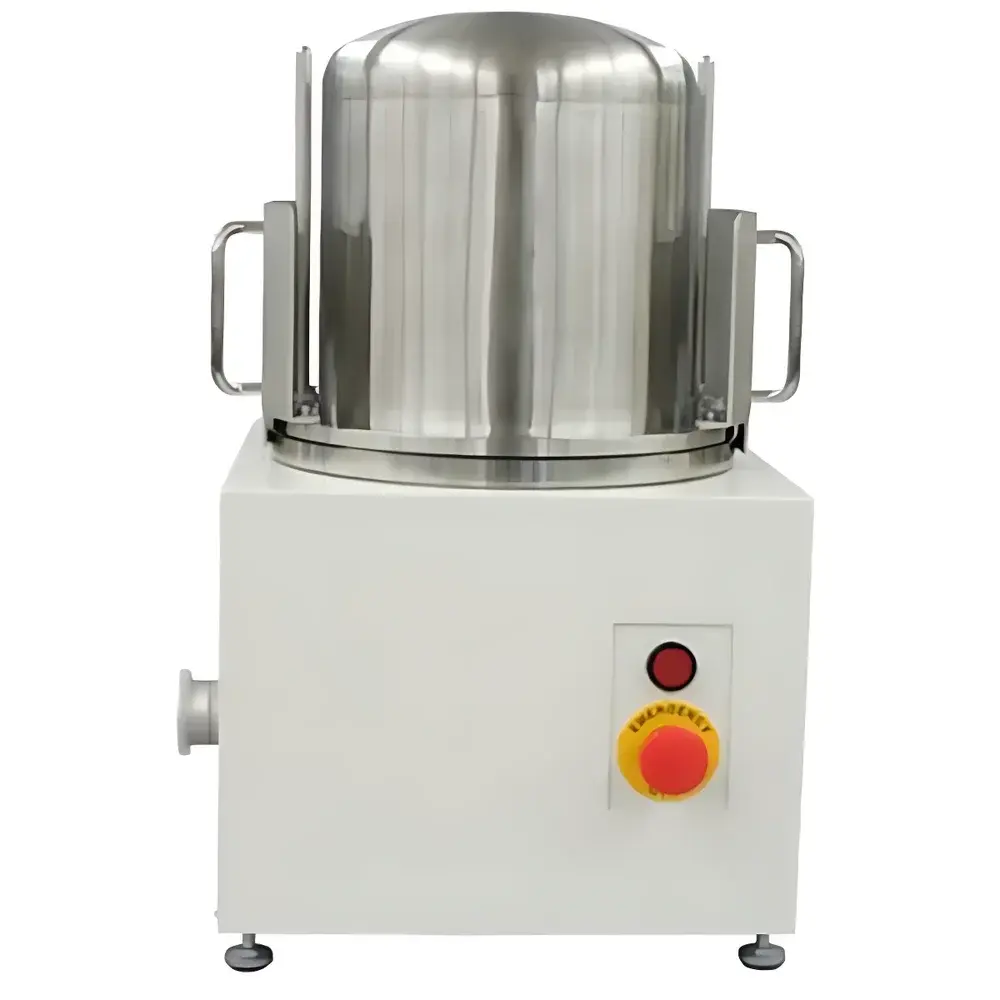
Advance Riko Peltier Evaluation System
| Brand | Advance Riko |
|---|---|
| Origin | Japan |
| Model | Peltier Evaluation System |
| Measurement Atmosphere | Vacuum |
| Temperature Range | 27–80 °C |
| Sample Dimensions | Square, 10–25 mm side length, thickness ≤ 3 mm |
| Measured Parameters | ΔTₘₐₓ (maximum temperature difference), Qc,ₘₐₓ (maximum cooling power), COP (coefficient of performance) |
| Compliance | Designed for thermoelectric module characterization per ISO 14405-1 and ASTM D5470 practices |
Overview
The Advance Riko Peltier Evaluation System is a precision-engineered instrument dedicated to the quantitative characterization of thermoelectric (TE) cooling modules—specifically bismuth telluride-based Peltier devices. Operating on the principle of controlled Joule heating and thermoelectric heat pumping under vacuum conditions, the system enables direct, traceable measurement of three fundamental performance metrics: maximum temperature difference (ΔTₘₐₓ), maximum cooling power (Qc,ₘₐₓ), and coefficient of performance (COP) at defined hot-side temperatures. Unlike empirical thermal resistance estimation methods, this system implements dual-sensor calorimetry with active hot-plate temperature stabilization and high-stability current sourcing (±0.1% accuracy), ensuring reproducible results compliant with international thermoelectric test conventions. It is engineered for laboratories engaged in TE material development, module packaging optimization, and quality assurance in high-reliability applications such as laser diode thermal management, infrared sensor stabilization, and microfluidic temperature control.
Key Features
- Vacuum-compatible test chamber (≤10⁻² Pa) eliminates convective heat loss and ensures measurement fidelity across the full operational temperature range (27–80 °C hot-side setpoint).
- Dual-thermocouple stack configuration with NIST-traceable calibration enables simultaneous monitoring of cold- and hot-side junction temperatures with ±0.2 °C accuracy.
- Integrated programmable DC power supply (0–15 V / 0–10 A) with real-time current/voltage logging synchronized to thermal transients.
- Modular sample holder accommodating square thermoelectric elements from 10 × 10 mm to 25 × 25 mm, with adjustable mechanical clamping force (0.2–0.8 MPa contact pressure) to minimize interfacial thermal resistance variability.
- Thermal interface material (TIM) compatibility testing mode allows comparative evaluation of thermal paste, phase-change pads, or soldered interfaces under identical boundary conditions.
- Embedded PID-controlled hot-plate with ±0.1 °C thermal stability over 60-minute dwell periods, meeting requirements for steady-state COP derivation per ISO 14405-1 Annex C.
Sample Compatibility & Compliance
The system supports single-stage, standard geometry Peltier modules fabricated from Bi₂Te₃-based alloys, including both commercial off-the-shelf (COTS) and custom-fabricated prototypes. Samples must be square (10–25 mm per side) and ≤3 mm thick, with planar, metallized surfaces suitable for low-resistance thermal and electrical contact. The vacuum environment satisfies ASTM D5470–22 Section 7.2 requirements for thermal transmission property measurements of solid materials. Data acquisition adheres to GLP-compliant metadata tagging—including operator ID, ambient lab conditions (recorded via integrated humidity/pressure sensor), and instrument calibration status—enabling audit-ready reporting for ISO/IEC 17025-accredited labs.
Software & Data Management
The proprietary PeltierEval™ software (v4.2+) provides real-time visualization of thermal transient curves, automatic peak detection for ΔTₘₐₓ and Qc,ₘₐₓ, and iterative COP calculation across user-defined current sweeps (e.g., 0.1–10 A in 0.2 A steps). All raw voltage, current, and thermocouple readings are timestamped at 10 Hz and stored in HDF5 format for long-term archival and third-party analysis (MATLAB, Python Pandas). Export options include CSV (for SPC charting), PDF test reports with embedded uncertainty budgets (k = 2), and XML files compatible with LIMS integration. Software validation documentation supports FDA 21 CFR Part 11 compliance, including electronic signature capture, audit trail logging, and role-based access control.
Applications
- Development of high-COP thermoelectric coolers for telecom optical transceivers requiring sub-ambient stabilization at 70 °C ambient.
- Comparative benchmarking of n-type vs. p-type leg material pairs under identical thermal boundary conditions.
- Process validation for die-attach reliability—quantifying degradation in Qc,ₘₐₓ after thermal cycling (−40 °C to +125 °C, 500 cycles).
- Supporting DOE-funded projects on mid-temperature (200–400 °C) segmented TE generators by establishing baseline low-temperature module performance.
- Failure analysis of field-return modules through correlation of reduced ΔTₘₐₓ with interfacial delamination detected via ultrasonic C-scan.
FAQ
What standards does the Peltier Evaluation System comply with?
It supports test methodologies aligned with ASTM D5470–22 (thermal transmission properties), ISO 14405-1 (geometrical product specifications), and IEC 60584-1 (thermocouple reference functions). Calibration certificates are issued per ISO/IEC 17025 requirements.
Can the system evaluate multi-stage or cascade Peltier modules?
No—this configuration is optimized for single-stage modules only. Multi-stage evaluation requires custom fixture design and is not covered under standard warranty or software support.
Is external water cooling required for the hot-plate?
Yes. The system requires a recirculating chiller (minimum 1.5 kW capacity, 18–25 °C inlet) connected via 1/4″ compression fittings to maintain hot-plate thermal stability during high-current operation.
How is electrical contact resistance minimized during measurement?
The system employs spring-loaded, gold-plated copper electrodes with real-time four-wire voltage sensing; contact resistance is automatically subtracted from total measured resistance using pre-characterized electrode impedance profiles.
Does the software support automated pass/fail criteria based on specification limits?
Yes—users can define upper/lower tolerance bands for ΔTₘₐₓ, Qc,ₘₐₓ, and COP per batch; the software generates color-coded summary dashboards and auto-generates non-conformance reports (NCRs) for QA workflows.



