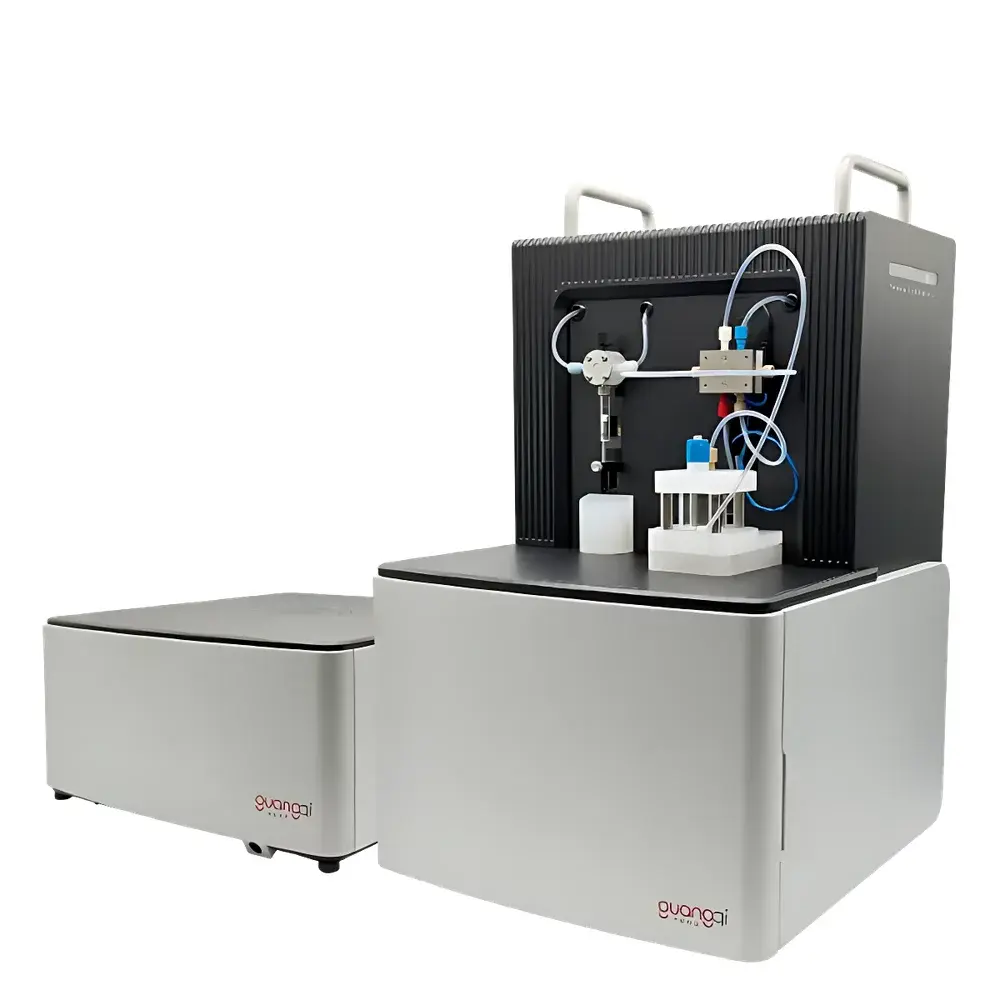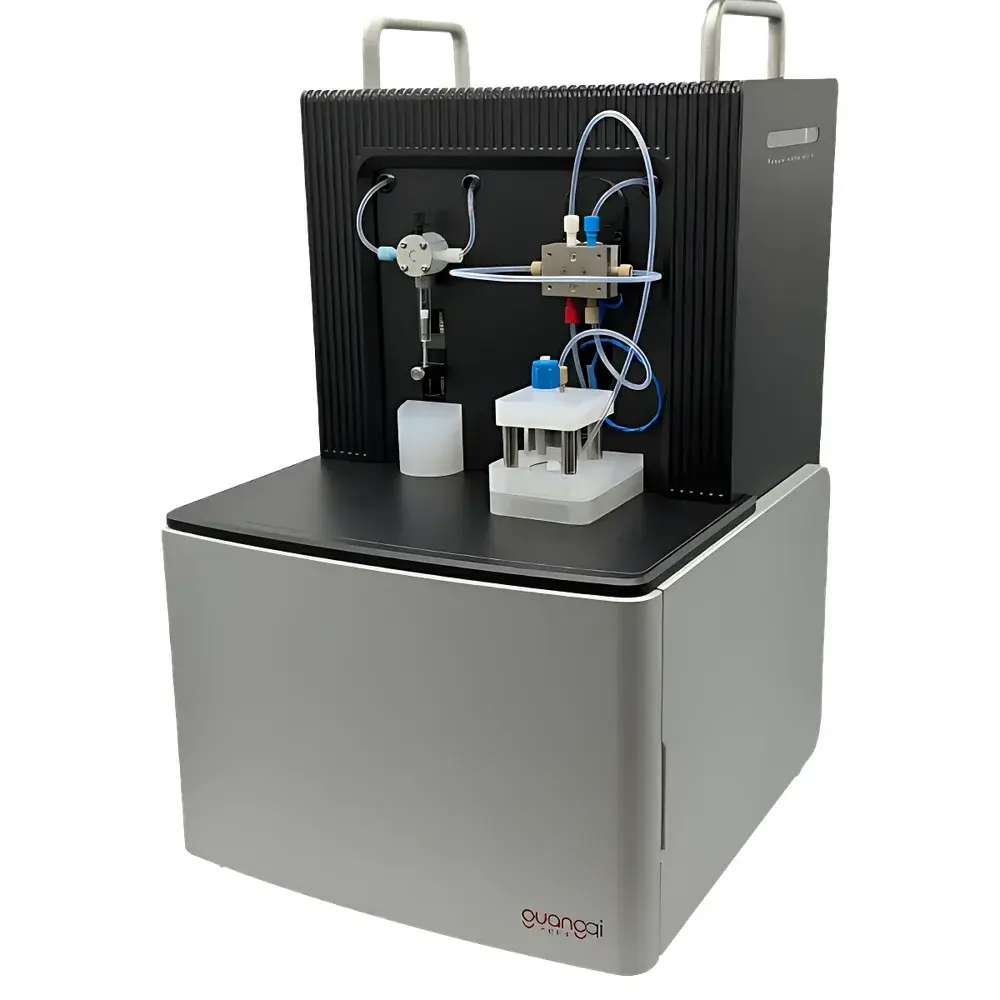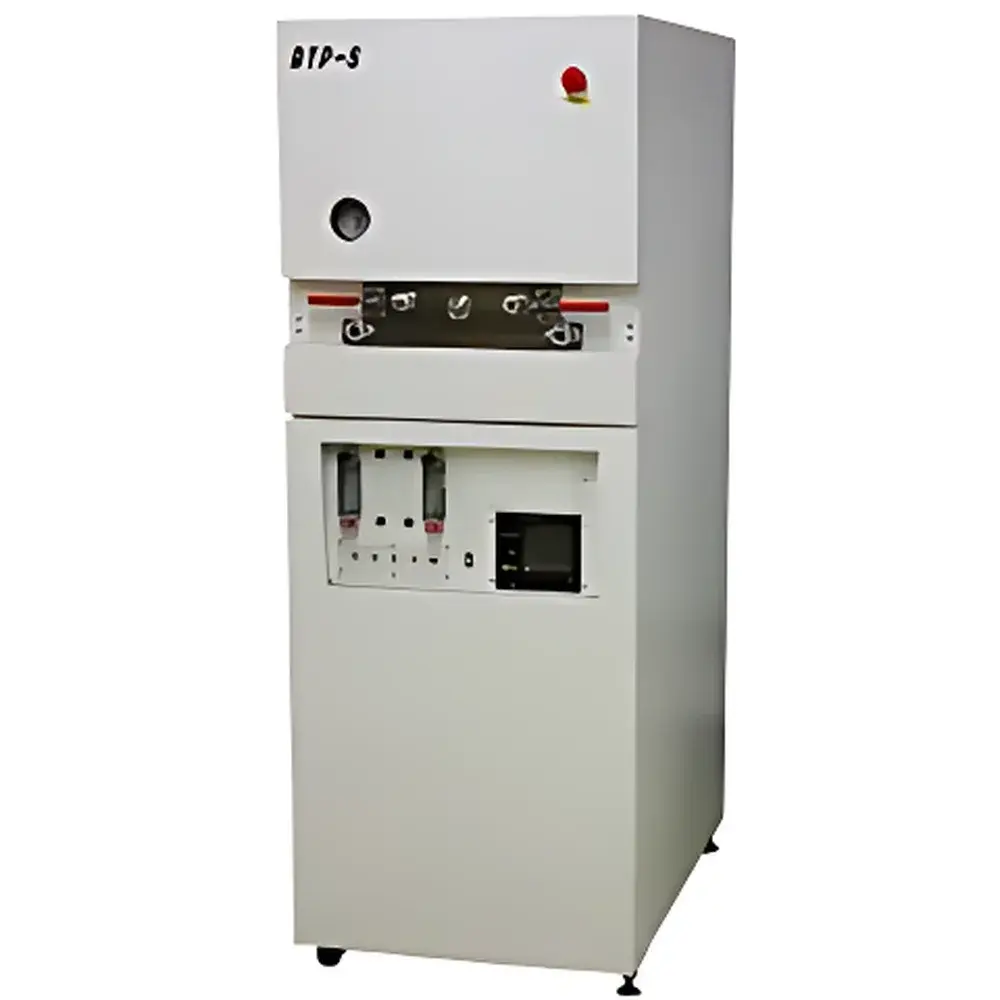
Advance Riko RTP-6 Economical Rapid Thermal Processing Furnace
| Brand | ADVANCE RIKO |
|---|---|
| Origin | Japan |
| Model | RTP-6 |
| Instrument Type | Standard Vacuum Rapid Thermal Annealing Furnace |
| Sample Size | 6-inch wafer |
| Temperature Range | RT to 1000 °C |
| Maximum Ramp Rate | 80 °C/s |
| Annealing Temperature Accuracy | ±0.5 °C |
| Temperature Uniformity | ±10 °C |
| Cooling | Water-cooled chamber (forced convection cooling enabled via optional chiller) |
| Heating Zones | 9 independently controlled zones |
| Atmosphere Control | Vacuum + continuous gas flow (N₂, O₂, forming gas, Ar, etc.) |
| Optional Accessories | Quartz shielding plate, pyrometer (for non-contact temperature monitoring), vacuum pump, recirculating water chiller |
Overview
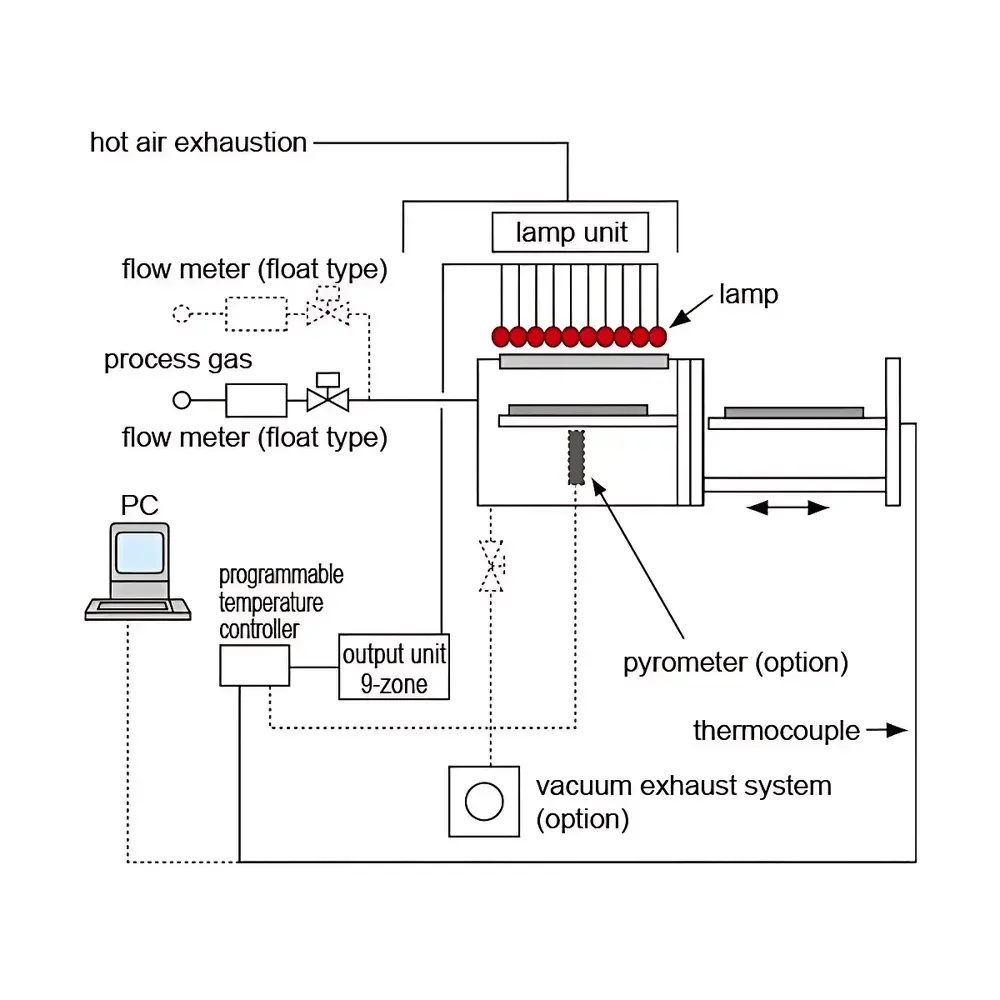
The Advance Riko RTP-6 is an economical rapid thermal processing (RTP) furnace engineered for precision thermal treatment of semiconductor wafers up to 150 mm (6-inch) diameter. Based on high-intensity infrared (IR) heating with parabolic gold-coated reflectors, the system delivers exceptional spatial and temporal thermal control—critical for advanced semiconductor fabrication processes where thermal budget minimization directly impacts junction depth, dopant activation, and interfacial integrity. Unlike conventional tube or box furnaces, the RTP-6 operates on a rapid thermal annealing principle: localized, transient heating enables sub-second to multi-second dwell times at peak temperature, minimizing unwanted diffusion while maximizing activation efficiency. Its architecture supports both vacuum and dynamically purged ambient atmospheres, making it suitable for oxidation, silicidation, alloying, and crystallization steps under tightly controlled chemical environments.
Key Features
- Nine independently programmable IR heating zones ensure radial and axial temperature uniformity across 6-inch wafers—compensating for edge effects and enabling process scalability from R&D to pilot-line validation.
- Parabolic gold reflector assembly maximizes radiant energy coupling efficiency and enhances thermal homogeneity; reflector geometry is optimized for Lambertian emission distribution and minimal shadowing.
- Water-cooled stainless-steel chamber enables rapid quenching (<5 °C/s typical cooling rate with optional chiller), supporting thermal cycle reproducibility and preventing thermal stress-induced wafer warpage.
- Integrated vacuum manifold with pressure regulation (10⁻³ to 760 Torr) and mass-flow-controlled gas delivery (up to 3 independent lines) allows seamless transition between inert, oxidizing, or reducing atmospheres during ramp-hold-cool sequences.
- Full digital temperature profiling via programmable controller with real-time data logging (0.1 s resolution); external trigger I/O supports synchronization with metrology tools (e.g., in-situ ellipsometers or sheet resistance mappers).
- Comprehensive safety architecture includes overtemperature cut-off, chamber pressure interlock, coolant flow monitoring, door-open emergency shutdown, and redundant thermocouple validation.
Sample Compatibility & Compliance
The RTP-6 accommodates standard 6-inch silicon, SiC, GaAs, and SOI wafers—flat or notch-oriented—with optional quartz shielding plates to mitigate particle generation and metal contamination. It meets fundamental requirements for cleanroom-compatible operation (Class 1000 or better when installed with HEPA-filtered exhaust). While not certified as GMP-compliant out-of-the-box, its deterministic temperature control, audit-ready event logging, and configurable user access levels align with GLP and pre-FDA 21 CFR Part 11 readiness frameworks when deployed with validated software configurations. Process recipes can be archived with metadata (operator ID, timestamp, gas flows, ramp rates), supporting traceability per ISO 9001:2015 and SEMI S2/S8 safety guidelines.
Software & Data Management
Control and monitoring are executed via Windows-based software with intuitive graphical interface for multi-step thermal profile definition (ramp, hold, cool, repeat). All temperature readings—including those from optional dual-wavelength pyrometer—are time-stamped and exported in CSV or HDF5 format. The system supports OPC UA connectivity for integration into factory automation platforms (SECS/GEM, CIM). Audit trails record parameter changes, manual overrides, and alarm events with immutable timestamps—essential for internal quality audits and regulatory submissions. Firmware updates are delivered via secure USB or network interface with SHA-256 signature verification.
Applications
- Activation annealing post-ion implantation (e.g., B, P, As in Si, Ge, or III-V substrates)
- Densification and stoichiometry correction of ALD/CVD-deposited gate oxides (SiO₂, HfO₂, Al₂O₃)
- Formation of low-resistance NiSi, CoSi₂, or TiSi₂ silicide contacts via self-aligned process windows
- Crystallization of ferroelectric thin films (PZT, SBT, BiFeO₃) for FeRAM and MEMS applications
- Ohmic contact alloying for GaN HEMTs and SiC power devices
- Thermal treatment of LED epiwafers (InGaN/GaN MQWs) to reduce non-radiative recombination centers
- Ultra-shallow junction (USJ) engineering through millisecond-scale spike anneals
- Post-deposition annealing of high-k dielectrics to suppress interfacial layer growth
FAQ
What is the maximum recommended dwell time at 1000 °C?
Typical process windows range from 1 s to 120 s depending on thermal mass and desired diffusion depth; extended holds >300 s are discouraged without quartz shielding and active chamber purge optimization.
Can the RTP-6 be integrated into an automated cluster tool environment?
Yes—via SECS/GEM-compliant RS-232/RS-485 or Ethernet/IP interfaces; hardware handshaking signals (start/complete/error) are provided on the rear I/O panel.
Is calibration traceable to NIST standards?
Temperature calibration uses reference thermocouples calibrated against NIST-traceable fixed-point cells (e.g., Al, Zn, Sn); full system validation reports are available upon request.
Does the system support multi-zone ramp decoupling for gradient thermal processing?
Yes—the nine-zone controller permits independent ramp rate and setpoint programming per zone, enabling controlled thermal gradients for stress engineering or graded doping profiles.
What maintenance intervals are recommended for long-term stability?
Gold reflector inspection every 200 cycles; quartz shielding replacement every 500–1000 cycles; water chiller filter replacement quarterly; annual full thermocouple and gas flow calibration.