
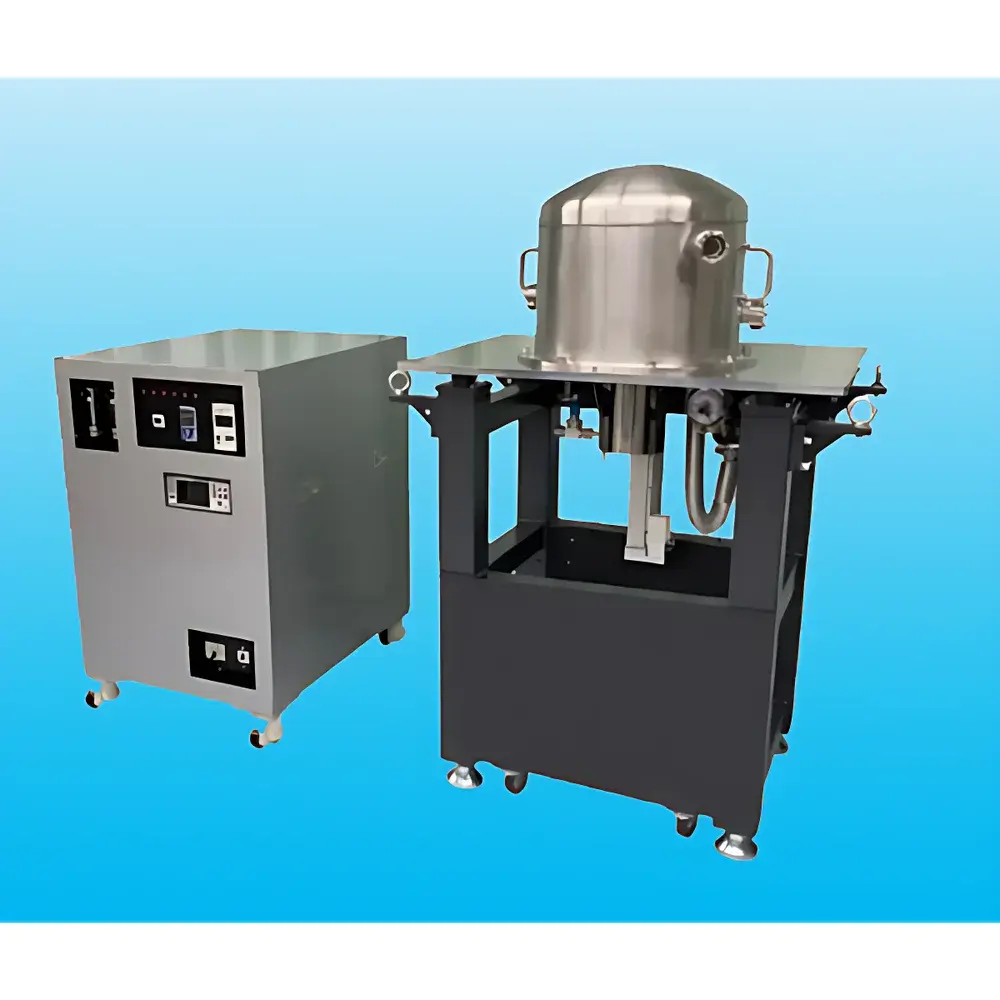
ADVANCE RIKO Super LIX-R Non-Contact Laser Dilatometer
| Brand | ADVANCE RIKO |
|---|---|
| Origin | Japan |
| Manufacturer Type | Authorized Distributor |
| Origin Category | Imported |
| Model | Super LIX-R |
| Price | Upon Request |
| Temperature Range (°C) | 0–50 |
| Heating/Cooling Rate (°C/min) | 0.01–1.5 |
| Temperature Accuracy (°C) | ±0.1 |
| Sample Diameter (mm) | Φ5 ±0.5 |
| Sample Length (mm) | 12–20 |
| Measurement Range (µm) | 20 |
| Resolution (nm) | <0.2 |
| CTE Detection Limit | 5 × 10⁻⁹ K⁻¹ |
| Thermal Stability | <±0.001 °C/min at 0.1 °C/min ramp |
| Atmosphere | Low-pressure He (100 Pa) |
| Sensor | PT-100 Platinum RTD (JIS C 1604-1997 Class A) |
| Laser | He-Ne, 632.8 nm, 5 mW (IEC 60825-1 Class 3B) |
Overview
The ADVANCE RIKO Super LIX-R is a high-precision, non-contact laser dilatometer engineered for absolute thermal expansion measurement of ultra-low-expansion materials. It employs a dual-beam Michelson interferometer configuration with a stabilized linearly polarized He-Ne laser (632.8 nm) to detect nanoscale dimensional changes induced by controlled thermal excursions. Unlike mechanical push-rod dilatometers—whose accuracy is compromised by thermal drift in fixtures, probe compliance, and contact-induced stress—the Super LIX-R eliminates physical contact entirely. Its optical displacement measurement is traceable to the laser wavelength, enabling absolute, drift-free quantification of length change ΔL/L₀ with sub-nanometer resolution. The system complies with JIS R 3251:1995 for coefficient of thermal expansion (CTE) determination of low-expansion glasses and is validated for materials with CTE values as low as 5 × 10⁻⁹ K⁻¹—such as Zerodur®, ULE® quartz, silicon carbide ceramics, and fused silica optics used in lithography steppers, space telescopes, and metrology-grade substrates.
Key Features
- Non-contact, absolute displacement measurement via dual-path Michelson interferometry—no calibration drift from mechanical hysteresis or thermal expansion of fixtures.
- Vibration-damped optical bench with patented anti-vibration mechanisms (Patent Applications JP2016-058190/058191/058192), enabling stable operation alongside high-resolution analytical balances (0.01 mg) in standard lab environments.
- Optimized optical train with stray-light suppression and edge-enhanced signal processing—maximizing contrast and SNR of interference fringes captured by high-frame-rate CMOS image sensors.
- Insulated cryo-thermostatic chamber with precision PID-controlled low-pressure helium atmosphere (100 Pa), ensuring uniform sample temperature distribution and minimizing convective heat transfer.
- Automated sample alignment jig with manual insertion—designed for reproducible positioning of cylindrical samples (Φ5 ±0.5 mm × 12–20 mm) without operator training; end surfaces require spherical radius (SR) finishing and Ra < 0.8 nm surface roughness.
- Temperature control stability of ±0.001 °C/min at 0.1 °C/min ramp rate, supported by JIS Class A PT-100 sensors (±0.15 °C at 0 °C) and high-accuracy circulating chiller integration.
Sample Compatibility & Compliance
The Super LIX-R is optimized for solid, opaque, or reflective cylindrical specimens conforming to JIS R 3251 geometry requirements: standard dimensions Φ5 mm × 20 mm, with spherically radiused ends to ensure consistent beam reflection and minimize diffraction artifacts. Surface finish must meet Ra ≤ 0.8 nm to maintain fringe coherence. Compatible material classes include fused silica, low-expansion glass-ceramics (e.g., Schott Zerodur), single-crystal silicon, SiC, and Invar alloys. The system operates under inert, low-pressure helium to suppress oxidation and reduce thermal boundary resistance—critical for achieving repeatable CTE data below 10⁻⁸ K⁻¹. All thermal protocols adhere to ASTM E228, ISO 11359-1, and JIS R 3251 standards. Data acquisition meets GLP/GMP documentation requirements, with full audit trail capability for FDA 21 CFR Part 11–compliant software configurations.
Software & Data Management
Control and analysis are performed via dedicated Windows-based software supporting real-time fringe tracking, automatic CTE calculation (α = (1/L₀)(dL/dT)), and multi-point thermal history logging. Raw interferogram images, temperature vs. time curves, and displacement vs. temperature plots are stored in HDF5 format with embedded metadata (instrument ID, calibration timestamp, operator, atmospheric pressure, laser power). Export options include CSV, MATLAB .mat, and PDF reports compliant with ISO/IEC 17025 reporting guidelines. Software supports batch processing of sequential runs, statistical evaluation of repeatability (3σ deviation across ≥5 replicates), and uncertainty propagation per GUM (JCGM 100:2008). Optional modules enable integration with LIMS and automated report generation aligned with internal QA/QC workflows.
Applications
- Validation of zero-CTE substrates for EUV lithography mask blanks and mirror assemblies in astronomical instrumentation.
- Qualification of thermal stability in optical cavity spacers for gravitational wave detectors (e.g., LIGO-type Fabry–Pérot resonators).
- Development and certification of low-expansion composites for semiconductor wafer handling stages and metrology frames.
- Interlaboratory comparison studies of ultra-stable reference materials under ISO/REMCO proficiency testing frameworks.
- Fundamental thermomechanical characterization of amorphous metals and nanostructured ceramics where conventional dilatometers lack sufficient sensitivity.
FAQ
What is the minimum measurable CTE value supported by the Super LIX-R?
The system is validated for CTE measurements down to 5 × 10⁻⁹ K⁻¹ on standard low-expansion reference materials under JIS R 3251 conditions.
Is helium atmosphere mandatory for all measurements?
Yes—low-pressure helium (100 Pa) is required to eliminate convection-induced thermal gradients and ensure uniform sample heating; alternative atmospheres are not supported.
Can the system measure non-cylindrical or irregularly shaped samples?
No—optical alignment and interferometric signal integrity require rotationally symmetric, specularly reflective cylindrical geometry with SR-finished ends.
Does the software support automated uncertainty estimation per ISO/IEC 17025?
Yes—uncertainty budgets include contributions from temperature sensor accuracy, laser wavelength stability, image sensor noise, and sample geometry tolerances, all calculated in accordance with GUM principles.
What maintenance is required for long-term interferometer stability?
Annual recalibration of laser wavelength and PT-100 sensor traceability to NMI standards (e.g., NIST or NMIJ) is recommended; optical alignment checks every 6 months using built-in reference interferograms.



