
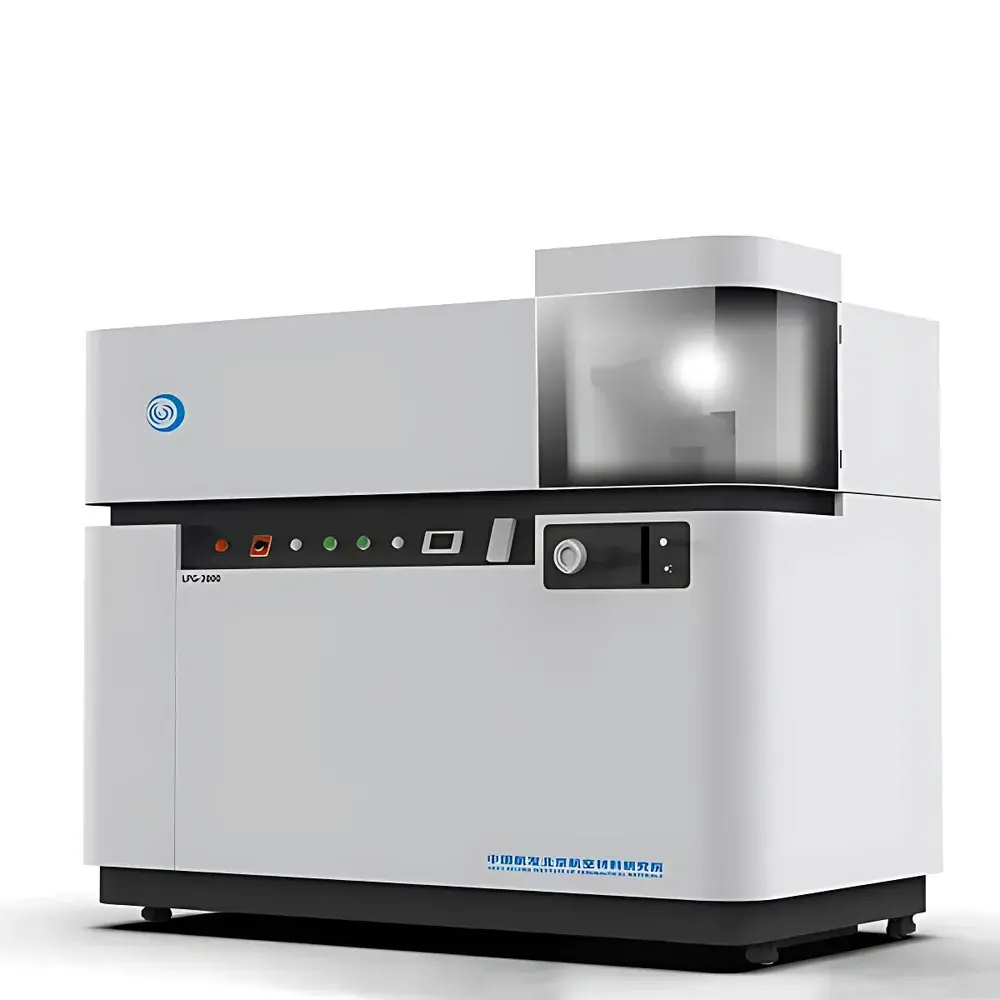
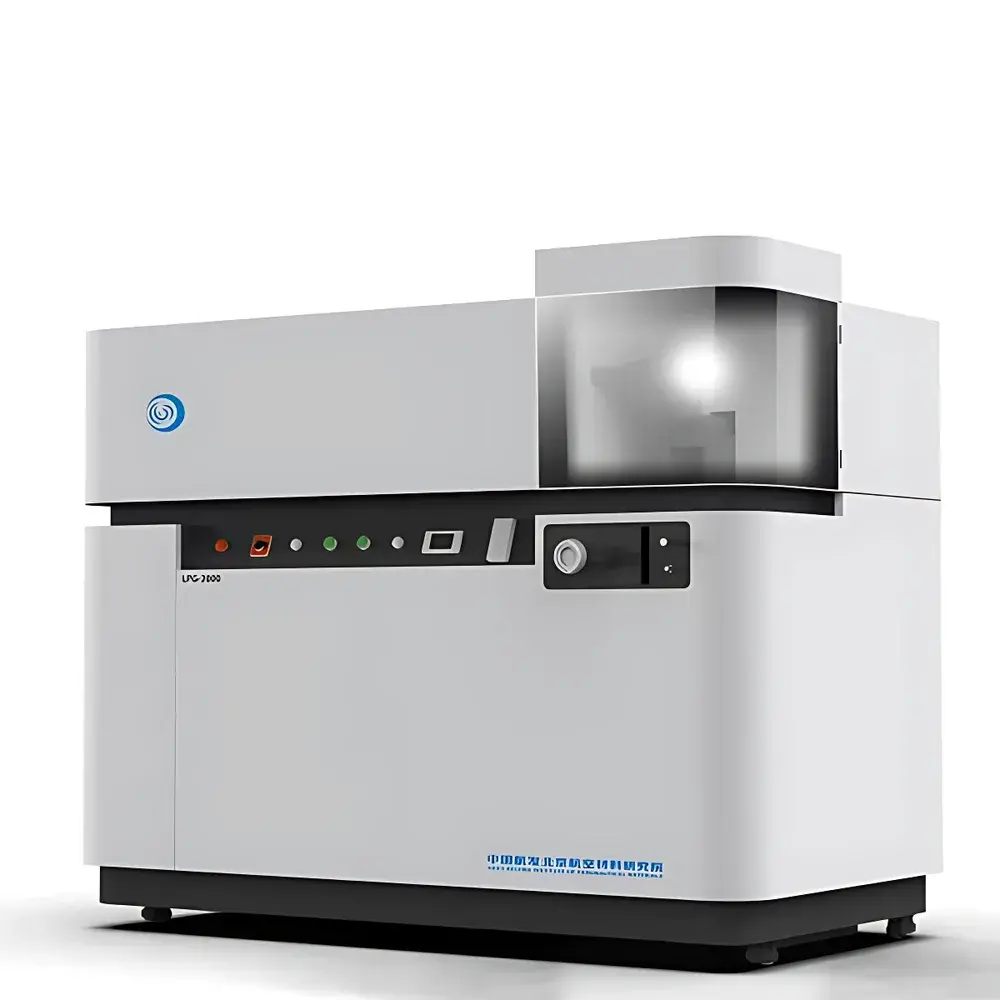
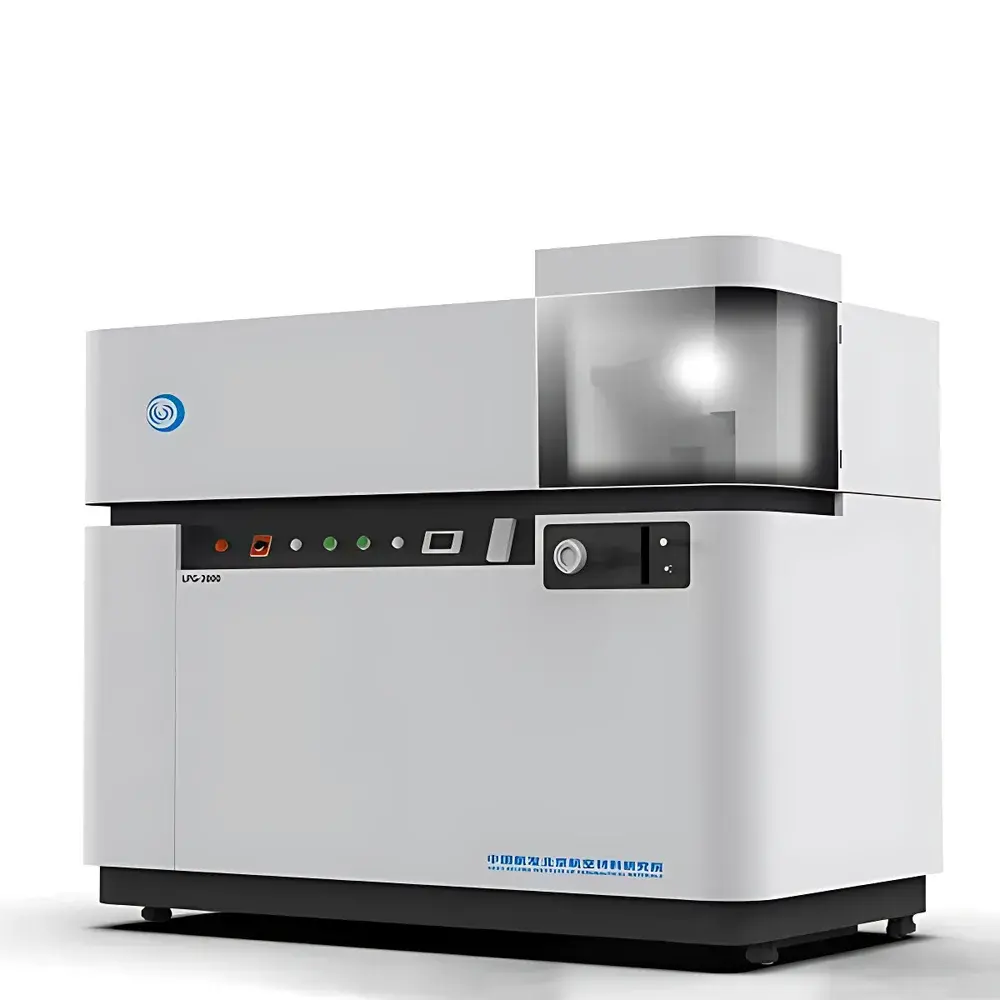
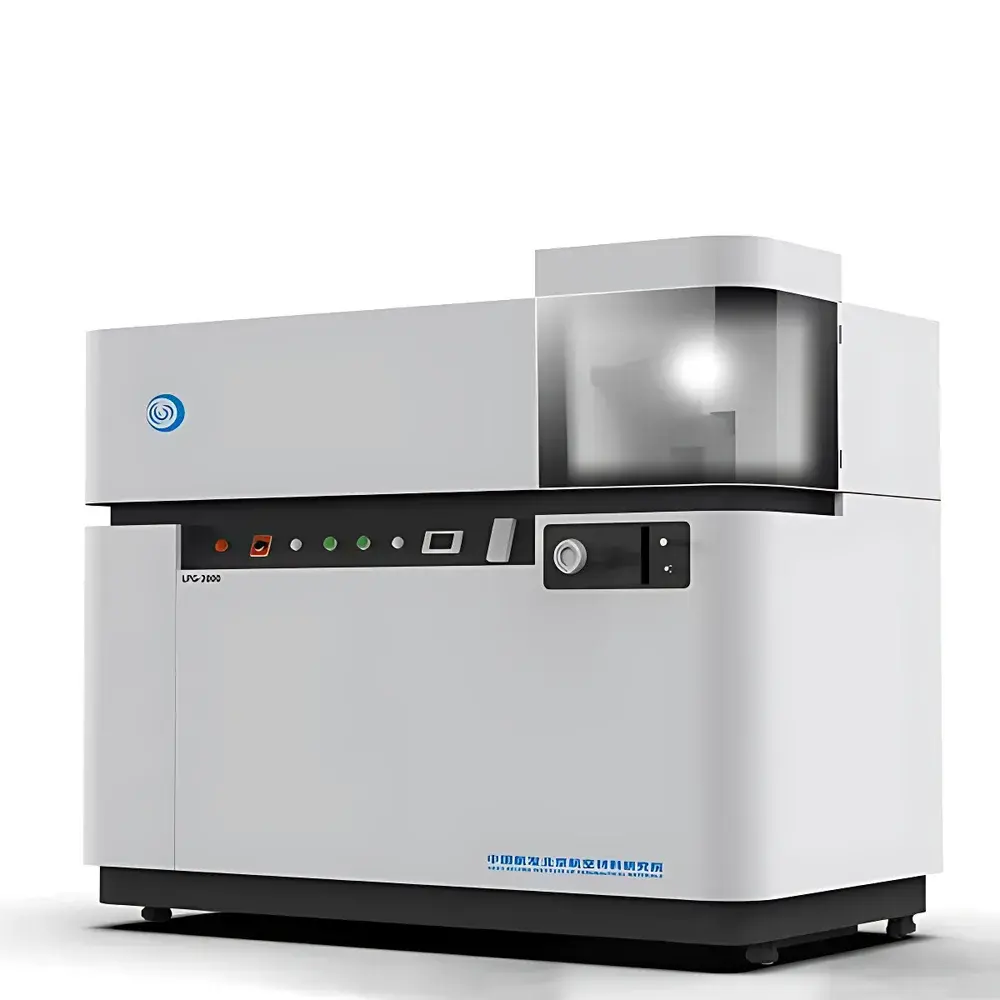
AECC LPG-2000 Vacuum-Type Hollow Cathode Glow Discharge Optical Emission Spectrometer
| Brand | AECC (Aviation Engine Corporation of China) |
|---|---|
| Origin | Beijing, China |
| Model | LPG-2000 |
| Light Source | DC-pulsed hollow cathode discharge (low-pressure) |
| Optical Chamber | Evacuated vacuum chamber |
| Wavelength Range | 170–430 nm |
| Grating | Holographic concave grating, focal length 750 mm, 2400 grooves/mm |
| Spectral Resolution | < 0.024 nm |
| Detector | Hamamatsu high-sensitivity, low-noise photomultiplier tube (PMT) |
| Elemental Coverage | Ag, As, Au, B, Ba, Be, Bi, Ca, Cd, Ce, Cu, Ga, Ge, Hg, In, La, Mg, Mn, P, Pb, Pd, Pt, Rh, Ru, Sb, Se, Si, Sn, Sr, Te, Tl, Y, Zn, Zr (including sub-190 nm lines for B and P) |
| Detection Limits | 1×10⁻⁵% to 1×10⁻⁷% (e.g., Bi ≤ 0.00001%, As ≤ 0.0005%, P ≤ 0.001%, B ≤ 0.001%) |
| Precision | RSD < 20% for 10 replicate excitations on homogeneous samples |
| Temperature Control | Thermostabilized optical chamber, ±0.1 °C stability |
Overview
The AECC LPG-2000 is a vacuum-type hollow cathode glow discharge optical emission spectrometer (GD-OES) engineered for direct solid sampling and quantitative multi-element analysis of conductive and semi-conductive materials. It operates on the principle of low-pressure glow discharge plasma generation—where a DC-pulsed hollow cathode source ionizes argon gas to sputter atoms from the sample surface, followed by excitation and subsequent atomic emission in the UV–visible range (170–430 nm). The evacuated optical chamber eliminates atmospheric absorption—particularly critical for vacuum-UV spectral lines below 190 nm—enabling reliable detection of light elements such as boron (B) and phosphorus (P), which are otherwise inaccessible in air-path instruments. Designed for metallurgical laboratories, aerospace material QA/QC facilities, and advanced materials R&D centers, the LPG-2000 delivers trace-level sensitivity and robust reproducibility for routine bulk and near-surface compositional analysis of high-performance alloys, steels, non-ferrous metals, ceramics, and geological matrices.
Key Features
- Vacuum-sealed optical bench with active thermostabilization (±0.1 °C), minimizing thermal drift and ensuring long-term wavelength calibration integrity
- DC-pulsed hollow cathode source with dynamic low-pressure argon flow control, enabling stable plasma operation and reduced electrode contamination
- Automated optical alignment system for rapid light path optimization without manual intervention
- Self-cleaning electrode pre-treatment sequence prior to each analysis, reducing memory effects and improving inter-sample consistency
- Auto-scanning capability for full spectral acquisition across the 170–430 nm range, supporting both qualitative survey and quantitative line selection
- Real-time dual-channel display of emission intensity and discharge current, facilitating immediate plasma diagnostics and process monitoring
- Integrated current regulation and emergency stop circuitry compliant with IEC 61000-6-2/6-4 electromagnetic compatibility standards
Sample Compatibility & Compliance
The LPG-2000 accepts solid, flat, electrically conductive specimens—including disk-shaped, rod-shaped, or irregular metal fragments—without requiring dissolution or pelletization. It supports direct analysis of nickel-based superalloys, titanium alloys, stainless steels, aluminum and copper alloys, as well as refractory ceramics and silicate-rich ores. Sample mounting uses standardized pin-contact holders compatible with ISO 11577:2018 (Glow Discharge Optical Emission Spectrometry — General Requirements). Instrument firmware and operational protocols align with GLP documentation requirements, including audit-trail-enabled parameter logging, user-access-controlled method storage, and timestamped raw spectral data archiving. While not FDA 21 CFR Part 11 certified out-of-the-box, the system architecture supports future validation packages for regulated environments upon customer-specific configuration.
Software & Data Management
The embedded control software provides method-driven workflow automation—from vacuum pump-down and plasma ignition to spectral acquisition, peak integration, and calibration curve application. Quantitative analysis employs internal standardization (e.g., using Fe or Cu matrix lines) and matrix-matched calibration standards traceable to NIST SRMs where applicable. Spectral libraries include validated emission lines for all 33 target elements, with configurable background correction algorithms (e.g., polynomial baseline fitting) and interference correction tables for overlapping transitions (e.g., Fe II 238.204 nm vs. Ni I 238.202 nm). Raw data export is supported in ASCII (.csv) and vendor-neutral .spc formats; spectral metadata includes instrument parameters, environmental conditions, and operator ID. Data retention complies with ISO/IEC 17025:2017 clause 7.5.2 for record preservation.
Applications
- Trace impurity profiling in turbine disk and blade alloys for aviation engine certification (per AMS 2269 and ASTM E1019)
- Verification of elemental homogeneity in additively manufactured metal parts (e.g., Ti-6Al-4V, Inconel 718)
- Quantification of residual dopants (B, P, Sb) in high-purity silicon carbide substrates used in power electronics
- Compositional screening of scrap metal streams for recycling quality control
- Depth-resolved analysis of coated systems (e.g., Al–Si diffusion barriers on steel) via controlled sputtering rate calibration
- Geochemical fingerprinting of rare-earth-bearing minerals using multi-element ratios (e.g., La/Yb, Ce/Pb)
FAQ
What vacuum level does the optical chamber maintain during operation?
The chamber achieves and sustains a base pressure ≤5×10⁻³ Pa during spectral acquisition, maintained by a dual-stage turbomolecular pumping system with integrated pressure feedback control.
Can the LPG-2000 analyze non-conductive samples such as oxides or polymers?
Direct analysis requires electrical conductivity. Non-conductors must be embedded in a conductive matrix (e.g., graphite powder pressing) or coated with a thin (~50 nm) conductive layer (e.g., Au or C) under inert atmosphere to prevent surface oxidation.
Is spectral recalibration required between sample types?
No. The auto-scanning and real-time wavelength reference system (using Hg/Ar internal lamp lines) ensures continuous calibration integrity across heterogeneous sample sets without manual intervention.
How is detection limit validation performed per ISO 11885?
Detection limits are determined as 3σ of 10 blank measurements (high-purity reference material), with uncertainty propagation accounting for shot noise, detector dark current, and background variability—fully documented in the instrument’s Type Test Report.
Does the system support remote diagnostics or preventive maintenance alerts?
Yes. Embedded CAN bus telemetry monitors vacuum integrity, PMT voltage stability, grating motor position, and cooling fluid temperature, triggering configurable email/SNMP alerts for scheduled service intervals or anomalous operating conditions.






