
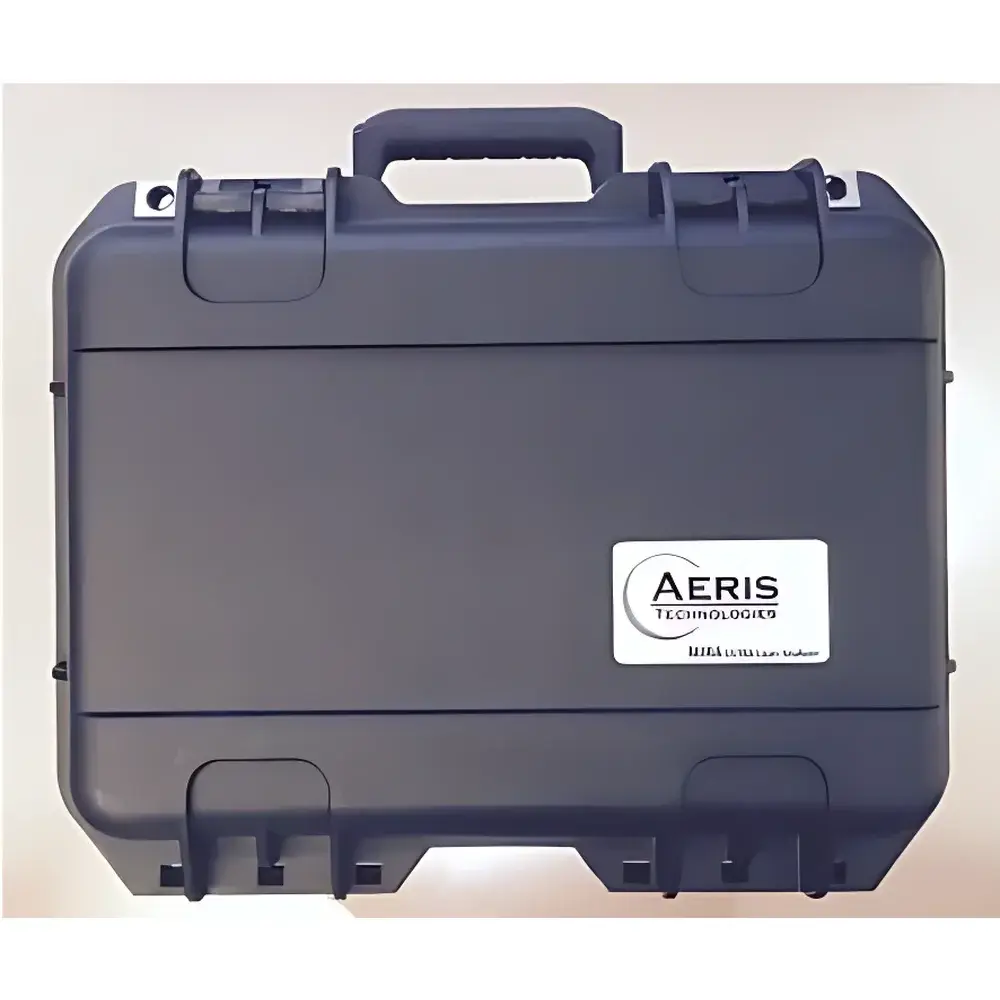
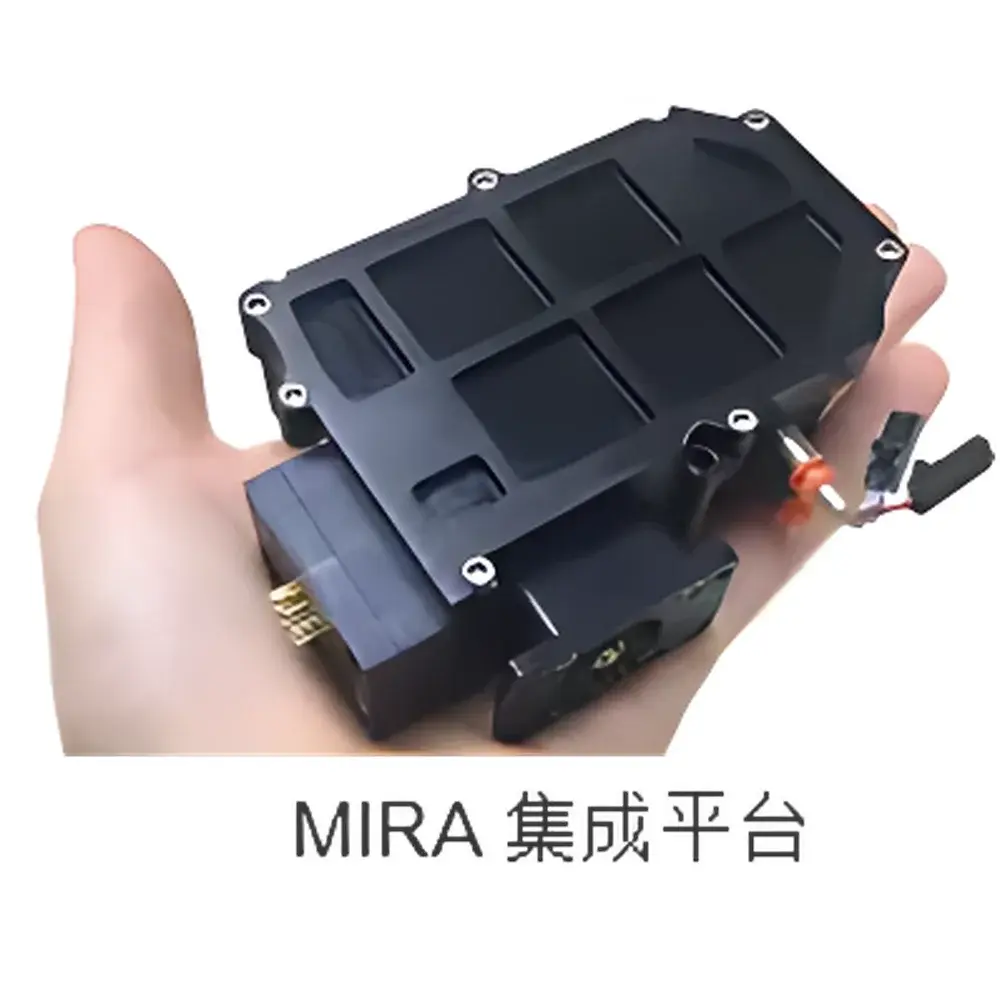
Aeris Technologies MIRA Eto Portable Ethylene Oxide (EtO) Analyzer
| Brand | Aeris Technologies |
|---|---|
| Origin | USA |
| Manufacturer Status | Authorized Distributor |
| Origin Category | Imported |
| Model | MIRA Eto |
| Pricing | Upon Request |
Overview
The Aeris Technologies MIRA Eto Portable Ethylene Oxide (EtO) Analyzer is a field-deployable, laboratory-grade gas analyzer engineered for ultra-trace detection of ethylene oxide in ambient air, workplace environments, and emission sources. It employs tunable mid-infrared (MIR) laser absorption spectroscopy—leveraging EtO’s strong, spectrally distinct fundamental vibrational absorption bands near 9.5 µm—to achieve sub-part-per-trillion (sub-ppt) sensitivity with high specificity and minimal cross-interference. Unlike near-infrared (NIR) or electrochemical sensors, MIR absorption provides >1000× higher absorption cross-sections for EtO, enabling robust quantification across a dynamic range from 40 ppt to 100 ppm without dilution or pre-concentration. The optical measurement cell is mirrorless, monolithic, and passively stabilized, integrating a multi-pass folded path within a compact 60 mL volume to deliver an effective optical path length of 15 meters. This architecture ensures rapid response (<1 s), low power consumption, and immunity to mechanical misalignment—critical for mobile and remote deployments.
Key Features
- Sub-ppt detection limit (500 ppt/s noise-equivalent concentration) with <1 ppb drift over temperature (10–40 °C) and humidity (10–95% RH, non-condensing)
- Simultaneous, co-located measurement of EtO and H2O vapor using a single MIR laser source and dual-wavelength detection scheme
- Onboard differential zeroing: two independently programmable sample inlets enable automated periodic zero-air referencing or synchronous differential sampling to suppress baseline drift
- 1 Hz standard data output (up to 10 Hz via RS-232); 1-minute warm-up time to operational stability; <30-second reporting latency for ppb-level concentration values
- Integrated temperature-controlled measurement cell (Ultra model: 42 °C ±1 mK) prevents condensation and thermal-induced spectral broadening
- True dry-mole-fraction calculation: real-time water correction eliminates need for external drying or post-processing compensation
- Multi-interface connectivity: Wi-Fi, USB 2.0, RS-232 (up to 10 Hz), and optional analog voltage output (0–5 V or 4–20 mA)
- Embedded 32 GB industrial-grade microSD storage (expandable); supports timestamped, GPS-tagged .kml export for georeferenced mapping in Google Earth
Sample Compatibility & Compliance
The MIRA Eto is designed for direct analysis of ambient air, stack effluent, indoor air, and sterilization chamber purge streams without sample conditioning (e.g., no chemical scrubbers, cryo-traps, or permeation tubes required). Its solid-state optical architecture meets ISO 16000-34 (indoor air—determination of EtO), ASTM D6196 (selection of sorbents), and aligns with U.S. EPA Method TO-15 and EU EN 14662 for volatile organic compound monitoring. While not certified as a Class I, Division 1 device, its ingress protection (IP54-rated enclosure for Ultra/Strato variants) and intrinsic safety-compatible power inputs support use in regulated industrial hygiene and environmental compliance settings. Data integrity conforms to GLP/GMP principles: all measurements include embedded audit trail metadata (sensor temperature, laser current, pressure, humidity, zero-reference status), and firmware supports configurable data logging intervals and secure file export for regulatory submission.
Software & Data Management
The MIRA Eto operates with Aeris’ proprietary MIRA Control Suite—a cross-platform application supporting real-time visualization, remote configuration, and automated calibration validation. Raw spectra and processed concentration time series are stored in open-format CSV and HDF5 files, ensuring interoperability with MATLAB, Python (Pandas/NumPy), and LIMS systems. Firmware includes built-in Allan variance analysis for long-term stability assessment and drift diagnostics. For continuous monitoring networks, the analyzer supports MQTT and Modbus TCP protocols via optional Ethernet bridge. All data exports include NIST-traceable timestamps synchronized to internal RTC (±1 ppm accuracy) or external GPS PPS signal. The system fully complies with FDA 21 CFR Part 11 requirements when deployed with user access controls, electronic signatures, and immutable audit logs enabled.
Applications
- Medical device sterilization facility emissions monitoring (fenceline, stack, and indoor air)
- Occupational exposure assessment per OSHA PEL (1 ppm TWA) and ACGIH TLV (0.1 ppm STEL)
- Environmental site investigations at former EtO production or formulation sites
- Unmanned aerial vehicle (UAV)-based plume mapping (MIRA Strato variant) for rapid spatial profiling
- Mobile source testing (e.g., fleet maintenance bays, transport corridors)
- Validation and verification of abatement technologies (e.g., catalytic oxidizers, carbon adsorption units)
- Reference-grade intercomparison studies against DNPH-HPLC and GC-MS methods
FAQ
What is the minimum detectable concentration for EtO, and how is it verified?
The instrument achieves a noise-equivalent sensitivity of 500 ppt per second (1σ) under optimal conditions. Detection limits are validated per ISO 11843-7 using repeated zero-air measurements and confirmed during factory calibration with NIST-traceable EtO standards.
Does the analyzer require daily calibration or consumables?
No routine calibration is required. The dual-inlet differential zeroing architecture enables automatic drift correction; most users perform verification checks every 7–30 days using certified span gas. No filters, reagents, or disposable components are needed.
Can the MIRA Eto operate unattended for extended periods?
Yes. With external power (12–15 V DC or 110–220 V AC), the Ultra and Strato models support continuous operation for >30 days. Internal battery options provide 5–6 h (Pico), 90 min (Strato), or up to 24 h (Ultra with external battery pack).
Is the system compatible with third-party data acquisition platforms?
Yes. ASCII-based serial protocol (RS-232) and Modbus TCP allow seamless integration into SCADA, PI System, or custom LabVIEW/Python DAQ environments. All communication protocols are documented in the publicly available MIRA Developer Manual.
How does water vapor interference affect measurement accuracy?
H2O is measured concurrently at the same optical path using a dedicated spectral channel. The software applies first-principles radiative transfer modeling to compute dry-mole-fraction EtO concentration in real time—eliminating reliance on empirical correction factors or external dew-point sensors.
Related Products







