
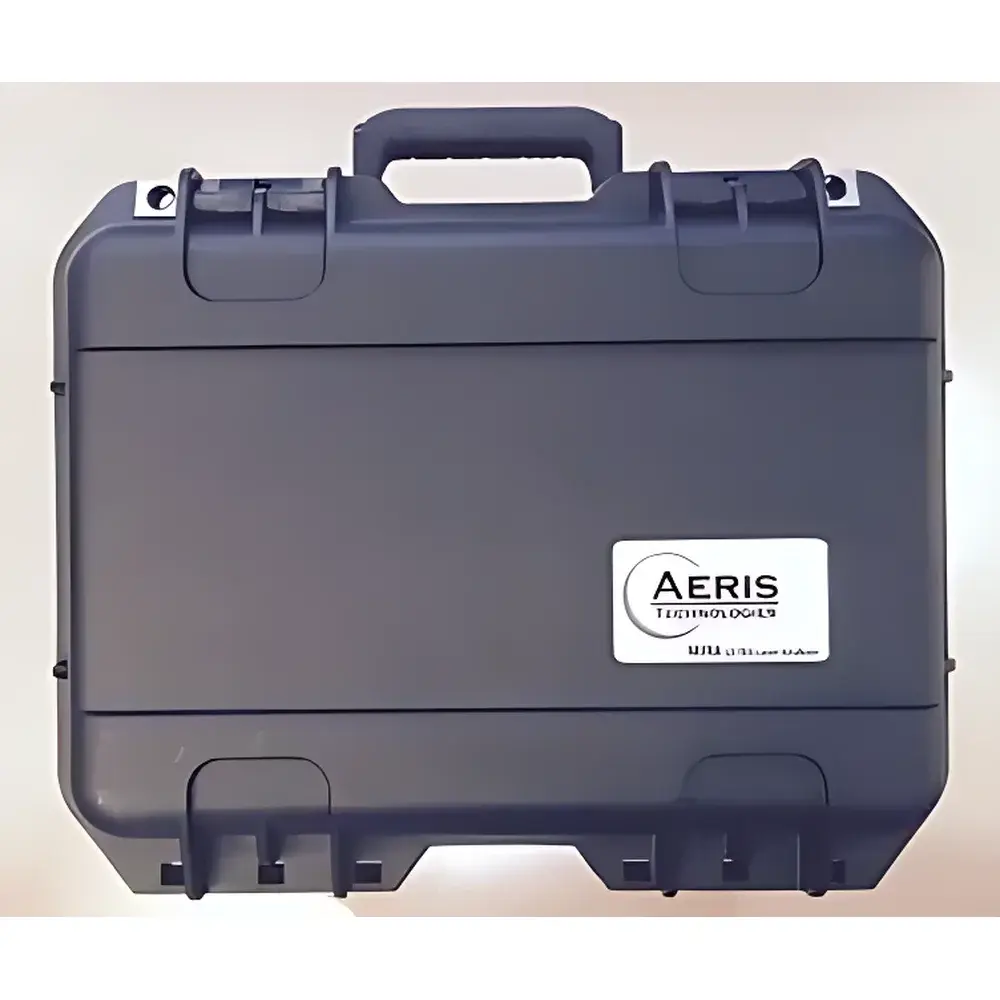
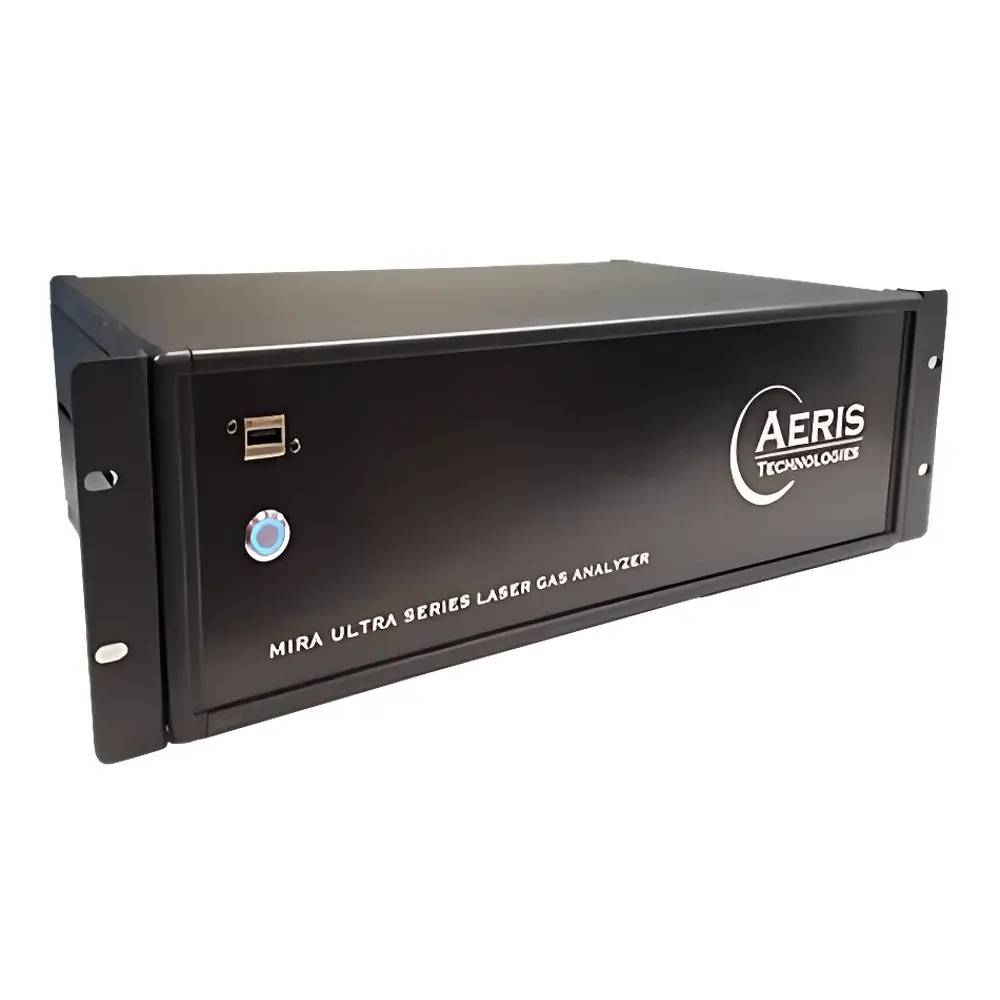
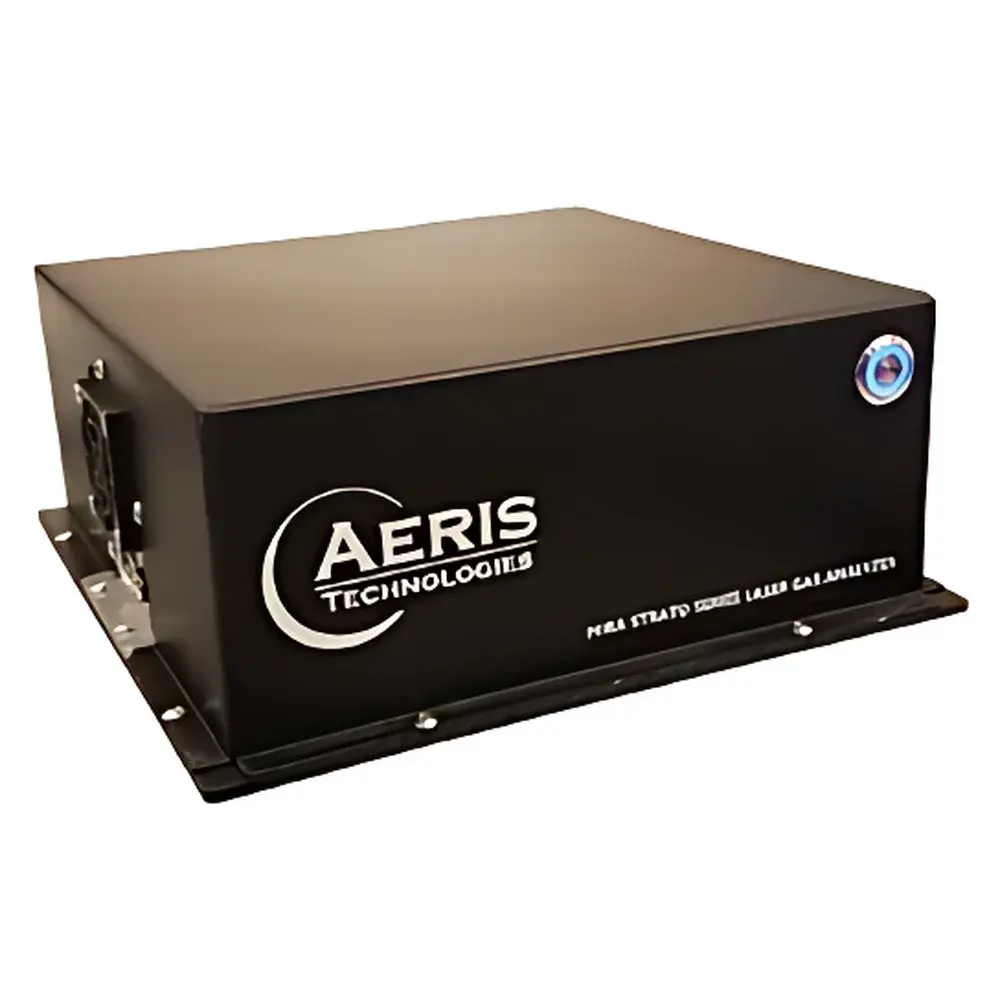
Aeris Technologies MIRA N2O/CO₂ Analyzer
| Brand | Aeris Technologies |
|---|---|
| Origin | USA |
| Manufacturer Type | Authorized Distributor |
| Origin Category | Imported |
| Model | MIRA N2O CO₂ |
| Instrument Type | Portable |
| Target Gases | N₂O, CO₂, H₂O (simultaneous) |
| Repeatability | 1 ppb |
| Resolution | 200 ppt/s (N₂O), 200 ppb/s (CO₂) |
| Response Time | 1 s |
| Zero Drift | <1 ppb (N₂O), <1 ppm (CO₂) |
| Operating Temperature | 10–40 °C |
| Relative Humidity | 10–95% RH (non-condensing) |
| Measurement Range | N₂O: <2 ppb – 500 ppm |
| CO₂ | <10 ppm – 10% |
| Data Output Rate | 1–10 Hz |
| Power Consumption | 15–25 W (model-dependent) |
| Dimensions & Weight | Model-specific (Pico: 11.5" × 8" × 3.75", 2.75 kg |
| Ultra Portable | 15" × 12" × 7", 6.5 kg |
| Strato | 7.5" × 7.5" × 3.5", 2 kg) |
| Connectivity | Wi-Fi, USB, RS-232, Analog Output (optional) |
| Internal Storage | 32 GB (expandable) |
Overview
The Aeris Technologies MIRA N₂O/CO₂ Analyzer is a field-deployable, mid-infrared (MIR) laser absorption spectrometer engineered for high-fidelity, real-time quantification of nitrous oxide (N₂O), carbon dioxide (CO₂), and water vapor (H₂O) in ambient air and industrial effluents. Unlike near-infrared (NIR) or electrochemical sensors, the MIRA leverages fundamental vibrational absorption bands in the 4–5 µm spectral region—where N₂O and CO₂ exhibit absorption cross-sections orders of magnitude stronger than in NIR—enabling sub-part-per-trillion (ppt) detection limits with exceptional specificity. Its proprietary multi-pass absorption cell achieves an effective optical path length of 15 meters within a compact 60 mL volume, eliminating reflective optics to enhance mechanical robustness, thermal stability, and long-term reliability. The instrument operates on the principle of tunable laser direct absorption spectroscopy (TDLAS), using solid-state quantum cascade lasers (QCLs) that target distinct rovibrational transitions unique to each analyte. This physics-based approach ensures traceable, calibration-free measurement performance across dynamic ranges spanning sub-ppb to percent-level concentrations—without consumables, reagents, or sample pre-treatment.
Key Features
- Simultaneous, independent quantification of N₂O (200 ppt/s sensitivity), CO₂ (200 ppb/s), and H₂O at 1 Hz native data rate—with optional 10 Hz output via RS-232
- Patented differential measurement architecture that actively compensates for thermal drift, achieving <1 ppb zero drift for N₂O over extended operation
- Two configurable sample inlets enabling automated periodic zero-gas referencing or synchronous differential sampling for enhanced baseline stability
- Integrated temperature-controlled sample chamber (Ultra models) maintained at 42 °C ± 1 mK to prevent condensation and minimize humidity-induced artifacts
- Onboard moisture correction algorithm delivering dry-mole-fraction outputs without external drying or post-processing
- Low-power design: Pico model draws only 15 W and operates up to 6 hours on internal Li-ion battery; Strato variant weighs just 2 kg and supports UAV integration
- Multi-interface connectivity including Wi-Fi, USB, RS-232, and optional analog voltage outputs compliant with industrial SCADA protocols
- Internal 32 GB flash storage with timestamped, metadata-rich binary logging; exportable as CSV or KML (with GPS-enabled variants)
Sample Compatibility & Compliance
The MIRA analyzer is validated for continuous unattended operation in diverse environmental matrices—including urban ambient air, soil flux chambers, stack emissions, vehicle exhaust plumes, and indoor air handling systems. Its non-contact optical measurement principle eliminates sensor poisoning, fouling, or saturation effects common in metal-oxide or electrochemical platforms. All models meet IP54 ingress protection standards for dust and splash resistance. Data integrity complies with GLP and GMP-aligned practices: time-stamped raw spectra, audit-trail-enabled configuration logs, and firmware-signed calibration records support regulatory reporting under EPA Method TO-11A, ISO 14064-2, and IPCC Tier 3 greenhouse gas inventory protocols. Optional GPS synchronization enables georeferenced mapping compatible with Google Earth KML visualization—critical for mobile monitoring campaigns and fugitive emission surveys.
Software & Data Management
The MIRA is operated via Aeris’ proprietary MIRA Control Suite—a cross-platform application supporting remote configuration, real-time spectral viewing, alarm thresholding, and automated report generation. Raw absorbance spectra are stored alongside processed concentration time series, allowing retrospective re-analysis with updated line parameters or baseline algorithms. Firmware updates preserve backward compatibility and include cryptographic signing for secure deployment in regulated environments. Export formats include IEEE-compliant CSV (with SI units and uncertainty estimates), NetCDF4 (for atmospheric modeling workflows), and KML (geotagged concentration overlays). For enterprise integration, RESTful API endpoints enable ingestion into cloud-based environmental data lakes (e.g., AWS IoT Core, Azure IoT Hub) and interoperability with ISA-95 MES systems via OPC UA gateways.
Applications
- Atmospheric science: eddy covariance flux measurements, boundary layer profiling, and satellite validation campaigns requiring laboratory-grade precision in portable form factors
- Greenhouse gas inventories: source attribution and mitigation verification per IPCC AR6 guidelines, particularly for agricultural soils, wastewater treatment plants, and cement kilns
- Combustion research: real-time stoichiometric analysis of N₂O formation pathways in gas turbines, spark-ignition engines, and catalytic converters
- Indoor air quality (IAQ) assessment: simultaneous tracking of CO₂ (ventilation proxy) and N₂O (bioeffluent tracer) in healthcare, education, and commercial buildings
- Mobile emissions testing: roadside, tunnel, and chassis-dynamometer applications meeting ASTM D6584 and ISO 8714 requirements for transient pollutant profiling
- UAV-based atmospheric sensing: Strato variant certified for Class I drone integration, enabling vertical profiling of N₂O/CO₂ gradients in complex terrain
FAQ
Does the MIRA require daily calibration with certified gas standards?
No. The instrument’s dual-beam differential architecture and thermally stabilized optical path reduce zero drift to <1 ppb for N₂O, enabling weeks of stable operation without external calibration—though annual NIST-traceable verification is recommended for compliance-critical deployments.
Can the MIRA distinguish between isotopic variants of CO₂ (e.g., ¹³CO₂)?
Not natively. The current QCL configuration targets the strongest fundamental ν₃ band of ¹²C¹⁶O₂ and the 00⁰1–00⁰0 transition of N₂O. Isotopologue-resolved analysis requires custom laser tuning and is available under Aeris’ OEM development program.
Is the internal pump sufficient for low-flow soil flux chambers?
Yes. The integrated diaphragm pump delivers stable 0.5–2.0 L/min flow across variable backpressure conditions typical of static/dynamic chamber configurations—no external vacuum source required.
How does the MIRA handle interference from methane or other hydrocarbons?
The MIRA’s narrow-linewidth QCLs operate at precisely selected wavenumbers where N₂O and CO₂ absorb strongly but CH₄ and common VOCs exhibit negligible cross-sensitivity—verified by ASTM D6348 interference testing across >50 compound classes.
What is the minimum detectable concentration (MDL) for N₂O under field conditions?
At 1-second integration, the MDL is 200 ppt (σ); when averaged over 60 seconds, it improves to ≤30 ppb—meeting WMO GAW compatibility thresholds for background monitoring stations.
Related Products







