
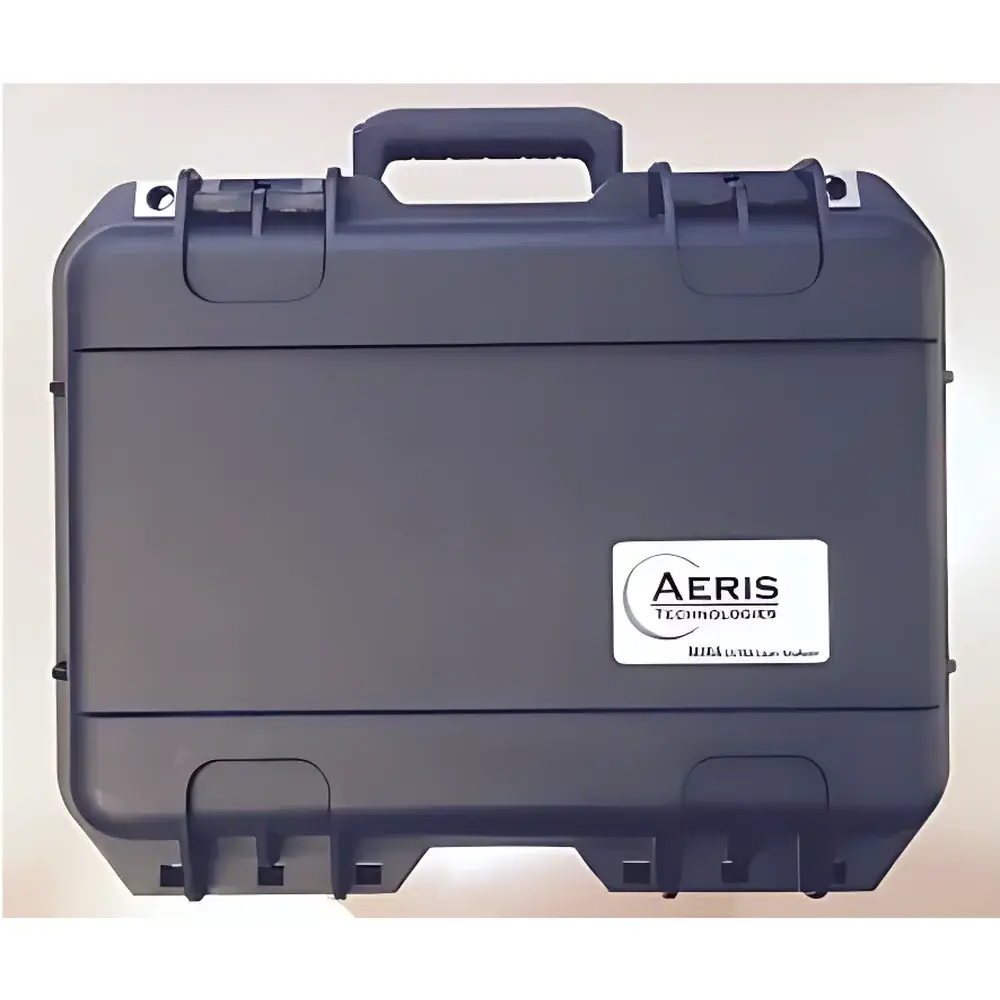
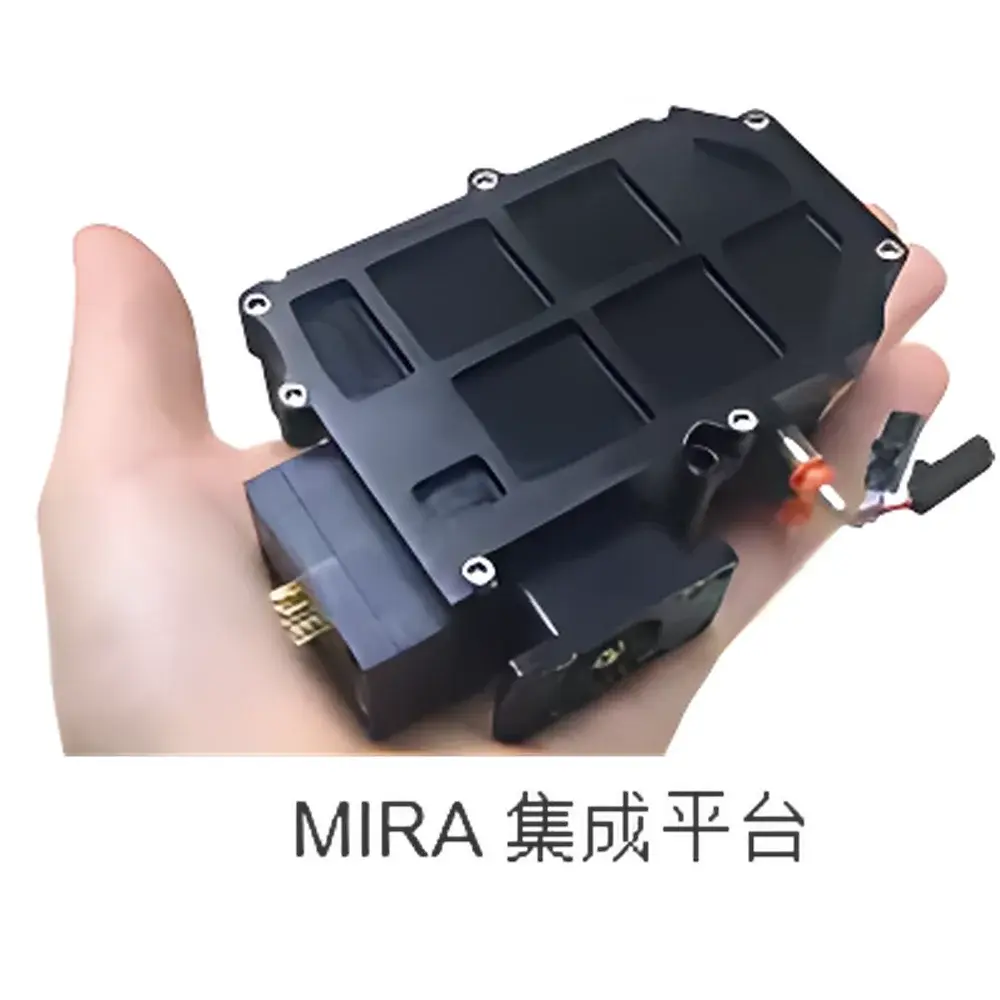
Aeris Technologies MIRA N2O/CO Portable Dual-Gas Analyzer
| Brand | Aeris Technologies |
|---|---|
| Origin | USA |
| Model | MIRA N2O/CO |
| Instrument Type | Portable |
| Measured Gases | N₂O, CO |
| Response Time | 1 s |
| Measurement Accuracy | CO < 1 ppb, N₂O < 1 ppb (2 ppb without zeroing) |
| Measurement Range | 1 ppb – 500 ppm |
Overview
The Aeris Technologies MIRA N2O/CO Portable Dual-Gas Analyzer is a field-deployable, high-precision trace gas measurement system based on tunable mid-infrared (MIR) laser absorption spectroscopy. Unlike near-infrared (NIR) or electrochemical sensors, the MIRA leverages the strong, molecule-specific fundamental vibrational absorption bands of nitrous oxide (N₂O) and carbon monoxide (CO) in the 4–5 µm spectral region—where absorption cross-sections are 1,000× greater than in NIR—enabling sub-part-per-trillion (sub-ppt) detection limits and exceptional selectivity. The analyzer employs a proprietary multi-pass absorption cell with no reflective optics, achieving an effective optical path length of 15 meters within a compact 60 mL sample volume. This architecture delivers rapid response (<1 s), low power consumption, and mechanical robustness suitable for mobile, airborne, and remote deployments. The instrument simultaneously quantifies N₂O, CO, and H₂O vapor in ambient air without chemical derivatization, drying, or consumables—providing dry-mole-fraction-corrected concentrations in real time.
Key Features
- Sub-ppb detection sensitivity for both N₂O and CO (500 ppt/s noise-equivalent concentration)
- Real-time dual-gas + water vapor co-measurement at 1–10 Hz update rates
- Patented differential zeroing method: two independently configurable sampling paths enable automated periodic zero calibration or synchronous differential measurement, minimizing long-term drift to <1 ppb (σ) over hours
- Thermally stabilized optical bench; MIRA Ultra variants feature active temperature control (42 °C ± 0.001 K) to suppress thermal drift and prevent condensation
- Integrated sampling pump, onboard 32 GB non-volatile memory (expandable), and multiple I/O interfaces: RS-232 (up to 10 Hz), USB, Wi-Fi, and optional analog outputs
- GPS-ready configuration: geotagged .kml output for spatial mapping in Google Earth or GIS platforms
- Ultra-low power operation: MIRA pico model draws only 15 W, supports 5–6 h battery runtime; MIRA Strato weighs just 2 kg with integrated GPS and UAV compatibility
- No consumables, no reagents, no mirrors to align—designed for unattended operation in harsh environments
Sample Compatibility & Compliance
The MIRA N₂O/CO analyzer is engineered for direct analysis of ambient air, stack emissions, chamber effluents, and headspace samples across a wide environmental operating range (10–40 °C, 10–95% RH, non-condensing). Its inherent water vapor measurement capability enables real-time dry-mole-fraction correction without external drying traps or post-processing algorithms. The instrument complies with ISO 14064-1:2018 requirements for GHG monitoring systems and supports GLP/GMP-aligned data integrity through timestamped, immutable binary logging. While not certified for regulatory enforcement under EPA Method TO-11A or EN 14625, its performance characteristics—including linearity (R² > 0.9999 over 1 ppb–500 ppm), repeatability (<0.5% RSD), and stability (Allan deviation <30 ppt at 180 s averaging)—meet or exceed benchmark laboratory-grade reference methods such as DNPH-HPLC for CO and GC-ECD for N₂O. Data export formats (CSV, NetCDF, .kml) facilitate integration into EPA’s AQS, ICOS, or FluxNet workflows.
Software & Data Management
The MIRA runs embedded Linux firmware with a web-based GUI accessible via Wi-Fi or Ethernet. Configuration, diagnostics, and real-time visualization are managed through a responsive HTML5 interface supporting live concentration plots, Allan variance analysis, and zero/delta tracking. All raw spectra and processed data are stored with full metadata (temperature, pressure, flow rate, GPS coordinates, calibration timestamps). The system implements audit-trail logging per FDA 21 CFR Part 11 principles: user authentication, electronic signatures for calibration events, and write-once storage. Data can be streamed via MQTT or polled via REST API for integration with SCADA, cloud dashboards (e.g., AWS IoT Core), or custom Python/MATLAB analysis pipelines. Firmware updates are delivered over-the-air with cryptographic signature verification.
Applications
- Atmospheric science: eddy covariance flux measurements, boundary layer profiling, and satellite validation campaigns
- Greenhouse gas inventory verification: soil flux chambers, landfill perimeter monitoring, agricultural emission hotspots
- Combustion diagnostics: engine exhaust characterization, turbine emissions testing, biomass incineration optimization
- Urban air quality networks: mobile mapping (car-mounted), drone-based plume tracing, indoor IAQ assessment in healthcare or industrial facilities
- Industrial process control: catalytic converter efficiency monitoring, syngas purity assurance, semiconductor fab ambient monitoring
- Calibration transfer: serving as a field-deployable primary standard for zero-air generators or span gas verification
FAQ
What is the fundamental measurement principle used in the MIRA N₂O/CO analyzer?
Mid-infrared tunable diode laser absorption spectroscopy (TDLAS) targeting the ν₃ asymmetric stretch band of N₂O (~4.5 µm) and the fundamental rovibrational band of CO (~4.7 µm).
Does the instrument require external zero gas or calibration cylinders?
No—its dual-path architecture enables autonomous zero referencing using ambient air or a dedicated zero-air source, eliminating dependence on bottled gases.
Can the MIRA operate unattended for extended periods?
Yes—field deployments exceeding 30 days have been validated with daily zero checks and passive thermal management; battery-backed models support >6 h continuous operation.
Is H₂O measurement mandatory, or can it be disabled?
H₂O is measured concurrently by default; however, dry-mole-fraction output can be toggled on/off in software without affecting N₂O/CO quantification accuracy.
How does the MIRA compare to cavity ring-down spectroscopy (CRDS) instruments for N₂O/CO?
While CRDS achieves comparable sensitivity, the MIRA offers superior robustness in variable-temperature/humidity environments, lower power draw, and immunity to mirror contamination—critical for long-term field use.
Related Products







