
Aeris Technologies MIRA VOC Formaldehyde Analyzer
| Brand | Aeris Technologies |
|---|---|
| Origin | USA |
| Manufacturer Type | Authorized Distributor |
| Origin Category | Imported |
| Model | MIRA VOC |
| Pricing | Upon Request |
| Principle | Photoacoustic Spectroscopy (PAS) with Mid-Infrared Laser Absorption |
| Measurement Range | 1 ppb to 500 ppm |
| Resolution | 1 ppb |
| Repeatability | ±2% of reading |
| Sampling Method | Tunable Mid-IR Laser Absorption Spectroscopy |
| Response Time | <1 s (T90) |
| Operating Temperature | 10–40 °C |
| Humidity Range | 10–95% RH (non-condensing) |
Overview
The Aeris Technologies MIRA VOC Formaldehyde Analyzer is a field-deployable, high-fidelity gas analyzer engineered for real-time, quantitative detection of formaldehyde (HCHO) in ambient air and industrial process streams. It employs tunable mid-infrared (mid-IR) laser absorption spectroscopy—leveraging the strong, spectrally unique fundamental vibrational absorption band of formaldehyde near 2800 cm⁻¹—to achieve sub-ppb sensitivity without chemical derivatization or consumables. Unlike near-IR or UV-based methods, mid-IR absorption provides >1000× higher cross-sections for HCHO, enabling exceptional selectivity and immunity to common interferents (e.g., methanol, acetaldehyde, CO₂, NO₂). The optical path is realized via a robust, mirrorless multi-pass absorption cell with an effective path length of 15 meters within a compact 60 mL volume—eliminating alignment drift and enhancing mechanical stability. Integrated water vapor (H₂O) co-detection enables real-time correction of humidity-induced spectral broadening and direct calculation of dry-mole-fraction concentrations, eliminating the need for external drying or post-processing compensation.
Key Features
- Sub-ppb detection limit (1 ppb/s noise-equivalent concentration) with <1 ppb long-term drift (σ over 24 h)
- True real-time response: T90 < 1 second; full spectral acquisition at 1–10 Hz configurable data rate
- Mirrorless, monolithic absorption cell architecture—no moving parts, no optical alignment required
- Simultaneous, synchronous measurement of HCHO and H₂O with independent quantification accuracy
- Onboard automatic zero calibration using internal reference cavity; user-definable calibration interval (e.g., hourly, daily, or event-triggered)
- Thermally stabilized variants (MIRA Ultra) maintain detector and cell temperature at 42 °C ± 0.01 K, reducing thermal baseline drift by >90% versus non-stabilized units
- Multi-interface connectivity: RS-232 (up to 10 Hz), USB 2.0, Wi-Fi (IEEE 802.11n), and optional 0–10 V analog output
- Embedded 32 GB industrial-grade flash memory with timestamped binary + CSV export; supports firmware-over-the-air (FOTA) updates
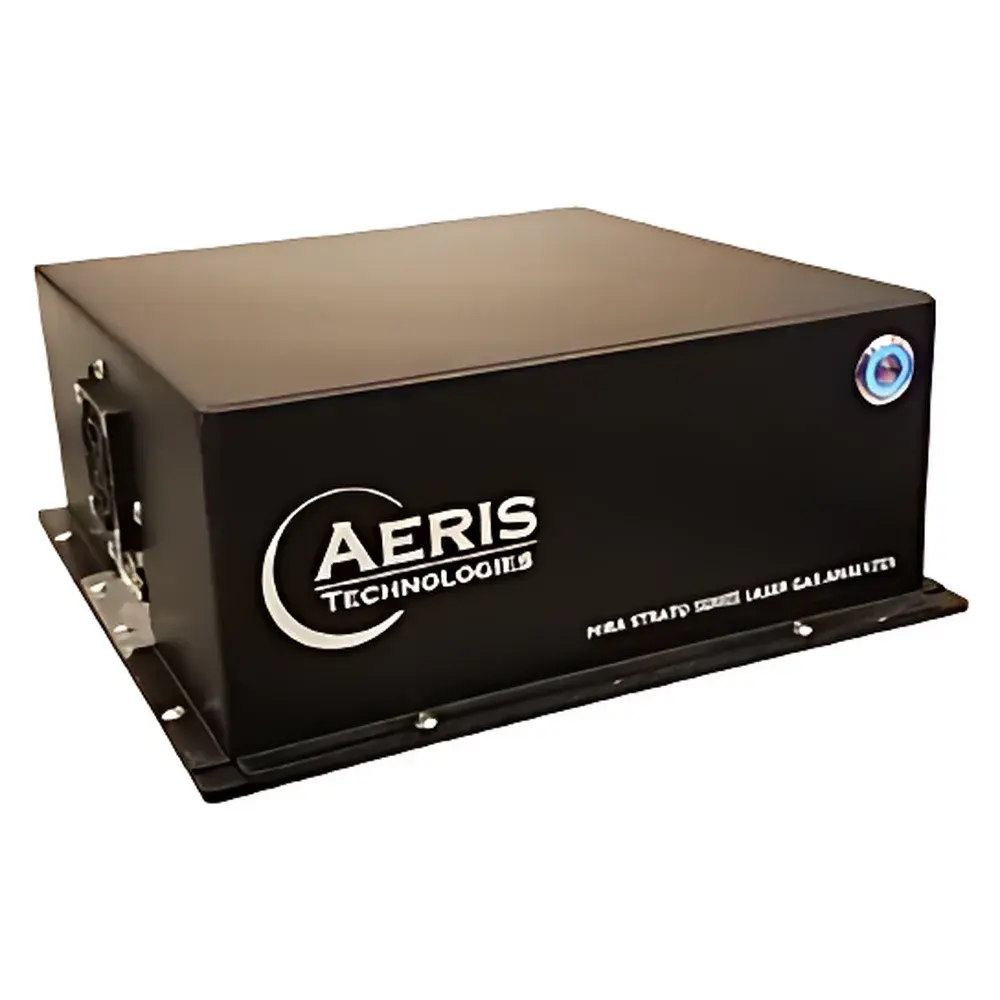
- Ultra-low power consumption: MIRA pico operates at 15 W (12–15 VDC, 2 A); MIRA Strato draws only 17 W and weighs 2 kg including integrated GPS and Li-ion battery
Sample Compatibility & Compliance
The MIRA VOC analyzer is validated for direct analysis of unmodified gas samples across diverse matrices—including indoor air, HVAC ducts, emission stacks, chamber testing environments (e.g., ASTM D6007, ISO 12460-3), and UAV-borne atmospheric profiling. Its humidity tolerance (10–95% RH, non-condensing) and built-in H₂O compensation eliminate the need for Nafion dryers or permeation dryers that introduce lag and adsorption artifacts. The instrument meets key regulatory and quality framework requirements: it supports audit-ready data logging compliant with GLP and GMP principles; time-stamped, cryptographically signed records satisfy FDA 21 CFR Part 11 electronic record integrity criteria when used with Aeris’ optional secure logging module; and its linear dynamic range (1 ppb–500 ppm) and repeatability (±2%) align with ISO 16000-23 and EN 16516 validation benchmarks for formaldehyde monitoring in building materials and indoor environments.
Software & Data Management
Aeris ControlSuite™—a cross-platform desktop and mobile application—provides full instrument control, spectral visualization, calibration management, and report generation. Raw absorbance spectra are stored alongside metadata (temperature, pressure, flow rate, GPS coordinates where equipped). KML export functionality enables georeferenced plume mapping in Google Earth or GIS platforms. For integration into SCADA or LIMS systems, the analyzer supports Modbus TCP and MQTT protocols via optional Ethernet interface. All firmware and calibration files are digitally signed and version-controlled. Audit trails log every configuration change, calibration event, and data export action—including operator ID, timestamp, and IP address—ensuring traceability for ISO/IEC 17025-accredited laboratories.
Applications
- Real-time QA/QC during composite wood panel manufacturing (e.g., particleboard, MDF) per CARB ATCM and EPA TSCA Title VI compliance
- Indoor air quality (IAQ) assessment in residential, commercial, and healthcare facilities—supporting WELL Building Standard v2 and LEED v4.1 credits
- Automotive cabin air monitoring and interior material off-gassing studies (SAE J2721, ISO 12219-1)
- Field validation of low-VOC coatings, adhesives, and insulation products
- Mobile emissions screening at traffic intersections and logistics hubs
- Unmanned aerial vehicle (UAV)-based boundary-layer mapping of formaldehyde gradients above industrial zones or wildfire-impacted regions
- Research applications in atmospheric chemistry, including HCHO photolysis rate estimation and OH radical proxy modeling
FAQ
How does MIRA distinguish formaldehyde from other carbonyl compounds?
It targets the ν(C–H) stretching fundamental band at 2800 cm⁻¹, which exhibits minimal spectral overlap with methanol, acetaldehyde, or acetone—confirmed by NIST reference spectra and interference testing per IUPAC guidelines.
Is external calibration gas required?
No. Zero calibration uses internal cavity reflection; span calibration may be performed optionally with certified HCHO permeation tubes or dynamic dilution systems—but is not mandatory due to inherent stability and drift compensation algorithms.
Can MIRA operate unattended for extended periods?
Yes. With scheduled auto-zero, temperature/humidity compensation, and 32 GB onboard storage, it supports autonomous 30-day deployments; battery-powered variants (pico, Strato) include low-power sleep modes and voltage telemetry.
Does the analyzer meet EPA or EU regulatory method equivalency?
While not yet listed as a federal reference method (FRM), MIRA VOC demonstrates strong correlation (R² > 0.995) with ASTM D6007 (DNPH-HPLC) across 0.01–10 ppm ranges and is under evaluation for inclusion in EPA OTM-39 and EN 16516 Annex B protocols.
What mounting options are available for permanent installation?
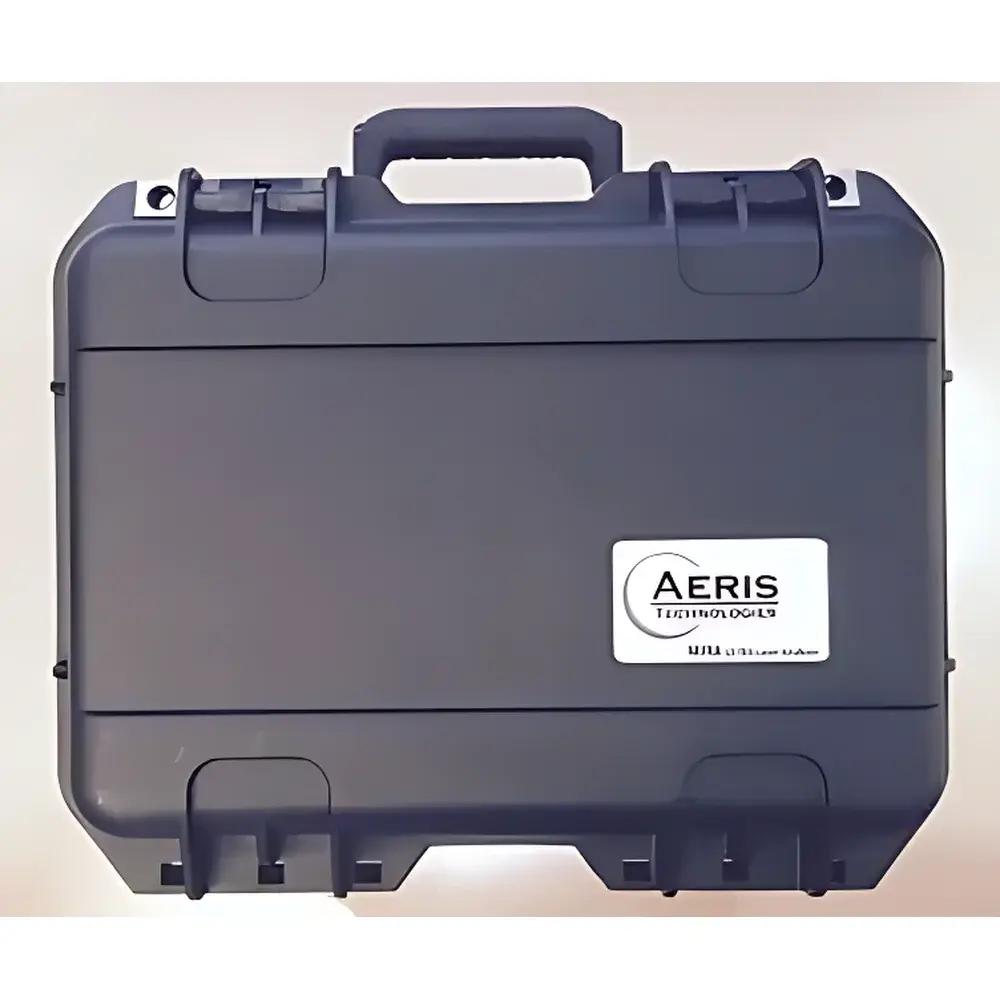
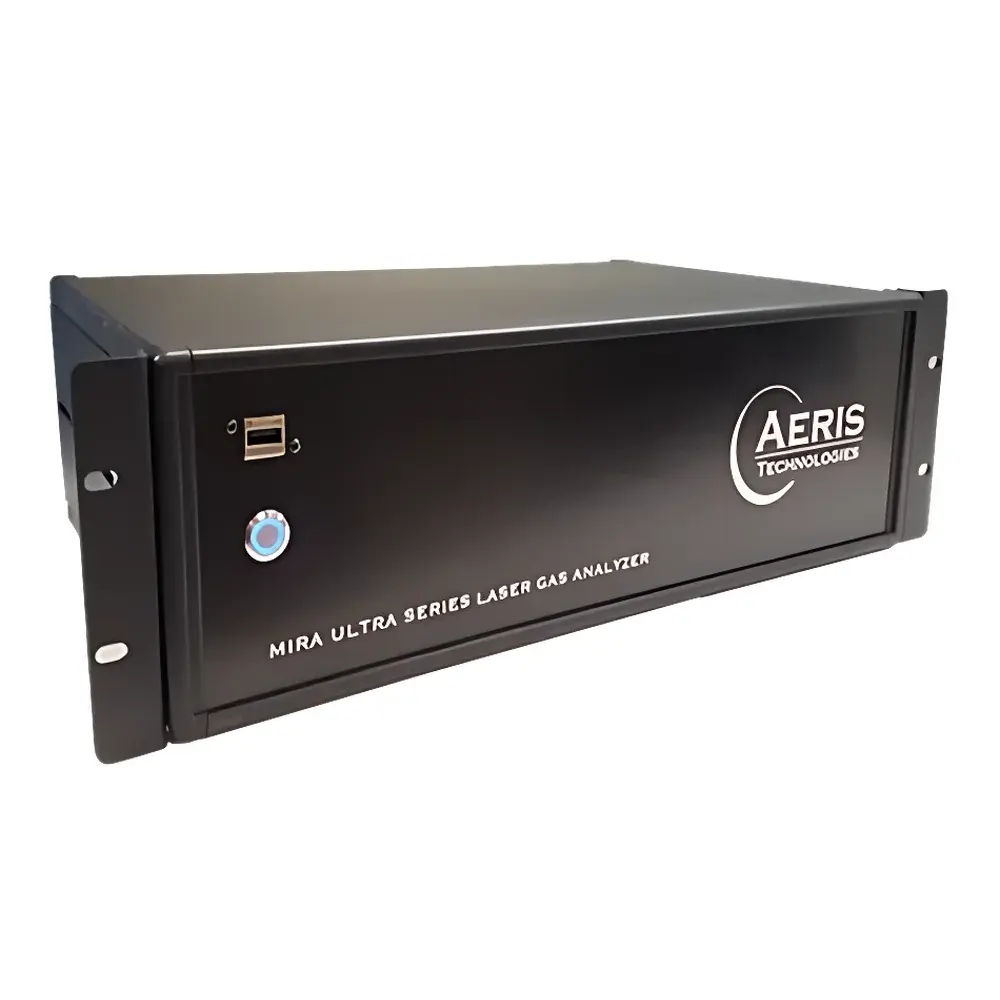
MIRA Ultra is available in 19-inch rack-mount (5U) and portable configurations; MIRA Strato includes UAV vibration-dampened mounting brackets and RS-232 TTL-level serial interface for direct flight controller integration.







