
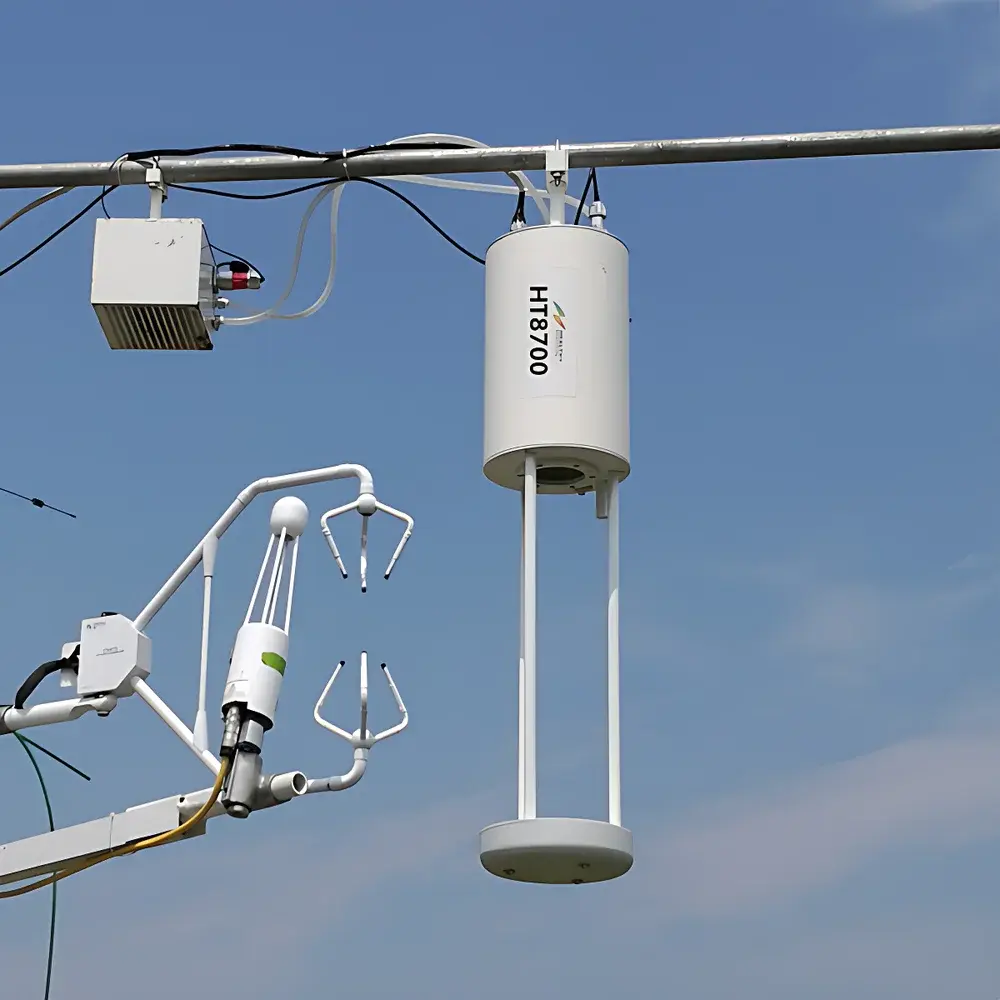
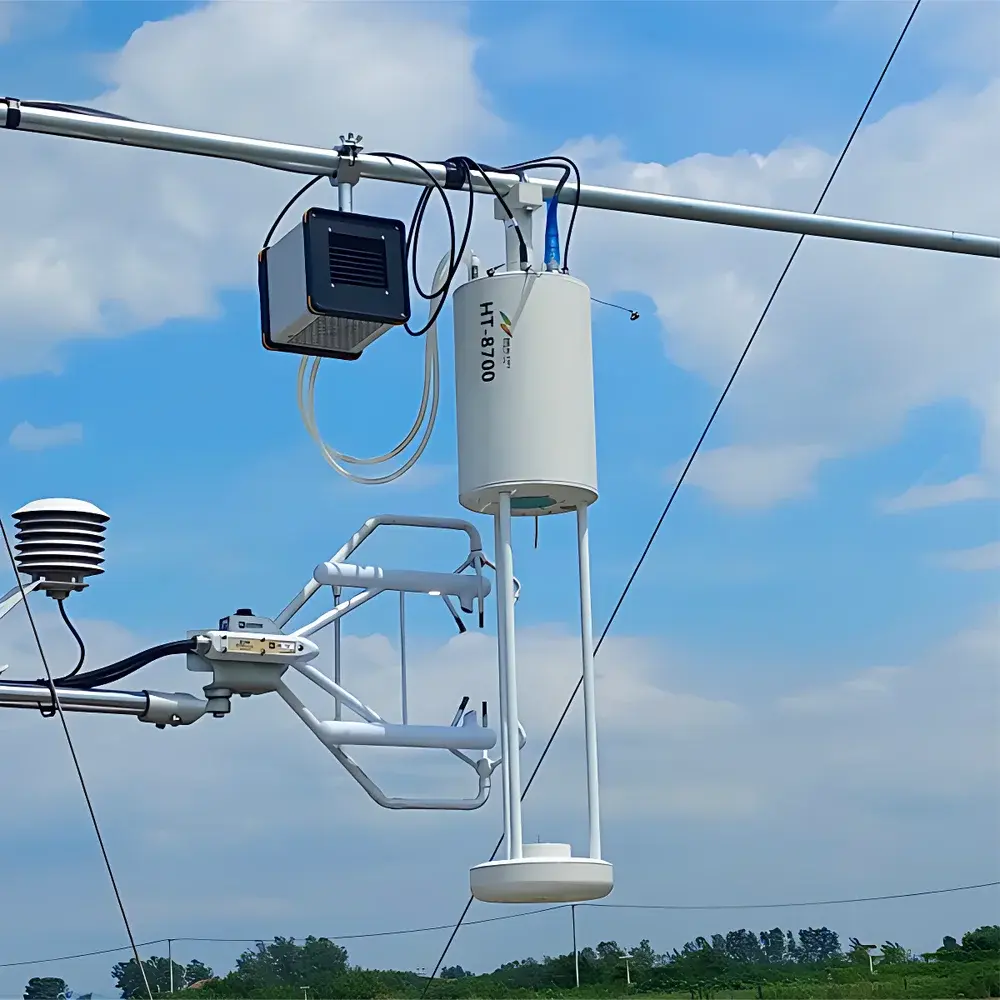
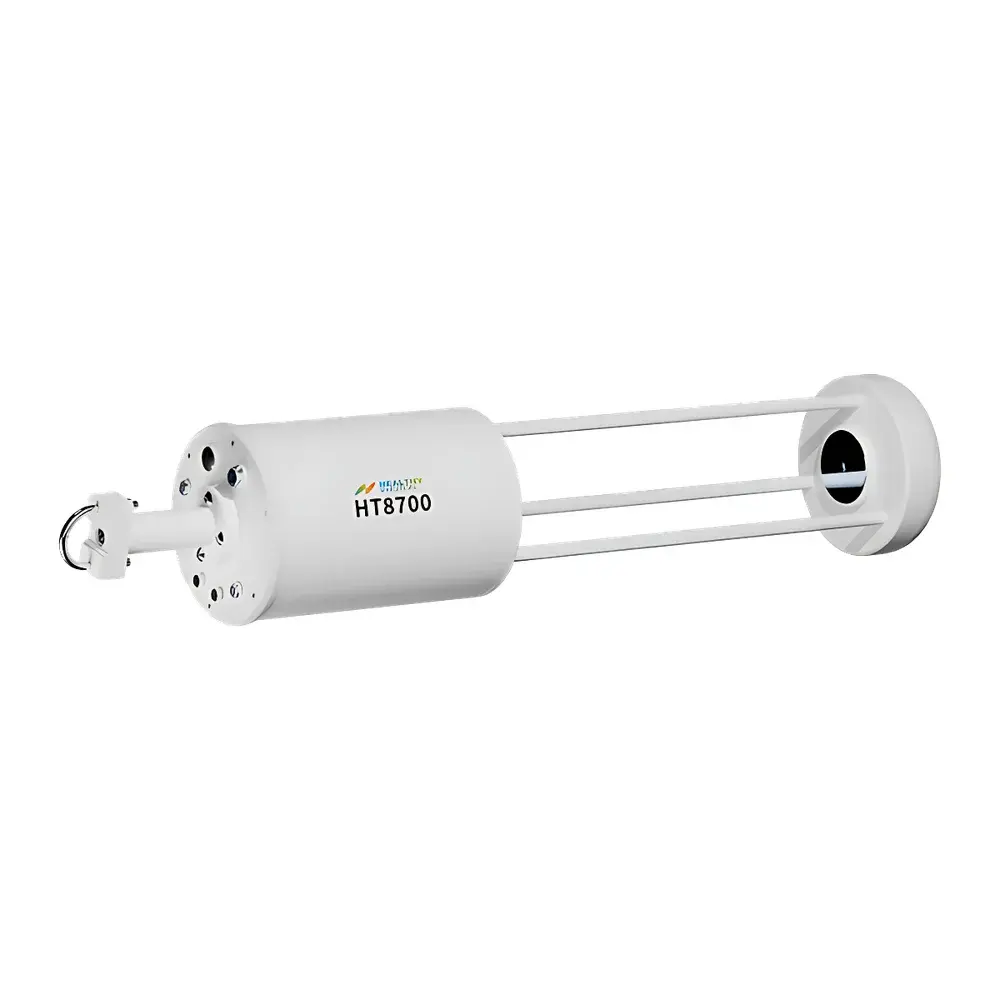
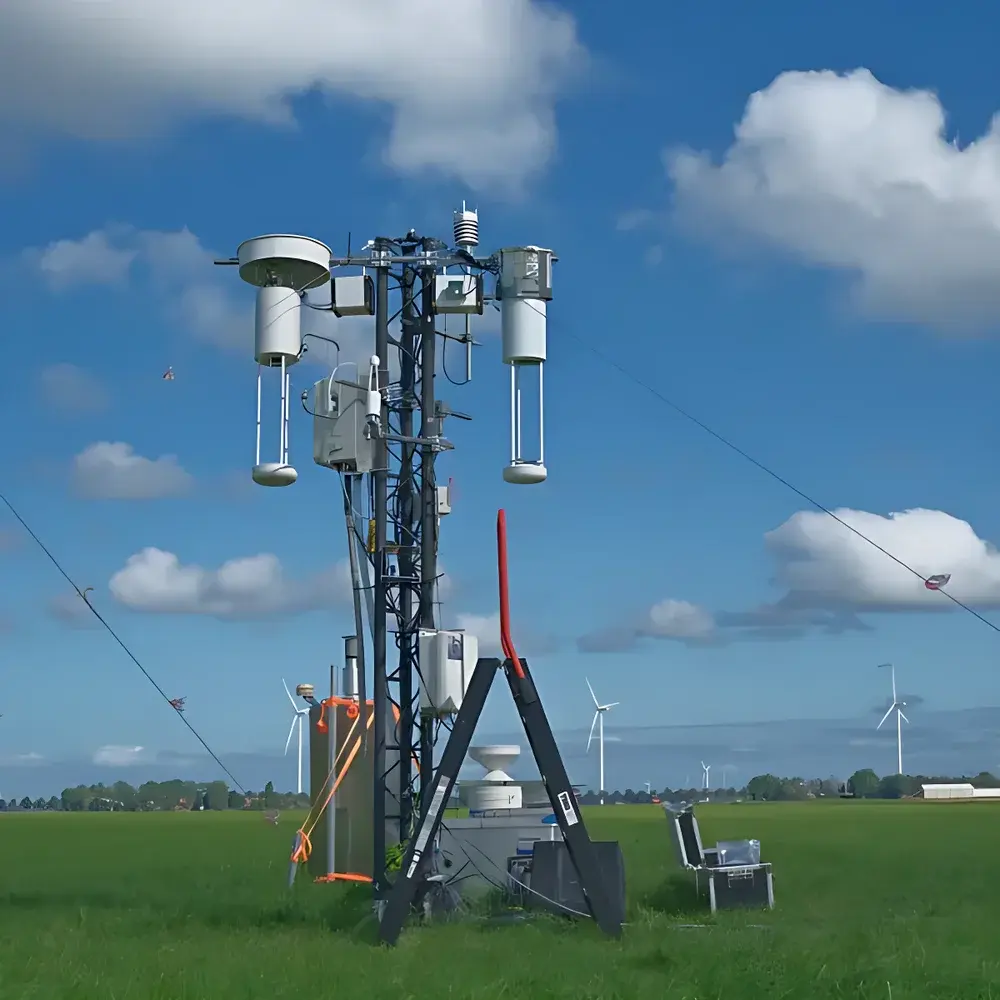
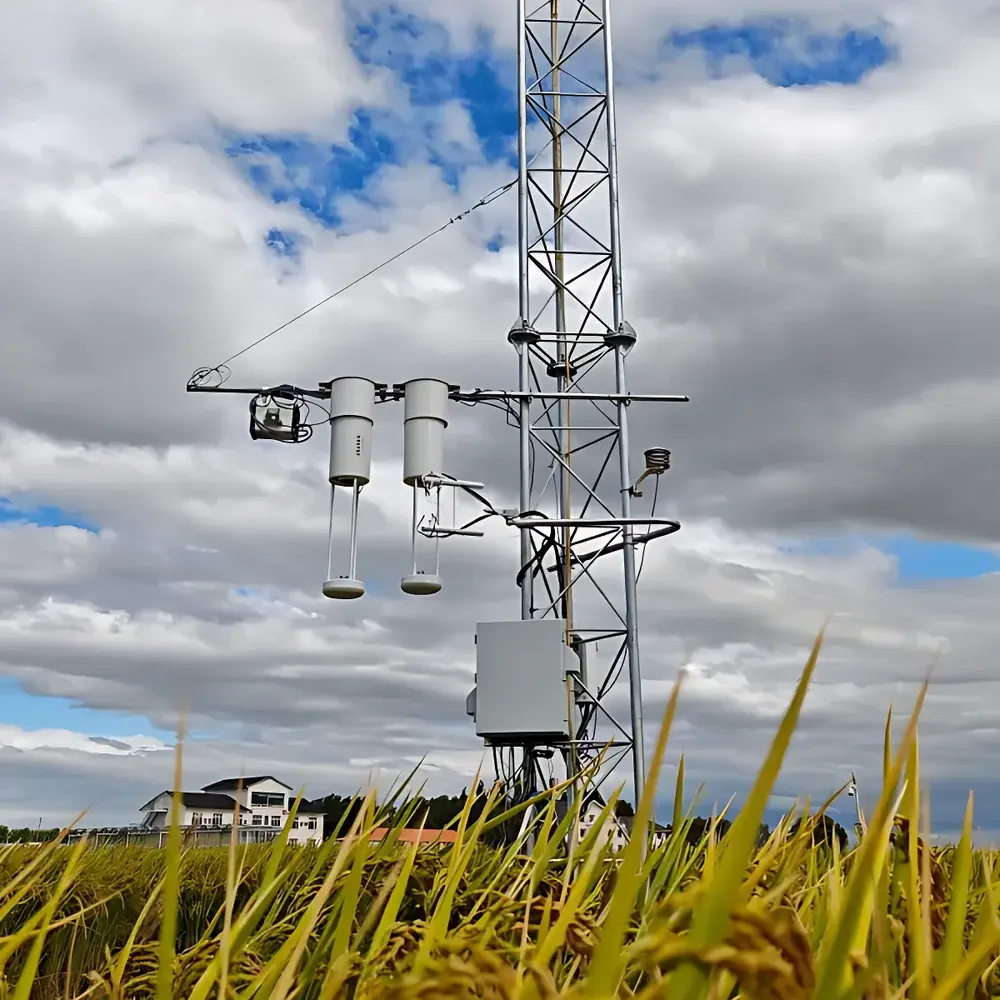
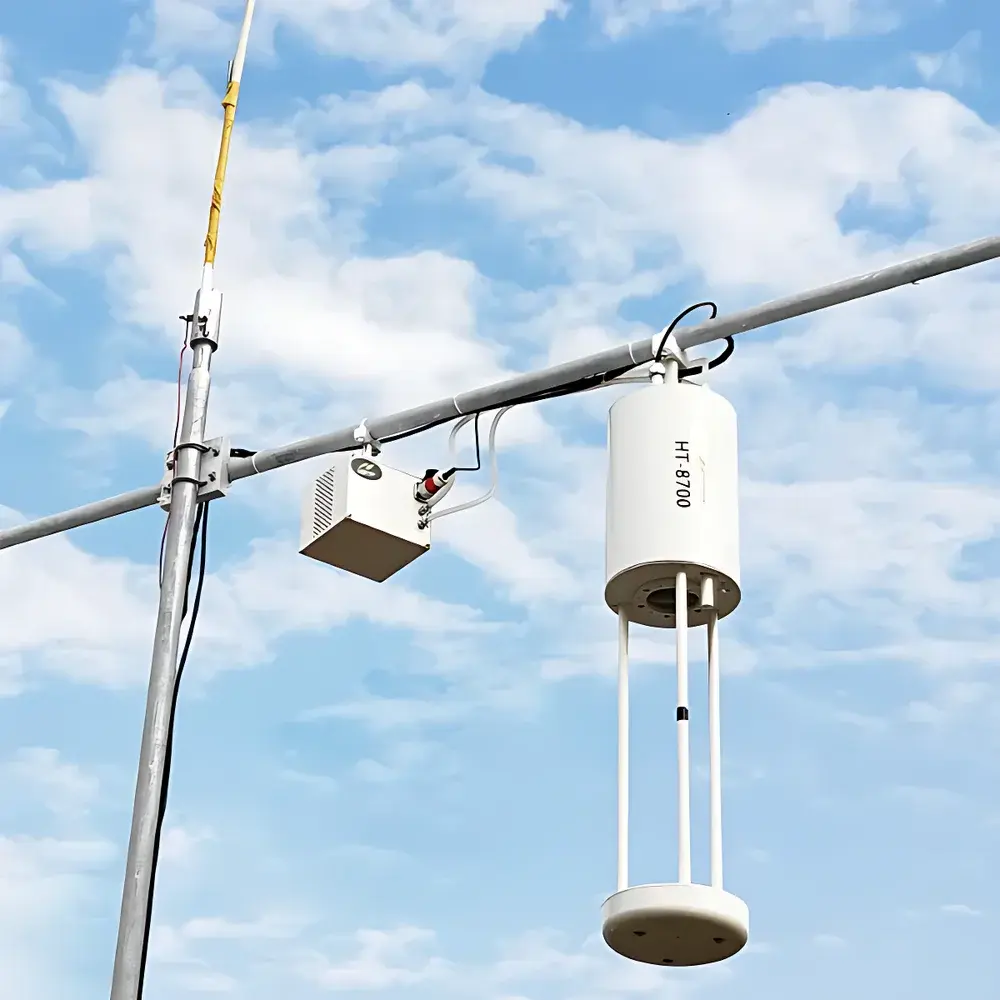
AeroNose HT8700 Open-Path Atmospheric Ammonia Analyzer
| Brand | AeroNose |
|---|---|
| Origin | Zhejiang, China |
| Manufacturer Type | Original Equipment Manufacturer (OEM) |
| Country of Origin | China |
| Model | HT8700 |
| Instrument Type | Online Continuous Monitor |
| Technology | Quantum Cascade Laser Absorption Spectroscopy (QCLAS) |
| Optical Path | Open-Path, Non-Contact |
| Deployment | Field-Deployable, Grid-Independent, Mobile-Platform Compatible |
| Compliance | Designed for EPA Method Complementarity, ISO 14644-1 Cleanroom Ambient Monitoring Support, GLP-Traceable Data Logging |
Overview
The AeroNose HT8700 is an open-path, continuous-wave quantum cascade laser absorption spectrometer (QCLAS) engineered for real-time, in-situ measurement of atmospheric ammonia (NH₃) concentration with sub-parts-per-trillion (ppt) sensitivity. Operating on the fundamental principle of tunable diode laser absorption spectroscopy (TDLAS), the HT8700 targets the strong ro-vibrational absorption line of NH₃ near 967.35 cm⁻¹ (≈10.34 µm wavelength) — a region selected for minimal spectral interference from water vapor, CO₂, and common atmospheric hydrocarbons. Unlike extractive sampling systems requiring heated lines, permeation filters, or chemical conversion, the HT8700 employs a true open-path configuration: the laser beam propagates freely across an unobstructed atmospheric path (standard 10–100 m baseline, configurable via retroreflector alignment), enabling direct quantification of column-integrated NH₃ mixing ratio without sample conditioning artifacts. This architecture eliminates inlet-related memory effects, adsorption losses, and calibration drift associated with wet chemistry or metal-catalyzed surfaces — critical for long-term stability in agricultural and industrial boundary layer monitoring.
Key Features
- Quantum Cascade Laser Source: Temperature-stabilized, single-mode QCL with linewidth < 0.001 cm⁻¹, enabling high-resolution scanning across the target NH₃ absorption feature with shot-noise-limited detection.
- Open-Path Optical Design: Dual-mirror retroreflector system supports path lengths from 10 m to 100 m; beam divergence < 1.5 mrad ensures robust alignment under wind-induced vibration and thermal gradient conditions.
- Real-Time Signal Processing: Onboard FPGA-accelerated spectral fitting engine performs least-squares multi-line Voigt profile fitting at 1 Hz update rate, concurrently correcting for H₂O broadening, pressure shift, and ambient temperature-dependent line strength.
- Grid-Independent Operation: Integrated 24 V DC power input with optional solar-charging battery bank (≥72 h autonomy); IP66-rated enclosure rated for −20 °C to +50 °C ambient operation.
- Zero-Drift Calibration Architecture: Built-in reference cell containing trace-certified NH₃/N₂ mixture enables automated zero/span verification every 24 h without external gas cylinders or manual intervention.
Sample Compatibility & Compliance
The HT8700 is validated for direct measurement of gaseous NH₃ in ambient air, soil-atmosphere exchange zones, livestock barn exhaust plumes, and fertilizer application microenvironments. It complies with measurement principles aligned with EPA Draft Method TO-11A (for reactive nitrogen species) and supports data traceability per ISO/IEC 17025:2017 requirements when deployed with NIST-traceable calibration records. Its open-path design avoids filter clogging and particle loading issues inherent in PM-bound NH₄⁺ analysis, making it suitable for high-humidity (up to 95% RH non-condensing) and high-particulate environments typical of agricultural field sites. The instrument meets electromagnetic compatibility (EMC) Class B per EN 61326-1 and carries CE marking for environmental monitoring use in EU member states.
Software & Data Management
The HT8700 ships with AeroNose Analytical Suite v3.2 — a Linux-based embedded platform supporting local data storage (32 GB internal SSD), remote SSH/TLS-secured access, and dual-output streaming: ASCII-formatted .csv files via Ethernet (TCP/IP or Modbus TCP) and binary HDF5 archives compliant with CF-1.7 metadata conventions. All raw interferograms, fitted spectra, and diagnostic logs are timestamped with GPS-synchronized UTC (±10 ms accuracy). Audit trails record user actions, calibration events, and firmware updates in accordance with FDA 21 CFR Part 11 requirements for electronic records and signatures. Data export modules support direct ingestion into ICOS, AmeriFlux, and FluxNet data portals via standardized NetCDF-4 templates.
Applications
- Atmospheric Boundary Layer Research: High-frequency (1 Hz) NH₃ concentration time series enable eddy covariance (EC) flux computation when paired with co-located 3D sonic anemometers — demonstrated in华北农区 (North China Plain) winter wheat–maize rotation studies.
- Agricultural Emission Inventory Refinement: Quantifies NH₃ volatilization dynamics during urea application, manure spreading, and tillage operations — supporting Tier 2–3 reporting under IPCC 2006 Guidelines and EU NEC Directive Annex X.
- Industrial Fugitive Emission Monitoring: Deployed along fence-line perimeters of chemical plants and wastewater treatment facilities to detect NH₃ leaks and verify abatement system performance against permit limits (e.g., US EPA 40 CFR Part 63 Subpart CC).
- Policy-Relevant Air Quality Modeling: Provides ground-truth inputs for CMAQ and WRF-Chem simulations assessing secondary particulate formation (NH₄NO₃, (NH₄)₂SO₄) and nitrogen deposition budgets.
FAQ
What is the minimum detectable concentration (MDL) of the HT8700 under typical field conditions?
The 1σ MDL is 0.08 ppb (30-second average, 50 m path length, 25 °C, 1013 hPa), verified per EPA Method IO-3.1 protocol using certified NH₃ permeation tubes.
Can the HT8700 be integrated with existing eddy covariance towers?
Yes — it provides TTL-sync output for hardware triggering of sonic anemometer data acquisition and supports NTP time synchronization to ensure sub-millisecond timestamp alignment across sensor networks.
Is routine maintenance required beyond calibration checks?
No consumables or replaceable optical components are specified; mirror cleaning is recommended every 6 months in dusty environments, and laser output power is monitored continuously via internal photodiode feedback.
Does the analyzer require external gas standards for daily operation?
No — the integrated reference cell enables autonomous zero/span validation; external standards are only required for annual metrological verification by an ISO/IEC 17025-accredited laboratory.
How is data integrity ensured during extended unattended deployments?
All measurements are written to redundant storage partitions; file-system journaling prevents corruption during power interruption, and SHA-256 checksums are appended to each data packet for end-to-end validation.







